
In Grand Rapids, furnace replacement in 2026 typically costs $4,150 to $7,500 installed, and most homeowners pay about $5,850. That's the number to keep in your head if you're staring at a cold basement, a noisy old unit, or a repair estimate that feels too close to a replacement quote.
If you live in West Michigan, you already know the furnace isn't some abstract appliance. It's the thing that gets you through November to April without freezing pipes, cold bedrooms, or a kitchen that never quite warms up. In Grand Rapids, Hudsonville, Jenison, Grandville, Walker, Standale, Allendale, and Wyoming, furnace replacement has to be judged against our winter, our older homes, and the way retrofits work in tight basements and mixed duct systems.
Table of Contents
- Why Furnace Replacement in Grand Rapids Is Different
- Signs It Is Time to Replace Your Furnace
- Key Cost Drivers for West Michigan Furnace Replacement
- The Replacement Process From Inspection to First Warm Air
- Choosing the Right Equipment for a Grand Rapids Home
- Rebates, Financing, and the Platinum Maintenance Membership
- How to Choose the Right Replacement Contractor
- Your Next Step With Platinum Heating & Cooling
Why Furnace Replacement in Grand Rapids Is Different
A furnace replacement in Grand Rapids is never just about swapping a box. It's about getting through a long heating season with older housing, basement installs, and venting layouts that don't always cooperate with a shiny new unit. That's why a national “average furnace price” guide is the wrong lens for this market, especially when January nights are brutal and a frozen condensate line can turn a normal morning into a service call.
The local market sits right where you'd expect for a cold-climate city. The typical 2026 installed replacement range is $4,150 to $7,500, with most homeowners landing around $5,850 in Grand Rapids, and that's about 8% above the national average. Local labor is also reported at 6% below the U.S. average, while about $200 is commonly budgeted for the HVAC permit, so code and compliance still matter even when labor looks relatively favorable. All of that is from the same Grand Rapids pricing guide, and it reflects that replacement costs are shaped by both the equipment and the house itself. Grand Rapids furnace replacement cost guide
Why the house matters as much as the furnace
Older homes in West Michigan often force the contractor to work around basement headroom, closet installs, mixed ductwork, or downflow orientation. Those are not small details. They decide whether the job is a clean swap or a rebuild of venting, condensate routing, and airflow paths.
Practical rule: if the install location is awkward, the final bill usually moves more because of labor and venting changes than because of the brand name on the furnace.
Grand Rapids homeowners need to think in terms of comfort, safety, and layout, not just fuel efficiency on a brochure. High-efficiency equipment can be a smart buy here, but only if the venting and installation geometry support it. If you want a broader lifespan and replacement context, the local guide on how long a furnace lasts is worth reading before you decide anything.
Signs It Is Time to Replace Your Furnace
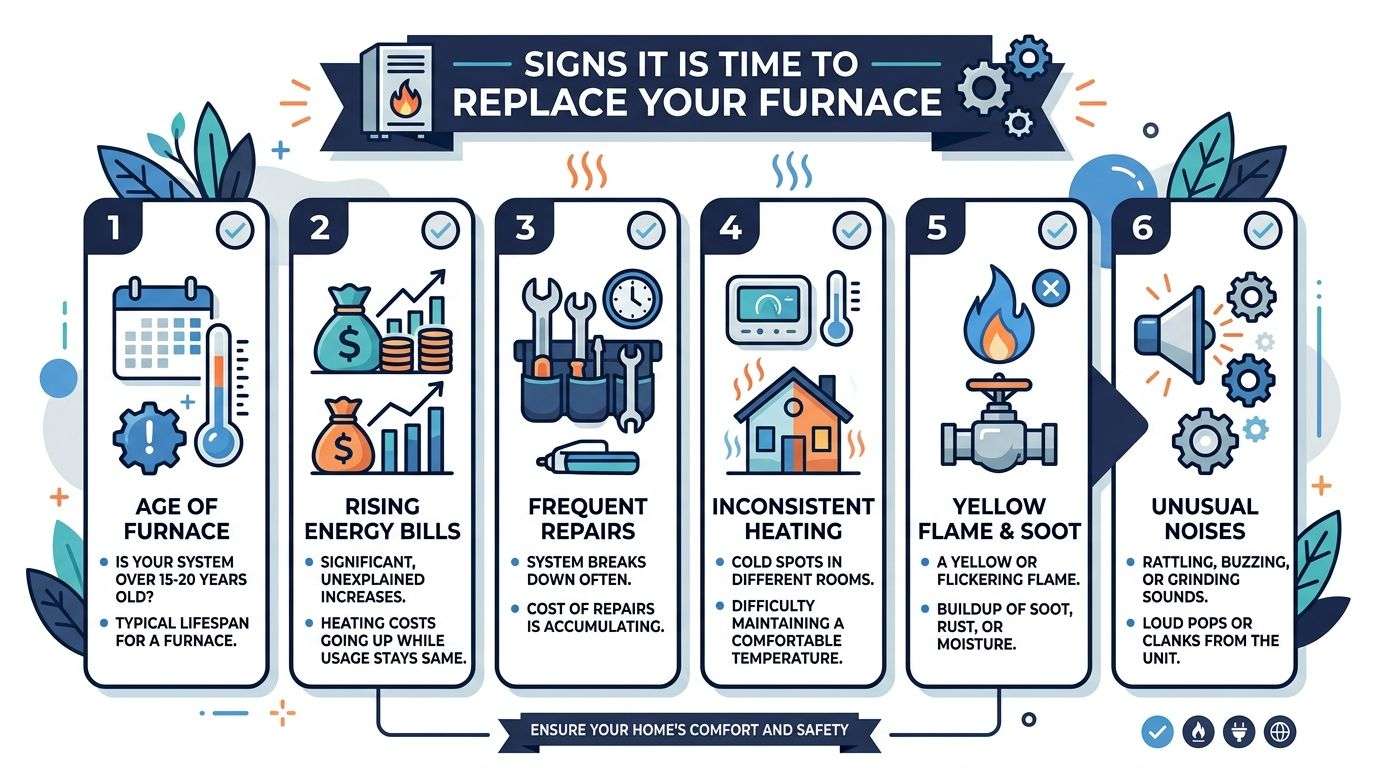
Start with age. A forced-air gas furnace generally lasts 15 to 25 years with good maintenance, and a Michigan home-buying guide says you should strongly consider replacement if the unit is over 15 years old and the repair estimate is above $1,500. That same guide gives a simple decision rule, multiply the furnace age by the repair cost, and if the total is above $5,000, replacement usually wins. Michigan furnace age and repair decision guide
What your furnace is telling you
Age by itself does not tell the full story. Uneven heating, strange smells, soot around the cabinet, a yellow burner flame, visible rust, and any suspicion of a cracked heat exchanger all deserve attention right away. Those are not cosmetic problems. They point to combustion trouble, airflow problems, or a unit that is getting less safe and less reliable with each heating season.
Rising gas bills can be another warning sign, especially if your habits have not changed. A furnace that cycles too often, struggles to hold temperature, or leaks heat through worn components burns more fuel before it fails completely. I tell homeowners to look at the whole picture, not one symptom by itself.
If you are comparing furnace symptoms with other house issues, the same logic applies to signs you need new windows. You do not wait for one giant failure. You watch for a pattern of performance loss, then act before the house gets harder and more expensive to live in.
A simple checklist you can use this week
- Age: if the furnace is past the 15-year mark, treat it like a replacement candidate.
- Repair cost: if the quote is more than $1,500, start comparing replacement instead of automatically repairing.
- Heating consistency: cold rooms, long run times, or frequent cycling are warning signs.
- Combustion clues: soot, odors, or a yellow flame deserve immediate attention.
- Visible wear: rust, cracking, or corrosion around the cabinet and exchanger are not wait-and-see issues.
- Track the bigger picture: if you are already asking how much longer the system can hang on, a local guide on how long a furnace lasts is the right place to check the age and repair decision against real-world replacement timing.
Key Cost Drivers for West Michigan Furnace Replacement
Grand Rapids homeowners usually start with the sticker price, and that's the wrong first question. In this market, the cost drivers are efficiency tier, home layout and furnace orientation, venting and condensate work, and permit plus labor. Get those four pieces right, and the quote makes sense. Miss them, and you end up comparing numbers that do not mean the same thing.
Efficiency tier sets the ceiling
A Grand Rapids replacement guide breaks installed pricing into clear bands. An 80% AFUE standard-efficiency gas furnace is estimated at $3,000 to $5,500 installed, a 90 to 92% AFUE mid-efficiency unit at $3,800 to $6,500 installed, and a 95 to 98% AFUE high-efficiency furnace at $5,000 to $10,000 installed. Grand Rapids furnace cost by efficiency tier
| Grand Rapids Furnace Replacement Cost by Efficiency Tier | AFUE | Installed Price Range |
|---|---|---|
| Standard-efficiency gas furnace | 80% | $3,000 to $5,500 |
| Mid-efficiency gas furnace | 90 to 92% | $3,800 to $6,500 |
| High-efficiency gas furnace | 95 to 98% | $5,000 to $10,000 |
That spread is not random. Higher-efficiency equipment often brings different venting needs, condensate handling, and a more careful setup. Two neighbors can buy what sounds like the same furnace and still get quotes that land thousands apart because one job is a clean swap and the other is a real retrofit.
Layout and code can move the price fast
A Michigan guide puts Grand Rapids installs at $5,800 to $10,100 installed for common packages, including an 80k BTU, 95% AFUE standard swap at $5,800 to $7,300 and a 100k BTU, 97% AFUE upgrade at $8,000 to $10,100. Michigan furnace install pricing guide That spread tells you what the contractor is really charging for. Venting changes, condensate work, and inspection requirements drive a lot of the difference, not just the metal cabinet.
A clean swap is one price. A swap that needs new venting, reworked drainage, or layout corrections is a different job.
Grand Rapids labor is reported at 6% below the U.S. average, and the permit budget is commonly about $200. That does not make the job cheap. It means the market is still shaped more by installation complexity than by raw labor rates. In older West Michigan homes, especially with tight basements, closet furnaces, or downflow setups, the installation side matters more than the equipment sticker.
The Replacement Process From Inspection to First Warm Air
A proper replacement starts before anyone lifts the old furnace out. The contractor should inspect the house, confirm the load, check the ductwork, and size the new unit to the home instead of to the old furnace. If they skip that step, you're not getting a replacement, you're getting a repeat of the last mistake.
What should happen in order
The process should move in a logical sequence. First comes the in-home inspection and sizing. Then the permit gets pulled, the old equipment comes out, and the installer makes any needed duct, venting, or condensate modifications before setting the new furnace and thermostat.
After that comes the part homeowners rarely see but absolutely should ask about. The installer should perform a combustion analysis, check for leaks, and test the full system under real operating conditions. If they leave without verifying flame quality, venting, and safe operation, the job isn't finished.
What takes time, and what gets noisy
Removal is the loud part. Drilling for new PVC venting, routing condensate, and cutting into older ductwork can add mess and noise, especially in older Grand Rapids basements. Commissioning and thermostat setup are usually quicker, but they only come after the heavy work is done.
Most straight swaps finish in a day. Jobs stretch into a second day when new venting is required, electrical upgrades are needed, or old materials create surprises during removal. If there's asbestos in the duct system, the timeline changes again, because the work has to be handled safely and legally.
What a homeowner should expect to see
- Inspection and sizing: the contractor should measure and verify, not guess.
- Permit work: the permit needs to be part of the job, not a side note.
- Removal and prep: old equipment comes out before the new one goes in.
- Installation and testing: the installer should end with combustion checks, leak checks, and a full system run.
Choosing the Right Equipment for a Grand Rapids Home
Don't buy furnace features you don't need. Most Grand Rapids homes should be sorted by layout first, comfort preference second, and efficiency tier third. If the house can support high-efficiency venting cleanly, a better furnace can be a smart long-term choice. If it can't, a simpler replacement is often the wiser move.
Match the furnace to the house, not the sales pitch
A high-efficiency condensing gas furnace can achieve up to 98% AFUE in upflow or horizontal configurations, but some models fall to about 95 to 96.7% AFUE in downflow mode. Carrier technical data on condensing furnace efficiency and clearances That efficiency swing matters in retrofits, because a basement or closet install can force a less favorable orientation and trim some of the savings you thought you were buying.
The same technical data also shows that these units typically need 1 in. clearance at the top and vent side, and 0 in. on the rear and sides in many configurations. That sounds small until you're standing in a tight mechanical room and trying to fit service access, venting, and return-air space into the same corner. In West Michigan, that kind of layout problem is common enough that it should drive the equipment choice.
Compare the main options honestly
Single-stage gas furnaces cost less up front and do one job well. Two-stage and modulating furnaces give steadier heat and better comfort control, but they make sense only if the duct layout, installation quality, and budget support the upgrade. A standard-efficiency swap can be the smarter financial move when the existing vent path is simple and the home won't benefit much from the extra controls.
If you want a practical selection framework, the local how to choose a furnace guide is a useful way to think through size, efficiency, and comfort without getting buried in model numbers.
Buy for the house you live in, not the feature list the salesperson is excited about.
A heat pump hybrid can work for some homes, but the decision has to fit the ductwork, insulation, and backup heating plan. In our climate, I'd rather see a homeowner get a properly installed gas furnace than overpay for a system that's mismatched to a Michigan basement and never really earns its keep.
Rebates, Financing, and the Platinum Maintenance Membership
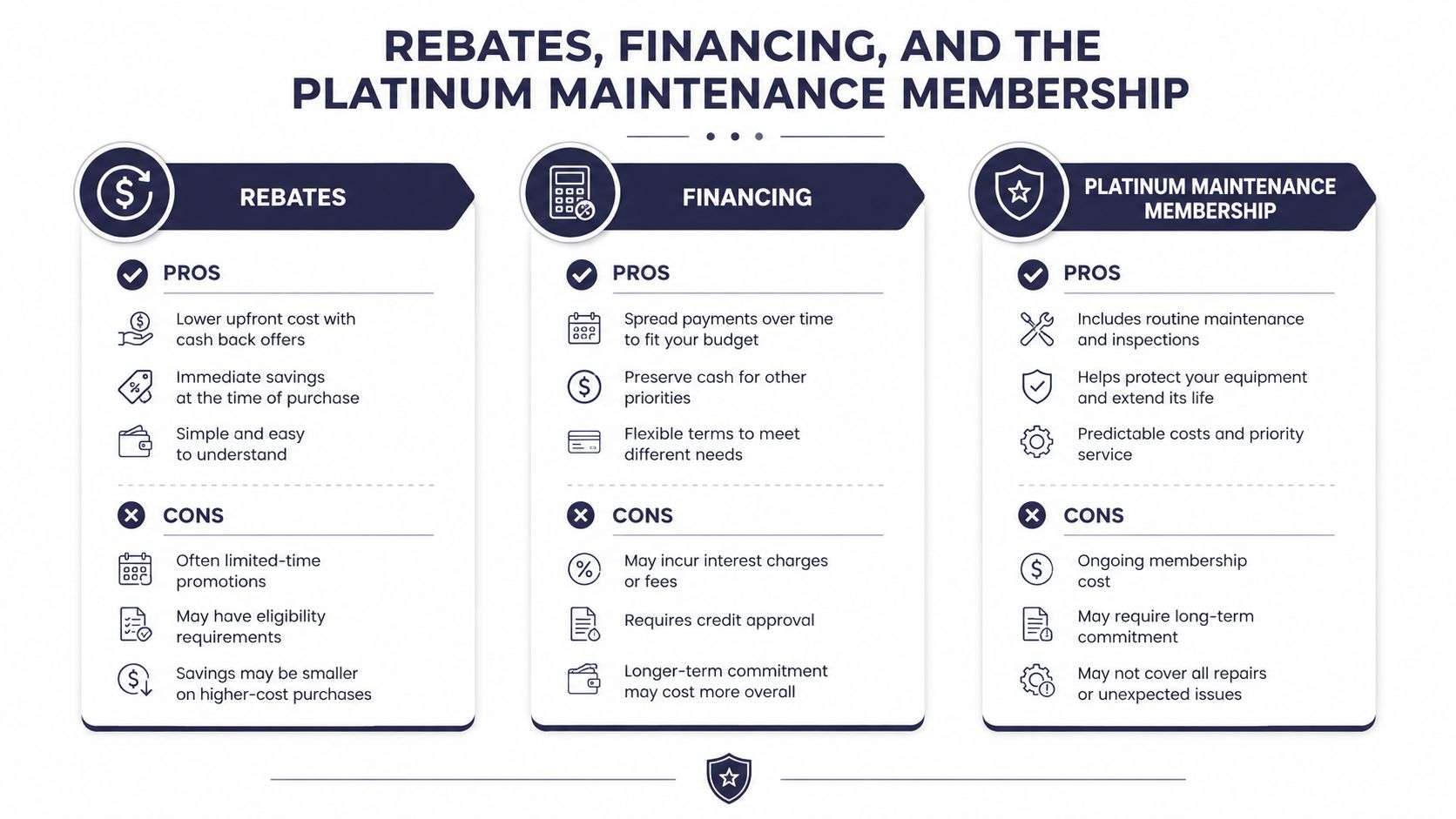
The sticker price is only part of the story. A high-efficiency furnace can qualify for financial help, and financing can spread the cost over time, but neither of those things matters if the equipment is installed poorly or ignored after the first winter. That's why the money conversation should include rebates, payment terms, and ongoing maintenance in one package.
What to ask about before you sign
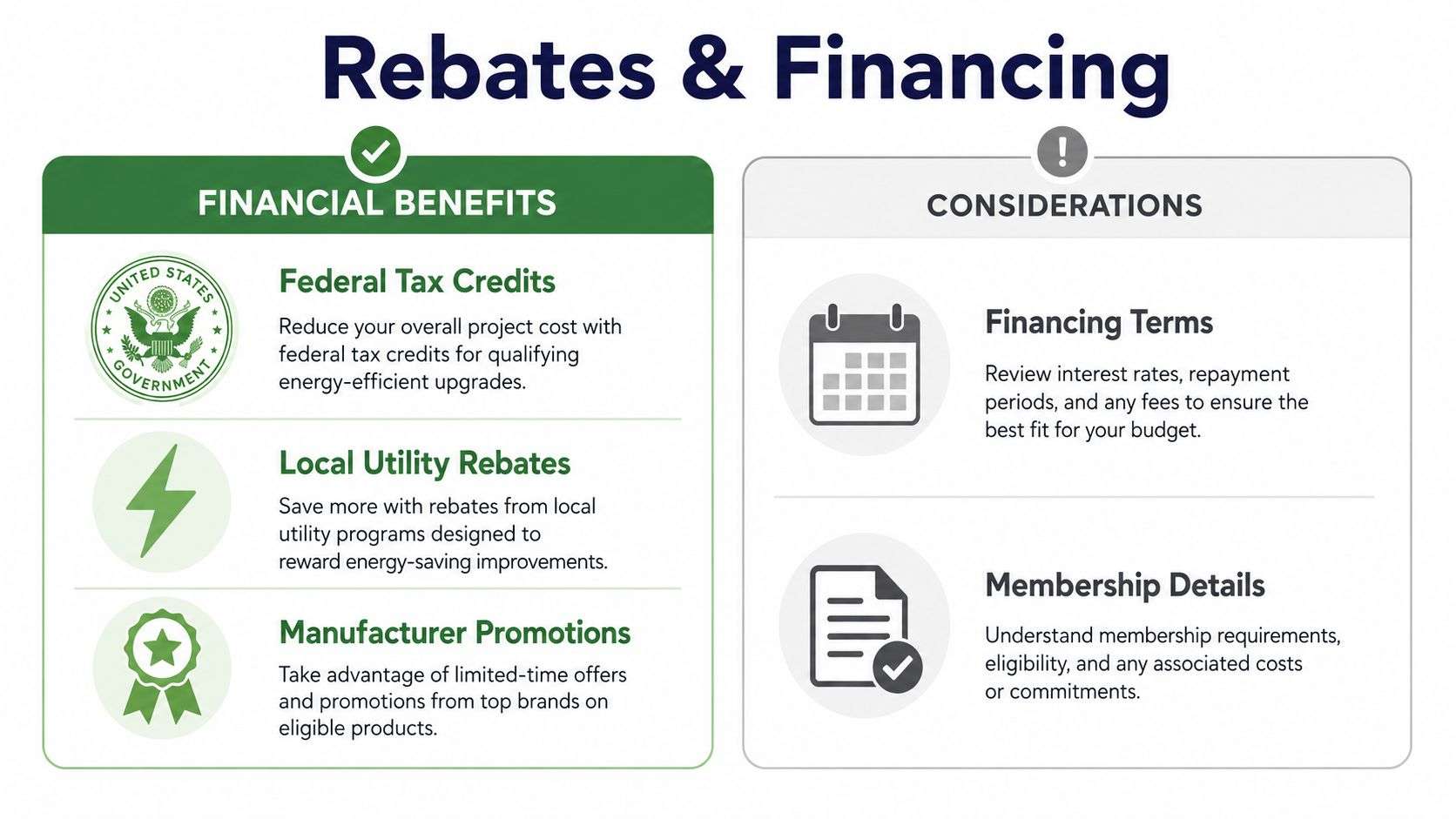
Ask whether the install qualifies for federal tax credits, local utility rebates, and manufacturer promotions. Don't let anyone hand-wave the paperwork. The rebate only helps if the system, paperwork, and timing all line up.
Financing matters too, especially if you're replacing a furnace during a cold-weather breakdown instead of planning ahead. Many homeowners use payment plans to stretch the project across several years, and that can make a higher-efficiency system easier to justify if the home layout supports it. Just read the terms carefully and ask what happens if you pay it off early.
Why maintenance belongs in the same conversation
A new furnace needs protection right away, not after it starts acting up. Platinum Heating & Cooling offers the Platinum Maintenance Membership, which is the kind of ongoing care that helps catch small problems before they become winter failures. That matters because a new install should be kept clean, inspected, and checked for performance, especially in the first heating season.
Don't pair a new furnace with an unprotected house
If the furnace is part of a broader comfort upgrade, it can make sense to look at the rest of the envelope too. The homeowner guide on energy-efficient replacement windows 2026 is a good reminder that heat loss doesn't stop at the equipment cabinet. In a cold-climate home, the furnace and the building shell work together.
The cheapest replacement is the one you can keep running safely for years.
How to Choose the Right Replacement Contractor
A good contractor makes the process boring in the best way. The quote is clear, the permit is handled, the install is documented, and startup testing gets done. A bad contractor leaves you with shortcuts, vague language, and no paper trail if something goes wrong later.
The checklist that matters
- EPA certification: confirm the technician handling the work is properly certified.
- Insurance: ask for proof, not a verbal promise.
- Local references: look for real work in Hudsonville, Jenison, Grandville, Walker, Standale, Allendale, or Wyoming.
- Written load calculation: the furnace size should be based on the house.
- Permit in writing: the permit should be pulled for your job, in your name where applicable.
- Parts and labor warranty: get it on paper before the install starts.
- Startup testing: combustion analysis and system checks should be part of the closeout.
- Clear quote: the estimate should spell out equipment, venting, and any extras.
Red flags you should not ignore
High-pressure same-day discounts are a bad sign. So are vague written quotes, no permit, and a contractor who skips combustion analysis at startup. Those shortcuts save the installer time and cost you comfort, safety, and power if there's a problem later.
If a gas line issue is part of the replacement scope, it helps to understand the plumbing side too. A clear Fraser gas line repair guide is a useful reminder that fuel supply work should be treated as its own serious trade, not an afterthought.
Your Next Step With Platinum Heating & Cooling
The decision is simple when you cut through the noise. First, decide whether your furnace is worth repairing or replacing. Second, choose the right efficiency tier for your house, not for someone else's. Third, hire a contractor who will size, install, and test the system the right way.
Platinum Heating & Cooling is a locally owned West Michigan HVAC contractor serving Grand Rapids, Hudsonville, Jenison, Grandville, Walker, Standale, Allendale, Wyoming, and nearby communities. The team is EPA-certified and insured, offers 24/7 emergency service, and backs its work with the Platinum Maintenance Membership, plus discounts for veterans and first responders. If you want a replacement handled by people who work in this climate every winter, schedule a free in-home inspection and get a straight answer on cost, equipment, and install quality.
How soon should I replace an old furnace? If it's over 15 years old, needs a repair above $1,500, or keeps failing during cold snaps, don't wait for the next breakdown. Get a replacement quote while you still have time to compare options.
Can financing help with the upfront cost? Yes, and for many families it's the difference between delaying the job and getting it done before winter turns rough. Ask for the payment terms in writing and compare them against the total installed price.
Is maintenance really necessary on a new furnace? Absolutely. A new system should be checked and kept clean from day one, because the first year sets the tone for the rest of the warranty period and the rest of the heating season.
If your furnace is limping through another West Michigan winter, don't keep gambling on patches and guesses. Visit Platinum Heating & Cooling to schedule a free in-home inspection, get a clear replacement recommendation, and put the right heating plan in place before the next cold snap hits.