
When it's time for a new furnace, you're looking at four big decisions: nailing down the right fuel type (like natural gas or electric), figuring out the correct size (BTU) for your house, decoding the efficiency rating (AFUE), and picking the best technology for your comfort (like a single-stage or two-stage system). Getting these fundamentals right is the secret to a smart investment that pays you back with reliable warmth and lower bills.
Your Starting Point for Choosing a New Furnace
When those West Michigan winds start whipping during our northern winter months from November through April, a furnace that works isn't a "nice-to-have"—it's a necessity. The whole process of picking a new one can feel overwhelming, but it really just boils down to knowing your home's specific needs before you even glance at a single brand or model.
Think of this as your roadmap. It's how you make a smart, informed decision that will keep your home comfortable for the next decade or more.
Your journey starts with a few basic questions. Seriously, taking a few minutes to answer these now will guide every other choice you make. It's the best way to avoid overspending on a system with features you don't need or, even worse, undersizing a unit that just can't keep up with a brutal Wyoming, Michigan winter.
Quick Guide to Furnace Selection Factors
Before you get lost in the sea of brands and models, take a step back. The table below breaks down the must-know factors that will shape your decision-making process. Getting a handle on these will make everything else much easier.
| Factor | What to Consider | Why It Matters for West Michigan |
|---|---|---|
| Fuel Source | Do you have a natural gas line? If not, you'll look at propane, oil, or electric. | Natural gas is king for cost-effectiveness in our area, but having a solid plan B is crucial if it's not available. |
| Home Size & Layout | We need a professional load calculation—not just square footage. Insulation, windows, and air leaks all play a role. | Our cold, long winters demand precise sizing. A "good enough" guess can lead to cold spots and high energy bills. |
| Efficiency Goals | Are you focused on long-term savings or lower upfront cost? This is where the AFUE rating comes in. | A high-efficiency furnace (95% AFUE or more) is a game-changer for reducing those hefty winter heating bills. |
| Comfort Technology | Do you want simple on/off heating (single-stage) or more consistent, quiet heat (two-stage or modulating)? | Advanced technology provides more even temperatures, eliminating the hot and cold swings common in older homes. |
This isn't about finding a one-size-fits-all solution; it's about finding the right-size-fits-your-home solution.
Core Decisions to Make First
Don't fall into the common trap. So many homeowners I talk to in Hudsonville, Jenison, and Grandville just assume they should get the same type of furnace they're replacing. But your home has likely changed, furnace technology has made huge leaps, and your own comfort goals are probably different now.
Let's break it down into four simple starting points:
Your Fuel Source: Is natural gas an option? It's almost always the most affordable fuel in our area. If not, we'll need to weigh the pros and cons of propane, oil, or going all-electric.
Your Home's True Needs: A professional load calculation is non-negotiable. This isn't just about square footage. An expert analysis looks at your insulation, window quality, and air leakage to pinpoint the exact heating power (measured in BTUs) you need. No more, no less.
Your Efficiency Target: Are you willing to invest a bit more upfront for much lower energy bills down the road? A high-efficiency furnace with a 95% AFUE (Annual Fuel Utilization Efficiency) rating or higher will deliver serious savings over its lifespan. If your current furnace is struggling, you might already be seeing some of the classic signs you need a new furnace that point to poor efficiency.
Your Desired Comfort Level: Do you just want basic heat that turns on and off (that's a single-stage), or would you prefer a more advanced system (two-stage or modulating) that runs longer at lower speeds for quieter, more even heat?
This handy decision tree shows how these choices build on each other, guiding you from the big picture to the perfect furnace for your home.
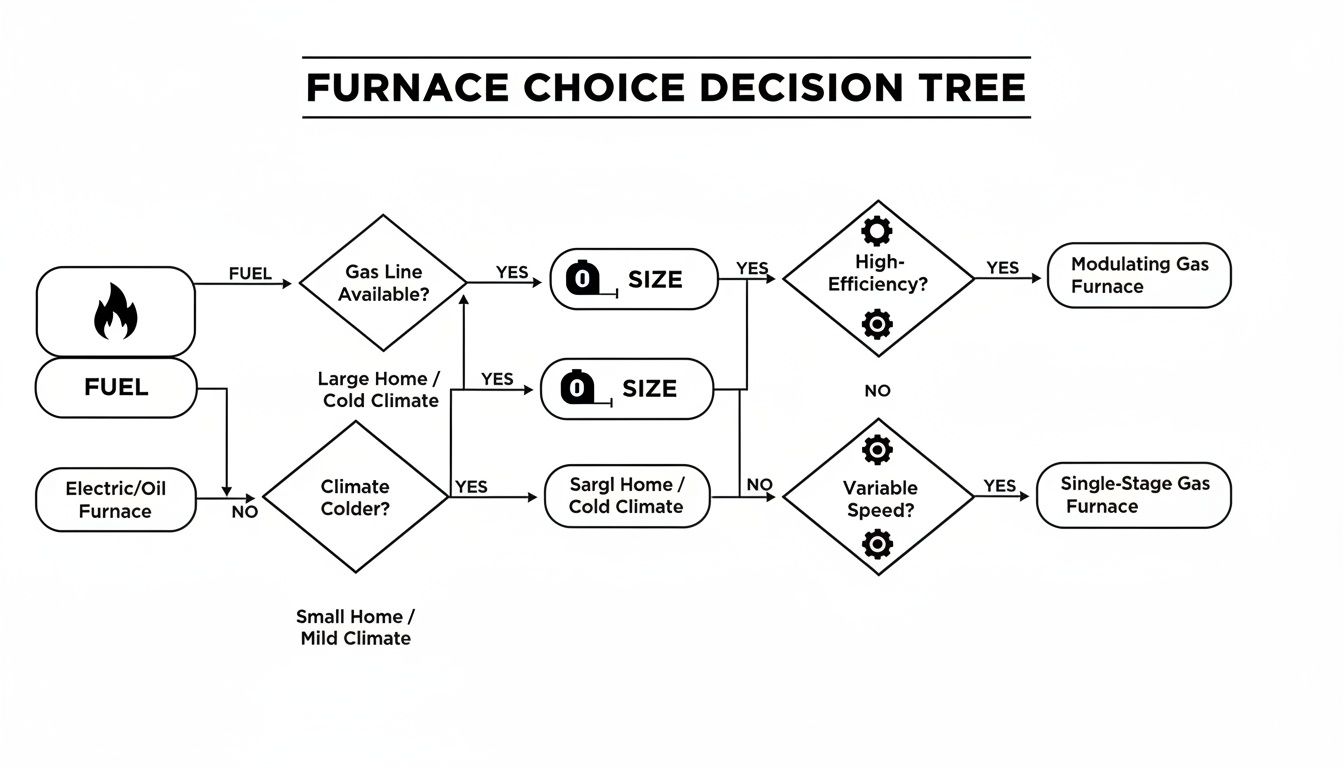
As you can see, each step narrows down your options, steering you toward a system that’s perfectly matched to your home’s unique needs and your family’s comfort.
Decoding Furnace Types and Fuel Sources
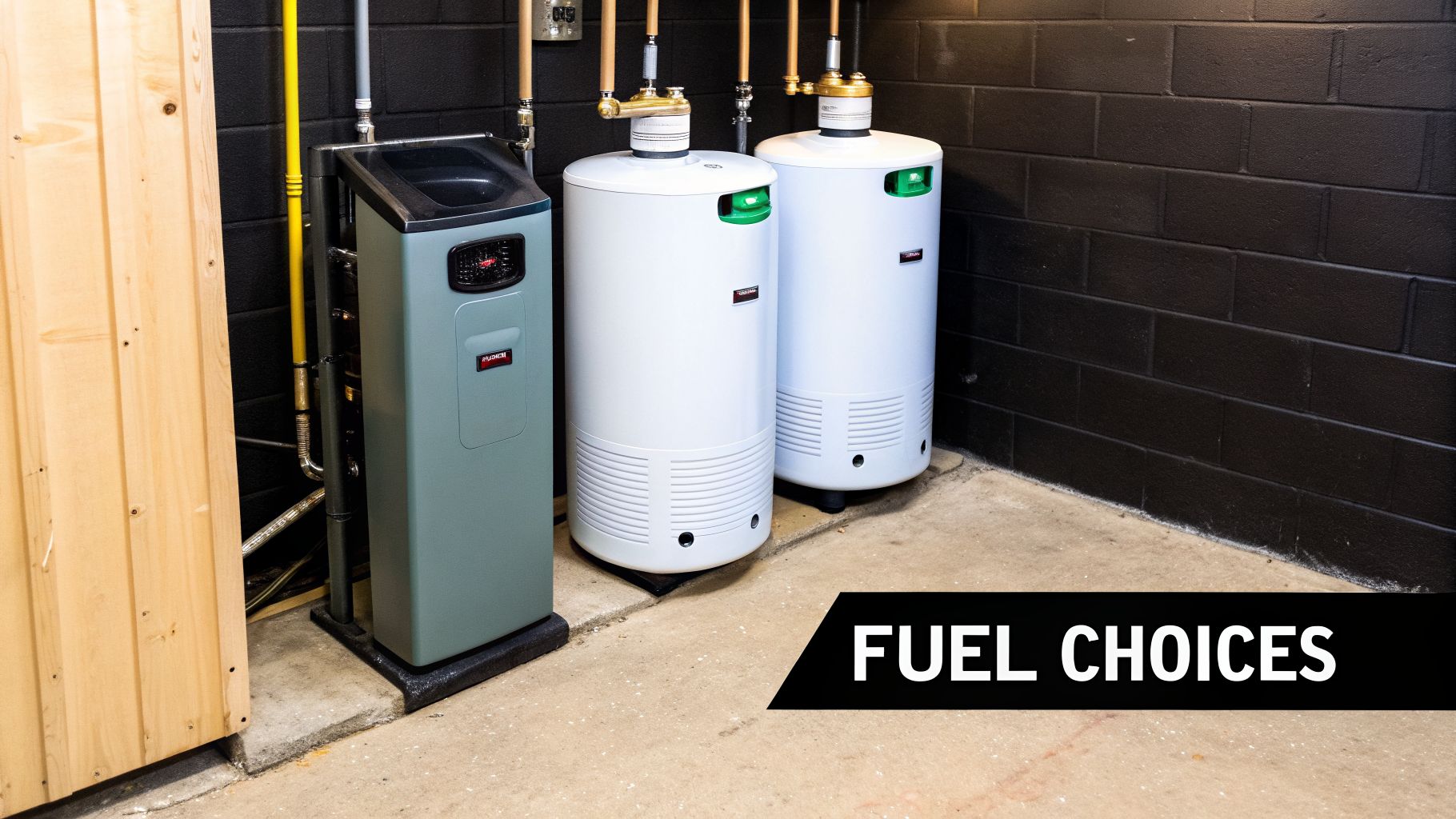
Once you’ve got a handle on your home's heating needs, it's time to look at the engine that'll be doing the heavy lifting—the furnace itself. The fuel source is the single biggest factor here. It impacts everything from your upfront installation cost to what you'll be paying on your utility bills every winter, especially from November through April.
For most of us here in West Michigan, including Hudsonville, Jenison, Grandville, Walker, Standale, Allendale, & Wyoming Michigan, the choice is pretty straightforward.
Natural Gas: The Go-To Choice
In communities like Hudsonville, Jenison, and Grandville, natural gas is the undisputed champion. It’s piped directly to your home, so it’s incredibly convenient and always on. More importantly, it's usually the most affordable way to heat your home, delivering serious warmth that can easily handle our coldest days without breaking the bank.
A natural gas furnace is a proven workhorse. It pulls air from your home, superheats it over a component called a heat exchanger, and then pushes that warm air through your ductwork. It's a reliable process that’s been perfected over decades.
If your home already has a natural gas line, picking a gas furnace is almost always the most logical and economical move. They strike the perfect balance between powerful performance and reasonable operating costs, which is why they’re the standard in most neighborhoods.
Of course, this all hinges on having access to a municipal gas line. Most suburban homes in areas like Walker, Standale, and Wyoming are already hooked up, which makes the decision a lot simpler. If you're out in a more rural spot like Allendale or on a property without a gas hookup, you'll need to explore the alternatives.
Exploring Other Fuel Options
When natural gas isn't on the table, you still have some excellent, powerful options. Each just comes with its own set of considerations for fuel storage, cost, and installation.
Propane Furnaces: These work a lot like natural gas models, but the fuel is liquid propane stored in a big tank on your property. Propane can be more expensive than natural gas, but it delivers the same robust heating performance. It's a fantastic choice for rural homes that need serious BTUs.
Oil Furnaces: Like propane, oil is stored in a tank and provides potent heat. Oil furnaces have a reputation for being built like tanks themselves—exceptionally durable. The downside is that fuel costs can fluctuate and are often higher than natural gas.
Electric Furnaces: This option is the odd one out because there’s no combustion or fuel storage. Electric furnaces are often the cheapest to buy and install. The trade-off is a big one, though: electricity is typically the most expensive way to generate heat, which can lead to some eye-watering utility bills during a West Michigan winter.
For a homeowner focused purely on the lowest upfront cost, an electric furnace can look very tempting. But you have to run the numbers for the long term. That initial savings can get wiped out fast by higher energy bills over the furnace's lifespan.
While furnaces are the primary heat source for most homes, it's worth knowing that other systems can play a role, too. Heat pumps, for example, are becoming more common as a supplemental or even primary source in some situations. You can learn more about this technology and find out what a heat pump is in our detailed guide.
Understanding Furnace Efficiency and Modern Tech
Modern furnaces are a world away from the clunky, energy-guzzling units you might have grown up with. But let's be honest, the terminology can feel like reading a different language. To pick the right furnace, you have to translate terms like "AFUE," "two-stage," and "modulating" into what they actually mean for your home's comfort and your bank account.
Think of AFUE (Annual Fuel Utilization Efficiency) like a car's miles-per-gallon rating. It’s a simple percentage that tells you how much of the fuel you pay for actually turns into heat. An old furnace might have an AFUE of 60%. That means 40 cents of every dollar you spend on heating is literally going up the chimney.
Jumping to a new high-efficiency model with a 95% AFUE rating means only 5 cents of every dollar is lost. That difference adds up to some serious savings during a long West Michigan winter. Making a smart upgrade here is one of the best moves you can make to lower energy use. If you're hunting for more ways to save, our guide on how to reduce heating costs has some great tips.
Beyond Simple On-and-Off Heating
The real game-changer in today's furnaces isn't just efficiency—it's how they deliver heat. Your old furnace was likely an "all or nothing" system, blasting heat at full power until the job was done. Modern systems are far more intelligent, offering a level of quiet comfort that just wasn't possible before.
Getting a handle on these different operating "stages" is the key to finally getting rid of those annoying cold spots and achieving a perfect, even temperature throughout your home.
Single-Stage Furnaces: This is the classic, no-frills option. It has one setting: 100% capacity. When your thermostat calls for heat, the furnace fires up at full blast, runs until it hits the target temp, and then shuts off completely. This can create noticeable temperature swings and is the least efficient design.
Two-Stage Furnaces: This is a huge leap forward. A two-stage furnace has a low setting (usually around 60-70% of full power) and a high setting. On milder days, it will run on its quiet, energy-saving low stage most of the time. It only kicks into high gear on the truly frigid days we see in Hudsonville or Jenison.
Modulating Furnaces: This is the top-of-the-line heating technology. Instead of just one or two settings, a modulating furnace makes tiny, precise tweaks to its heat output, often in increments as small as 1%. It runs almost constantly at the lowest possible level needed to maintain your set temperature, delivering unmatched comfort and efficiency.
The market has definitely noticed the benefits of these smarter systems. Homeowners are increasingly choosing two-stage and modulating furnaces for their superior performance. In fact, current data shows two-stage furnaces now hold 38% of the residential market share because they offer a fantastic blend of efficiency, quiet operation, and consistent heat. It’s a clear trend: people are prioritizing long-term comfort and savings. You can see more data on the global residential furnace market growth for yourself.
Expert Insight: For most homeowners here in West Michigan, a two-stage furnace hits the sweet spot. It dramatically improves comfort and cuts down on energy use compared to a single-stage unit, all without the premium price tag of a fully modulating system.
Furnace Technology Comparison
So, how do you choose? It really comes down to your budget and what you value most in-home comfort. The right technology can completely change how your house feels during our long northern winter heating season, which often stretches from November through April.
Here’s a simple table to help you compare your options, whether you're in Standale, Allendale, or Wyoming.
| Furnace Type | Operation | Energy Efficiency | Upfront Cost | Best For |
|---|---|---|---|---|
| Single-Stage | Runs at 100% capacity or is off. | Standard | $ | Budget-conscious homeowners who need a basic, reliable replacement. |
| Two-Stage | Runs at a low (~65%) or high (100%) setting. | High | $$ | Homeowners seeking a balance of improved comfort, quiet operation, and energy savings. |
| Modulating | Adjusts heat output in small increments. | Highest | $$$ | Homeowners who want the most precise temperature control, quietest operation, and maximum energy savings. |
Each type has its place, but understanding these differences ensures you get a system that not only heats your home but makes it a more comfortable place to live.
Why Correct Furnace Sizing Is Non-Negotiable
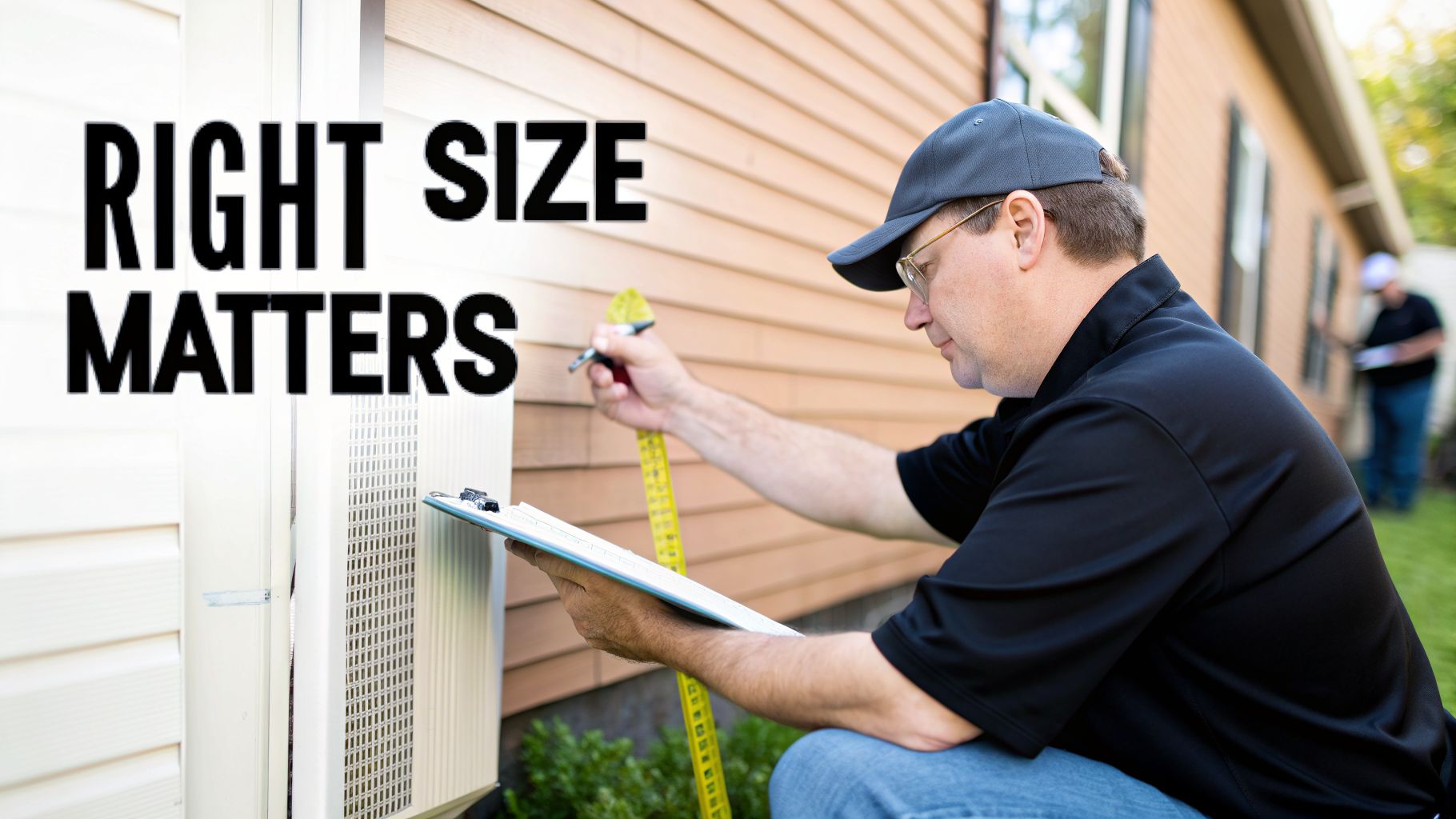
When you're figuring out how to choose a furnace, it's tempting to get caught up in high-efficiency ratings and all the latest bells and whistles. But here’s the thing: none of that matters if the furnace is the wrong size for your home.
Getting the size right isn't just a suggestion; it’s the absolute foundation of an effective heating system, especially when you're facing those long West Michigan winters from November through April.
You might think an oversized furnace is a good thing—more power is better, right? Not in this case. In reality, a unit that's too big is a recipe for trouble. It will blast your home with heat far too quickly, hit the thermostat's set point, and immediately shut off. This constant on-off routine is known as short cycling.
This pattern doesn't just waste a ton of energy; it also puts a huge amount of stress on the furnace’s most important parts. The result? You get uneven temperatures where some rooms are stuffy and others are still cold, and you could be looking at a much shorter lifespan for your brand-new system.
The Problem with an Undersized Furnace
Going too small is just as bad. A furnace that's not powerful enough for your home might seem to be doing okay on a milder day. But when the temperature really drops in places like Walker, Standale, or Allendale, that little furnace will run and run, struggling to keep up.
Even running nonstop, it might never actually get your home to a comfortable temperature, leaving you chilly and frustrated. All that continuous operation puts an incredible strain on the system, which often leads to premature breakdowns and shockingly high utility bills. You end up paying more for less comfort.
A correctly sized furnace is the key to both efficiency and comfort. It ensures the system runs for longer, more consistent cycles, which uses less energy, provides more even heat, and extends the life of the equipment.
Why You Can’t Just Match Your Old Unit’s Size
One of a very common mistakes we see homeowners in Hudsonville and Jenison make is replacing an old furnace with a new one of the exact same size. It sounds logical, but it completely overlooks all the changes your home has likely gone through over the last 15-20 years.
Think about it. Your home isn't the same place it was when that old furnace was installed. You may have:
- Upgraded to more energy-efficient windows.
- Added insulation in the attic or walls.
- Sealed up air leaks around doors and light fixtures.
All those improvements mean your home holds onto heat much better than it used to. Because of this, you probably need a smaller, more efficient furnace now. Just grabbing the same size as your old one will lead straight to the short-cycling problems we just talked about.
The Professional Solution: A Manual J Load Calculation
The only way to guarantee you get the right size is with a professional load calculation. In the HVAC world, we call this a Manual J calculation. This isn't just a ballpark guess based on your home's square footage. It's a detailed, in-depth analysis performed by a certified technician.
This comprehensive audit looks at everything:
- Total square footage and ceiling height.
- The quality and R-value of your insulation.
- The number, size, and type of windows you have.
- Your home's orientation to the sun.
- Air leakage rates in your home's "envelope."
- Local climate data for areas like Grandville and Wyoming, Michigan.
This data-driven approach tells us the exact amount of heating power (measured in BTUs) your home needs to stay warm and comfortable, even on the coldest day of the year. It’s the only way to be sure your investment in a new furnace will perform the way it's supposed to for the next 15 to 20 years.
Finding a Trusted Installer in West Michigan
You can pick the most advanced, highest-efficiency furnace money can buy, but it's all for nothing if the installation is botched. Honestly, the quality of the installation is even more crucial than the brand name on the unit itself. A poor setup can lead to lower efficiency, constant breakdowns, and even serious safety hazards.
This really makes finding a reliable HVAC contractor the most important part of the entire process. For those of us here in West Michigan, including Hudsonville, Jenison, Grandville, Walker, Standale, Allendale, & Wyoming Michigan, choosing a local, reputable company is key. You need a team that understands how to set up a system to handle our long, demanding northern winters, which can easily stretch from November through April.
Vetting Your Local HVAC Contractor
Not all technicians are created equal, and that’s a fact. When you let a contractor into your home, you have to be confident in their skills and professionalism. A qualified installer will be upfront about their credentials and won't hesitate to answer your questions.
Here’s a quick checklist of what you should absolutely demand:
- Proper Licensing and Insurance: Make sure the contractor is fully licensed to work in Michigan and carries comprehensive liability insurance. This is your safety net against any accidents or property damage during the job.
- EPA Certification: Any technician handling refrigerants—which are in air conditioners and heat pumps—is required by law to have EPA certification. It’s proof they’re trained to handle these substances safely.
- Positive Local Reviews: Jump online and see what your neighbors in places like Grandville, Walker, and Standale are saying. Look for consistent feedback about their professionalism, punctuality, and the quality of their work.
Deciphering the Installation Quote
A professional quote is much more than just a number scribbled on paper. It should be a detailed, itemized document that gives you a crystal-clear picture of what you’re paying for. Transparency here prevents surprise charges and headaches later on.
Your quote should clearly break down the costs for:
- The specific furnace model (brand, size, and AFUE rating)
- All required labor for the installation
- Any necessary permits from your local city (like Wyoming or Allendale)
- The safe removal and disposal of your old furnace
- Any required ductwork modifications or upgrades
- All materials, including piping, wiring, and venting
A trustworthy contractor will take the time to walk you through the quote, explaining each line item. If a company hands you a vague, one-line price or pressures you to sign on the spot, treat that as a major red flag.
The Value of Post-Installation Support
The relationship with your installer shouldn't end the moment your new furnace kicks on. Great companies stand by their work with solid support to protect your investment for years. Look for a contractor who offers both a workmanship warranty (covering the installation itself) and a preventative maintenance plan.
The furnace market is growing, and a big part of that is driven by people replacing old units and needing reliable heat for our increasingly extreme weather. For us in West Michigan, this just underscores how important it is to pick a dependable system and a contractor who will be there to support it. You can read more about the furnace market's growth and trends on gminsights.com.
Ultimately, a good maintenance plan is the single best way to make sure your furnace runs at peak efficiency for its entire lifespan, keeping your family safe and warm through every Michigan winter.
Common Furnace Questions Answered
Even after you've done all the research, there are always a few lingering questions that pop up right before you're ready to make a decision. To help you feel completely confident as you figure out how to choose a furnace, we’ve put together the most common questions we hear from our neighbors across West Michigan, including Hudsonville, Jenison, Grandville, Walker, Standale, Allendale, & Wyoming Michigan. Here are some clear, straightforward answers to guide you through these final steps.
How Much Does a New Furnace Cost in West Michigan?
For most homeowners in communities like Grandville and Wyoming, the typical investment for a new furnace installation lands somewhere between $3,500 and $7,500. Of course, some high-end, feature-rich systems can cost more. That's a pretty wide range, and it's because the final price tag is built from a few key components.
The biggest cost drivers are the furnace's efficiency rating (AFUE), its technology (like a basic single-stage vs. an advanced modulating unit), and its size (BTU output). A straightforward swap-out with a standard-efficiency model will naturally be on the lower end of that scale.
But the complexity of the installation itself is a huge variable. For example, if you're upgrading to a high-efficiency furnace, we often have to run new PVC venting through your home, which adds to the labor. If your existing ductwork needs to be tweaked or modified to fit the new system, that will also influence the final price.
A transparent, detailed quote is non-negotiable. It should break down every cost—the equipment, labor, any necessary permits, and even the safe disposal of your old unit. We make it a point to provide that clarity and are always ready to walk you through financing options to make this essential home upgrade more manageable.
How Long Should a Furnace Last Around Here?
In our neck of the woods, a professionally installed and well-maintained furnace should keep your home warm and cozy for a solid 15 to 20 years. The two things that have the biggest impact on its lifespan are the quality of the initial installation and your commitment to regular, professional maintenance.
Annual tune-ups are the single best thing you can do to get the most life out of your furnace. This yearly service ensures all the components are clean, properly calibrated, and running as efficiently as possible. It’s also the perfect chance for a technician to spot small, developing issues before they snowball into a major—and expensive—mid-winter breakdown.
Because our furnaces in West Michigan work overtime during the long northern winter heating season from November through April, this annual check-up isn't just a good idea; it's a must-have for longevity and peak performance. If your current furnace is creeping past that 15-year mark and you're starting to see it more often, replacing it is usually the smartest financial move in the long run.
Pro Tip: Don't wait for it to quit on you. If you know your furnace is getting up there in age, planning for a replacement during the cooling season can save you the stress and premium cost of an emergency installation on a frigid January day.
What Are the Signs I Need a New Furnace?
Your furnace will almost always give you hints that it’s nearing the end of its road. Learning to recognize these clues can help you plan for a replacement instead of being forced into one during a cold snap.
Here are the most common red flags to watch for:
- Its Age: This is the most obvious one. If your furnace is over 15 years old, it's living on borrowed time. It's time to start budgeting and looking at your options.
- Rising Energy Bills: A sudden, sustained spike in your heating costs without a change in your habits is a classic sign of declining efficiency. Your furnace is having to work harder and burn more fuel just to keep up.
- Frequent and Costly Repairs: Are you on a first-name basis with your HVAC tech? If you're pouring hundreds of dollars into repairs every year, that money is much better spent on a new, reliable system.
- Strange Noises: Furnaces make noise, but you should pay close attention to anything new or unusual. Loud banging, rattling, screeching, or popping sounds often point to serious mechanical trouble.
- Uneven Heating: If you've got rooms that are always too hot while others feel like an icebox, it’s a strong signal that your aging furnace can no longer push air effectively throughout your home.
Ready to get a reliable, high-efficiency furnace that's perfectly suited for your West Michigan home? The certified experts at Platinum Heating & Cooling are here to help. We provide transparent quotes, professional installation, and ongoing support to keep your family warm and comfortable for years to come. We proudly serve West Michigan, including Hudsonville, Jenison, Grandville, Walker, Standale, Allendale, & Wyoming Michigan.
Schedule your free in-home estimate today by visiting us at https://platinumheatingmi.com.