
You wake up on a January morning in Grand Rapids, hear the furnace click, and get nothing but cold air. The house is getting colder by the minute, the kids are already asking why the vents feel dead, and now you're looking at an emergency call that could've been avoided with routine care. That's exactly why an hvac maintenance plan Grand Rapids homeowners can trust matters, especially in a market where winter runs long and cooling season still arrives fast.
A good plan isn't about selling you more service. It's about keeping the equipment you already own running the way it should, before West Michigan weather exposes every weak spot. In this climate, scheduled maintenance is the practical choice, not the optional one.
Table of Contents
- Why Grand Rapids Homeowners Need Proactive HVAC Care
- What Professional HVAC Maintenance Includes
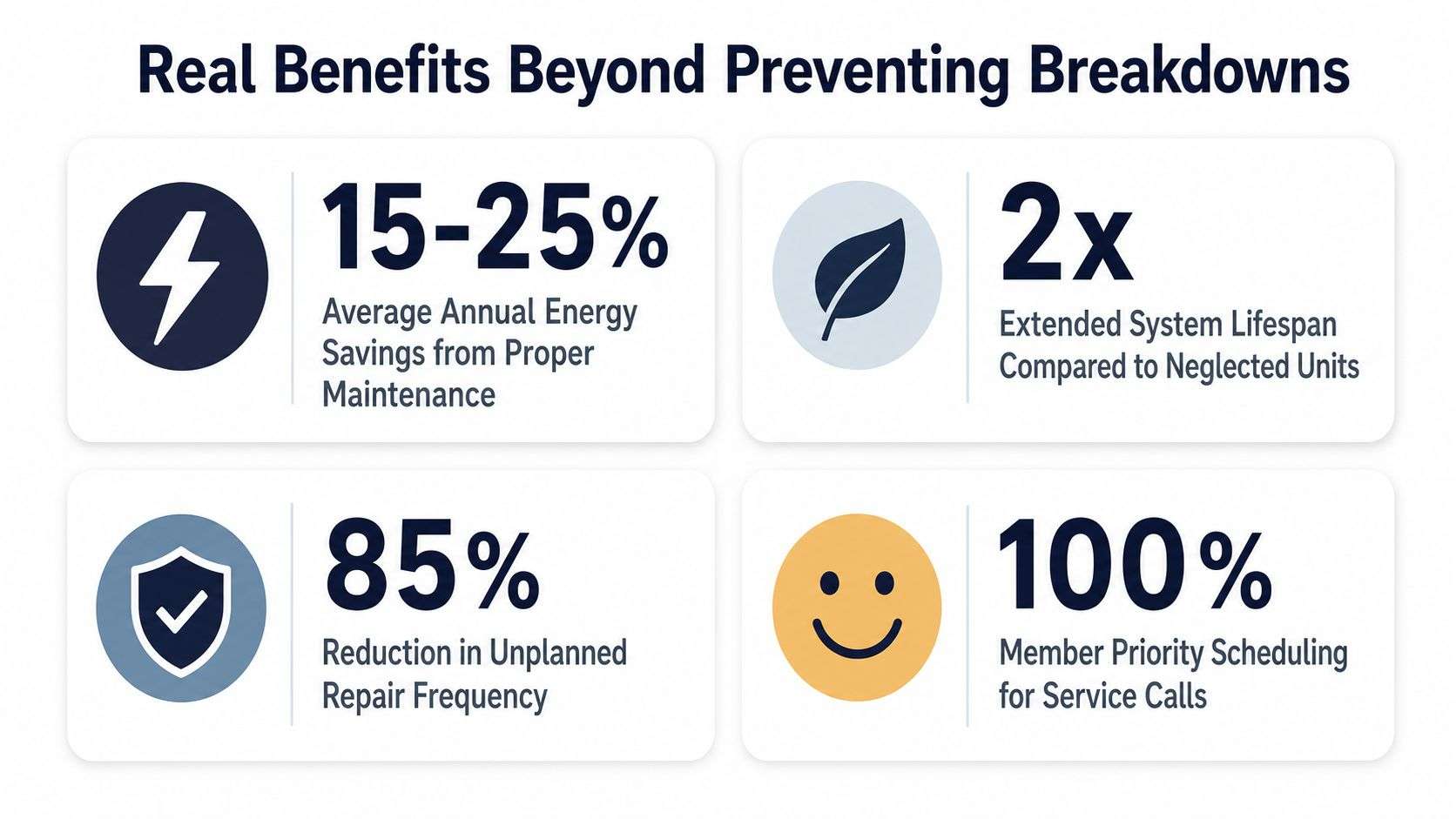
- Real Benefits Beyond Preventing Breakdowns
- Understanding HVAC Maintenance Plan Pricing
- Platinum Heating and Cooling Maintenance Membership Details
- Seasonal Maintenance Checklist for West Michigan Homes
- Common Questions About HVAC Maintenance Plans
Why Grand Rapids Homeowners Need Proactive HVAC Care
A furnace that quits in January turns a normal day into a scramble. In West Michigan, the heating season is long, the cooling season can hit hard, and both put different stress on the same equipment. That is why local maintenance guidance points to two seasonal service visits per year, one in the fall for heating and one in the spring for cooling, with some commercial systems needing more frequent attention. Michigan HVAC maintenance guidance
Reactive service is expensive in the ways homeowners feel most
Reactive repairs usually show up at the worst possible time, after a part has already failed and you are paying for urgency instead of prevention. A clogged filter, loose connection, dirty coil, or drifting refrigerant charge does not always stop the system right away. It often starts with weaker airflow, longer run times, or uneven comfort, then turns into a breakdown once the weather gets extreme.
Practical rule: if you only call for service when the system fails, you are already behind.
Grand Rapids homes also deal with humidity swings that affect comfort in every season. Warm months can bring sticky indoor air, while cold months can expose drafty spots, frozen lines, or heat loss around the building shell. A maintenance plan gives a technician a chance to catch those problems before they become the reason a room feels stuffy, dry, or cold.
That is also why a real plan should look at more than mechanical wear. It should account for airflow, filtration, and moisture control, since those pieces shape both comfort and indoor air quality. For a broader look at what a technician should review during a visit, see this HVAC system inspection checklist.
The other reason proactive care matters is simple wear. Every heating and cooling system builds stress while it runs, and West Michigan's seasonal swings ask a lot of that equipment. If you want cleaner operation, fewer surprise calls, and steadier comfort, waiting for failure is the wrong strategy.
For homeowners who also care about better filtration choices, the same logic applies to the rest of the house. A helpful starting point is this guide on filter selection tips, because airflow, filtration, and maintenance all affect how hard your HVAC system has to work.
What Professional HVAC Maintenance Includes
A real maintenance visit should be specific, not vague. If a plan only promises a “checkup,” that is not enough. The work should change based on the season, the equipment, and the condition of the system, because heating and cooling fail in different ways.
A proper visit covers the parts that affect performance and safety. That includes tightening electrical connections, lubricating moving parts, checking the condensate drain, cleaning coils, checking refrigerant level, cleaning and adjusting blower components, and inspecting gas or oil connections, burner combustion, and the heat exchanger, as laid out in the ENERGY STAR maintenance checklist. Dirty filters should be inspected, cleaned, or changed once a month, and airflow problems can reduce efficiency by up to 15%.
Spring service focuses on cooling performance
Before cooling season, a technician should clean the evaporator and condenser coils, check refrigerant level, and verify that airflow across the system is healthy. A dirty coil or poor airflow forces the AC to work harder for the same result. If the drain is partially blocked, moisture can back up where it should not, which is a common source of preventable trouble once summer humidity arrives in Grand Rapids homes.
Fall service focuses on heating safety and reliability
Before heating season, the priorities shift. The technician should inspect the heat exchanger, burner combustion, ignition components, and safety controls. Those checks matter because furnace problems often show up as incomplete combustion, ignition failure, or cracked components that should never be left to guesswork. For a Michigan winter, that is basic risk control.
A homeowner can replace a filter. A professional tune-up goes deeper, checking the parts that decide whether the system is safe, efficient, and ready for the season.
For a plain-English example of how those steps should be documented, the HVAC system inspection checklist is a useful reference point. DIY care handles the basics, but a maintenance visit is about confirming the system is ready to run under load.
Real Benefits Beyond Preventing Breakdowns
A maintenance plan pays off long before a system quits. It keeps equipment cleaner, steadier, and easier to live with. In Grand Rapids, that matters because homeowners are not only dealing with wear on the equipment. They are also dealing with indoor air quality, humidity control, and the comfort swings that come with long heating seasons and short, intense cooling periods.
Comfort and air quality improve together
A well-maintained system moves air the way it should. That helps cut down on dust, stale air, and the uneven room-to-room comfort that makes people keep changing the thermostat. It also means filters, drains, blower parts, and coils are more likely to get attention before they start affecting how the home feels.
A maintenance visit should support the whole house, not just the mechanical box in the basement. That is the practical value homeowners feel day to day.
For a closer look at the comfort side, review the benefits of HVAC maintenance. In plain terms, maintenance helps the system do its job without making the house feel dry, muggy, dusty, or uneven from room to room.
The financial case is straightforward
Budgeting is simpler when you look at maintenance as a planned cost instead of a surprise expense. Typical residential maintenance plans are generally in the $120 to $400 per year range, and a Michigan-specific guide places many annual plans at $150 to $400 per year, depending on coverage and extras like priority scheduling or parts protection.
That is the right way to judge it. You are comparing a known yearly expense against emergency repair, lost comfort, and the cost of replacing equipment earlier than you should. Documentation matters too, especially on warranty-sensitive systems, because a clear service history makes planning easier and keeps records organized. A maintenance plan gives you that paper trail, not just a tune-up.
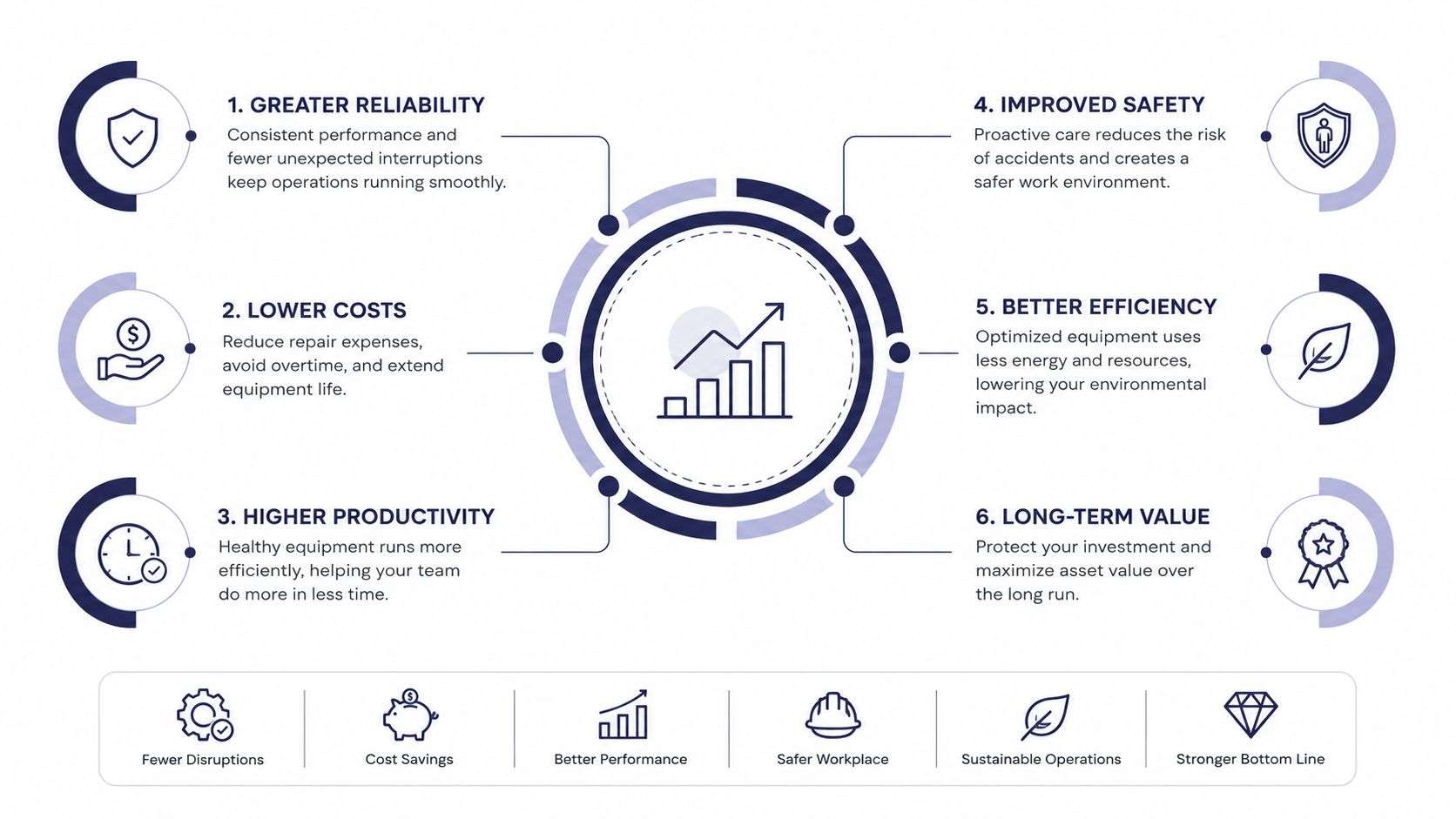
Bottom line: a maintenance plan should make your home more comfortable first, then save you money second. If it only promises breakdown prevention, it is underselling what maintenance actually delivers.
Understanding HVAC Maintenance Plan Pricing
A maintenance plan looks expensive only until you compare it with the cost of skipped service, uneven comfort, and shortened equipment life. In Grand Rapids, the key question is whether the plan fits the property, the equipment, and the season. Homes here need more than a basic tune-up because winter cold, summer humidity, and indoor air quality all push the system in different ways.
Residential and commercial plans are priced differently
Homeowner plans usually sit in the $120 to $400 range each year, with a Michigan-focused guide also placing many annual plans at $150 to $400 depending on coverage. Commercial maintenance pricing context Commercial and multi-unit properties use a different model. A separate industry calculator estimates maintenance at about $0.12 to $0.65 per square foot annually, with another rule of thumb putting annual maintenance budgets at 2% to 5% of replacement cost for each HVAC asset. The same source also cites an average of $50 to $120 per cooling ton annually for larger systems.
| Plan Type | Annual Cost Range | Service Frequency | Best For |
|---|---|---|---|
| Residential maintenance plan | $120 to $400 | Two seasonal visits | Homeowners who want predictable care |
| Michigan annual plan guide | $150 to $400 | Usually spring and fall | Homes needing broader coverage options |
| Commercial square-foot model | $0.12 to $0.65 per sq. ft. | At least twice yearly, sometimes quarterly | Multi-unit and larger properties |
| Cooling-ton benchmark | $50 to $120 per ton | Based on system size | Larger HVAC systems and rooftops |
The difference comes down to what the service has to cover. A home with one furnace and one air conditioner is a smaller job than a property with multiple rooftop units, zoned equipment, or several tenants relying on the same system. Grand Rapids homeowners also need a plan that accounts for humidity control, filter changes, and seasonal performance, not just a quick inspection.
What should change the quote
Coverage drives price. If a plan includes priority scheduling, parts protection, or emergency-visit discounts, it should cost more than a bare-bones tune-up. The same goes for equipment count. One house with a single furnace and AC is a different workload than a building with multiple systems or complicated ductwork.
Ask for the exact visit scope, the renewal language, and the covered equipment list before you compare numbers. A cheap plan that leaves out the equipment you depend on is not a bargain. For homeowners who want a clear example of how a structured program is set up, the Maintenance Membership program is a useful reference point.
Platinum Heating and Cooling Maintenance Membership Details
A maintenance plan should match the property, the schedule, and the owner's tolerance for surprise. Platinum Heating & Cooling's Maintenance Membership is built around that reality, with scheduled care for heating and cooling equipment, plus member-focused service features that matter when the weather turns rough. If you're evaluating an hvac maintenance plan Grand Rapids homeowners can use, the key question is whether the plan fits your house and your season, not whether the brochure sounds polished.
What the membership is meant to cover
The membership is a fit for homes and businesses that need recurring attention on furnaces, air conditioners, heat pumps, rooftop units, apartment systems, and related equipment. Platinum Heating & Cooling serves West Michigan, including Hudsonville, Jenison, Grandville, Walker, Standale, Allendale, Wyoming, and the greater Grand Rapids area, so the service area isn't limited to a single neighborhood or a single type of property. The company also uses EPA-certified, insured technicians, which matters when you want work done correctly and documented cleanly.
For the program details, see the Maintenance Membership program.
Why a membership works better than one-off calls
Memberships make the most sense when you want the same system checked on a schedule instead of waiting until symptoms show up. That's especially true for property managers and owners with multiple units, where missed maintenance turns into tenant complaints fast. It also helps when the system needs seasonal follow-through, because the plan can keep service from slipping past the ideal window.
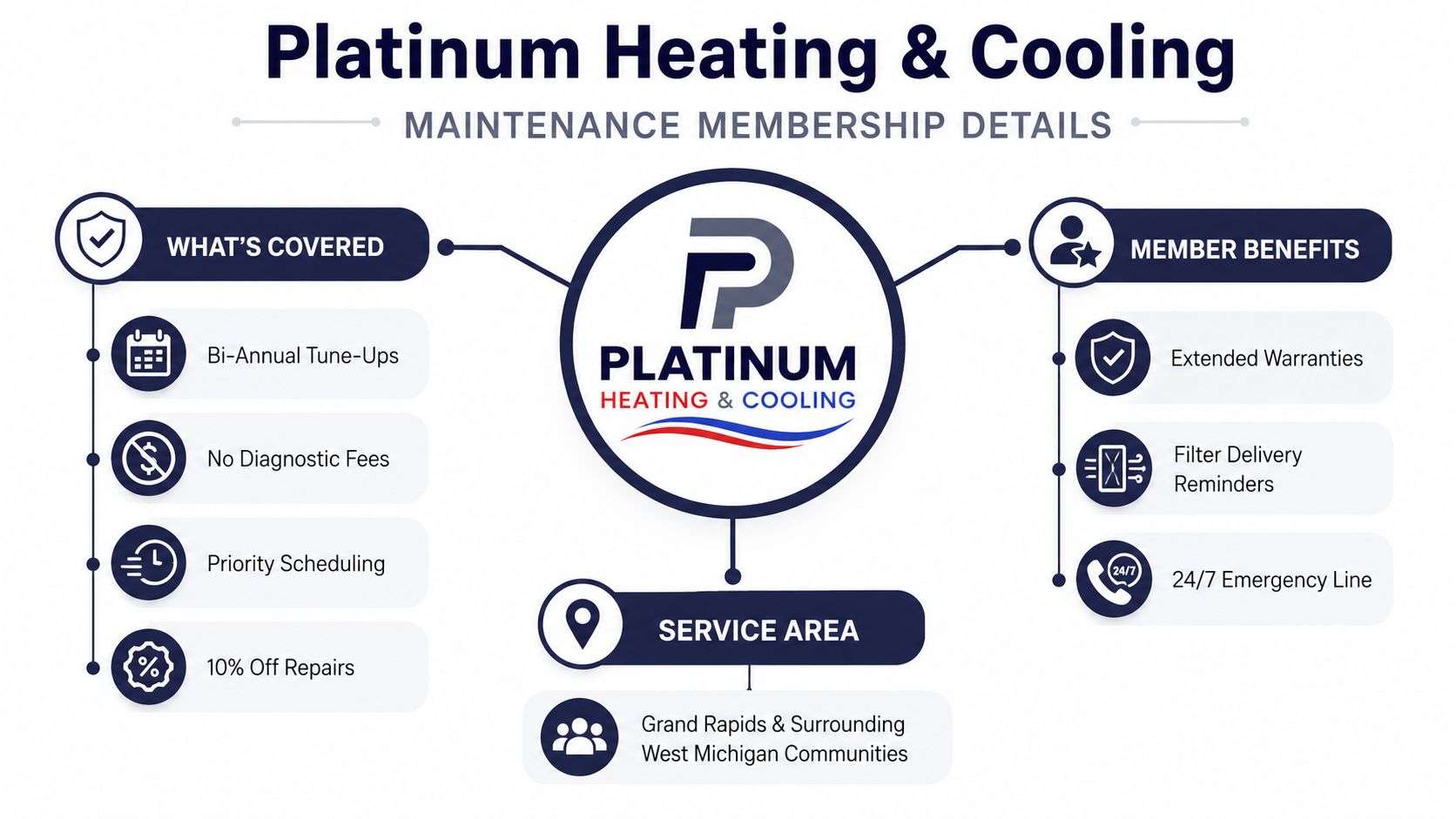
Good memberships remove friction. You get a clearer schedule, fewer missed tune-ups, and less guessing about whether the system is ready for the next season.
Platinum also handles repair, replacement, and maintenance work across residential and commercial systems, which makes the membership easier to keep under one roof if your property needs more than a basic home tune-up. That's the advantage of a local contractor with a wide service footprint. One company can maintain the system, track the history, and respond when something changes.
Seasonal Maintenance Checklist for West Michigan Homes
West Michigan weather punishes HVAC equipment from both ends. Build the plan around the calendar, with fall heating prep before cold weather settles in and cooling service in spring before summer loads begin. Waiting until the system is already stressed means you are paying for catch-up work.
Use the year as your maintenance map
Winter, November through April: keep the furnace running cleanly, watch for short cycling, and check that airflow has not dropped off. This is also the season for heat exchanger inspection, ignition checks, safety controls, freeze protection, ventilation, and envelope leaks before small problems turn into bigger ones. For colder-month planning, Grand Rapids commercial guidance says preparation should begin in early fall so the system is ready before winter demand hits. Early fall heating prep guidance
Spring: schedule the cooling tune-up, clear debris around the outdoor unit, and make sure drainage paths are open. Get ahead of the first hot stretch. Small issues are easier to correct before the system starts working hard every day.
Summer: watch for airflow problems, replace filters on time, and pay attention to comfort changes that show the system is straining. Clean filters and steady airflow support better operation, and dirty filters need regular attention. ENERGY STAR maintenance checklist
Fall: service the furnace before the first cold snap, then seal obvious drafts and check that the house is ready for heating season. That is when a maintenance plan starts paying off in fewer surprises and less emergency scrambling.
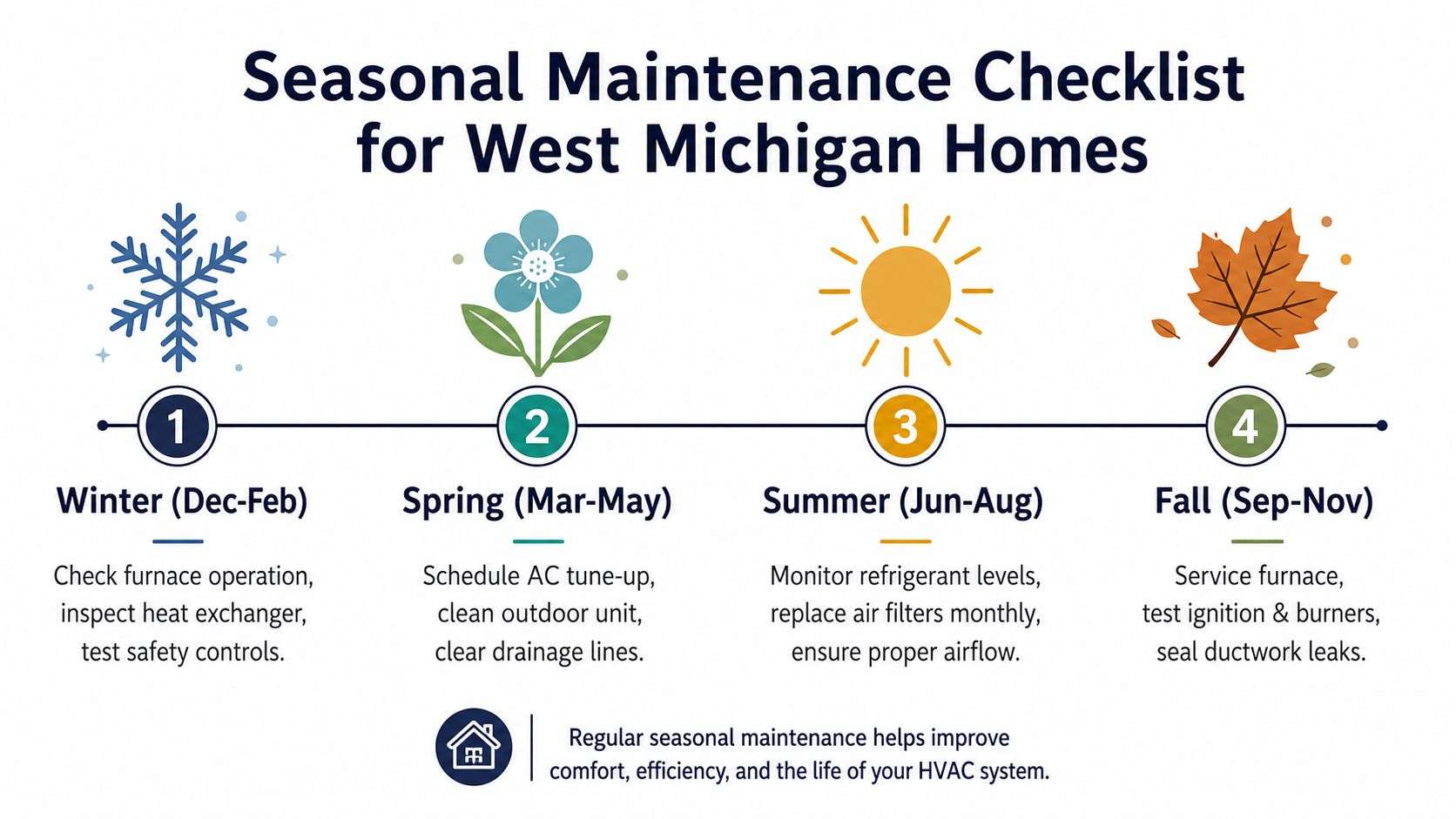
Best habit: pair the professional tune-up with one monthly homeowner check, especially the filter and a quick look at airflow at the registers.
If you manage humidity-sensitive spaces, keep that tied to maintenance. Moisture control, comfort stability, and clean airflow all depend on the same system staying in shape through the season, and the same mindset applies to why add window cleaning to your plan.
Common Questions About HVAC Maintenance Plans
Homeowners usually want the same few answers before they commit. First, yes, a maintenance plan should have clear terms. You want to know the service window, what's included, how cancellations work, and whether the plan renews automatically. If those details aren't written down, keep looking.
Second, older systems can still benefit from maintenance, but they need honest evaluation. If the equipment is nearing the end of its life, the plan should still help you stretch reliability, but it shouldn't hide the fact that replacement may be closer than repair. Third, maintenance history helps with manufacturer expectations and general record-keeping, so skipping a year doesn't usually help your long-term position.
A useful add-on for any home maintenance mindset is a broader view of the property. For example, if you're already reviewing exterior upkeep, this guide on why add window cleaning to your plan shows how routine home care can support comfort and upkeep in ways people overlook. HVAC is the same way. The more consistently you maintain the house, the fewer things pile up at once.
If you want the simple answer, here it is. Buy the plan if you want predictable service, cleaner operation, and better seasonal readiness. Skip it only if you're fine gambling on emergency timing.
If you want a maintenance plan that fits West Michigan weather, keeps the paperwork clean, and treats your system like it matters, talk to Platinum Heating & Cooling. They handle scheduled HVAC maintenance, emergency service, and year-round system care across Grand Rapids and the surrounding area, so you can stop waiting for the next breakdown and start planning ahead.