
Improving your AC efficiency is really about making your system work smarter, not harder. It's a mix of simple upkeep, smart thermostat use, and making sure air can move freely. These quick wins can seriously lower your energy bills during a hot West Michigan summer without making you sweat.
Your Quick Wins for a More Efficient AC This Summer
When the summer heat hits West Michigan, from Hudsonville to Allendale, your air conditioner works overtime. That constant running can lead to some surprisingly high energy bills. The good news? You don’t need to be an HVAC pro to make a real difference. Learning how to improve AC efficiency often starts with a few easy, low-cost tweaks any homeowner can handle.
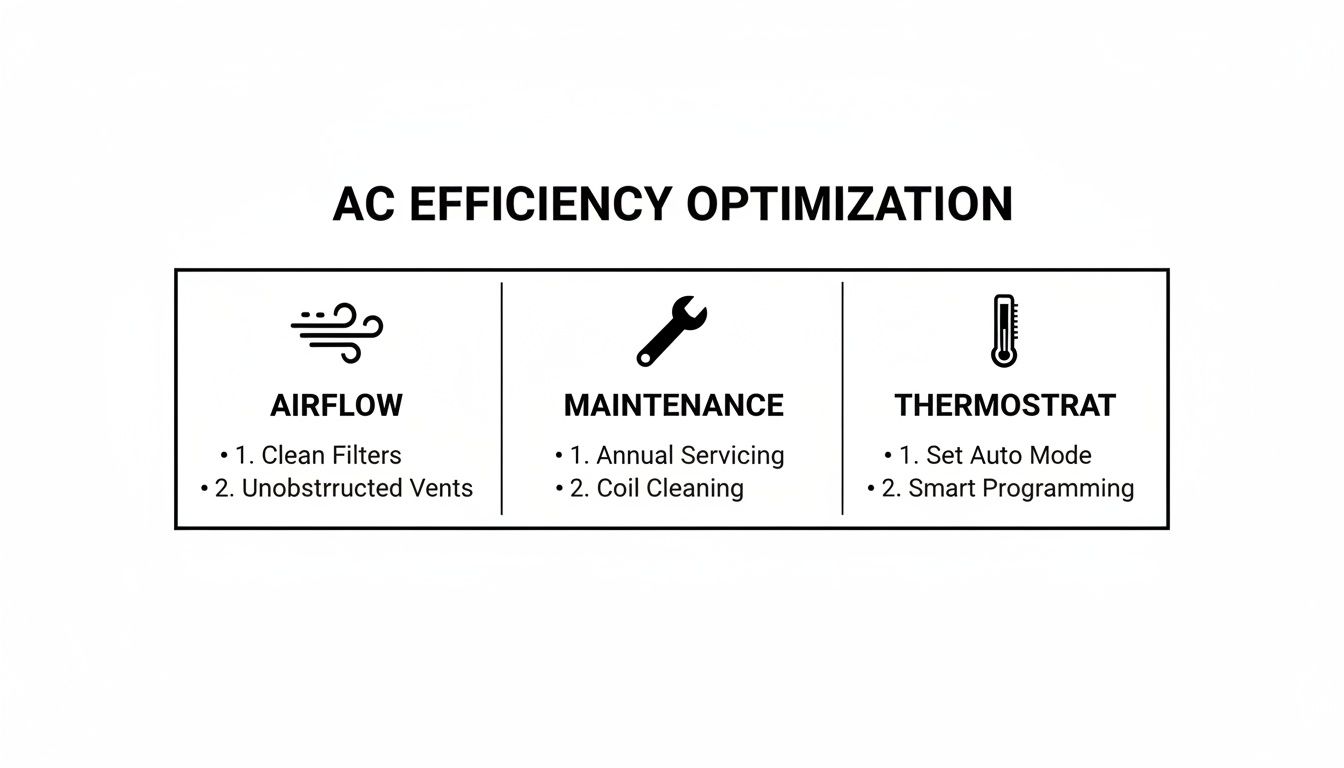
Think of it this way: an efficient air conditioner relies on three things. It needs clear airflow, regular care, and smart temperature control. When your system can “breathe” easily and isn’t fighting a clogged filter or leaky duct, it uses way less energy. A well-maintained system is just like a well-tuned car—it performs better and lasts longer.
The Three Pillars of AC Efficiency
Before you start pulling things apart, it helps to understand the big picture. Getting these three areas right is your roadmap to a better-performing AC and lower cooling costs this season.
Unrestricted Airflow: Your AC isn't magic; it works by pulling heat from your indoor air and pushing it outside. Anything that gets in the way of that process—a dirty filter, a couch blocking a vent, or overgrown bushes around your outdoor unit—forces the system to run longer and harder.
Preventative Maintenance: Little problems have a bad habit of turning into big, expensive ones. Simple tasks like hosing down your outdoor unit and checking your condensate drain line can prevent up to a 15% loss in efficiency. That's a huge return for a few minutes of your time.
Smart Thermostat Habits: Your thermostat is the brain of the whole operation. Using it strategically is one of the easiest ways to save. For example, setting it a few degrees higher when you're out of the house can make a noticeable dent in your bill. Every single degree you raise the temperature can save you up to 3% on your cooling costs.
This quick visual breaks down how these three core areas impact your AC's performance and energy use.
Whether you’re in Jenison, Grandville, or anywhere else nearby, mastering these basics is your first step toward lower energy bills. These are the quick wins that deliver immediate value, setting the stage for a more efficient and comfortable home all summer long.
Your AC Efficiency Action Plan at a Glance
To make it even easier, here's a quick summary of actions you can take. We've broken them down by how much effort they take and the kind of savings you can expect.
| Action Item | Effort Level | Potential Savings | Best For |
|---|---|---|---|
| Change Air Filter | Low | 5-15% | Every homeowner; essential monthly task |
| Clean Outdoor Unit | Low | Up to 15% | DIYers comfortable with basic outdoor work |
| Adjust Thermostat | Low | Up to 10% annually | Anyone looking for easy, no-cost savings |
| Clear Vents & Registers | Low | 5-10% | Homes with furniture or clutter near vents |
| Seal Air Leaks | Medium | 10-20% | Homeowners looking for a weekend project |
| Schedule Pro Tune-Up | Low (Hire a Pro) | 15-25% | Ensuring peak performance and longevity |
This table gives you a clear starting point. Pick one or two low-effort items this weekend, and you'll already be on your way to a more efficient cooling system.
Essential DIY Maintenance for Peak AC Performance
When the summer sun is beating down on West Michigan, a surprising amount of your air conditioner's efficiency can be lost to simple neglect. The good news? You don’t have to be an HVAC technician to tackle the most common issues.
Performing a few basic maintenance tasks can dramatically boost your AC's performance by up to 15%. That’s a real saving on your energy bills for just a few minutes of your time each month during the cooling season.
Master the Air Filter Change
If you only do one thing for your air conditioner, make it this. A clogged air filter is the number one cause of poor performance and system strain we see on service calls. It’s like forcing your AC to breathe through a straw.
A dirty filter chokes the airflow, making your system’s fan motor work much harder to pull in air. This wastes energy and can even cause the indoor evaporator coils to freeze over—a much more serious problem.
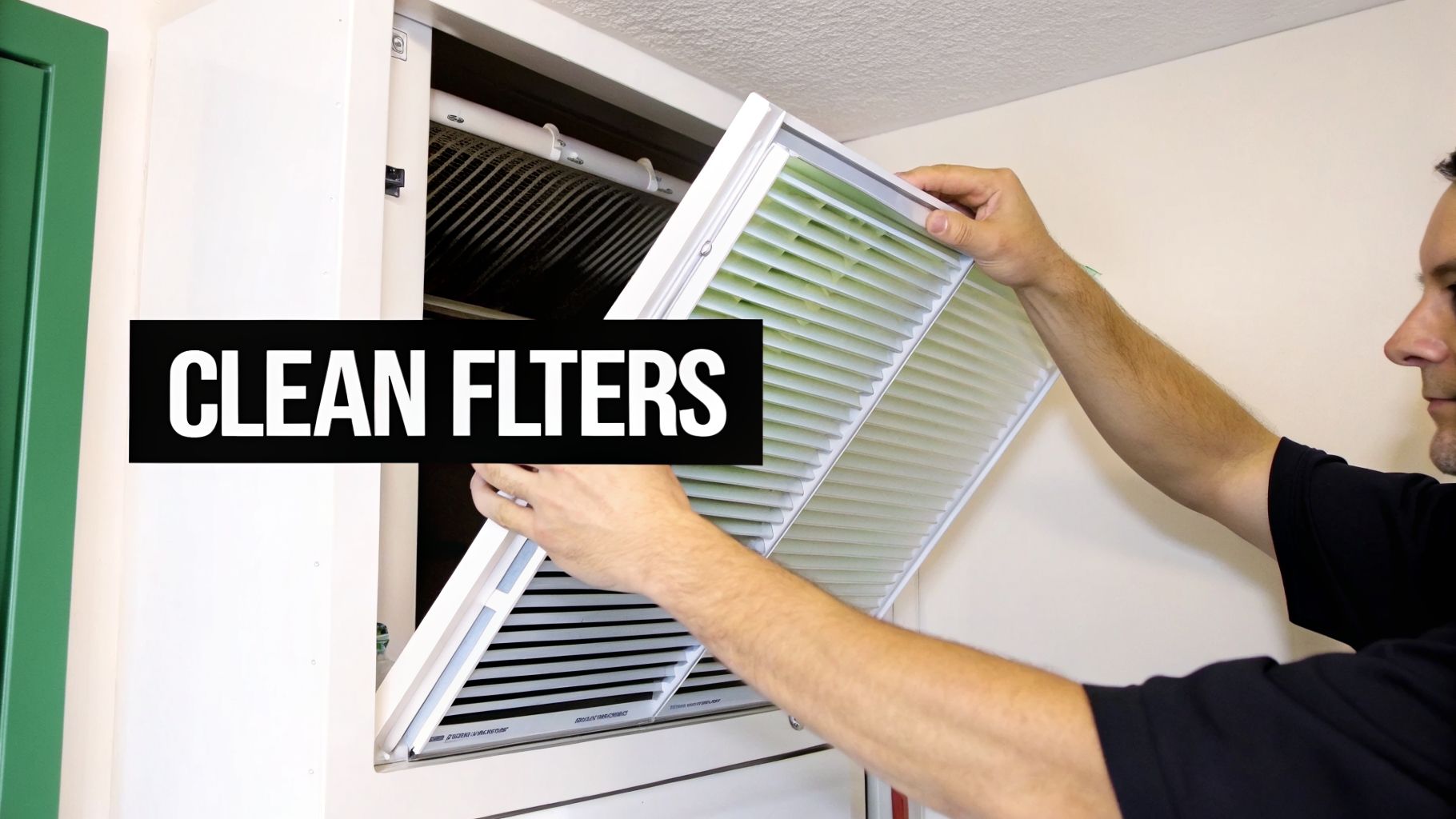
Here's how to stay on top of it:
- Locate the Filter: Your filter is usually in a slot on the indoor air handler (the big metal box in your basement or utility closet) or behind a large return air grille in a wall or ceiling.
- Check It Monthly: During the cooling season (and the heating season from November through April), make a habit of peeking at your filter every 30 days. If it looks gray and caked with dust, it’s time for a new one.
- Replace as Needed: For a typical one-inch filter, every 60-90 days is a good rule of thumb. If you have pets, live near a dusty road, or have allergy sufferers at home, you’ll probably need to change it monthly.
Pro Tip: Grab a marker and write the date you changed the filter directly on its cardboard frame. This little trick takes all the guesswork out of your maintenance routine.
Keep the Outdoor Condenser Unit Clear
Your AC system has two main parts. The outdoor unit, or condenser, is responsible for releasing all the heat it has pulled out of your home. To do its job right, it needs plenty of room to breathe.
Over time, leaves, grass clippings, dirt, and that West Michigan cottonwood fluff can clog the delicate metal fins. This debris acts like a blanket, trapping heat and forcing your system to run longer and harder. We see this all the time in homes from Jenison to Allendale.
Maintaining a 2-foot clearance zone is crucial for proper heat exchange.
Before you start, always turn off the power to the unit. You’ll find a disconnect box mounted on your house near the condenser, and you should also flip the corresponding breaker in your main electrical panel.
- Clear Debris: Start by pulling away any large debris like leaves, twigs, and grass by hand. Trim back any bushes or weeds that are closer than two feet to the unit on all sides.
- Gently Hose It Down: Use a regular garden hose with a spray nozzle to gently wash the fins from the top down. Never use a high-pressure washer—it can easily bend the fragile aluminum fins and cause a much bigger problem.
A clean condenser can operate much more efficiently. For a more detailed guide, check out our post on how to clean an AC condenser unit.
Inspect the Condensate Drain Line
As your AC cools your home, it also pulls a lot of humidity out of the air. This moisture collects and drips into a pan, then flows out of your house through a PVC pipe called a condensate drain line.
If this line gets clogged with algae or sludge, the water has nowhere to go. This backup can lead to a few headaches:
- High Indoor Humidity: The system can't dehumidify properly, leaving your home feeling sticky and uncomfortable.
- Water Damage: A bad clog can make the drain pan overflow, potentially causing water damage to your ceiling, walls, or floors.
- Automatic Shutdown: Many modern systems we install in Wyoming, Michigan, have a float switch that automatically shuts the AC off if it detects a backup. This protects your home but leaves you without any cooling until it's fixed.
Periodically look for the small pipe exiting your foundation and make sure you see water dripping from it when the AC is running. If you suspect a clog, it's often a simple fix, but if you're not comfortable tackling it, it’s a quick task for a pro during a tune-up.
Using Your Thermostat to Outsmart High Energy Bills
Your thermostat is more than just a dial on the wall. It’s the brain of your cooling system and a great tool for cutting costs. A lot of people just “set and forget” their AC, letting it run at one temperature all summer long.
But if you learn how to use your thermostat right, you can seriously improve your AC's efficiency. This is one of the best ways to cut your cooling bills during a humid West Michigan summer, all without giving up comfort.
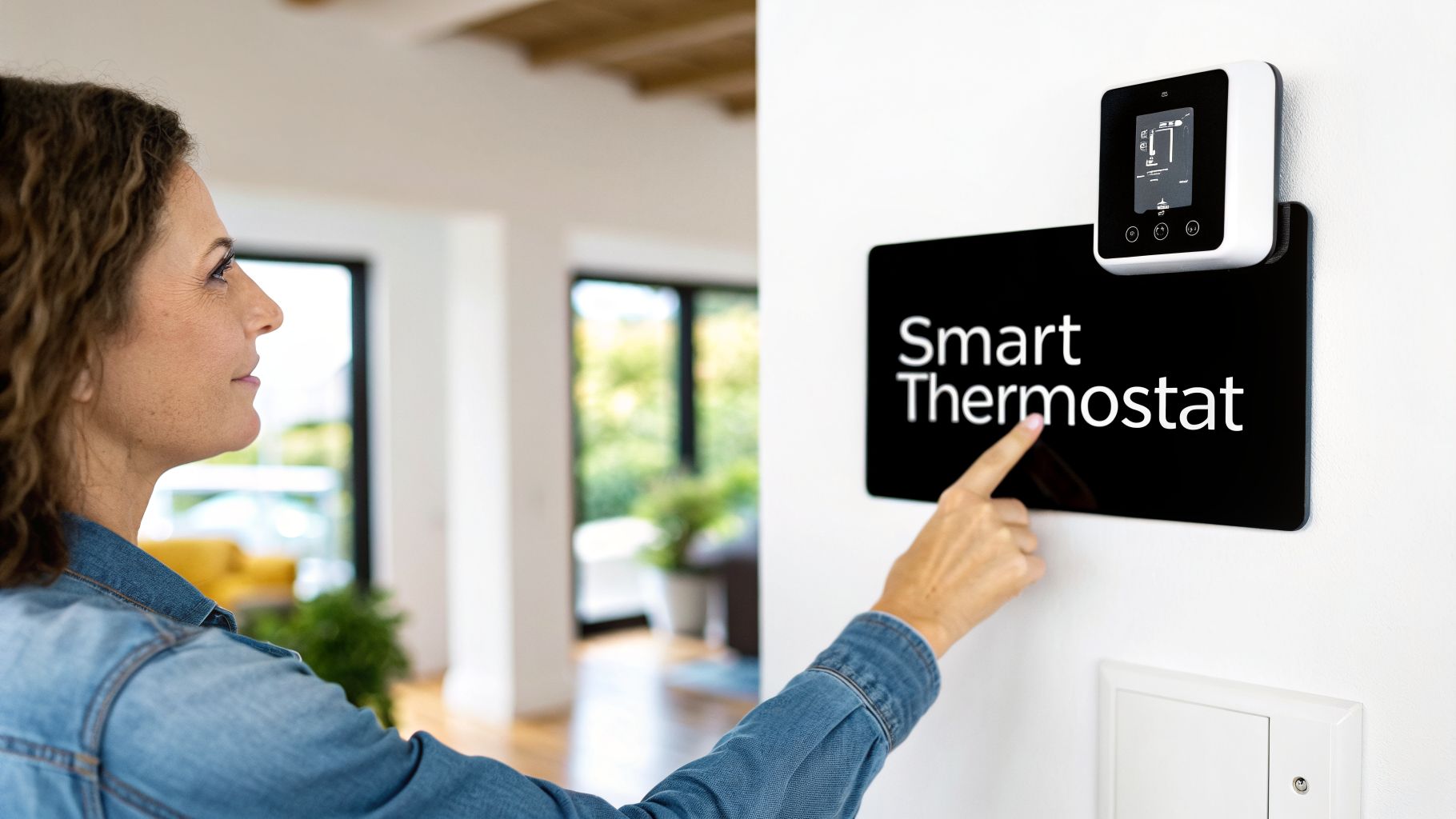
Modern thermostats, especially the programmable and smart ones, give you tight control over your home's cooling. The whole idea is to match your AC's runtime to when you're actually home. Why cool an empty house in Grandville to a chilly 70 degrees?
Busting a Common AC Myth
First, let's clear up a common myth. Cranking your thermostat way down to 65°F will not cool your home any faster. Your air conditioner only works at one speed to pull heat out of your house.
Setting a super low temperature just makes the system run much, much longer to hit that target. It's a huge waste of energy. Think of it like cruise control in your car—setting it to 90 mph doesn't make you accelerate faster to 65. Set the thermostat to the temperature you actually want.
Create an Energy-Saving Temperature Schedule
The U.S. Department of Energy says you can save as much as 10% a year on utility bills. All you have to do is turn your thermostat back 7°-10°F for eight hours a day. During the cooling months, this means setting the temperature higher when you're away or asleep.
A good starting point for a West Michigan summer might look like this:
- When You're Home: Set it to 78°F. This is widely seen as both comfortable and efficient.
- When You're Asleep: You can usually go a bit warmer. Try setting it to 82°F.
- When You're Away: Let the temperature climb to 85°F. This gives your AC a real break while you're at work.
Don't worry, your house won't get stuffy with an 85°F setting while you're out. It will still be way cooler than the outside air, and your system can drop it back to 78°F pretty fast when you return.
Let Smart Thermostats Automate Your Savings
Programmable thermostats are a good step, but smart thermostats really put your savings on autopilot. These devices use Wi-Fi to automate efficiency with almost no effort from you. For homeowners in places like Standale and Allendale, they're a smart investment.
Key Smart Thermostat Features:
- Learning Algorithms: Many models learn your daily habits over the first few weeks. They then build a cooling schedule that saves energy without you even noticing.
- Geofencing: This uses your phone's location to tell if you're home. It can automatically turn the temperature up when the last person leaves and start cooling things down as you head home.
- Remote Access: You can change your thermostat from anywhere with a mobile app. Forget to adjust it before a vacation? Just do it from the road.
If you’re thinking about an upgrade or need help programming your current thermostat, the certified techs at Platinum Heating & Cooling are ready to help. We serve all of West Michigan, including Hudsonville, Jenison, Grandville, Walker, Standale, Allendale, & Wyoming, Michigan. We can recommend the perfect thermostat for your home and lifestyle.
When a New AC Is the Smartest Financial Decision
Sometimes, all the maintenance and thermostat tricks in the world can't change a simple fact: your air conditioner is just too old. An aging AC isn't just less reliable—it's often a quiet drain on your bank account with every single cooling cycle.
Deciding to replace your unit isn’t about giving up on it. It’s about making a smart financial move that pays you back in lower energy bills and better comfort for years to come.
If your system is over 10-15 years old, needs constant, expensive repairs, or still uses the phased-out R-22 refrigerant, you’ve reached a tipping point. Continuing to pour money into a failing unit is a losing game. The real question is no longer if you should upgrade, but how much you stand to gain when you do.
Understanding SEER2 and Your Potential Savings
When you start looking at new air conditioners, you'll see a critical rating: SEER2 (Seasonal Energy Efficiency Ratio 2). Just think of it like the MPG rating for your car—the higher the number, the less fuel (or electricity) it burns to do its job. SEER2 is the new standard, updated to better reflect real-world conditions.
A surprising number of homes in West Michigan are still running AC units with SEER ratings of 10 or even lower. Today, the minimum standard for new installations is much higher, and high-efficiency models can hit a SEER2 of 20 or more.
That difference is huge. Did you know that upgrading to a modern, high-SEER2 air conditioner can slash your cooling bills by 30-50%? Those old clunkers from a decade ago were built to a much lower standard. Today's models from trusted providers like Platinum Heating & Cooling regularly achieve SEER2 ratings of 14 to 20+.
Old Tech vs. New Innovations
So, why are modern air conditioners so much more efficient? It isn't just one thing; it's a collection of smart engineering improvements working together.
Variable-Speed vs. Single-Speed Compressors
- Old: Your old AC probably has a single-speed compressor. It’s either running at 100% capacity or it’s completely off. Think of it like a light switch with no dimmer—full blast or nothing at all.
- New: High-efficiency units now use variable-speed compressors. These are the dimmer switches of the HVAC world. They can ramp up or down, running at lower speeds (like 40% capacity) for longer periods to perfectly match your home's cooling demand. This gets rid of the energy-wasting start-and-stop cycles, giving you more consistent temperatures and much better dehumidification.
A Real-World ROI Scenario in Wyoming, MI
Let's run the numbers for a family in a typical 2,000-square-foot home right here in Wyoming, Michigan. Their 15-year-old AC has a SEER rating of 10 and costs them about $400 each summer to operate. They decide it's time to upgrade and choose a new system from Platinum Heating & Cooling with a SEER2 rating of 17.
By upgrading from a SEER 10 to a SEER2 17 unit, this family could cut their annual cooling costs by roughly 41%. That's a savings of about $164 in the very first summer. Over the new unit's 15-year lifespan, those savings can easily top $2,460, and that’s not even counting future energy price hikes.
When you factor in the money you'll save on the inevitable repairs that an old unit would have needed, the return on investment gets even better. For many homeowners, the upgrade pays for itself long before the new system's life is over.
And if you’re interested in year-round efficiency, it’s worth looking into how a modern heat pump can both heat and cool your home. You can learn more about heat pumps in our detailed guide.
Solving Hidden Airflow and Ductwork Problems
You can have the most powerful, brand-new air conditioner on the market, but it won’t do you much good if the chilled air can't get where it needs to go. It's a classic mistake to focus only on the AC unit itself. The real unsung hero of your home's comfort is the ductwork. This hidden network of pathways is what actually delivers the cool air, and if it has problems, your efficiency and comfort will nosedive.
Leaky, uninsulated, or poorly designed ducts are a massive source of energy waste. Think about it: studies show that a typical house loses 20% to 30% of the air moving through its duct system from leaks and bad connections. That means nearly a third of the money you spend cooling your home might just be chilling your attic, basement, or crawlspace instead of your living room.
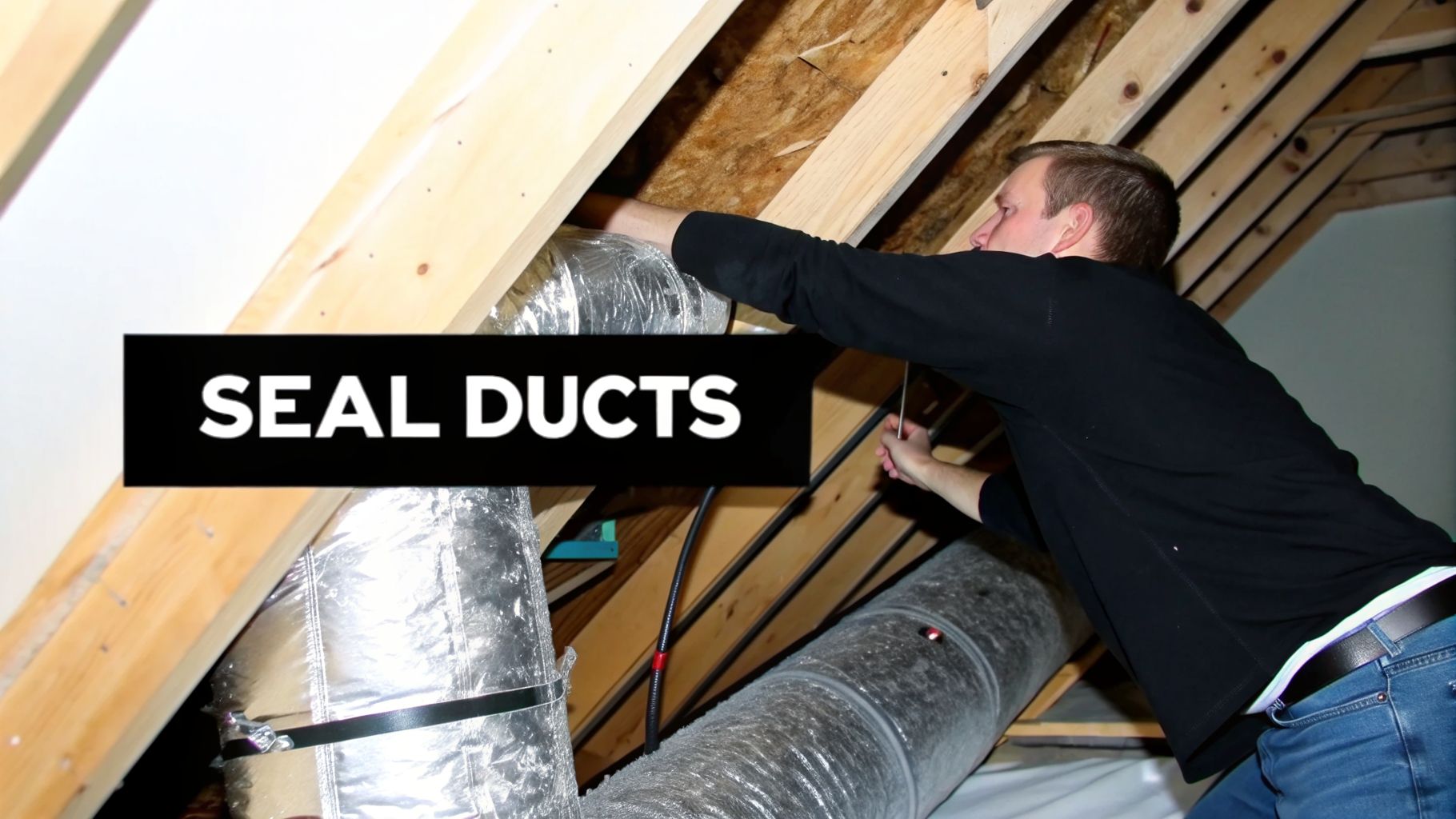
This kind of inefficiency is the root cause of frustrating hot spots, an AC that seems to run constantly, and bills that are way too high. It's a common complaint we hear from homeowners all over West Michigan, from Hudsonville to Grandville.
Finding Obvious Airflow Blockages
Before you start worrying about complex, hidden leaks, let's check for the simple stuff first. Sometimes the biggest barrier to good airflow is something you can spot and fix in just a few minutes. Your HVAC system is basically a closed loop—it has to push cool air out through supply vents and pull warm air back in through return vents.
If you block either side of that loop, you're essentially choking your system. Take a walk through your home and give every single vent a quick inspection:
- Is a couch shoved right up against a large return air grille?
- Do you have a rug or a dog bed thrown over a floor vent?
- Are the louvers on a vent closed or pointed straight into a thick curtain?
Making sure all your vents are open and completely unobstructed is a free fix that immediately improves AC efficiency and comfort. It’s a simple step that lets the air circulate the way it was designed to, helping cool your home faster so the system can run less often.
We once got a service call out in Jenison for a room that was always sweltering. It wasn't the AC at all. The homeowners had put a new bookcase directly in front of the room’s only supply vent, completely cutting off the airflow. Moving it just a few inches solved the entire problem.
The Impact of Professional Duct Sealing
While you can easily spot a blocked vent, finding and sealing air leaks in the ductwork itself is a job best left to a professional. These leaks are sneaky, often hiding at joints and seams tucked away in your walls, attic, or crawlspace. Our technicians at Platinum Heating & Cooling use specialized tools to actually pressurize the entire duct system, which lets us pinpoint exactly where air is escaping.
Once we find the leaks, we seal them properly with mastic sealant or durable metal-backed tape. That standard gray duct tape, despite its name, should never be used for this. It dries out, gets brittle, and fails in no time.
Especially in the older homes you find around Walker, Standale, and Wyoming, Michigan, professional duct sealing is one of the single most effective upgrades you can make for your AC's performance. When we seal those leaky ducts, all that air you're paying to cool gets delivered straight to your living spaces, which can drastically improve efficiency and finally get rid of those stubborn hot rooms for good.
Why Proactive Maintenance Is Your Best Investment
While changing your own filters and clearing away leaves are great habits, they only scratch the surface. Those DIY tasks are important, but they don't get to the heart of what keeps your AC running efficiently and reliably for years.
Think of it this way: a professional tune-up is where a trained eye can spot the little problems that are brewing. Catching them early is the key to avoiding a system failure in the middle of a West Michigan heatwave. That’s why we consider an annual tune-up a must-do, especially for your cooling system before summer hits and for your heating system before the colder months from November through April arrive.
What a Professional Tune-Up Involves
When a Platinum technician shows up for a maintenance visit, we’re not just there to wipe things down. Our EPA-certified pros dive deep into your system’s health.
Here’s a look at what we’re checking:
- Verifying Refrigerant Levels: Too little or too much refrigerant is a huge problem. It kills efficiency and can destroy your compressor. We make sure the charge is dialed in exactly to the manufacturer's specs.
- Meticulous Coil Cleaning: We don’t just give the outdoor unit a quick rinse. We use specialized cleaners on both the indoor and outdoor coils to restore their ability to actually transfer heat—which is their entire job.
- Measuring Airflow: If your system is struggling to move air, it’s working way too hard and driving up your bills. We measure airflow to make sure it’s just right.
- Testing Electrical Components: Loose connections and failing capacitors are breakdowns waiting to happen. We inspect, tighten, and test all the electrical parts to keep your system safe and reliable.
This kind of detail work really matters. We often find simple fixes for homeowners in the West Michigan area that deliver an immediate boost in efficiency. It's a small step that has a big impact—globally, improving AC efficiency could prevent 2.5 billion metric tons of CO2 emissions by 2050. Every tune-up is a win for your wallet and the planet. You can explore these findings from American Scientist to see the bigger picture.
Peace of Mind with Scheduled Maintenance
We created the Platinum Maintenance Membership to make all of this simple. It’s a straightforward way for homeowners from Hudsonville and Jenison to Grandville and Walker to get scheduled care without having to think about it.
Membership ensures your system runs at peak performance year after year, preventing breakdowns during the hottest days of summer or coldest days of winter. It also includes priority service and exclusive discounts, making it the smartest way to protect your investment.
By scheduling your cooling maintenance in the spring and heating maintenance in the fall, you’re always prepared. You can see the full list of benefits of routine HVAC maintenance and why it’s so important in our other article.
Answering Your Top AC Efficiency Questions
We hear a lot of the same questions from homeowners across West Michigan. When those humid summer days hit, everyone wants to know how to get the most out of their air conditioner without breaking the bank. Let's clear up some of the most common questions we get with straightforward, practical advice.
What’s the Best Thermostat Setting for Summer?
This is easily the number one question, and the honest-to-goodness answer is, it’s whatever keeps you comfortable. But if you’re looking for a sweet spot that balances comfort and cost, we recommend starting at 78°F when you're home.
For every single degree you raise the temperature, you can trim your cooling costs by up to 3%. It adds up fast. When you’re out for the day or sleeping, bumping it up to the low 80s gives your AC a much-needed break and really cuts down on wasted energy. The trick is to program a schedule that fits your family's routine.
How Often Should I Change My Air Filter?
Think of your air filter as the lungs of your HVAC system. For a basic one-inch filter, changing it every 60-90 days is a solid rule of thumb.
But, you really should be giving it a look once a month, especially when your AC is running constantly during the cooling season. If you've got pets shedding fur, live near a dusty road, or have anyone with allergies in the house, plan on swapping it out every 30-45 days. A clean filter is hands down the cheapest and simplest way to keep air flowing and your system running efficiently, both in summer and during the winter heating months.
What Is "Inverter Technology" and Is It Worth It?
Inverter technology is a huge leap forward for ACs. A traditional unit is either all on or all off—it blasts cold air until it hits the target temp, then shuts down. An inverter system is much smarter. It works more like cruise control in your car, constantly adjusting its speed to precisely match the cooling your home needs.
This gets rid of those constant, energy-guzzling start-and-stop cycles. For homeowners in places like Allendale or Standale, this tech is a true game-changer. Making the switch can lead to 30-40% lower energy consumption. As the global air conditioning market shifts toward efficiency, this is the technology leading the way. Upgrading to an inverter model installed by Platinum Heating & Cooling means better comfort and serious long-term savings.
What Are the Signs I Need an AC Replacement?
An old, failing AC will give you some clear warning signs. Keep an eye out for these red flags:
- It's Old: If your system is creeping past the 12-15 year mark, it’s running on outdated, inefficient tech.
- You're on a First-Name Basis with Your Repair Tech: Calling for service more than once a season? Those repair bills are going to start looking like a down payment on a new unit.
- Sky-High Energy Bills: If your summer bills suddenly jump with no explanation, your AC is likely struggling to keep up and burning through electricity.
- It Uses R-22 Refrigerant: This older coolant has been phased out. It's now incredibly expensive and hard to find, which makes any major repair a bad investment.
If any of these sound familiar, it's definitely time to start looking at a modern, high-efficiency replacement.
Got more questions? Or maybe you're ready to talk about an upgrade for your home in West Michigan, including Hudsonville, Jenison, Grandville, Walker, Standale, Allendale, & Wyoming, Michigan? The certified experts at Platinum Heating & Cooling are here to give you an honest assessment. Contact us today for a free quote on a new system that will keep you cool and save you money.