
Giving your AC condenser unit a good cleaning is a pretty simple job. It mostly involves cutting the power, clearing away any gunk, and giving the outside coils a gentle rinse. Here in West Michigan, this small task can make a huge difference in your system's efficiency and help you dodge some expensive repair bills down the road. Just think of it as some much-needed spring cleaning for your home's comfort system, prepping it for the cooling season.
Why Cleaning Your AC Condenser Is Crucial in West Michigan
Once our hot, humid summers roll in, your air conditioner's outdoor unit is working overtime to push all that heat out of your house. That condenser unit is basically a magnet for anything floating in the air. For folks in West Michigan, including Hudsonville, Jenison, Grandville, Walker, Standale, Allendale, & Wyoming Michigan, that means a constant battle against grass clippings, the infamous cottonwood fluff, and dust.
All that debris builds up and creates a thick, insulating blanket over the delicate metal fins on the condenser coils. When those coils get clogged, your AC can't get rid of heat the way it's supposed to. It's like asking your system to run a marathon while wearing a heavy winter coat. The end result is an AC that has to work way harder and run much longer just to cool down your home.
The Real Cost of a Dirty Condenser
That extra strain isn't just a small inconvenience—it hits you right in the wallet. Letting this simple maintenance slide can cause a surprising jump in your energy bills. A dirty HVAC system can actually jack up fan and blower energy use by a shocking 41-60%. That's not just a guess; research from the National Air Duct Cleaners Association (NADCA) confirmed how much harder compressors have to work when the coils are caked with grime. You can read more about these HVAC efficiency findings to get the full story.
For homeowners in West Michigan, a dirty condenser is often the secret villain behind rising utility costs each summer, even when it feels like your system is barely keeping up.
At the end of the day, cleaning your AC condenser is about more than just keeping things tidy. It’s a proactive move with some real, tangible payoffs:
- Lower Energy Bills: A clean, efficient system just plain uses less electricity, which saves you money every month during the cooling season.
- Better Cooling Performance: Your house will cool down faster and stay cooler, even on the most scorching days.
- Longer System Lifespan: Taking the stress off the compressor helps prevent breakdowns and can add years to the life of your unit.
This guide will walk you through cleaning your AC condenser safely and effectively. But remember, if you're looking for a complete, professional tune-up, the certified technicians at Platinum Heating & Cooling are always here to help serve you in West Michigan, including Hudsonville, Jenison, Grandville, Walker, Standale, Allendale, & Wyoming Michigan.
Gathering Your Tools and Prioritizing Safety
Before you even think about touching your AC unit, let's talk about the most important step: safety. This isn't the part to skim over. Your outdoor condenser is a mix of high-voltage electricity and surprisingly delicate parts, so taking a few minutes to prep properly can save you from a nasty shock or a very expensive repair bill.
First things first, you need to completely shut off all power to the air conditioner, and this is a two-part job. Head inside and find your thermostat. Switch the system to the "Off" position. This simple step prevents it from trying to power up while you're outside working on it.
Next—and this part is absolutely non-negotiable—you need to go outside to the disconnect box. It’s usually a small, gray metal box mounted to the side of your house right near the condenser unit. Open it up and either pull out the disconnect block or flip the big switch to "Off." This physically severs the high-voltage connection, guaranteeing the unit is dead and safe to work on.
Your AC Cleaning Toolkit
With the power safely off, it's time to gather your supplies. You'll be happy to know you don't need a bunch of expensive, specialized equipment. You probably have most of this stuff in your garage already.
Here’s what you’ll want to have on hand:
- Work Gloves: A good pair will protect your hands from the surprisingly sharp metal fins.
- Safety Glasses: A must-have to keep flying dust, leaves, and cleaning spray out of your eyes.
- A Soft-Bristle Brush: Something with a long handle is great for gently sweeping away loose gunk like grass clippings and cottonwood fluff without damaging anything.
- Garden Hose with Spray Nozzle: Look for a nozzle that can create a gentle, wide spray, not a powerful jet.
- Commercial AC Coil Cleaner (Optional): If your unit is caked with grime, a can of foaming coil cleaner from the hardware store can work wonders. Just read the label to see if it's a "no-rinse" formula.
- Fin Comb (Optional): This handy little tool is cheap and perfect for straightening out any bent or crushed fins, which happens more often than you'd think.
Crucial Tip: Whatever you do, never use a pressure washer on your AC condenser. The force is way too strong and will flatten the delicate aluminum fins in seconds. This chokes off airflow, kills your system's efficiency, and can cause some serious damage. A gentle rinse from your garden hose is all it takes.
Understanding how each component of your air conditioner system works makes it clear why being gentle is so important. Once you've got your tools and you've double-checked that the power is off, you're ready to get started.
A Practical Guide to Cleaning Your Condenser
Alright, with the power cut and your tools laid out, it's time to get your hands dirty. Learning how to clean an AC condenser unit is something any homeowner in Grandville or Walker can handle. I'll walk you through the simple, step-by-step actions to get your system running efficiently for the West Michigan summer ahead.
First things first, let's clear away all the gunk on the surface. Your unit has probably spent the fall and winter collecting a nice blanket of leaves, twigs, and grass clippings. Gently take off the top grate or fan cage—it's usually just a few screws—and set it aside. Just be careful not to yank on any of the fan wires.
With the top off, you can reach inside and clear out the bigger debris by hand or with a shop vac. Get all those leaves and whatever else has settled in the bottom of the unit. That stuff traps moisture, and that's a recipe for rust and corrosion down the road.
This quick visual guide sums up the essential safety checks before you really dig in.
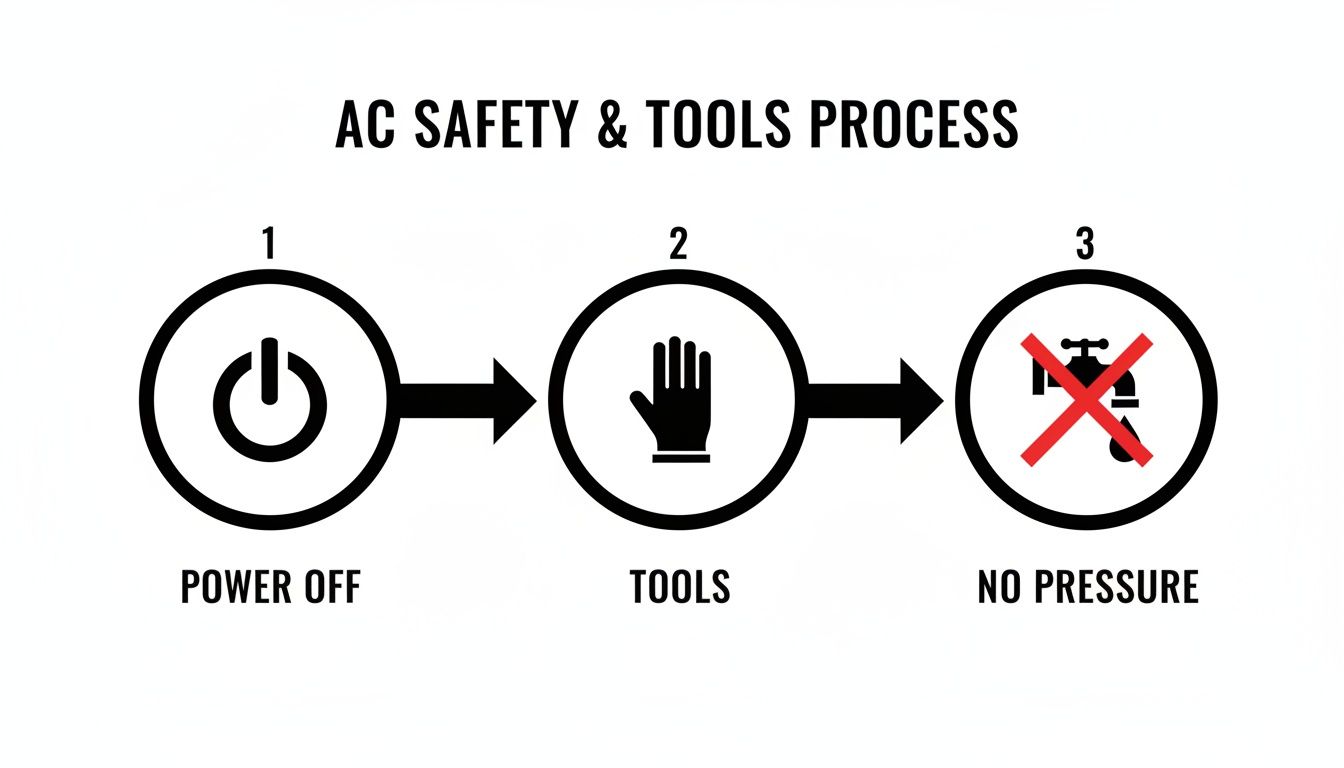
The approach is all about safety: shut the power down completely, have your tools handy, and use gentle water pressure. No shortcuts here.
Rinsing the Condenser Coils the Right Way
Now that the big stuff is gone, we get to the most important part: cleaning those delicate condenser fins. This is where the magic happens. These fins are what release heat from your home, and even a thin film of dirt can seriously impact their performance.
Here’s the key trick: spray from the inside out. Stand where the fan motor was and use a regular garden hose with a spray nozzle. You want to aim the water outward, pushing all the trapped dirt, pollen, and cottonwood fluff away from the unit, not deeper into the coils.
Work your way around the entire condenser, spraying at a slight downward angle. You'll be amazed at the muddy water that comes pouring out. Just keep at it until the water runs clear.
Using a Commercial Coil Cleaner
If you're in Allendale or Jenison and your unit is looking extra grimy—or maybe it's just been a few years—water alone might not cut it. This is where a commercial foaming coil cleaner is your best friend. You can grab a can at any local hardware store.
Just follow the directions on the can. Usually, you'll spray the foam all over the outside of the coils and let it sit for about 10-15 minutes. The foam works its way into the fins, breaking down all that stubborn gunk. After it's done its job, you have to rinse it all away completely, again spraying from the inside out until there are absolutely no suds left.
Leaving any cleaner residue behind is a big mistake. It can get sticky and actually attract more dirt, undoing all your hard work. A thorough rinse isn't optional—it's essential for a proper cleaning.
This kind of maintenance isn't just for homes. We see the same issues with our commercial clients all over West Michigan. For an office in Grandville or a warehouse in Standale, a dirty condenser during a heatwave can slash cooling capacity by as much as 30%, according to industry data. That inefficiency makes the system work overtime, leading to expensive breakdowns. At Platinum Heating & Cooling, our insured techs handle everything from rooftop units to heat pumps for businesses, because proper maintenance is what keeps these systems alive. You can learn more about the broader impact in the commercial coil cleaning industry.
Straightening Damaged Condenser Fins
Last but not least, take a close look at the fins themselves. It's really common for them to get bent or crushed by hail, rocks from the lawnmower, or just an accidental bump. Bent fins block airflow just as much as a layer of dirt.
A fin comb is the perfect tool for this job. It's a cheap little gadget with teeth spaced to match the fins on your unit. Gently run the comb through the bent areas, always moving in the same direction as the fins. It takes a bit of patience, but you can straighten them out and get that airflow back to normal.
Once the fins are clean and straight, carefully put the top grate and fan back on. Now you can head over to the disconnect box and the thermostat to restore power. Your AC is officially prepped and ready to keep you cool all summer.
What to Inspect While You're Out There
Giving your AC condenser a good cleaning is a great start, but a shiny unit isn't necessarily a healthy one. Since you've already shut the power off and you're right there, it's the perfect time to play detective and do a quick visual check. This is how homeowners from Wyoming to Standale can catch small issues before they blow up into a major repair on a sweltering July afternoon.
You're not trying to diagnose complex electrical problems. Just take a look around. You're searching for clues about the overall condition of your unit and its surroundings. Finding these things early is the best way to avoid an expensive emergency call down the road.
Check the Unit's Foundation
First, look at what your AC unit is sitting on. Most condensers are on a concrete pad, but over time, our West Michigan soil can shift, settle, or wash away.
- Is the pad still level? Even a slight tilt puts a ton of stress on the copper refrigerant lines that connect the unit to your house. That constant strain can eventually lead to cracks and a very expensive refrigerant leak.
- Is the ground solid around it? Check for any signs of erosion or sinking, especially if a downspout empties nearby. You might need to add some dirt or gravel to build the area back up and give it a stable base.
A sinking or unstable pad is a sneaky problem that can cause some serious damage over time. Making sure your unit sits on solid, level ground is a huge factor in its long-term health.
A tilted condenser is one of the most common things we see on service visits in the Grandville and Jenison areas. It might not look like a big deal, but the constant vibration on those strained refrigerant lines is a top cause of preventable leaks and total system failure.
Inspect the Condensate Drain Line
Next, find the condensate drain line. It's usually a white PVC pipe running from your indoor furnace or air handler to the outside, often near the condenser. Its only job is to get rid of the water your AC pulls out of the air inside your home.
This line can get clogged up with all sorts of gunk—algae, mold, you name it. A clog forces that water to back up, which can lead to nasty water damage inside your house, typically in the basement or a utility closet. Just peek at the end of the pipe and make sure it’s clear and not blocked by grass clippings, mulch, or dirt.
Look for Signs of Refrigerant Leaks
While you're looking over the unit, keep an eye out for any signs of a refrigerant leak. Refrigerant is the lifeblood of your air conditioner; if it's low, your system simply can't cool your home properly.
The biggest giveaway is an oily or greasy residue on the copper lines, the coils, or the service valves where a technician connects their gauges. Your system's refrigerant circulates with a special oil, so if you see that oily film, you've almost certainly got a leak. This is not a DIY fix—it needs professional attention right away.
Taking just a few extra minutes for these checks turns a simple cleaning into a full health checkup for your AC. If you see anything that looks off, don't wait for it to get worse. Schedule a professional service visit with our certified technicians, and we'll get it sorted out for you.
Why Professional AC Maintenance Is a Smart Investment
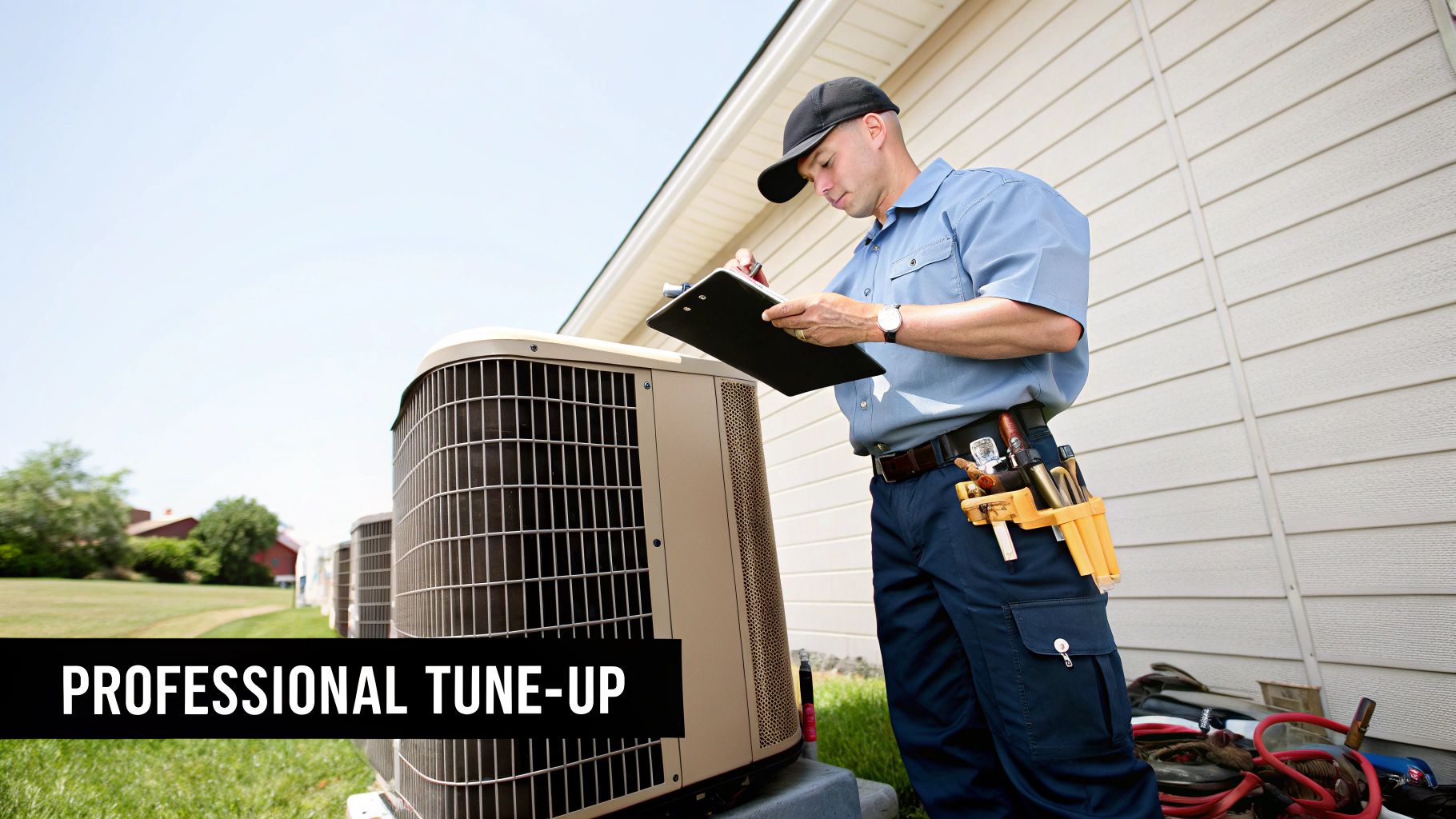
Giving your condenser unit a good cleaning every year absolutely makes a difference in how your AC performs. But it's important to remember that it doesn’t take the place of a full professional tune-up.
Think of your DIY cleaning as the essential upkeep between deep, expert checkups. A certified technician from Platinum Heating & Cooling shows up with specialized diagnostic tools and years of experience that go way beyond what you can accomplish with a garden hose.
While you're focused on clearing away leaves and grime from the outside, our technicians are performing a comprehensive inspection and a deep clean of the entire system. This is where the real, long-term value comes in. We don’t just rinse the fins; we meticulously check all the critical components that keep your system running safely and efficiently.
Beyond a Simple Rinse
A professional tune-up is truly an investment in your home's comfort and your system's lifespan. It's all about catching those small, hidden issues before they snowball into a complete breakdown on the hottest day of the year in Grandville or Jenison. Our technicians handle tasks that should only ever be tackled by a trained expert.
Here’s a glimpse of what a professional visit includes that your DIY cleaning doesn't:
- Testing Electrical Components: We carefully inspect capacitors, contactors, relays, and wiring for any signs of wear and tear, which helps prevent those sudden, unexpected failures.
- Checking Refrigerant Levels: Having too much or too little refrigerant can seriously damage your compressor, the heart of the system. We ensure the levels are dialed in precisely to manufacturer specs.
- Full System Safety Inspection: Our team checks for potential electrical hazards and operational issues, making sure your entire HVAC system is running as it should.
- Cleaning Internal Components: We can safely access and clean the indoor evaporator coils and other internal parts that are often difficult and risky for homeowners to reach.
Professional AC maintenance isn't just a niche service; it's a rapidly growing market for a very good reason. The global demand for condenser cleaners is projected to jump from USD 3.2 billion in 2023 to USD 4.8 billion by the 2030s. Here in West Michigan, where Hudsonville homeowners battle relentless Allendale pollen, our professional-grade tools can achieve up to 95% contaminant removal—that’s a massive leap from the 60% effectiveness of many DIY sprays. You can learn more about the global condenser cleaner market growth and see why so many homeowners are prioritizing expert care.
Year-Round Peace of Mind in West Michigan
We wanted to make proactive care simple and stress-free for homeowners in West Michigan, including Hudsonville, Jenison, Grandville, Walker, Standale, Allendale, & Wyoming Michigan, which is why we created the Platinum Maintenance Membership. This program is designed to deliver year-round peace of mind with scheduled, seasonal tune-ups.
We'll get your AC fully prepped for peak summer performance (cooling season) and, when the seasons turn, make sure your furnace is ready for our harsh northern winter months (November through April). As a member, you also get priority service and other valuable perks.
Explore the benefits of our Platinum Maintenance Membership program to keep your home comfortable, no matter what the Michigan weather throws at us.
Common Questions About Cleaning Your AC Unit
Even with a step-by-step guide, you probably have a few more questions rattling around. That’s perfectly normal. To clear things up, here are a few of the most common questions we get from homeowners all over West Michigan when it comes to cleaning their AC condenser. Think of it as a quick FAQ to give you that last bit of confidence before you get started.
How Often Should I Clean My AC Condenser Unit in West Michigan?
For most folks here in places like Hudsonville or Jenison, a good, thorough cleaning once a year in the spring is the sweet spot. It gets your system ready to handle the summer heat without breaking a sweat during the cooling season.
Now, if you live in Allendale and your yard is full of those fluffy cottonwood trees, or you’re in a new construction area with a lot of dust, you might want to consider a second, quicker rinse-down in late summer. This helps keep it breathing easy through the hottest part of the year.
Can I Use a Pressure Washer to Clean the Coils Faster?
Please, don't do this. It's one of the fastest ways to turn a simple DIY job into a call for professional repairs. A pressure washer is far too powerful and will absolutely bend and flatten the delicate aluminum fins on your condenser coils.
Once those fins are damaged, they can't transfer heat properly because airflow is blocked. This chokes your AC, spikes your energy bills, and can lead to some seriously expensive repairs. A regular garden hose with a decent spray nozzle is all you need—and all you should ever use.
A pressure washer is a fast track to a service call. That intense spray can permanently damage the coil, turning a simple maintenance task into a significant repair job that restricts airflow and strains your entire system.
What Happens If I Skip Cleaning My AC Unit?
Putting off a cleaning lets all that dirt, pollen, and grime build up into a thick, insulating blanket on the coils. Your AC's job is to move heat from inside your house to the outside, and that blanket makes it incredibly difficult.
Your compressor has to work much, much harder to push heat out. The immediate result? Higher energy bills. In the thick of a Grandville summer, you'll notice your house isn't getting as cool as it used to. Long-term, you're just putting a ton of extra wear and tear on the system, which can definitely shorten its lifespan.
Is It Safe to Use Household Cleaners on My AC Coils?
It's best to steer clear of household soaps and detergents. Things like dish soap can leave behind a sticky residue that ends up attracting even more dirt and dust over time, making your problem worse.
If plain water isn't cutting through the grime, head to a home improvement store and pick up a can of foaming coil cleaner specifically designed for the job. Just make sure you follow the directions on the can and rinse the coils completely when you're done. You don't want any of that cleaner left behind.
If you’ve gone through the steps but still feel like something’s not right—or you’d just rather have a pro handle it—the team at Platinum Heating & Cooling is always here to help. Our certified techs serve all of West Michigan, including Hudsonville, Jenison, Grandville, Walker, Standale, Allendale, & Wyoming Michigan, making sure systems are primed for the cooling season and ready for our tough northern winters (November through April).
Ready for a professional tune-up? Schedule your service with us today by visiting https://platinumheatingmi.com.