
A heat pump is a clever all-in-one system that gives you highly efficient heating and cooling for your home. Unlike a traditional furnace that has to burn fuel to make heat, a heat pump just moves heat around. This simple difference makes it a much smarter, more energy-conscious choice for year-round comfort.
The All-in-One Comfort Solution Explained
When folks here in West Michigan hear "heat pump," they usually get stuck on the word "heat" and think it's just for winter. So, what is a heat pump, really?
The easiest way to think about it is as a heat mover—or maybe a two-way air conditioner. It’s an incredible piece of equipment that handles all your home comfort needs with a single outdoor unit.
During our warm West Michigan summers, typically the months from May through October, the system works exactly like a central air conditioner. It grabs the heat from inside your home in places like Hudsonville or Grandville and moves it outside, leaving you with a cool, comfortable living space.
Then, when the cold winter months hit from November through April, the system just reverses itself. This is where the magic really happens. Instead of making heat from scratch, it finds and extracts heat energy that's already in the cold outdoor air and moves it inside your home for steady, gentle warmth.
How a Heat Pump Works Year-Round
The whole idea behind a heat pump is heat transfer, not heat generation. That fundamental difference is what makes it so incredibly efficient. It uses a refrigerant cycle to absorb and release heat, giving you both heating and cooling without burning any fossil fuels in your home.
Here’s a quick breakdown of how it switches hats:
- Cooling Mode (Summer Months): The unit absorbs heat from your indoor air and dumps it outside, cooling your home down. It's the exact same process a standard air conditioner uses.
- Heating Mode (Winter Months): The unit absorbs heat from the outdoor air (yes, even when it’s cold!) and releases it inside, warming up your home in Jenison or Wyoming, MI.
A modern heat pump can be up to 300% efficient. That means for every one unit of electricity it uses, it can move three units of heat. For comparison, even a high-efficiency furnace maxes out at around 98% efficiency.
Having one system do two jobs is a game-changer for homeowners in West Michigan, including Allendale, Walker, and Standale, who are looking for simplicity and serious energy savings. By handling both heating and cooling, a heat pump gets rid of the need for a separate furnace and AC, streamlining your entire home comfort system.
How a Single System Heats and Cools Your Home
Understanding that a heat pump moves heat rather than creating it is the first step. But how does one machine handle the very different jobs of keeping your home cool during a humid West Michigan summer and warm through a freezing winter? The secret is a clever, adaptable refrigeration cycle.
The whole process runs on a special substance called a refrigerant. This refrigerant flows through a series of coils and components in both the indoor and outdoor units of your heat pump. By changing the pressure and state of this refrigerant, the system can either soak up heat from inside your house or pull it from the outside air.
The Cooling Cycle Explained
During the warmer months, from May through October, your heat pump acts just like a high-efficiency air conditioner. Its goal is simple: grab the heat inside your Grandville or Allendale home and dump it outdoors.
This cycle works in a continuous loop:
- Heat Absorption: Cold liquid refrigerant travels to the indoor coil (also called the evaporator). As your home's warm air blows across it, the refrigerant absorbs that heat and turns into a cool gas.
- Pressurization: This low-pressure gas then heads to the compressor in the outdoor unit. As its name suggests, the compressor pressurizes the gas, which makes it get really hot.
- Heat Release: The hot, high-pressure gas flows through the outdoor coil (the condenser). A fan blows outside air across the coil, and the heat dissipates into the air. As it cools, the refrigerant turns back into a liquid.
- Expansion: The high-pressure liquid refrigerant passes through an expansion valve. This valve rapidly drops its pressure and temperature, getting it ready to go back inside and grab more heat.
This diagram shows the two distinct cycles a heat pump uses to manage your home's temperature all year long.
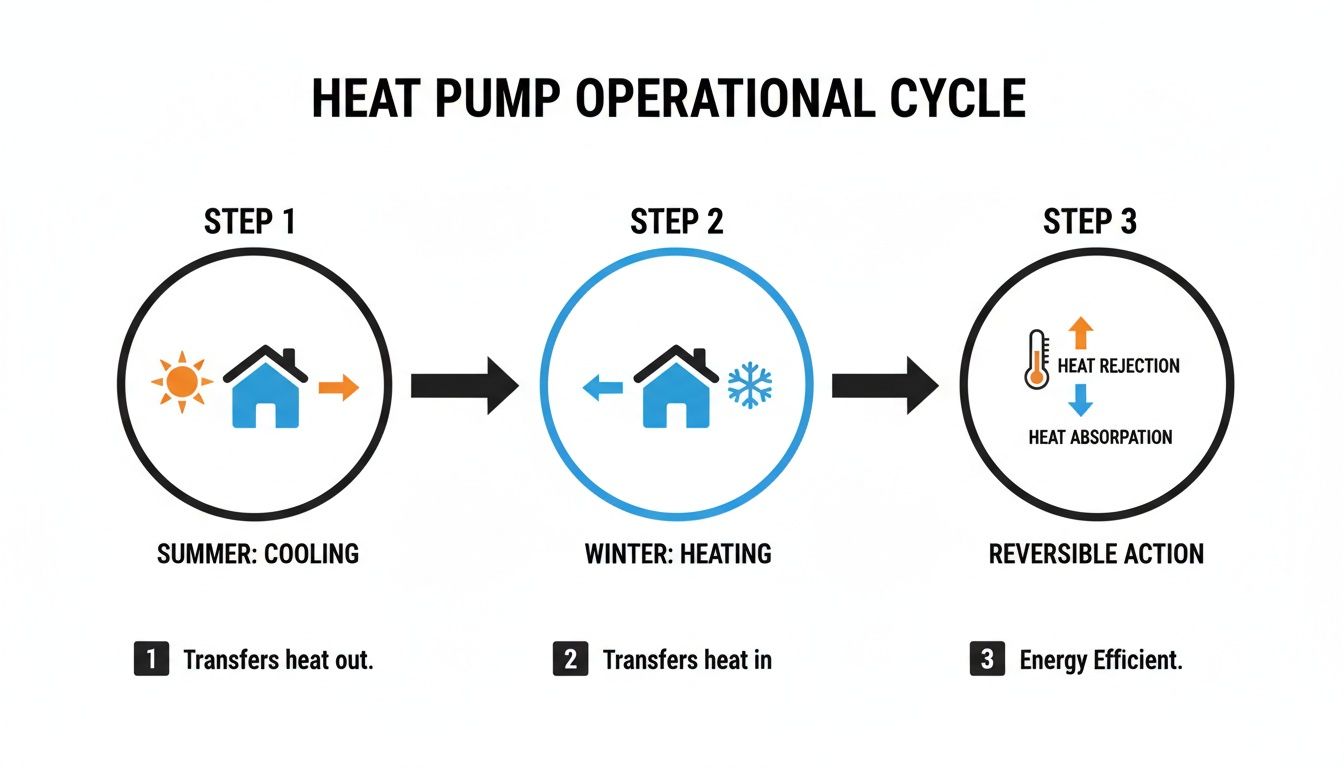
You can see how the system pulls heat from your house in the summer and pushes heat into it during the winter, all by reversing the refrigerant's flow.
The Magic of the Reversing Valve
So, how does the system switch from cooling your home in Standale to heating it in Hudsonville? This amazing change is all thanks to a single, critical part: the reversing valve.
When you flip your thermostat from "cool" to "heat," this valve changes the direction of the refrigerant flow. Just like that, the entire process we just described happens in reverse.
The reversing valve is the ingenious component that turns a standard air conditioner into an all-in-one heating and cooling solution. It essentially makes the outdoor coil the evaporator and the indoor coil the condenser.
The Heating Cycle in Action
Once the reversing valve does its job, the heat pump gets to work for the colder winter months, from November through April. It starts pulling ambient heat energy from the cold outdoor air and moves it inside your home to keep you warm.
Here's how the reversed process heats your home:
- The outdoor coil now acts as the evaporator, absorbing heat from the outside air. Even when it feels freezing to us, there's still usable thermal energy in the air.
- The refrigerant, now a low-pressure gas carrying this captured heat, goes to the compressor, where it's pressurized and becomes very hot.
- This hot gas then flows to the indoor coil, which is now acting as the condenser. As your indoor fan blows air across this hot coil, the heat is released into your home's ductwork.
- After releasing its heat, the refrigerant condenses back into a cooler liquid and flows back outside to start the process all over again.
This continuous cycle of heat transfer allows the system to provide consistent, efficient warmth for your home in Jenison, Walker, or Wyoming, using far less energy than traditional heating methods.
Finding the Right Heat Pump for Your Property
Once you've wrapped your head around how a heat pump can pull double duty for heating and cooling, the next logical question is: which one is right for my West Michigan home? Just like cars, heat pumps aren't one-size-fits-all. The best choice really comes down to your property's layout, what kind of HVAC system you already have, and your budget.
For most homeowners in communities like Grandville, Allendale, and Jenison, the decision boils down to three main types of heat pump systems. Each has its own strengths, and one is almost certainly a better fit for your home than the others. Let's dig into the most popular options we install.
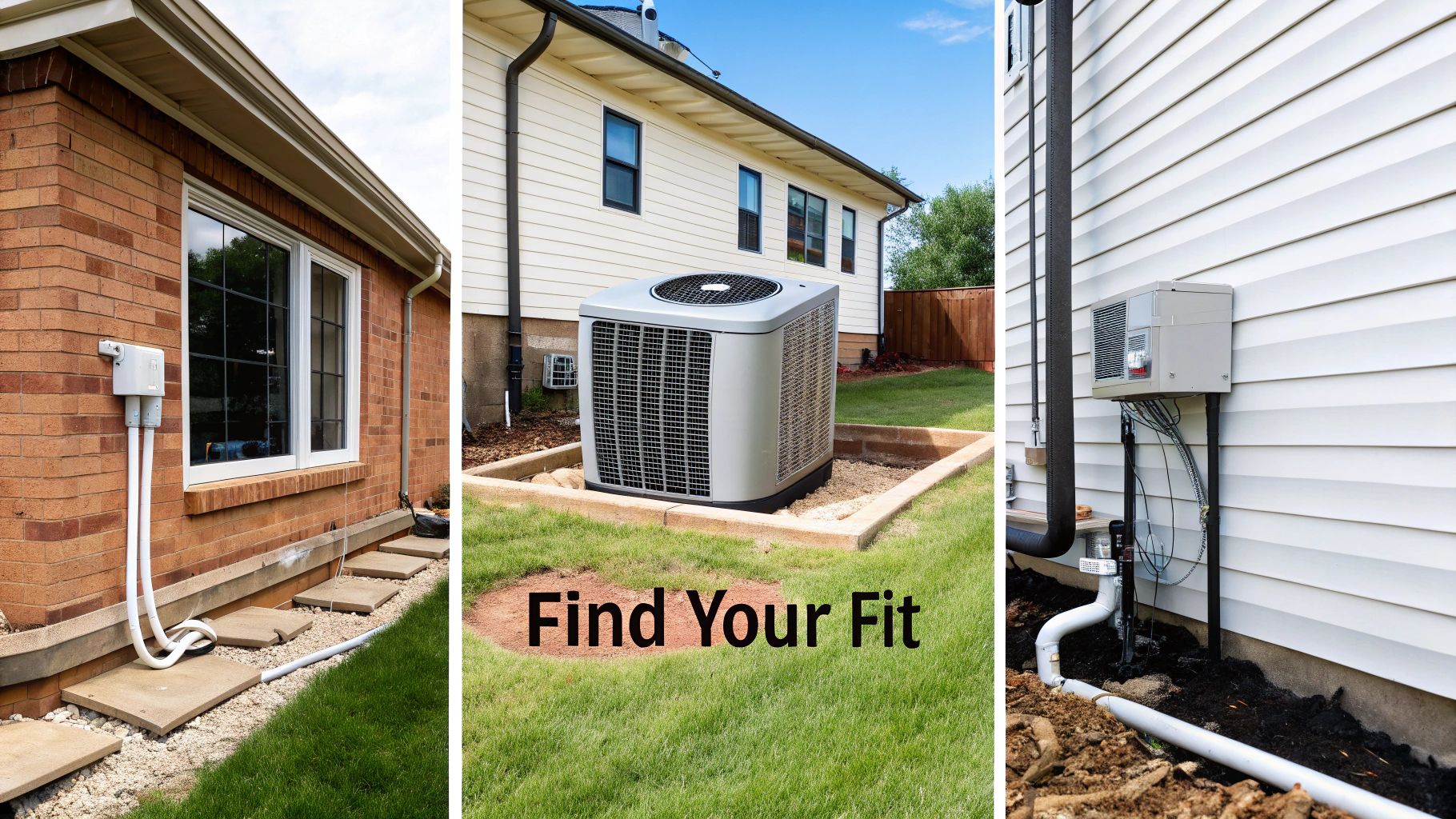
Air-Source Heat Pumps
This is the type of heat pump most people picture. An air-source heat pump looks almost exactly like a standard central air conditioner, and it works by moving heat between your house and the air outside. They’ve become a go-to choice for upgrades because they can often hook right into your existing furnace and ductwork.
- How They Work: In simple terms, these systems use an indoor air handler and an outdoor unit to play catch with heat. During the summer months (May through October), they grab heat from inside your home and toss it outside. In the winter months (November through April), they reverse the game, pulling heat from the cold outside air and bringing it inside.
- Best For: Homes in places like Walker and Standale that already have a good duct system in place. They are a fantastic replacement for an old central AC, giving you super-efficient cooling plus the bonus of handling most of your heating needs.
Today's cold-climate models are built tough, specifically designed to keep working efficiently even when the temperature drops below freezing, making them a really practical option for our neck of the woods.
Geothermal Heat Pumps
Also called ground-source heat pumps, these are the undisputed champions of energy efficiency. Instead of dealing with the wild temperature swings of the air, a geothermal system taps into the steady, consistent temperature of the earth just a few feet underground.
The ground here in Michigan stays at a relatively constant 50-55°F all year round. Because of that, geothermal systems run with incredible efficiency, whether it's a scorching summer day in Wyoming, MI, or the dead of a frigid winter.
The installation is a bit more involved, requiring a series of pipes—called a ground loop—to be buried in your yard. A fluid runs through these pipes to either absorb heat from the earth or release it. While the upfront cost is higher because of the excavation, the long-term savings are massive. We're talking about potentially cutting your heating and cooling bills by up to 70%.
- How They Work: They transfer heat to and from the earth using that underground loop system.
- Best For: Homeowners who have enough yard space for the loop and plan to stay in their home for the long haul. If your goal is the absolute lowest monthly energy bills possible, this is your system.
Ductless Mini-Split Heat Pumps
What if your house doesn't have ducts? Or you've got a new addition, a finished garage, or a sunroom that's impossible to keep comfortable? This is exactly where ductless mini-split heat pumps come in.
These systems pair a single outdoor unit with one or more sleek indoor units that mount high on a wall or ceiling. The best part? Each indoor unit has its own remote, letting you create different temperature "zones" around your home. You can keep the living room perfectly cozy without wasting a dime heating or cooling a guest room nobody is using. You can learn more about these flexible systems in our guide to mini-split services in West Michigan.
- How They Work: A thin conduit connects the outdoor unit to the indoor heads, delivering heated or cooled air directly into the room, no ducts needed.
- Best For: Older homes in places like Hudsonville and Jenison that were built without ductwork, for new additions, or for homeowners who just want to fix those stubborn hot and cold spots for good.
Heat Pumps vs. Furnaces: A Head-to-Head Comparison
For decades, the standard setup for home comfort in West Michigan has been pretty straightforward: a trusty furnace for our cold winter months and a separate air conditioner for the humid summers. It’s a combination that has served homes in Hudsonville, Jenison, and Grandville for years. But technology doesn't stand still, and the all-in-one heat pump is now a serious contender, challenging that traditional approach.
So, how does a modern heat pump really stack up against the tried-and-true furnace and AC combo? It’s about more than just heating and cooling. This decision impacts your monthly energy bills, your home's carbon footprint, and even how quiet your backyard is on a summer evening. To make the right call, you need to see how they compare on the factors that matter most.
Key Differences in Performance and Cost
The biggest difference comes down to a simple concept: how they produce heat. A furnace creates heat by burning fuel, usually natural gas. A heat pump, on the other hand, just moves heat that already exists outside, which is a fundamentally more efficient way to work.
This one operational difference leads to several important distinctions:
- Energy Efficiency: Especially during the milder parts of the northern winter months (November through April), a heat pump uses way less energy to warm your home. Modern heat pumps can hit efficiency ratings of over 300%. That means for every unit of electricity they use, they deliver three units of heat. Even the most efficient furnaces max out at around 98% efficiency.
- Operating Costs: That massive efficiency gap translates directly to your utility bills. From fall through spring, a heat pump can seriously lower your heating costs compared to a gas furnace, particularly when temperatures are above freezing.
- Upfront Investment: A full heat pump system often has a higher price tag for installation than a standard furnace and AC unit. However, this initial cost is frequently balanced out over time by huge energy savings and the federal and local rebates available.
When you're looking at quotes, don't just focus on the initial price. The total cost of ownership—what you'll spend on installation, energy bills, and maintenance over 15 years—often puts the super-efficient heat pump system ahead.
To help you see the differences clearly, we've put together a simple comparison for homeowners in West Michigan, including Walker, Standale, Allendale, and Wyoming, Michigan.
Heat Pump vs. Furnace & AC: A West Michigan Comparison
Choosing between a heat pump and a traditional HVAC system is a big decision. This table breaks down the key differences to help you see which option might be the better fit for your home and priorities.
| Feature | Heat Pump System | Traditional Furnace & AC |
|---|---|---|
| Primary Function | Moves heat for both heating & cooling | Creates heat (furnace) & moves heat for cooling (AC) |
| Energy Efficiency | Extremely high; often over 300% efficient | High; furnace efficiency typically 80-98% |
| Year-Round Operation | One unit provides both heating and cooling | Two separate units handle heating and cooling |
| Environmental Impact | All-electric; produces zero direct emissions | Burns fossil fuels, producing CO2 emissions |
| Operating Noise | Modern units are very quiet, especially variable-speed | Can be louder, with distinct on/off cycles |
| Winter Performance | Excellent in mild cold; may need a backup in deep freezes | Powerful and consistent heat at any temperature |
After comparing them side-by-side, you can see the unique advantages each system brings. The heat pump shines with its incredible efficiency and all-in-one convenience, while the furnace remains a powerhouse for the coldest days.
What About Our Brutal Winters?
This is the big question we always get: "Can a heat pump really handle a West Michigan winter?" It's a fair concern. Older models definitely struggled when the temperatures plunged during our northern winter months (November through April), which is why furnaces became the go-to for so long.
But today’s cold-climate heat pumps are a completely different animal. They are engineered specifically for regions like ours and can maintain impressive heating power and efficiency even when it's well below freezing.
For homeowners who want the absolute best of both worlds, a "dual fuel" system is the ultimate solution. This setup pairs a high-efficiency heat pump with a gas furnace. The system is smart—it automatically switches to whichever heating source is most cost-effective based on the outdoor temperature. You get the incredible efficiency of the heat pump for most of the year and the raw power of the furnace for the most bitter cold snaps.
If you’re interested in a dual fuel setup, you can learn more about our expert furnace installation services and how we pair them with modern heat pumps.
Can a Heat Pump Handle a West Michigan Winter?
This is the number one question we get from homeowners around here: will a heat pump actually keep my house warm when a polar vortex slams West Michigan? It’s a fair question, especially for those of us in Hudsonville and Wyoming who’ve seen our share of brutal, lake-effect snow and sub-zero days during the northern winter months of November through April.
The short answer is a resounding yes. But these aren't your grandpa's heat pumps. The technology has come a long, long way.
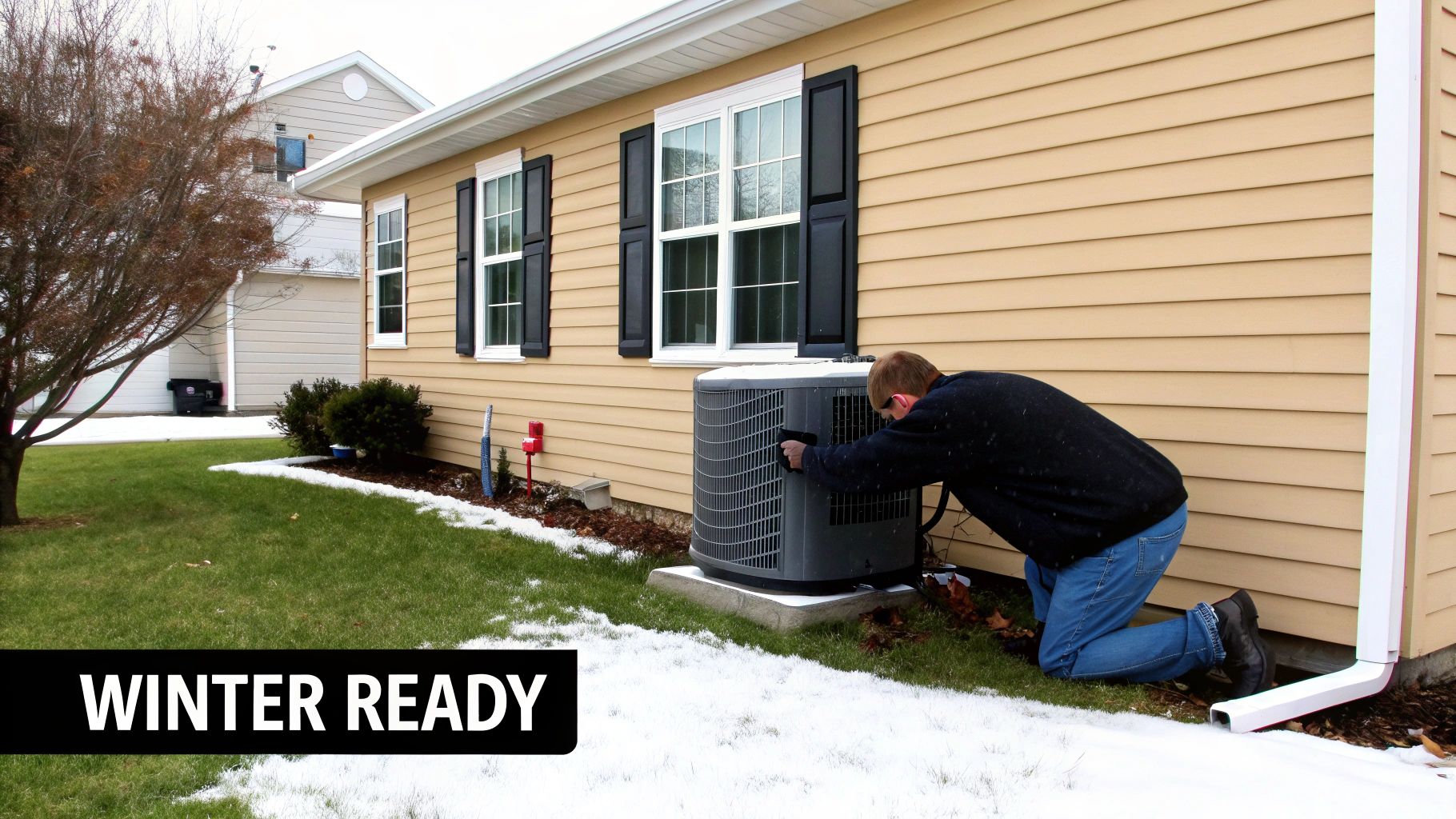
Today's cold-climate heat pumps are built specifically for the tough winter months we face from November through April. They are a world away from older models, engineered to pull heat from the air efficiently even when the temperature drops way below freezing.
The Power of Modern Cold-Climate Technology
The secret to their performance lies in advanced tech like variable-speed compressors. Old systems were either on or off—full blast or nothing. A variable-speed unit, on the other hand, can fine-tune its output with incredible precision.
Think of it like cruise control in your car instead of stomping on the gas and then hitting the brakes. It uses just enough energy to maintain a perfect, consistent temperature. This allows it to run in longer, steadier cycles, which avoids those big energy spikes and delivers steady warmth, even on a frosty morning in Jenison.
Modern cold-climate heat pumps are designed to operate effectively down to temperatures as low as 5°F, and some high-end models can maintain significant heating capacity even when it's -15°F outside. This makes them a viable primary heating source for a significant portion of our winter.
This technology means that for most of the heating season in Walker or Standale, your heat pump is more than up to the task. But for those truly bitter nights, there's an even smarter way to go.
Dual Fuel: The Ultimate West Michigan Solution
For homeowners in Grandville and Allendale who want absolute peace of mind, the best setup is a dual fuel system. This hybrid approach pairs a high-efficiency air-source heat pump with a powerful gas furnace, giving you the best of both worlds.
Here’s how this brilliant combo works:
- Mild-to-Cold Weather: For the bulk of the fall, winter, and spring, the super-efficient heat pump handles all your heating. It sips electricity to move a massive amount of heat, keeping your energy bills surprisingly low.
- Extreme Cold: The system is smart. It watches the outdoor temperature, and when it hits a set point where the furnace becomes more economical to run (usually around 20-30°F), it automatically switches over.
- Furnace Power: The gas furnace kicks on to deliver that powerful, reliable heat during the coldest stretches of winter, ensuring your home stays perfectly comfortable, no matter what.
This automatic handoff means you’re always using the most economical heating source without ever thinking about it. You get the incredible efficiency of the heat pump for most of the season and the raw power of a furnace for the handful of days you really need it. It’s the perfect, worry-free heating strategy for a West Michigan home.
Choosing Your Local Heat Pump Installation Experts
Making the move to a modern heat pump is a big deal—it’s a major upgrade for your home's future comfort and efficiency. You’ve seen how one system can handle both heating and cooling, rack up impressive energy savings, and shrink your carbon footprint. But now comes the most important decision: picking the right team to install it.
Let me be clear: the quality of the installation is just as critical as the equipment itself. You can have the most advanced, high-efficiency unit on the market, but if it's not sized correctly and installed with painstaking care, you'll never see the performance you paid for. This is especially true here in West Michigan, where local expertise isn't just a bonus—it's a necessity.
Your Trusted Partner in West Michigan
At Platinum Heating & Cooling, we're not just another HVAC company. We live here, and we specialize in designing and installing high-performance heat pump and dual fuel systems for our neighbors across West Michigan. We’re proud to serve communities like Hudsonville, Jenison, Grandville, Walker, Standale, Allendale, & Wyoming, Michigan.
Our team isn't just certified; they're constantly training on the latest cold-climate technology. That deep, specific knowledge is what ensures your system is ready for whatever our wild seasons throw at it:
- Winter Reliability (November through April): We know exactly how to configure a system that delivers consistent, reliable heat during our coldest months, so you stay warm without worry.
- Summer Efficiency (May through October): Our technicians design your setup for peak cooling performance, turning your home into a cool escape from those humid Michigan summers.
Choosing the right HVAC contractor is just as important as selecting the right system for your home. A high-efficiency unit will only perform at its best if it’s properly sized and carefully installed by experts who understand your local climate.
We don't do cookie-cutter solutions. Our process always starts with a detailed look at your home’s specific layout and needs. This allows us to design a system that truly maximizes both your comfort and your long-term savings. Whether you're considering a standalone cold-climate unit or a versatile dual fuel system, we're here to make sure you understand every option.
Ready to find out if a heat pump makes sense for your home and your budget? The team at Platinum is here to give you straight answers and expert advice. For a closer look at our process, check out our guide on professional heat pump installation.
Give us a call to schedule a no-obligation consultation. We'll walk you through all the benefits, show you the potential savings, and help you find the perfect solution to keep your family comfortable, no matter the season.
Heat Pump Questions We Hear All the Time
Even after you get the basics down, it's totally normal to have more practical questions. Here in West Michigan, folks want to know the real story of owning one of these all-in-one systems day in and day out. Here are the straight answers to the questions we get asked most by our neighbors in Hudsonville, Jenison, Grandville, Walker, Standale, Allendale, & Wyoming, Michigan.
What Is the Average Lifespan of a Heat Pump in Michigan?
In a true four-season climate like ours, a well-cared-for heat pump should give you about 15 years of service. The key is that it's pulling double duty—heating through our chilly northern winter months (November through April) and cooling during the humid other months (May through October). That's why consistent upkeep is so important.
Regular, professional maintenance is hands-down the best thing you can do to get the most life out of your unit and keep it running like a top, year after year.
Are Heat Pumps Louder Than Traditional Air Conditioners?
That’s a common worry, but the answer is almost always no. In fact, today’s heat pumps, especially the variable-speed models we recommend, are often way quieter than those old, clunky air conditioners you might be used to.
They run at lower, steadier speeds for longer stretches. This means you don't get that loud roar every time the system kicks on and off, making things much more peaceful both inside your house and out in the yard.
For most West Michigan homes, a modern heat pump will translate to noticeable savings on your utility bills. By moving heat instead of creating it, these systems can be up to 300% efficient, while even the best furnaces top out at 98% efficiency.
Does a Heat Pump Require Special Maintenance?
Heat pump maintenance isn't all that different from a standard AC tune-up, but it's arguably more critical since the system runs year-round. The tech will clean the indoor and outdoor coils, check the refrigerant levels, and make sure that all-important reversing valve is working perfectly.
To keep it reliable and in peak condition, we strongly recommend a professional tune-up twice a year:
- Once in the spring to get it ready for a Hudsonville or Jenison cooling season.
- Once in the fall to prepare it for the heating demands of a Grandville winter.
This proactive approach is the best way to catch small issues before they become big problems and keep your system running at its highest efficiency.
Will a Heat Pump Save Me Money on Utility Bills?
For the vast majority of homeowners in places like Walker, Allendale, and Wyoming, the answer is a big "yes." The incredible efficiency of a heat pump means it uses less energy, which leads directly to lower monthly bills.
You'll see the biggest savings during the milder "shoulder seasons" of spring and fall. In those months, the system can handle all your heating needs for just a fraction of what it would cost to run your gas furnace.
Ready to see how a modern heat pump could make your home more comfortable and cut down your energy bills? The team at Platinum Heating & Cooling has the local know-how to design the perfect system for your West Michigan home. We serve Hudsonville, Jenison, Grandville, Walker, Standale, Allendale, & Wyoming, Michigan. Schedule your free, no-pressure consultation today by visiting us at https://platinumheatingmi.com.
Made with Outrank app