
A lot of Jenison homeowners wait until the first stretch of sticky summer weather to think about their air conditioner. That usually works, right up until the system starts blowing warm air at dinner time, the bedrooms feel damp, or the unit keeps running without ever quite catching up.
That moment is frustrating because AC problems rarely feel clear from the homeowner side. You hear a noise, feel weak airflow, or notice the house won't dry out, but you don't know whether you need a simple tune-up, a repair, or a bigger conversation about replacement. A good service visit should remove that uncertainty.
This guide is built for homeowners in West Michigan, including Hudsonville, Jenison, Grandville, Walker, Standale, Allendale, and Wyoming, Michigan. The goal is simple. Help you spot trouble early, understand what professional air conditioner service includes, and know what a trustworthy service process should look like.
Keeping Cool in Jenison When Summer Heats Up
Summer in Jenison doesn't have to be extreme to make AC problems obvious. One humid afternoon is enough. The house starts to feel heavy. The thermostat says one thing, but the living room feels different. You check the vents, then the filter, then the breaker, hoping it's something simple.
Jenison is a compact service area, and that matters more than people think. One local reference describes the community at about 16,538 residents, and notes that the market relies on a concentrated group of service providers, which makes spring and fall inspections especially important for avoiding summer breakdowns in a smaller local market (Jenison HVAC market overview).
Why local timing matters
In a larger city, homeowners sometimes assume there will always be a long list of companies available the same day. In a community like Jenison, planning ahead matters more. If your AC starts struggling during a hot spell, you don't want to begin your search then.
That's why preventive care matters so much with Air Conditioner Service in Jenison MI. A seasonal check gives a technician time to catch small issues before they become mid-summer failures. If you want to understand what helps a system cool better between visits, this guide on ways to improve AC efficiency is a useful next read.
A reliable HVAC partner is often more valuable in a smaller local market because scheduling before peak demand can prevent the rushed, reactive repair call.
What most homeowners are really trying to solve
People aren't asking for “service” in the abstract. They want a house that feels cool, dry, and predictable. They want the AC to turn on, run normally, and shut off without drama.
That's the mindset to keep through the rest of this guide. Don't think only in terms of breakdowns. Think in terms of comfort, humidity control, and catching issues while they're still manageable.
Defining Professional Air Conditioner Service
A lot of homeowners hear “AC service” and picture a technician glancing at the outdoor unit, changing a filter, and leaving. A real service visit should be much more thorough than that.
Professional air conditioner service means inspecting the system, testing how it operates, and correcting the common problems that reduce cooling performance. That includes the parts you can see, like filters and thermostat settings, and the parts you can't, like refrigerant charge, coils, electrical components, and condensate drainage.
What a technician should check
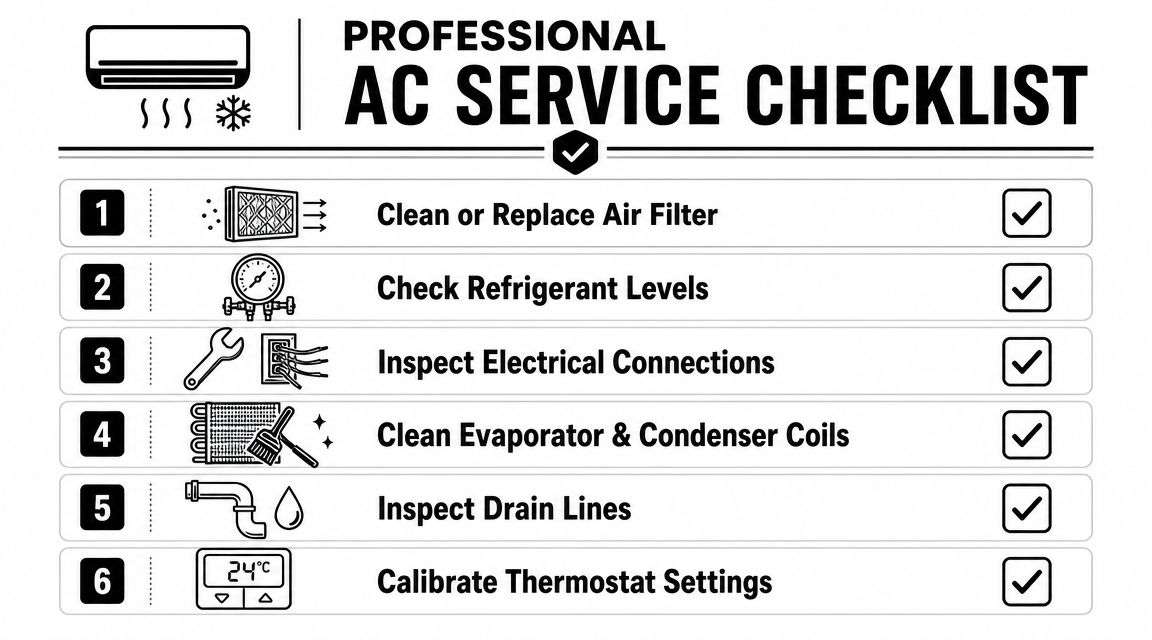
A solid service visit usually includes tasks like these:
- Air filter inspection. A dirty filter can choke airflow and make the system work harder than it should.
- Refrigerant check. The system needs the proper refrigerant charge to move heat effectively.
- Electrical inspection. Loose wires, worn contactors, and failing capacitors can create unreliable operation.
- Coil cleaning. Dirty evaporator or condenser coils reduce heat transfer.
- Drain line inspection. A blocked condensate drain can cause water issues and shutdowns.
- Thermostat verification. The control settings need to match what the system is doing.
For a deeper look at the bigger maintenance picture, see what HVAC maintenance includes.
Why refrigerant and airflow matter so much
If you remember only one technical point, remember this. A proper AC service must prioritize refrigerant charge verification and airflow correction. Undercharged refrigerant or restricted airflow are major drivers of longer runtimes, lower efficiency, and compressor trouble (refrigerant and airflow service guidance).
Here's the plain-language version:
| Problem | What you notice | What it can lead to |
|---|---|---|
| Low refrigerant | Weak cooling, longer run times | Strain on major components |
| Restricted airflow | Rooms cool unevenly, weak vent output | Frozen coil, poor comfort |
| Dirty coils | AC runs but doesn't keep up | Reduced cooling capacity |
Service is also about humidity
Homeowners often describe an AC problem as “it's cooling, but the house still feels clammy.” That's a real clue. Good AC performance isn't only about dropping the temperature. It's also about removing moisture from indoor air.
Practical rule: If your home feels muggy even when the thermostat is set where you want it, ask the technician to evaluate airflow, filter condition, coil cleanliness, and refrigerant charge together, not as separate issues.
When those basics are right, the system usually cools more evenly and controls humidity better. That's why a tune-up can change how a house feels, not just what number appears on the thermostat.
Common Signs Your Air Conditioner Needs Repair
Most air conditioners don't fail without warning. They usually give you clues first. The trick is knowing which clues matter and which ones you can monitor for a day or two.
Signs that should get your attention
- Warm or lukewarm air from the vents. If the thermostat is calling for cooling and the air doesn't feel cool, the issue could involve refrigerant, airflow, or the outdoor unit.
- Weak airflow. If the system is running but the vent output feels soft, there may be a filter problem, blower issue, duct restriction, or frozen coil.
- Frequent cycling. If the system starts and stops too often, it may be struggling with controls, airflow, or system condition.
- Unusual indoor humidity. When the home feels sticky, the AC may be running without removing moisture properly.
- Odd sounds. Grinding, squealing, rattling, or buzzing usually mean something mechanical or electrical needs attention.
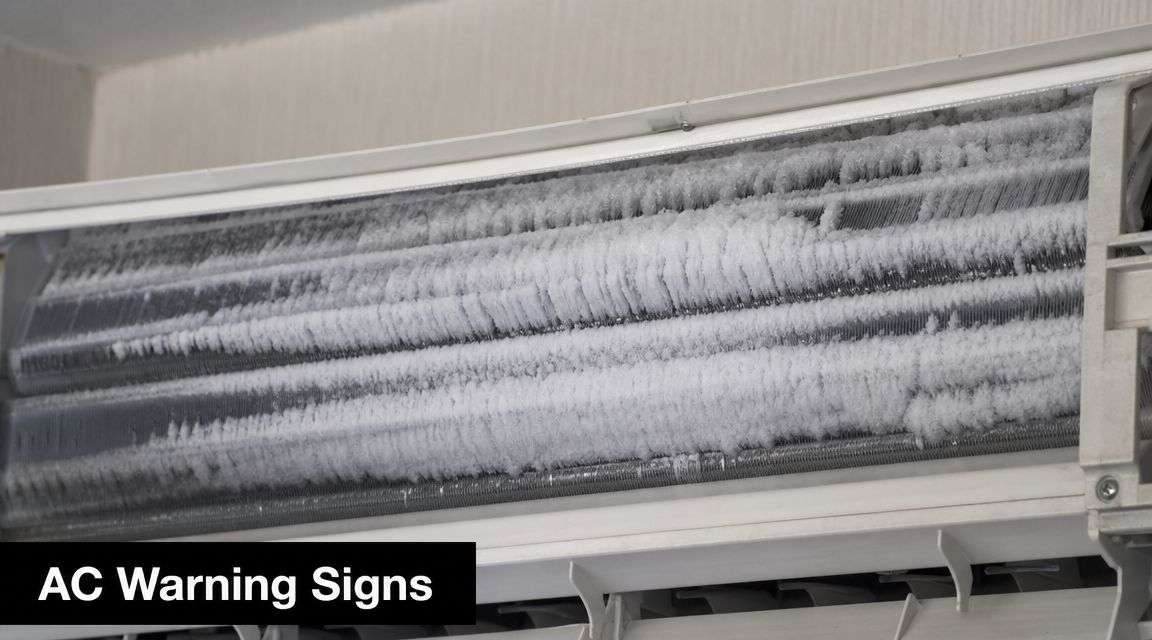
- Ice on the indoor coil or refrigerant line. Frost is never a normal sign during cooling season.
If your system is already struggling to cool, this homeowner guide to AC not cooling troubleshooting can help you narrow down what you're seeing before you schedule service.
What those symptoms often mean
Some signs point to small problems. Others suggest a bigger repair is close if you keep running the unit.
A dirty filter might start as weak airflow. If that restriction gets bad enough, the evaporator coil can get too cold and freeze. Then the house gets warmer, even though the AC seems to be running all the time.
A squealing noise may be a failing motor component. A loud buzz might mean an electrical part is struggling. A rattle could be simple, but it can also signal a loose panel or failing fan assembly.
If your AC is blowing warm air, icing up, or making a new loud noise, shut it off and schedule service instead of forcing it through another day.
What you can check before calling
You don't need to diagnose the whole system yourself, but a few quick checks can help:
- Thermostat setting. Make sure it's set to cool and the temperature setting is below room temperature.
- Filter condition. If the filter is visibly dirty, replace it.
- Outdoor unit area. Look for obvious debris or blockage around the condenser.
- Breaker status. Confirm the system hasn't tripped a breaker.
If those basics look normal and the problem continues, it's time for professional repair.
Why Professional EPA-Certified HVAC Service Is Essential
Air conditioning looks simple from the outside. There's a thermostat on the wall, a box outside, and cool air comes through vents. But the actual system combines electricity, refrigerant, airflow, controls, and condensate management. That's why DIY AC work can go sideways fast.
A homeowner can usually handle routine filter changes and basic housekeeping around the outdoor unit. Beyond that, most cooling issues need proper instruments, training, and safe handling practices. Refrigerant is a major reason.
The refrigerant change makes training even more important
The industry is in a transition. The U.S. EPA says that new residential air conditioners and heat pumps manufactured after January 1, 2025 must use lower-global-warming-potential refrigerants, and that makes correct service procedures more important for homeowners choosing repairs or replacement options (EPA refrigerant transition context for Jenison homeowners).
That affects more than brand-new equipment. It also affects parts compatibility, technician training, and how service decisions are made on older systems. If someone guesses, mixes refrigerants, or handles the system incorrectly, they can damage equipment and create compliance problems.
What a certified technician protects you from
A trained HVAC technician helps reduce risks in several areas:
- Electrical safety. Capacitors, contactors, and wiring can be dangerous even when the unit appears off.
- Refrigerant handling. Charge verification and leak-related decisions require the right tools and procedures.
- Accurate diagnosis. Replacing a part without understanding the root problem can waste time and money.
- Equipment protection. Incorrect service can shorten the life of the compressor or fan motors.
- Warranty concerns. Improper work can complicate future warranty claims.
DIY has limits
Homeowners sometimes get tempted by quick internet fixes. Wash the outside coil with too much pressure, and you can bend fins. Add refrigerant without diagnosis, and you can create a worse problem. Ignore airflow and focus only on temperature, and the system may still cool poorly after the “fix.”
Certified HVAC service isn't just about convenience. It's about handling the refrigerant circuit and electrical system correctly the first time.
That matters even more now, because service decisions increasingly involve both present repair needs and future equipment compatibility.
Platinum's Service Offerings for West Michigan
A good HVAC company should help you make decisions, not just show up when the system quits. For Jenison homeowners, that usually means three things. Routine maintenance to reduce surprises, repair service when something goes wrong, and honest guidance when an older unit is costing more to keep alive than it should.
That matters more in West Michigan than in places with mild seasons. Your AC has to handle humid summer days, then the heating side of the system takes over for a long winter. Many homeowners prefer one company that can follow the equipment through both seasons, keep service records in one place, and spot patterns over time.
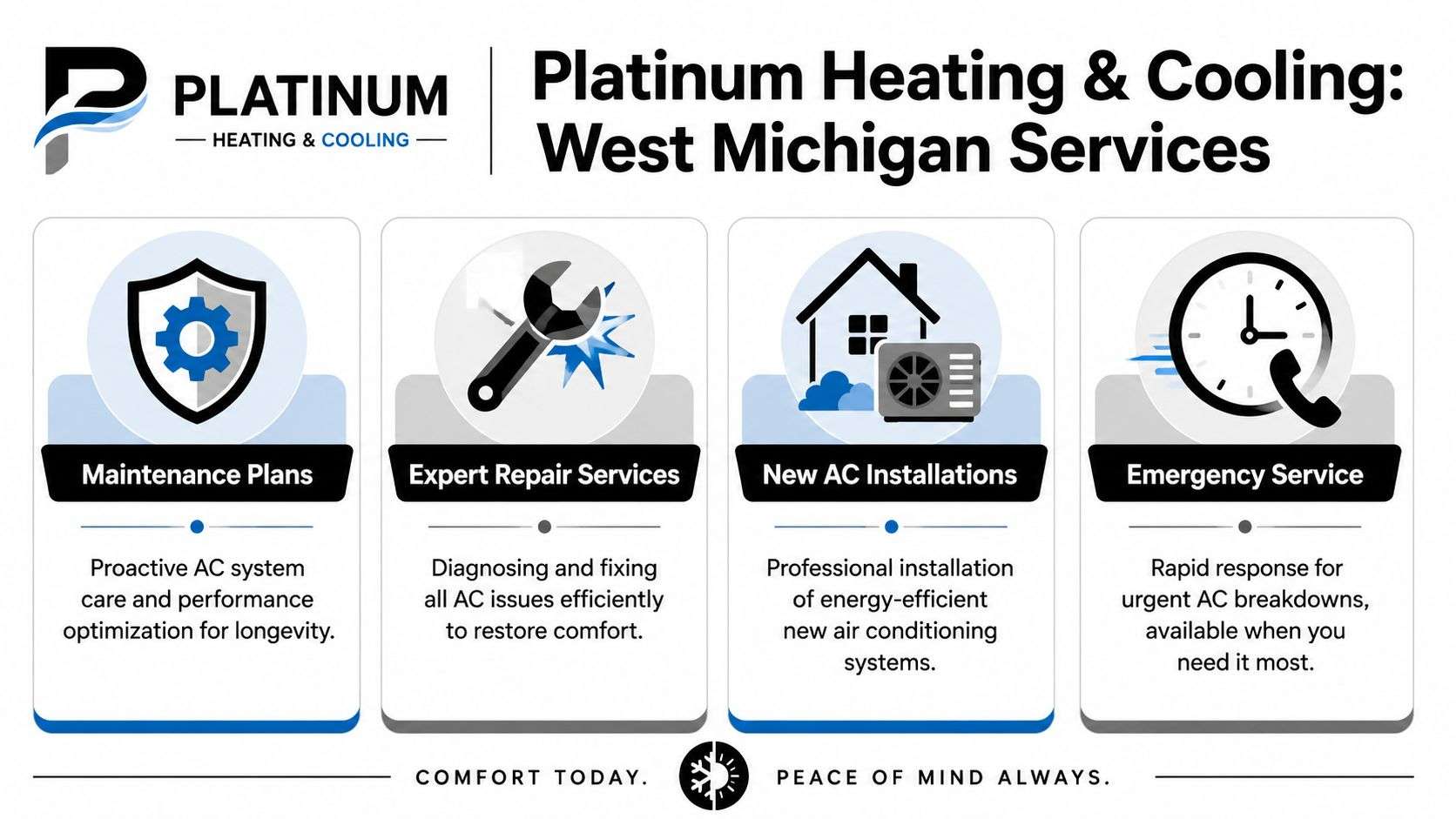
Platinum Heating & Cooling serves West Michigan communities including Hudsonville, Jenison, Grandville, Walker, Standale, Allendale, and Wyoming. Their work covers residential systems, apartments, and light commercial properties, which is useful if you want one provider for more than a single repair call.
Why semiannual service fits Michigan homes
HVAC service works a lot like car maintenance. You get better results when you check the system before the heavy-use season, not after a breakdown. Guidance for Jenison-area homeowners recommends semiannual HVAC inspections because seasonal swings can expose problems such as dirty filters and coil buildup before they reduce performance and raise operating costs (semiannual Jenison HVAC inspection guidance).
For most homeowners, that means one visit in spring for cooling and another in fall for heating. It is a simple schedule, and it is easier to remember than waiting for the equipment to remind you.
What to look for from a local HVAC provider
If you are choosing Air Conditioner Service in Jenison MI, look at the full range of help a company can provide. The right fit should cover the whole decision process, from early warning signs to repair or replacement.
- Planned maintenance. Scheduled tune-ups help catch wear, airflow restrictions, and control issues before they turn into a no-cooling call.
- Repair diagnosis and repair work. A technician should identify the root problem, explain it clearly, and repair what is failing.
- Replacement guidance. Older systems sometimes reach a point where repeated repairs stop making financial sense.
- Emergency service. Some cooling failures happen during the hottest stretch of the week, when waiting is harder on the household.
- Support for different property types. Landlords and small commercial owners often need service that can scale beyond one home.
That range matters because AC decisions are rarely isolated. A clogged coil today can be a simple maintenance issue. A refrigerant leak on an aging system can turn into a repair-versus-replacement conversation.
Membership plans and local support
A membership plan helps homeowners stay on schedule without having to remember every seasonal visit. The practical benefit is consistency. The system gets checked at regular intervals, small issues are easier to catch early, and repair decisions become clearer because there is already a service history.
Here is how that usually helps in real life:
| Need | Why it matters |
|---|---|
| Spring AC check | Helps prepare the system before heavy cooling use |
| Fall HVAC visit | Keeps the broader system ready for the heating season |
| Priority support | Useful when demand is high during weather extremes |
| Ongoing records | Makes future repair or replacement decisions clearer |
Platinum also offers maintenance membership options, repair service, installation, and 24/7 emergency support across West Michigan. For a Jenison homeowner trying to choose a long-term service partner, that kind of structure is often the difference between reacting to problems and staying ahead of them.
Some local providers, including Platinum, also offer discounts for veterans and first responders. For households managing an urgent repair, that kind of local support can make the choice a little easier.
Scheduling Service and What to Expect
A lot of homeowners put off calling because they're not sure what the visit will involve or what it might cost. That uncertainty is understandable. The process should be simple and clear.
What the appointment usually looks like
A normal service process goes like this:
- You schedule the visit by phone or online and describe what the system is doing.
- A technician arrives and checks the equipment, thermostat behavior, airflow, and operating condition.
- The technician diagnoses the issue and explains what's wrong in plain language.
- You get a written estimate before repair work moves forward.
That written estimate matters. It gives you a chance to compare options, ask questions, and decide whether the repair makes sense for the system's age and condition.
How to think about cost
National pricing gives homeowners a useful frame of reference. Angi reports that HVAC contractors commonly charge $50 to $150 per hour, inspections can run $150 to $500, the average HVAC repair costs about $350, and repairs may range from $100 to $2,000 or more, depending on the issue (Jenison HVAC cost guide on Angi).
The most practical takeaway is this: a diagnostic visit is often the lower-cost step that helps you avoid guessing. It gives you a professional opinion and a written scope before you commit to a larger repair.
Ask for the diagnosis in plain language and request the estimate in writing. That keeps the decision clear, especially if you're comparing repair against replacement.
How to prepare before the technician arrives
You don't need to do much, but a few steps help:
- Clear access to the thermostat, indoor unit, and outdoor condenser.
- Write down symptoms such as noise, poor airflow, icing, or warm air.
- Note timing like whether the problem started suddenly or has gotten worse over time.
- Bring past repair info if you have it.
That gives the technician a better starting point and often speeds up the diagnosis.
Jenison Homeowner AC Service FAQs
How often should I have my air conditioner serviced?
For most homes in this area, a twice-yearly HVAC inspection cadence is a practical benchmark. In West Michigan, that usually means checking cooling before the summer season and reviewing the broader HVAC system again before winter. That schedule is especially helpful in homes with pets, older equipment, or comfort complaints that come and go with the seasons.
Can I do any AC maintenance myself?
Yes. Homeowners can handle a few basics safely:
- Change or clean the air filter on schedule.
- Keep plants and debris away from the outdoor unit.
- Check the thermostat settings if cooling seems off.
- Watch for warning signs like weak airflow, icing, or unusual noise.
Leave refrigerant, electrical testing, motor diagnostics, and deeper internal service to a trained HVAC technician.
Should I repair or replace my air conditioner?
That depends on the age of the equipment, repair history, current symptom, refrigerant situation, and how well the system is keeping you comfortable. If the repair is straightforward and the system has been reliable, repair often makes sense. If problems keep returning, comfort is poor, or parts and refrigerant issues are complicating service, replacement may be the better long-term choice.
Why does the house feel humid even when the AC is running?
Because cooling and moisture removal are tied together. An AC can run and still leave the house feeling sticky if airflow is restricted, the filter is dirty, the coil is affected, or the refrigerant charge is off. That's one reason a proper service visit looks at humidity-related comfort, not only temperature.
If your home in Jenison or the surrounding West Michigan area isn't cooling the way it should, Platinum Heating & Cooling can help you schedule AC service, troubleshoot comfort problems, and review maintenance options with clear communication and written estimates.