
When the West Michigan summer heat settles in from May through October, the last thing you want is an air conditioner that’s running but not actually cooling your home. It’s a frustrating situation, but before you assume a major breakdown, a quick check of a few common culprits can often get things back on track.
Before calling in the pros, a little DIY air conditioner not cooling troubleshooting can save you both time and money.
Your First Steps When The AC Fails To Cool
It’s a feeling homeowners from Hudsonville to Grandville know all too well: the AC is humming, but the air coming out of the vents is lukewarm at best. This is one of the most common calls we get when the weather heats up and systems start working overtime.
But hold off on that service call for just a minute. These first few steps are your best line of defense and can quickly solve the most frequent issues we see in the field.
Check The Thermostat Settings
I know, it sounds almost too simple, but you’d be surprised how often this is the culprit, especially after a long winter where you've been focused on heating. Take a quick look at your thermostat before you do anything else.
Make sure it’s actually set to “Cool.” After the northern winter months (November through April) of using the "Heat" setting, it's easy for it to get bumped to just "Fan." The "Fan" setting is a sneaky one because it will blow air through your vents, but it won't trigger the outdoor unit to start the cooling process. Also, double-check that the temperature is set a few degrees below the current room temperature—that's the signal your system needs to kick on.
Inspect The Air Filter
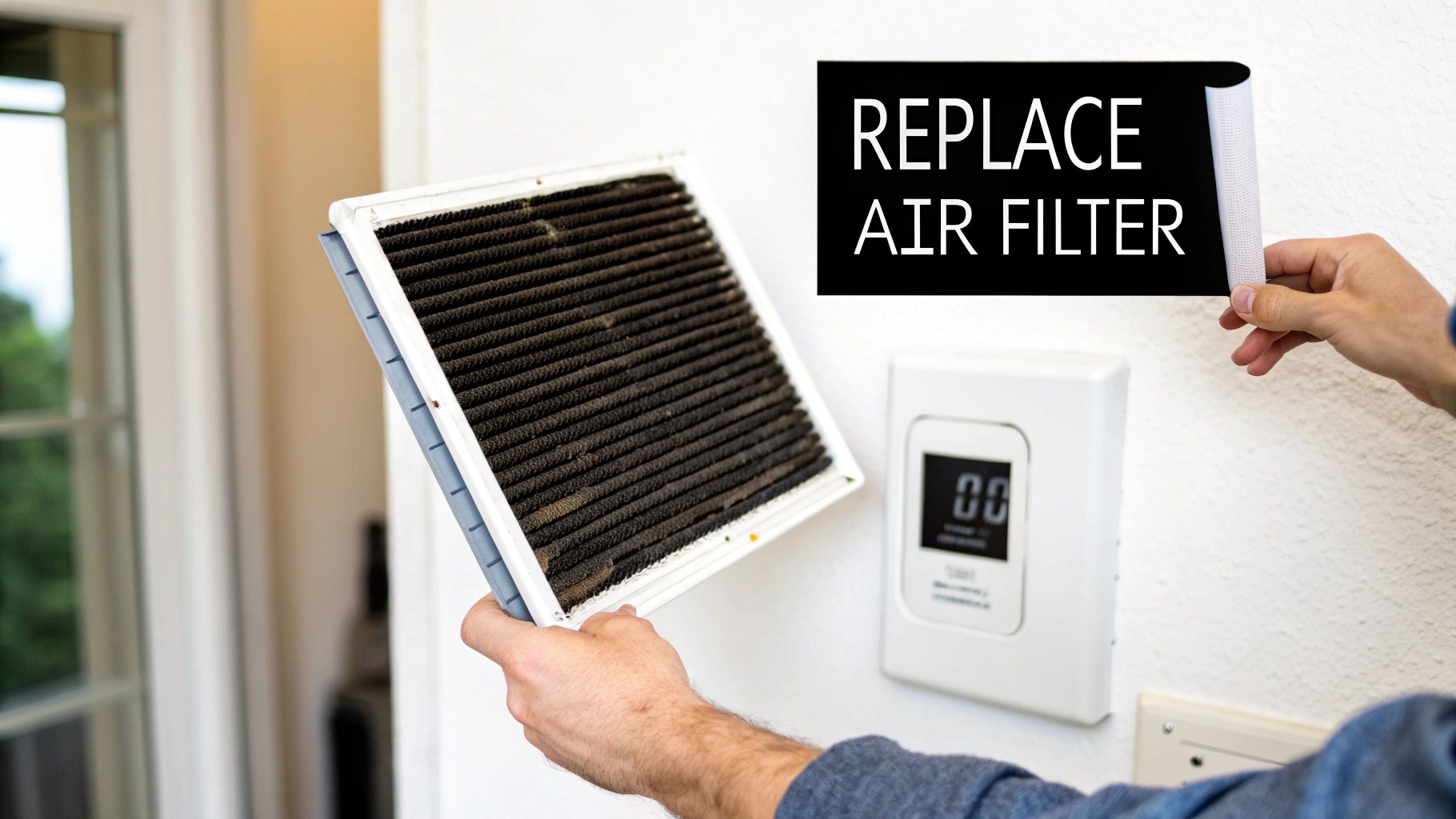
A clogged air filter is, without a doubt, the number one reason an air conditioner stops cooling properly. Think of it like trying to run a marathon while breathing through a straw. When that filter is choked with dust, pet hair, and pollen, it starves your system of the air it needs.
This blockage makes your AC work much harder to pull air through, drastically reducing its cooling power and efficiency.
A dirty air filter isn't just a minor issue—it's the cause of up to 70% of all HVAC service calls in places like the Grand Rapids area. Clogged filters can slash airflow by as much as 50%, forcing your unit to work 25% harder and cutting its cooling efficiency by an average of 15%. For a deeper dive into why filter changes are so critical, you can explore the data in various HVAC industry reports.
For those of us in Jenison and Allendale dealing with summer pollen, making a habit of checking the filter monthly is a smart move. Just slide it out of its slot (usually near your indoor furnace or air handler) and hold it up to a light. Can't see the light through it? It's definitely time for a new one.
To help you get started, here's a quick checklist for those initial, safe troubleshooting steps you can take yourself.
Quick DIY Troubleshooting Checklist
This table is a simple guide to walk you through the first things to check when your AC isn't performing as it should.
| Checklist Item | What to Look For | Simple Fix | Potential Outcome |
|---|---|---|---|
| Thermostat | Incorrect setting ("Heat" or "Fan"), dead batteries, or incorrect temperature setting. | Set to "Cool," replace batteries, and lower the set temperature 5° below room temp. | The AC system engages and starts cooling properly. |
| Air Filter | Visible dirt, dust, or debris clogging the filter media. | Replace the filter with a new one of the correct size. | Improved airflow and restored cooling performance. |
| Circuit Breaker | A tripped breaker for the indoor or outdoor unit in your main electrical panel. | Flip the breaker switch completely off, then back on. | Power is restored to the AC unit, allowing it to run. |
| Outdoor Unit | Debris like leaves, grass clippings, or dirt blocking the fins of the condenser unit. | Turn off power at the breaker first, then gently clear away debris with a hose. | The unit can now release heat effectively, improving cooling. |
Following these steps can often resolve the most common and simple issues without needing a professional visit.
This visual guide breaks down that initial diagnostic process, showing how starting with the thermostat and filter can quickly narrow down the problem.
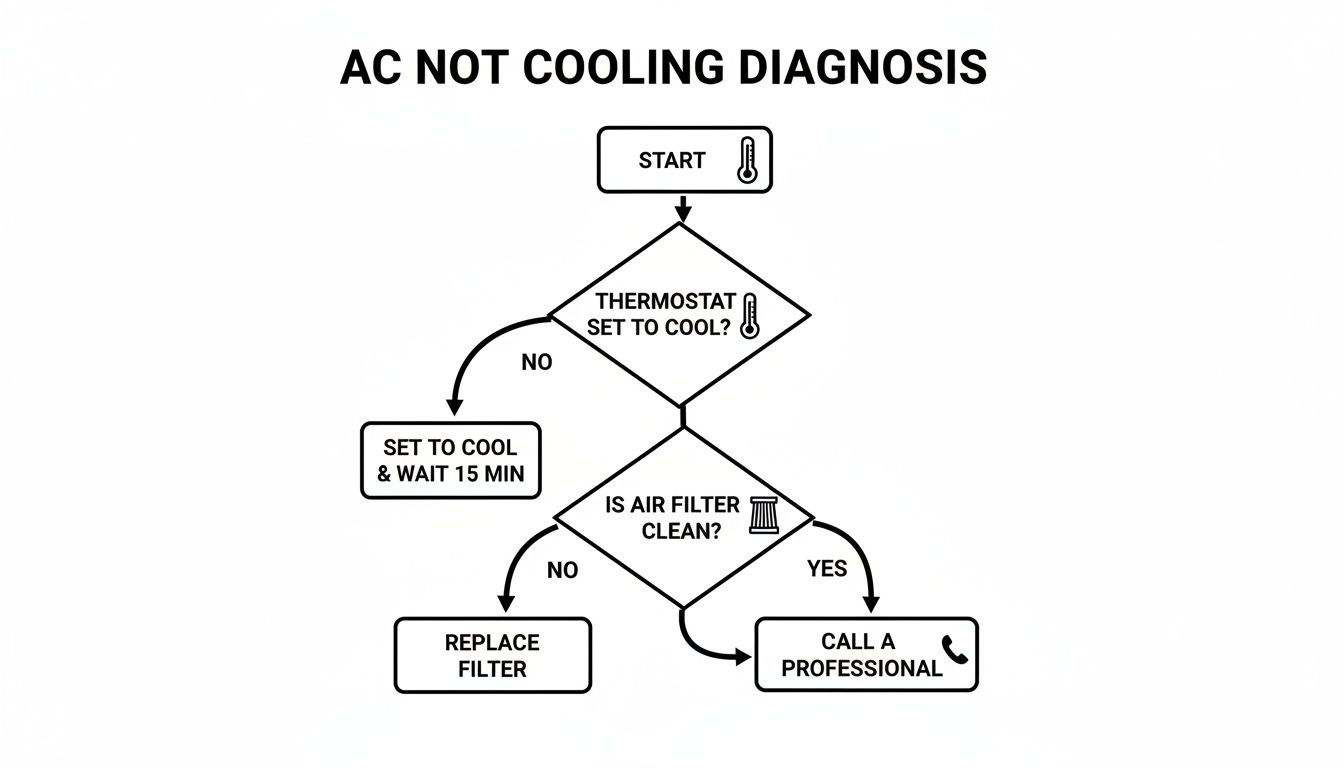
The key takeaway here is that these simple, homeowner-friendly checks are the most effective place to start. By ruling out these common culprits first, you can often solve the problem yourself.
If you've confirmed the thermostat is set right and you've put in a clean filter, but your home in Walker or Wyoming still feels warm, the issue might be something more. The next step is a safe visual inspection of your outdoor unit.
Inspecting Your System For Common Issues
So, a new filter and thermostat adjustments didn't do the trick. Now it’s time for a safe, visual check of your HVAC system. More often than not, the next culprit is plain old dirt and grime mucking up the works. This is especially true for homeowners around West Michigan, including Hudsonville, Jenison, Grandville, Walker, Standale, Allendale, & Wyoming michigan, where springtime cottonwood and summer foliage can choke an outdoor unit in no time.
Your air conditioner relies on two sets of coils working in tandem: the evaporator coil inside your home and the condenser coil outside. The evaporator coil pulls heat out of your indoor air, and the condenser coil kicks that heat to the curb. If either one gets too dirty, this whole heat-swapping process grinds to a halt, leaving you with lukewarm air and a struggling system.
Checking The Outdoor Condenser Unit
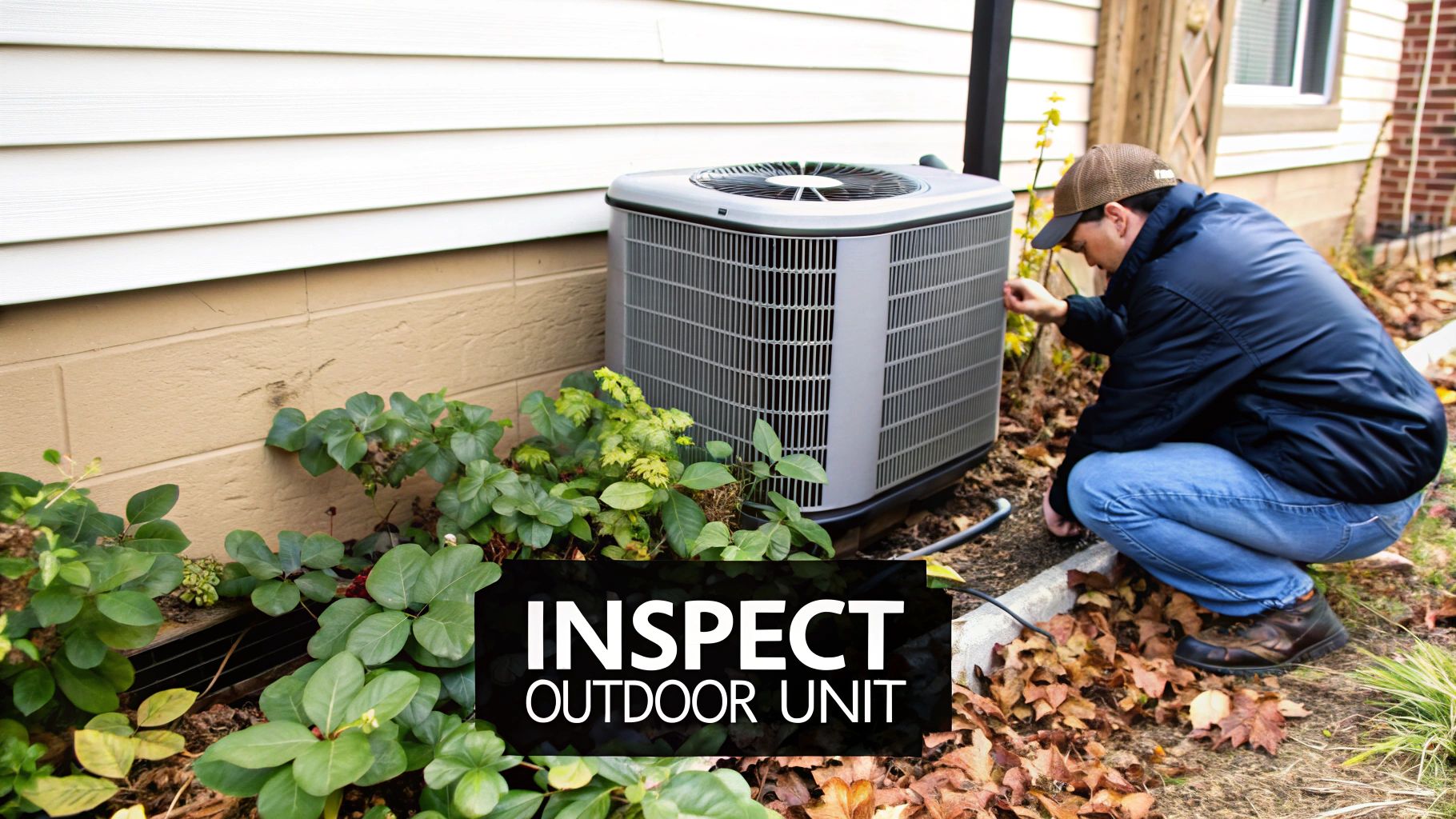
Your outdoor unit—the condenser—is the workhorse that gets rid of all the heat pulled from inside your house. To do its job, it needs to breathe. That means it needs clear, unrestricted airflow across its coils.
Take a walk outside and look at the unit from a few feet away. Is it being suffocated by overgrown bushes, tall grass, or a blanket of leaves? Anything within a two-foot radius can block the airflow it desperately needs. We see it all the time in places like Jenison, where pollen and grass clippings love to cake onto condenser fins.
Keep an eye out for:
- Leaves and Twigs: This stuff gets sucked right up against the fins, creating a mat that traps heat.
- Grass Clippings: Mowing too close can blast clippings straight into the coils, gumming them up.
- Cottonwood and Pollen: This fuzzy mess builds up fast, essentially insulating the coils so they can't release heat.
- Dirt and Grime: Over time, a simple layer of dust can seriously reduce your AC's efficiency.
Before you touch anything, shut off the power to the outdoor unit. You can do this at your home's main circuit breaker panel. Once you're certain the power is off, you can gently rinse the fins with a garden hose and a sprayer nozzle, working from the top down. Whatever you do, never use a high-pressure washer—it will bend those delicate aluminum fins in a heartbeat. For a more detailed guide, check out our post on how to clean your AC condenser unit.
Inspecting The Indoor Evaporator Coil
While the outdoor unit battles the elements, the indoor evaporator coil has a different nemesis: ice. This coil is tucked away inside your home, usually in the air handler right above or next to your furnace.
Ice buildup is a dead giveaway of an airflow problem. When that dirty filter you just replaced was blocking air from moving across the coil, the coil gets way too cold. This causes any moisture in the air to freeze right onto it. A solid block of ice can't transfer heat, so your system will just run and run without actually cooling anything.
To check for ice, you might need to open an access panel on your indoor unit (again, only after cutting the power). If you see any frost or a chunk of ice, your DIY troubleshooting is done for now.
Dirty evaporator and condenser coils are a huge drain on AC efficiency, causing 25-35% of performance loss. In dusty Midwest climates, these coils can collect 1-2 pounds of gunk every year, slashing heat transfer by 40% and letting indoor temps creep up by 5-10°F. Uncleaned coils can make a system run 20% longer, spiking your electricity bill by 15-25%—that can be over $250 in extra costs for a family in Walker. This strain also leads to freeze-ups that shut down 1 in 4 units right in the middle of summer.
If you've found a frozen coil, turn your AC system completely OFF at the thermostat, but switch the fan setting to "ON." This will circulate room-temperature air over the ice and help it melt naturally. Don't try to chip or scrape the ice off; you could easily damage the coil. It can take a few hours to thaw out completely. Once it's clear, pop in a fresh air filter before you turn the cooling back on. If it just freezes up again, that's a red flag for a bigger issue, like a refrigerant leak, that needs a professional technician.
Recognizing Deeper Mechanical Problems
So, you’ve changed the filter and cleared away the leaves from your outdoor unit, but the air coming from your vents is still lukewarm. When the simple fixes don’t work, it's usually a sign that something more serious is going on. DIY troubleshooting is fantastic for the basics, but some problems are strictly for the pros.
Knowing how to spot a major mechanical or electrical failure is key to preventing further damage and knowing when it's time to pick up the phone.
For homeowners across West Michigan, from Wyoming to Allendale, being able to describe what’s happening can make a huge difference. If you can tell a technician what you’re seeing or hearing, they can often get a head start on the diagnosis right over the phone, making sure they show up with the right tools and parts to get you cool again.
The Telltale Signs Of A Refrigerant Leak
One of the most common—and critical—issues your AC can have is a refrigerant leak. Think of refrigerant as the lifeblood of your system. It’s the magic stuff that absorbs heat from inside your house and dumps it outside. If you’re low on refrigerant, it means you have a leak.
Your air conditioner is a sealed system, just like your refrigerator. It doesn't "use up" refrigerant like a car uses oil. If the level is low, it has escaped, and just topping it off is a band-aid fix that ignores the real problem.
Here’s what to look and listen for:
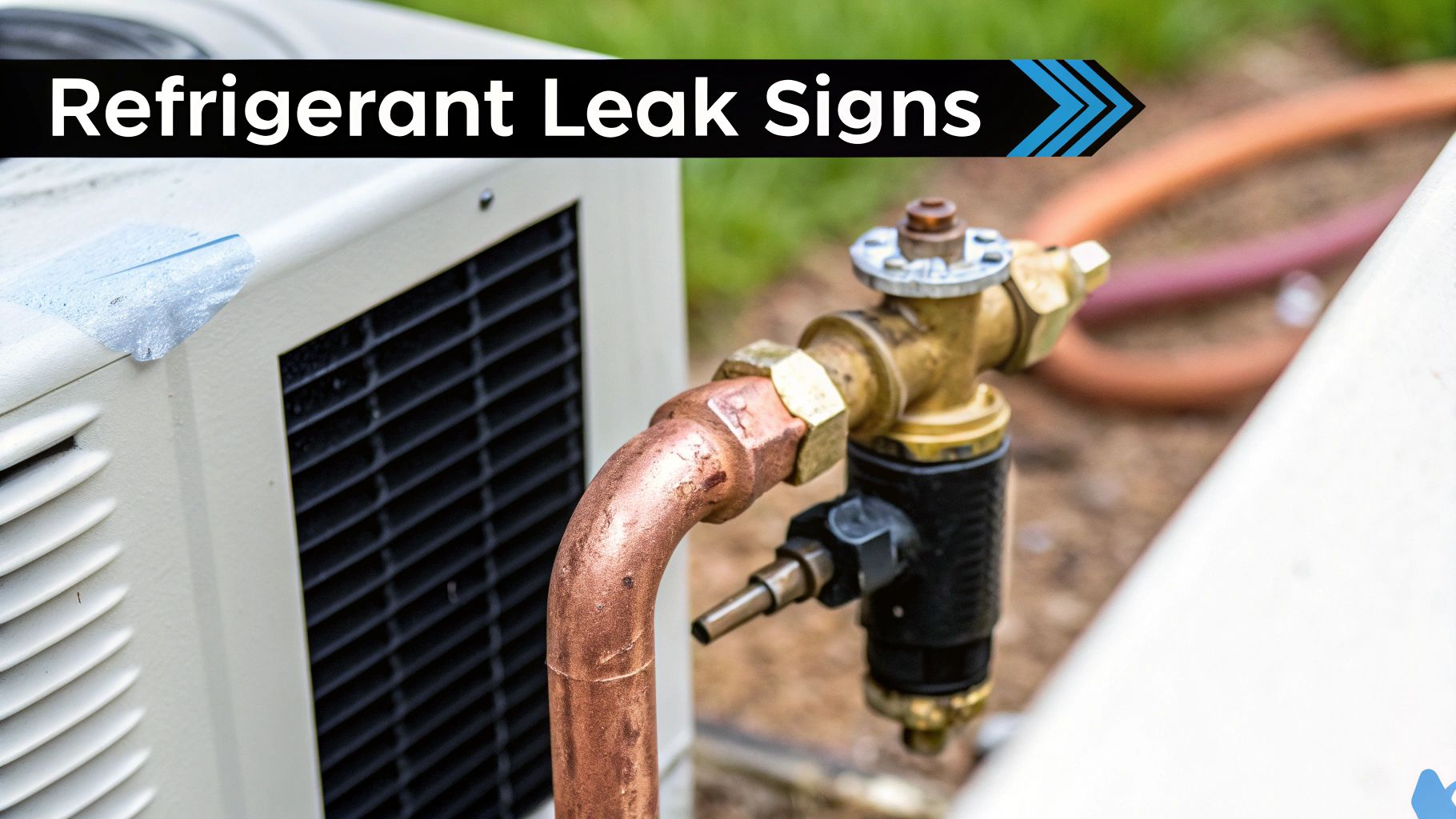
- Hissing or Bubbling Noises: A sharp hissing sound near either unit is a classic sign of refrigerant gas escaping. You might also hear a gurgling or bubbling along the copper lines.
- Warm Air From Vents: This one’s obvious. Without enough refrigerant, the heat transfer process breaks down, leaving you with lukewarm air.
- Ice on Evaporator Coils: A frozen coil can be caused by a dirty filter, but it's also a hallmark of a refrigerant leak. Low refrigerant causes a pressure drop that can make the indoor evaporator coil get cold enough to freeze over.
- Oily Residue: Refrigerant circulates with a special oil to lubricate the system. If you spot a greasy film on the copper lines or fittings, it’s a dead giveaway you’ve got a leak.
Important Safety Note: Handling refrigerant is not a DIY job. It requires an EPA certification because of its environmental impact and the dangerously high pressures involved. Never try to add refrigerant yourself. A pro from Platinum Heating & Cooling has the training to find the leak, fix it properly, and recharge the system to exact factory specs.
When The Capacitor Or Compressor Fails
Besides refrigerant leaks, two other culprits can bring your AC to a grinding halt: the capacitor and the compressor. These electrical components are the muscle behind your outdoor unit.
The capacitor is like a small battery that gives the fan and compressor motors the jolt they need to get started. When it goes bad, the motors can't get going. The compressor, on the other hand, is the heart of your AC, pumping the refrigerant through the system. A failed compressor is one of the most serious (and expensive) repairs you can face.
Distinguishing Capacitor From Compressor Issues
You can often play detective just by listening to your outdoor unit. Pay attention to the sounds it makes—or doesn't make—when it tries to turn on.
| Component | Common Symptoms | What You Might Hear |
|---|---|---|
| Capacitor | The outdoor fan won't spin, or it struggles to start and turns very slowly. The unit might try to kick on but then shuts right back off. | A low humming or buzzing sound. You'll often hear a "click" as the system attempts to start, followed by that persistent hum. |
| Compressor | The circuit breaker trips over and over. The fan outside might be running just fine, but the air inside is still warm. | A loud clanking, rattling, or even a screeching noise when it tries to start up. Sometimes you'll see it shudder or shake violently. |
Lastly, don't forget to check the simple stuff one more time: your home's main electrical panel. A tripped circuit breaker could be the culprit. Find the breaker for your AC or air handler and see if it's in the "off" or middle position. If you reset it and it immediately trips again, leave it off. That’s a clear sign of a serious electrical problem that needs a professional right away to avoid a safety hazard.
When To Call An HVAC Professional
Trying a few DIY troubleshooting steps is a great start when your AC acts up, but knowing where to draw the line is crucial for your safety and your wallet. After you’ve checked off the easy stuff like the thermostat and the air filter, a problem that sticks around usually points to something deeper—something that needs professional tools and a trained eye.
This is the moment to step back. Trying to tackle complex electrical or refrigerant problems on your own is a recipe for disaster. It can lead to serious injury, cause even more expensive damage to your unit, and will almost certainly void your manufacturer's warranty.
The goal is to feel empowered to make a smart, safe call, not to attempt a risky repair that’s over your head.
Red Flags That Demand Expert Attention
Some symptoms are non-negotiable. If you notice any of these signs, it’s time to put down the tools and pick up the phone. These aren't just minor quirks; they're signals of serious issues that can be dangerous if not handled by a pro.
- Signs of a Refrigerant Leak: We mentioned this earlier, but it bears repeating. Hissing sounds, an oily film on the copper lines, or ice building up on the coils are classic signs of a leak. Only an EPA-certified technician can legally and safely handle refrigerant to find the leak and fix it properly.
- Electrical Buzzing or Burning Smells: Any strange smells, especially like burning plastic, or a loud, angry buzzing from either the inside or outside unit points to a major electrical problem. It could be anything from a failing motor to a bad capacitor. Shut the power off at your circuit breaker immediately and leave it off.
- The Compressor Won't Start: You hear a click from the outdoor unit, but the fan and compressor never actually kick into gear. Or worse, it makes loud grinding or clanking noises when it tries. This unit is in distress, and trying to force it to run can cause a total system meltdown.
- The Circuit Breaker Keeps Tripping: A breaker tripping once might just be a fluke. But if it trips every single time the AC tries to start, you're dealing with a dangerous electrical short or an overloaded circuit that needs a professional diagnosis, fast.
We once got a call from a homeowner in Standale who heard a faint hissing from their outdoor unit. Instead of shrugging it off, they called us. Our tech found a tiny, slow refrigerant leak. If they had ignored it, that leak would have drained the system by the end of the cooling season and completely fried the compressor—turning a simple repair into a full system replacement. That one phone call saved them thousands.
The Dangers Of DIY Overreach
It’s tempting to try and save a few bucks with a DIY fix, but with HVAC systems, the stakes are high. Your home's AC unit runs on a 240-volt circuit. That’s more than enough to cause serious harm or even be fatal if you don’t know exactly what you’re doing.
Beyond the personal safety risk, a botched repair can set off a chain reaction of damage. For example, trying to add refrigerant yourself (which is illegal without certification) can easily overcharge the system and destroy the compressor—the single most expensive part of your air conditioner.
Our team has the specialized diagnostic tools to pinpoint the real problem, from electronic leak detectors to refrigerant gauges and multimeters. If your initial air conditioner not cooling troubleshooting didn't solve the puzzle, it's time to let us take over. You can learn more about our professional AC repair and service for homeowners across West Michigan, including Hudsonville, Jenison, Grandville, Walker, Standale, Allendale, & Wyoming michigan.
Calling a pro isn't giving up; it's the smartest move you can make to protect your home, your family, and your investment.
Preventive Maintenance For A Reliable AC
The best way to deal with an AC problem is to make sure it never happens in the first place. Once you've gone through the basic troubleshooting steps, the conversation always shifts from reacting to problems to actively preventing them. Honestly, investing in regular maintenance is the single smartest thing you can do to ensure your air conditioner sails through the hottest West Michigan months (May through October) without a hitch.
This isn't just about dodging a mid-summer breakdown. It's about keeping your system running at its peak for a longer, healthier, and more efficient life. A well-maintained AC doesn't just keep you cool—it gives you peace of mind and real savings on your monthly energy bills. Think of it as an insurance policy for uninterrupted comfort.
Your Seasonal Maintenance Checklist
For homeowners in places like Hudsonville and Jenison, where the seasons hit hard, a simple checklist can make a huge difference. Taking care of a few key tasks in the spring and checking in mid-summer can head off the most common system failures I see in the field.
Spring Start-Up (April-May):
- Clear the Area: Before you even flip the switch to "cool" for the first time, head outside. Take off any winter cover that protected the unit during the northern winter months (November through April) and clear away all the leaves, twigs, and gunk that have piled up. You need a bare minimum of two-foot clearance all the way around for it to breathe properly.
- Gentle Cleaning: With the area clear, shut off the power at the circuit breaker. Use a regular garden hose with a gentle spray to rinse the dirt and pollen off the condenser fins. Go from top to bottom. Whatever you do, never use a pressure washer—it will bend those delicate fins in a second and cause major problems.
- First Run Test: Turn the power back on, set your thermostat to "Cool," and drop the temperature a few degrees below what it is inside. Let it run for a solid 15-20 minutes. You're just making sure it's kicking on, blowing cold air, and cycling like it should.
Mid-Summer Check-In (July-August):
- Filter Check: The middle of summer is prime time for dust, pollen, and pet dander. You should be checking your air filter monthly, especially if you have pets or anyone with allergies. A dirty, clogged filter is still the number one enemy of your air conditioner.
- Drain Line Inspection: Find the PVC pipe that carries condensation away from your indoor unit. Make sure it's not clogged up with algae or debris and is dripping like it's supposed to. A blockage here can cause water to back up, potentially damaging your home and shutting the whole system down.
Beyond The Basics The Value Of A Professional Tune-Up
While these homeowner steps are crucial, they can't take the place of a professional tune-up. A full service call goes way beyond changing a filter. It’s a deep dive into the health, safety, and performance of your entire HVAC system.
An annual professional tune-up can restore up to 95% of your air conditioner's original efficiency. Without it, small, unnoticed issues—like a slightly low refrigerant charge or a loose electrical wire—can cause a 5-10% drop in performance each year. That might not sound like much, but it can easily add up to hundreds of dollars in wasted energy over a single cooling season.
When a Platinum Heating & Cooling technician comes out, we run through a multi-point inspection designed to catch problems before they leave you sweating. This includes:
- Cleaning Coils: We don't just rinse them; we thoroughly clean the indoor evaporator and outdoor condenser coils to ensure they can transfer heat effectively.
- Checking Refrigerant Levels: We check for the precise refrigerant charge your system needs. Being even a little low or high forces the system to work much harder than it should.
- Tightening Electrical Connections: Loose wires are a serious fire hazard and one of the most common reasons for component failure. We inspect and tighten every connection.
- Calibrating the Thermostat: We make sure your thermostat is reading the room temperature correctly and sending the right signals to your AC.
This kind of detailed care doesn't just get your system ready for the hottest days in Grandville or Walker; it can significantly extend its lifespan. To make it easy, we offer plans that cover all the essentials. You can learn more about our dedicated spring HVAC maintenance services that keep West Michigan homes comfortable all season long. It's the best way to protect your investment and avoid the stress of a sudden breakdown.
Still Have Questions? We’ve Got Answers.
After you've run through the basic troubleshooting steps, you might still have some lingering questions. That's perfectly normal. We get calls every day from homeowners across West Michigan—from Jenison to Standale—asking about the same things.
Here are the most common questions our technicians answer, along with our straightforward advice.
How Often Should I Change My Air Filter In West Michigan?
This is, without a doubt, the most important question we get asked. With our heavy spring pollen and summer dust here in West Michigan, your AC’s filter really takes a beating. For a standard 1-inch filter, a good rule of thumb is to check it monthly and plan on replacing it at least every 90 days.
But that's just a starting point. Your home might need a more frequent schedule.
- Got pets that shed? You'll want to change it more often.
- Anyone smoke indoors? Definitely check it monthly.
- Family members with allergies or asthma? Swapping it out every 30-60 days can make a huge difference in their comfort.
A clean filter is the single best thing you can do for your AC's health and efficiency.
Why Is My AC Unit Covered In Ice?
Seeing ice buildup on your air conditioner is a big red flag. Whether it’s on the indoor evaporator coil or the copper lines running outside, it signals a serious problem. It almost always boils down to one of two things: a major airflow blockage or a refrigerant leak.
- Restricted Airflow: If your air filter is completely clogged, it's like trying to breathe through a straw. The system can't pull in enough warm air, causing the coils to get so cold that moisture freezes solid on them.
- Low Refrigerant: A refrigerant leak causes the pressure inside the system to drop. This pressure drop also makes the coils get incredibly cold, leading to the same icy result.
If you see ice, turn the AC system off immediately, but keep the fan running to help it thaw out. Check your filter. If it looks clean, you're almost certainly dealing with a refrigerant leak and need to call an EPA-certified professional right away.
A Word of Caution: Whatever you do, don't try to chip or scrape the ice off. Those coils are delicate, and a small puncture can turn a manageable repair into a costly replacement. Just let it melt on its own, which can take a few hours.
What Is The Average AC Repair Cost In The Grand Rapids Area?
AC repair costs can swing pretty widely depending on what's wrong. For our neighbors here in the Grand Rapids area, including Grandville and Walker, we've put together a quick look at what you can generally expect for common fixes.
| Repair Type | Common Cost Range | Description |
|---|---|---|
| Capacitor Replacement | $150 – $400 | A very common fix for motors that won't start. |
| Coil Cleaning | $100 – $500 | Professional cleaning of dirty indoor or outdoor coils. |
| Refrigerant Leak Repair | $300 – $1,500+ | Involves finding the leak, fixing it, and recharging the system. |
| Compressor Replacement | $1,500 – $3,000+ | One of the biggest repairs, as the compressor is the heart of your AC. |
These are just ballpark figures. At Platinum Heating & Cooling, our process is to give you a clear, upfront price after we've diagnosed the problem, so you can make an informed decision with no surprises.
Can I Add Refrigerant To My AC Myself?
Let me be direct: the answer is an absolute no. Your air conditioner is a closed system; it doesn't "use up" refrigerant like a car uses oil. If it's low, it means there's a leak somewhere that needs to be fixed.
Beyond that, refrigerant is a federally regulated substance. Handling it requires an EPA certification for a reason—it’s not safe for you or the environment if handled improperly. A pro will find and fix the leak first, then charge the system to the precise level the manufacturer specifies. That’s how you get a safe, efficient, and long-lasting repair.
When your air conditioner not cooling troubleshooting hits a wall, it’s time to call in the experts. For honest, reliable service in West Michigan—including Hudsonville, Jenison, Grandville, Walker, Standale, Allendale, & Wyoming michigan—you can trust the team at Platinum Heating & Cooling. Schedule your service with us today!