
A central air and heat system is your all-in-one solution for managing your home's climate from a single control point. It uses a network of ducts to move conditioned air around, giving you consistent temperature control for both heating and cooling in every room.
How Central Air and Heat Actually Works
Ever wonder how one system can handle a humid Jenison summer and then switch gears for a frigid Hudsonville winter? It helps to think of your central air and heat system as your home’s respiratory system. It breathes in air, conditions it to the right temperature, and then exhales it into every room to keep you comfortable.
This whole process relies on a few key players working together in perfect harmony. Whether you're turning up the heat during those long winter months from November through April or cranking the AC from May to October, these components are always on the job.
The Main Players in Your HVAC System
Your home's comfort really boils down to this core team of components:
- The Brain (Thermostat): This is your command center. When you set a temperature, it tells the rest of the system when to kick on, what to do (heat or cool), and when it's time to shut off.
- The Lungs (Indoor Unit): Tucked away in a basement, closet, or attic, this is usually a furnace or an air handler. It houses the powerful blower motor that circulates air all through your house.
- The Powerhouse (Outdoor Unit): This is the unit you see outside. In the summer months, it's the air conditioner, working hard to pull heat out of your home. In some setups, this is a heat pump, which is clever enough to both heat and cool.
- The Airways (Ductwork): This is the hidden network of channels running through your walls, ceilings, and floors. It carries the comfortable, conditioned air from the indoor unit to every room and brings stale air back to be reconditioned.
Getting a handle on how these parts work together is the first step toward making smart decisions about your home's climate control. If you want to zoom in on the cooling side of this equation, you can learn more about how a complete air conditioner system operates. Together, these elements make sure your home in West Michigan, including Hudsonville, Jenison, Grandville, Walker, Standale, Allendale, & Wyoming, is a true haven of comfort, no matter what the weather throws your way.
Comparing the Different Types of HVAC Systems
Picking a central air and heat system isn't a one-size-fits-all deal, especially with the kind of seasons we get here in West Michigan. What works perfectly for a home in Allendale might not be the best fit for a family over in Wyoming. The first step to finding the right match for your home is understanding your options.
Not all systems are created equal, and each design has its own unique strengths. Let's walk through the main types you'll come across, from the traditional workhorse of our region to newer, more flexible alternatives.
This diagram gives you a quick look at how the main parts of a central air system work together, with the thermostat as the brains of the operation.
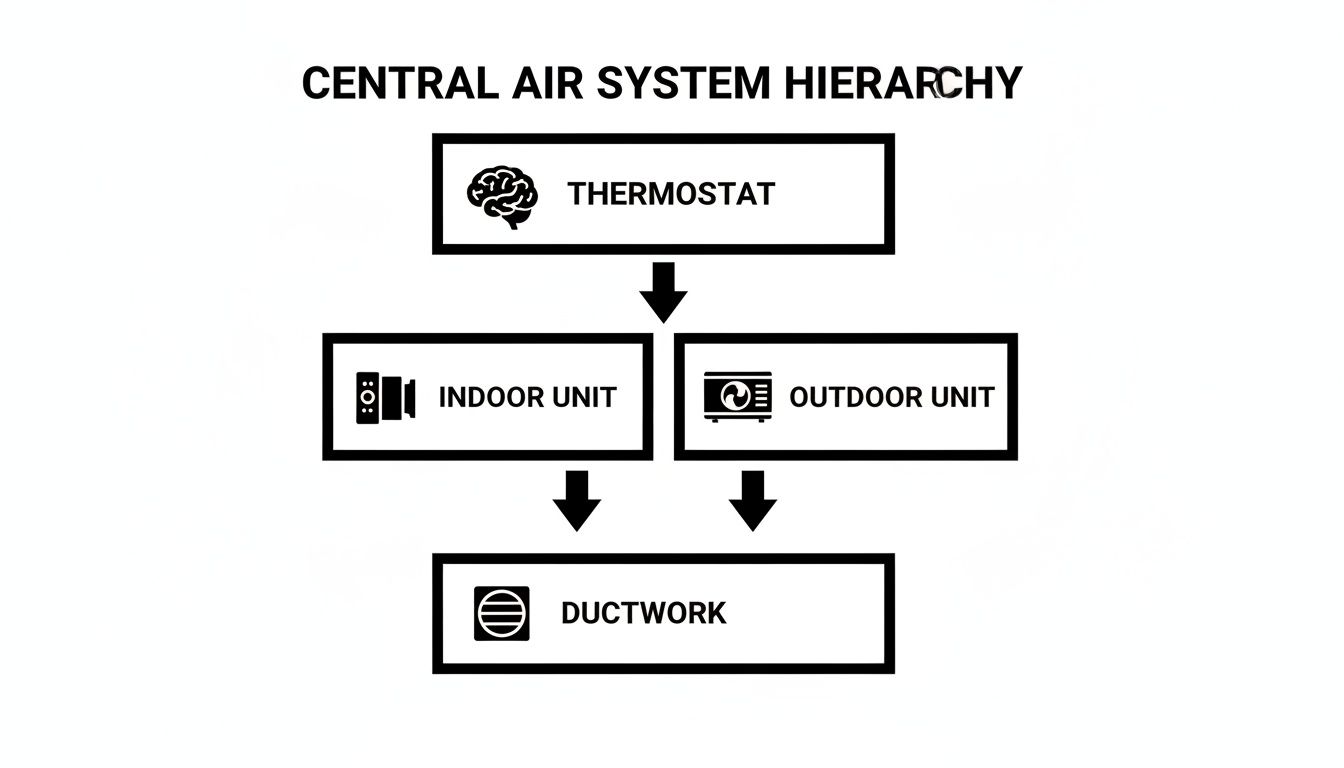
As you can see, the thermostat tells the indoor and outdoor units when to kick on, and the ductwork is like the highway system that delivers all that comfortable air where it needs to go.
The Classic Split System
By far the most common setup you’ll find in homes from Hudsonville to Standale is the split system. The name says it all—its main components are split between the inside and outside of your house.
Inside, you’ve got a furnace, usually running on natural gas, that handles the heavy lifting during our cold winters from November through April. Outside, there’s a separate air conditioning unit that takes over during the humid summer months to keep your home cool.
This tried-and-true combination is a powerhouse for our climate. It gives you potent, reliable heat for the coldest Michigan days and serious cooling muscle for sticky summer afternoons.
This system is so popular because it’s built to do two jobs—heating and cooling—and it does both of them exceptionally well without compromise.
The Versatile Heat Pump
A heat pump is a seriously clever piece of equipment that can both heat and cool your home, all from a single outdoor unit. The easiest way to think of it is as an air conditioner that can also run in reverse.
During the warmer months, it works just like a standard AC, grabbing heat from inside your house and moving it outside. But in the cooler months from November through April, it reverses the flow, pulling heat from the outdoor air (yes, even when it’s cold out!) and transferring it inside to warm your home.
Heat pumps are incredibly energy-efficient, especially during West Michigan's milder spring and fall weather. When the temperature really plummets during our northern winter months, though, their efficiency can drop. That's why they're often paired with a backup heat source, like an electric heat strip or a gas furnace, creating what’s called a "dual fuel" system that truly offers the best of both worlds. You can learn more about this technology and professional heat pump installation.
Packaged Systems for Space Saving
What happens if you don't have the room for a big indoor furnace and a separate outdoor AC unit? That's where a packaged system shines. All the critical components—the compressor, condenser, and evaporator—are bundled together in a single cabinet that sits outside, usually on a concrete slab or even a rooftop.
These all-in-one units are a fantastic solution for homes with limited indoor space, like houses without a basement or a dedicated utility closet. The conditioned air gets delivered into your home through ductwork, just like with a split system.
- Convenience: With everything in one spot, maintenance and service calls are often simpler.
- Space-Efficiency: It frees up valuable square footage inside your home.
- Flexibility: They come in different setups, including gas/electric or heat pump models.
While they're less common for single-family homes in areas like Jenison or Grandville, packaged systems are a smart, practical choice for certain types of properties.
Ductless Mini-Splits for Targeted Comfort
For older homes that were built without ductwork, or for new additions where running new ducts just isn’t practical, ductless mini-splits are a game-changer. Just like a traditional system, a mini-split has an outdoor compressor and an indoor air-handling unit.
The big difference is that instead of one large indoor unit pushing air through a network of ducts, a mini-split uses one or more sleek indoor heads mounted high on a wall or on the ceiling. Each of these heads can be controlled independently, letting you create customized temperature "zones" throughout your home.
This zoned approach gives you amazing flexibility and can lead to major energy savings because you're only paying to heat or cool the rooms you're actually using. They are an elegant way to bring modern comfort to just about any space.
Which Central HVAC System Is Right for You?
Choosing the right system can feel overwhelming, but breaking it down by how each one works and what it does best can make the decision much clearer. This table gives you a quick side-by-side comparison to help you see which option might be the best fit for your West Michigan home.
| System Type | How It Works | Best For | Key Advantage |
|---|---|---|---|
| Split System | A separate furnace (inside) for heating and an AC unit (outside) for cooling. | Most homes in West Michigan that need powerful, dedicated heating and cooling. | Maximum Performance: Delivers robust heating and cooling without compromise. |
| Heat Pump | A single unit that moves heat—pulling it out of the house in summer and into the house in winter. | Homes in milder climates or for homeowners prioritizing high energy efficiency. | Energy Efficiency: Extremely efficient, especially when paired with a backup furnace (dual fuel). |
| Packaged System | All heating and cooling components are housed in one cabinet located outside the home. | Homes with limited indoor space, like those without basements or utility closets. | Space-Saving: Frees up valuable interior square footage. |
| Ductless Mini-Split | An outdoor unit connected to one or more indoor heads to cool/heat specific rooms. | Older homes without existing ductwork, new additions, or for room-by-room temperature control. | Zoned Comfort: Unmatched flexibility and targeted heating/cooling. |
Ultimately, the best system depends on your home's layout, your budget, and your comfort priorities. Whether you need the raw power of a traditional split system or the zoned efficiency of a ductless unit, there's a perfect solution out there.
Choosing the Right System for Your West Michigan Home
Putting a new central air and heat system in your home is a big deal. It’s a major investment that impacts your comfort for years to come. But the "right" choice isn't about grabbing the fanciest model off the shelf; it's about finding the perfect match for your home's unique personality. For anyone living in West Michigan, from Hudsonville to Jenison and Grandville, making a smart decision means looking past the brand name and getting a handle on the real science of home comfort.
A classic mistake we see all the time is the "bigger is better" myth. When it comes to HVAC, that couldn't be more wrong. A system that's too powerful for your home will blast on and off constantly—we call this short-cycling. Not only does this spike your energy bills, but it never runs long enough to pull the humidity out of the air during our sticky Michigan summers. You'll feel cool, but also unpleasantly damp.
On the flip side, an undersized unit will run nonstop, struggling to keep up and burning itself out way too soon. This is exactly why a professional load calculation is the absolute first step. A real expert will measure your home's size, check the insulation, inspect the windows, and even note which way your house faces the sun. It's the only way to know precisely how much heating and cooling power you actually need.
Decoding Efficiency Ratings
Once you know the right size, it’s time to talk efficiency. You’ll see a bunch of acronyms on new equipment, but don't let them intimidate you. They’re just simple report cards that tell you how much comfort you’re getting for every dollar you spend on energy.
- SEER (Seasonal Energy Efficiency Ratio): This one's for your air conditioner. It measures how efficiently it cools over an entire summer season. The higher the SEER number, the less electricity it sips to keep your home cool.
- AFUE (Annual Fuel Utilization Efficiency): This is for your furnace. It's a simple percentage showing how much fuel (like natural gas) gets turned into actual heat. A 95% AFUE furnace means 95 cents of every dollar you spend is warming your house, while only 5 cents is lost up the chimney.
- HSPF (Heating Seasonal Performance Factor): You'll see this rating on a heat pump's heating performance. Just like SEER, a bigger HSPF number means it's more efficient when battling the cold during the winter months from November through April.
Getting familiar with these ratings lets you make a true apples-to-apples comparison and see the real long-term savings a high-efficiency system can offer.
Think about it this way: for a typical West Michigan home, swapping out an old 10 SEER air conditioner for a modern 16 SEER unit can slash your cooling costs dramatically. That's not a tiny tweak—it's real money back in your pocket every month.
This push for efficiency is changing the whole game. While air conditioning is a huge part of the industry, heating tech is also making massive leaps. Families in Hudsonville or Jenison who upgrade to a modern central AC with a SEER rating over 16 can cut their cooling costs by 20-40%. In the same way, property managers in Grand Rapids retrofitting older buildings can watch their yearly operating costs fall by 15-25%. You can explore more HVAC market trends and see just how much efficiency is shaping the future.
Fuel Types for West Michigan Weather
The last piece of the puzzle is your fuel source. Here in communities across West Michigan, including Grandville, Walker, Standale, Allendale, & Wyoming, most of us have two primary choices for our central air and heat system.
Natural Gas: This is the go-to for a reason. It's the most common and usually the most affordable way to heat a home in our area. Natural gas furnaces deliver a powerful, steady heat that you can rely on to get you through a West Michigan winter, from the first cold snap in November to the last one in April. They are absolute workhorses.
Electricity: All-electric setups, usually a heat pump paired with a backup electric furnace or air handler, are a fantastic alternative. Heat pumps are incredibly efficient, especially when temperatures are hovering above freezing. For homeowners in Allendale or Wyoming who don't have access to a natural gas line, an all-electric system is the standard, providing clean and effective comfort all year round.
At the end of the day, picking the right system is a balancing act. You have to weigh the upfront cost against long-term energy savings, all while making sure the equipment is sized just right for your home.
Warning Signs Your HVAC System Needs Attention
Your central air and heat system is the quiet workhorse of your home, but it almost always gives you a heads-up before a major breakdown. Learning to spot these clues can save you from a true emergency—like your furnace dying in the middle of a January cold snap or your AC tapping out during a West Michigan July heatwave.
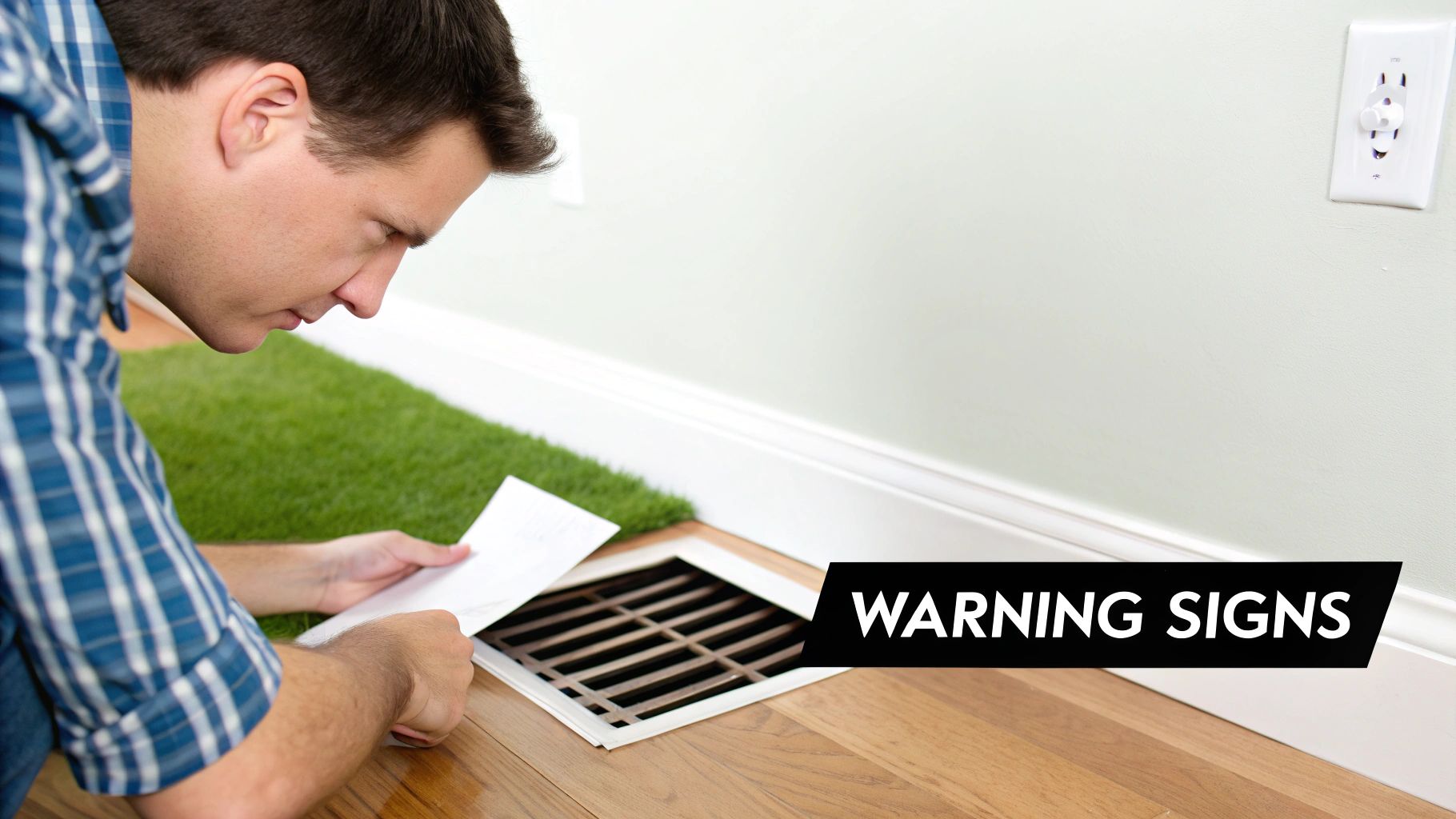
These signs aren't always loud and dramatic. More often than not, they start as small changes in performance or sound that are easy to brush off. But paying attention to these early warnings lets you act fast, potentially turning a huge replacement bill into a simple repair.
Sounds and Smells to Watch For
Often, the very first sign of trouble is something you hear. Your HVAC system should run with a consistent, low hum, so any new or strange noises are a red flag.
- Banging or Clanking: A loud bang when the system kicks on or off can point to a serious issue, like a problem with the blower or motor. That’s a sound you definitely shouldn’t ignore.
- Squealing or Grinding: High-pitched squeals often mean a belt is failing or a motor bearing is on its last legs. A metallic grinding sound could mean parts are rubbing together, which can cause severe damage fast.
- Burning Smells: It's usually normal to get a dusty, burning smell the first few times you turn on the heat between November and April. But if you smell a sharp, acrid, or electrical odor that sticks around, it could be an overheated motor or a wiring problem that needs professional help right away.
Think of these sounds and smells as your system's way of crying for help.
Performance Problems You Can See and Feel
Beyond strange noises, a drop in performance is a dead giveaway that something’s wrong with your central air and heat. If your home in Jenison or Grandville just isn’t as comfortable as it used to be, your system is telling you it's struggling.
You might notice weak airflow coming from your vents. This could be caused by anything from a clogged filter (an easy fix) to a failing blower motor (not so easy). Another common complaint is the development of hot and cold spots, where some rooms feel great while others are drafty or stuffy.
One of the most reliable signs of an inefficient system is a sudden, unexplained spike in your utility bills. If your heating costs go through the roof during a Wyoming winter or your cooling bills jump in an Allendale summer without a change in your habits, your equipment is working way too hard.
This loss of efficiency means your system is running longer and harder to do the same job, hitting you directly in the wallet. It's a clear signal that it's time for a professional to take a look.
Repair or Replace: The Big Question
So, how do you decide if you're looking at a straightforward repair or a full-blown replacement? A few key factors can point you in the right direction. Frequent breakdowns are a major red flag; if you find yourself calling for repairs every season, those costs can quickly add up to the price of a new unit.
The age of your system is also a huge factor. Most central air conditioners last around 15-20 years, while furnaces can keep running for 20-30 years. If your equipment is getting close to the end of its expected lifespan, sinking a lot of money into a major repair might not be the smartest move. A new, high-efficiency system won't just be more reliable—it can also deliver better comfort and significant long-term energy savings.
Why Regular HVAC Maintenance Is a Smart Investment
The secret to a long-lasting, reliable central air and heat system isn't luck—it's proactive care. It’s best to think of your HVAC system like your car; you wouldn't drive 20,000 miles without an oil change and expect it to run perfectly. Annual maintenance is that same essential tune-up for your home's hardest-working appliance.
This simple investment is the best way to prevent the vast majority of surprise breakdowns, which always seem to happen at the worst possible time. Whether it’s a furnace failing during the cold winter months from November through April or an air conditioner giving up in the middle of a July heatwave, a professional service call catches small issues before they snowball into expensive emergencies.
What a Professional Tune-Up Involves
A real maintenance visit is so much more than just swapping out a filter. When a certified technician comes to your home, they perform a deep inspection and cleaning to make sure every single part of your system is working in harmony.
A typical service includes things like:
- Cleaning Critical Components: Our techs get into the nitty-gritty, cleaning coils, blower components, and other parts where dirt builds up, chokes off airflow, and kills efficiency.
- Verifying Electrical Connections: We inspect and tighten all electrical connections and measure motor voltage and current. Loose wires are a common and preventable cause of failure.
- Checking System Controls: This is a crucial safety and comfort check to ensure your system starts, operates, and shuts off exactly when it's supposed to.
- Inspecting Condensate Drains: A clogged drain can lead to serious water damage and high indoor humidity. We make sure it's clear and flowing freely.
This thorough process gets your system ready for the demanding seasons ahead, whether you're bracing for a Jenison winter or a Grandville summer.
The Long-Term Benefits of Proactive Care
The real value of regular tune-ups goes way beyond just preventing repairs. When we consistently care for your system, we're also boosting its energy efficiency, which translates directly to lower monthly utility bills. A well-maintained unit doesn't have to work as hard to heat or cool your home, saving you money every single month.
It's no surprise that the HVAC services industry is a cornerstone of homeownership. This global market is forecasted to hit a staggering USD 97.9 billion by 2030. For homeowners right here in the greater Grand Rapids area, this points to real, tangible benefits: routine maintenance can prevent 70% of common failures, extend a furnace's life from 15 to over 25 years, and even trim utility bills by 10-20%. You can dig deeper into the growing importance of HVAC services on MarketsandMarkets.com.
We want to make this process completely effortless for homeowners in West Michigan, including Hudsonville, Jenison, Grandville, Walker, Standale, Allendale, & Wyoming. That's why we created a dedicated maintenance plan. Joining our program is the simplest way to get peace of mind, priority service when you need it most, and long-term savings. Learn more about the perks of our maintenance membership program and let us handle the upkeep so you can just relax and enjoy the comfort.
What Does a Professional Installation and Service Actually Look Like?
Getting a new central air and heat system installed can feel like a huge undertaking, but knowing what to expect makes the whole process a lot less intimidating. We want to pull back the curtain and walk you through the entire journey, from the moment you call us to the final handshake and quality check. It's a straightforward, transparent process designed to give you total peace of mind.
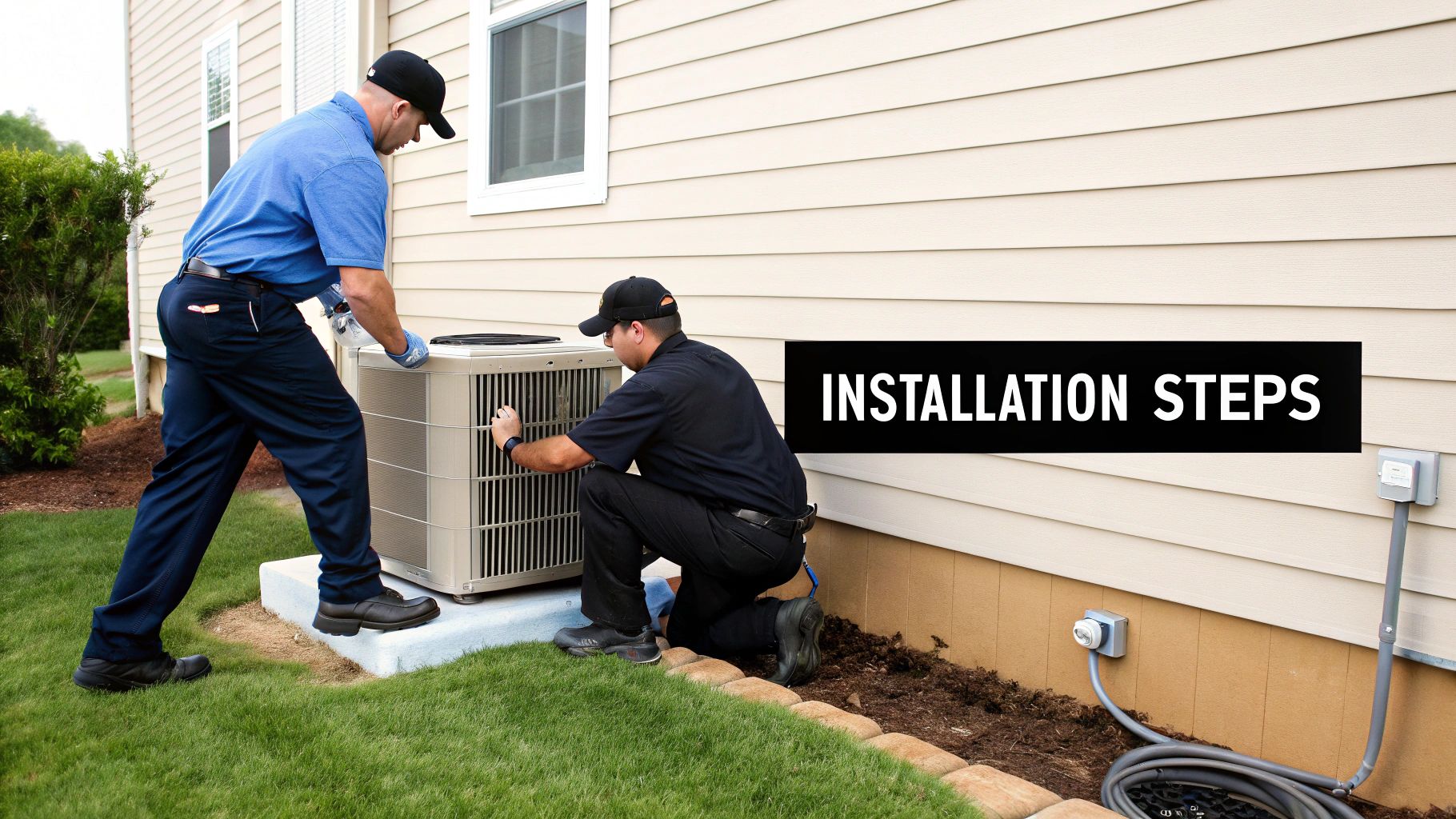
The HVAC world is constantly evolving, which is great news for homeowners here in West Michigan. Today's systems can slash your energy use by 30-50% compared to older models. That means real savings in your pocket, whether you're fighting off a bitter Hudsonville winter from November to April or sweating through a muggy Jenison summer. With technology advancing so quickly, a professional, EPA-certified installation is more critical than ever to get the performance you're paying for. You can even read more about the expanding global HVAC market on Spherical Insights.
Your In-Home Consultation and System Sizing
It all starts with a detailed in-home consultation. One of our seasoned technicians will come out to your home in West Michigan, including Hudsonville, Jenison, Grandville, Walker, Standale, Allendale, & Wyoming. We'll sit down and talk about your comfort goals, your budget, and any headaches you're having with your current system.
This isn’t just a quick glance around. We perform a comprehensive load calculation—a crucial step many companies unfortunately skip. By carefully analyzing your home’s square footage, insulation levels, window quality, and overall layout, we can pinpoint the exact size and capacity your new system needs to run perfectly without wasting energy.
The Installation Day Breakdown
Once we've helped you choose the perfect system for your home, our certified and insured team schedules your installation day. We treat your home like our own, ensuring the entire process is clean, respectful, and efficient from start to finish.
Here’s a play-by-play of what you can expect:
- Preparation and Protection: First things first, we lay down drop cloths and take every precaution to protect your floors, walls, and furniture from any dust or debris.
- Careful Removal of Old Equipment: Our technicians will safely disconnect and haul away your old furnace, air conditioner, or heat pump. We make sure every component is disposed of properly and in an environmentally responsible way.
- Meticulous New System Installation: This is where our expertise really shines. We install the new indoor and outdoor units, connecting all the electrical, refrigerant, and ductwork lines according to the manufacturer's strict specifications and all local building codes.
A professional installation is about so much more than just connecting pipes and wires. It’s about ensuring every single component is perfectly calibrated to work in harmony, guaranteeing top-tier performance, efficiency, and longevity from the moment we turn it on.
Final Checks and System Handover
After the new unit is securely in place, we're not done yet. We run a battery of rigorous quality checks to confirm everything is operating at peak performance. This involves verifying refrigerant levels are perfect, testing the airflow throughout your home, and calibrating your new thermostat for accuracy.
Finally, we walk you through your brand-new system. We'll show you exactly how to operate the thermostat, point out any cool new features, and answer every last question you have. Our goal is to leave you feeling completely comfortable and confident in your investment.
Your Top Questions About Central Air and Heat
Investing in a central air and heat system is a big decision, and it naturally brings up a lot of questions. We get it. To help our neighbors here in West Michigan, we’ve put together some straightforward answers to the things we get asked the most. This should give you the clarity you need to move forward with confidence.
How Much Does a New System Cost in West Michigan?
This is usually the first question on everyone's mind, and the honest answer is: it varies. The final price tag depends on a few key things, like the type of system you go with, its efficiency rating (SEER/AFUE), the size of your house, and what shape your current ductwork is in.
Generally speaking, a full system replacement here in West Michigan, including areas like Hudsonville, Jenison, Grandville, Walker, Standale, Allendale, & Wyoming, will run anywhere from $5,000 to over $12,000. The only way to know for sure is to have a professional come out for a free, no-obligation estimate. That's when we can really assess your home's unique needs and let you know about any rebates or financing that could help.
How Long Should My HVAC System Last?
With a little TLC in the form of annual maintenance, your equipment should serve you well for a long time. A central air conditioner typically lasts 15-20 years, while a good furnace can keep you warm for 20-30 years.
Here in West Michigan, our systems work hard. Think about the humid summers in Jenison and then the bone-chilling cold we get from November through April in Hudsonville. Because of that, getting a professional tune-up every year is the single best thing you can do to get the most life out of your equipment and avoid a surprise breakdown.
What Is the Best Thermostat Setting for Energy Savings?
Finding that sweet spot between being comfortable and keeping your utility bills in check is what it's all about. The U.S. Department of Energy has a simple guideline that works perfectly for our climate.
- In the heating season (November-April): Try setting your thermostat to 68°F when you're home and awake. You can dial it back even further when you're asleep or out of the house to really rack up the savings.
- During the cooling season (May-October): Aim for 78°F when you're at home. Bumping it up a few degrees when you leave prevents the AC from running when nobody's there to enjoy it.
A programmable or smart thermostat makes this effortless. It automates these temperature changes for you and can help you save up to 10% on your energy costs each year without a second thought. It's a simple upgrade that pays for itself.
Ready to make sure your home stays perfectly comfortable, no matter what the Michigan weather throws at us? Whether you need a quick repair, are thinking about a high-efficiency upgrade, or just have more questions, the expert team at Platinum Heating & Cooling is here for you in West Michigan, including Hudsonville, Jenison, Grandville, Walker, Standale, Allendale, & Wyoming. Contact us today to schedule your free, no-obligation estimate!