
Ever wished you could control the temperature in each room as easily as flipping a light switch? That's the simple but brilliant idea behind a mini split system. It’s a super-efficient, ductless heating and cooling solution designed for precise, room-by-room comfort.
Your Direct Answer to What Is a Mini Split System
Think about your traditional central HVAC system. It's like one giant speaker trying to blast music throughout your entire house. Some rooms get deafeningly loud, others are too quiet, and you're wasting a ton of energy sending sound into empty hallways.
So, what is a mini split system in comparison? It's like having a sleek, modern sound system with a dedicated smart speaker in each room. You get to control the volume and the playlist everywhere, independently. This is the heart of what we call zoned comfort.
A mini split delivers targeted heating and cooling right where you need it, cutting out the energy waste that’s so common with old, leaky ductwork. For homeowners here in West Michigan—from historic houses in Grandville to new builds out in Allendale—this targeted approach is a game-changer for our wild seasons. It provides powerful, efficient cooling to cut through the summer humidity and reliable heating to keep you cozy during our long, harsh northern winter months from November through April.
The Power of Zoned Comfort
The real magic of a mini split is its ability to create independent temperature "zones." This is a huge deal in West Michigan, where heating and cooling needs can change dramatically from one part of a house to another.
Just think about these common scenarios:
- That home office that turns into a sauna in the afternoon sun? Keep it cool without turning the rest of the house into an icebox.
- A guest room that sits empty most of the year? Simply turn that zone off and save a bundle on energy.
- Family members with different sleep temperature preferences? Everyone gets to set their own ideal comfort level.
This level of precise control doesn't just make everyone happier—it directly slashes your utility bills. By not paying to heat or cool unused spaces, homeowners can see energy savings of up to 30% compared to traditional ducted systems.
A Smart Solution for West Michigan Homes
For folks in Hudsonville, Jenison, and Wyoming, Michigan, where our homes are a mix of older constructions without ducts and modern, open-concept designs, mini splits offer incredible flexibility. They’re the perfect fit for:
- Older homes where tearing up walls to add bulky ductwork would be a messy, expensive nightmare.
- New additions like a sunroom or finished basement that aren't hooked up to the main HVAC system.
- Tough problem areas, like that second-floor bedroom that’s always sweltering in the summer.
No matter if you're in Walker, Standale, or anywhere else in our area, understanding what a mini split system is opens up a new world of efficient, personalized home comfort. It’s a modern climate solution built for the way we actually live today.
How a Mini Split Works to Heat and Cool Your Home
To really get what a mini split system is all about, you have to look under the hood. It’s a pretty clever piece of technology. At its heart, a mini split is a heat-moving machine. It doesn't actually create heat or cold air; it just moves heat energy from one place to another with incredible efficiency.
During those hot, humid summers we get in West Michigan, the system grabs all the unwanted heat from inside your Jenison or Grandville home and kicks it outside. Then, during our long, cold northern winter months from November through April, it does the exact opposite. It pulls warmth from the freezing outdoor air and brings it inside to keep you toasty.
The Three Core Components of a Mini Split
This heat-moving magic happens thanks to three main parts working together. Each one has a specific job, and once you understand them, the whole system makes a lot more sense.
- The Outdoor Compressor/Condenser: This is the powerhouse, sitting right outside your home. It contains the compressor, the engine that pressurizes a special fluid called refrigerant and pumps it through the system.
- The Indoor Air Handler (Evaporator): This is the slim, wall-mounted unit you see inside a room. It has a fan that blows your indoor air across coils that are either hot or cold, sending perfectly conditioned air right where you want it.
- The Conduit: This is just a small, protected bundle of tubes and wires connecting the indoor and outdoor units. It holds the refrigerant lines, a power cable, and a condensation drain, all wrapped up neatly.
Because this conduit only needs a small, three-inch hole drilled through an outside wall, the installation is way less of a headache than trying to fit bulky new ductwork all over your house.
The Secret Weapon: Inverter Technology
The real magic that makes a mini split so good is its inverter-driven compressor. Picture a traditional HVAC system like a simple light switch—it’s either all the way on or all the way off. That constant on-off cycle wastes a ton of energy and makes the temperature in your house swing up and down.
An inverter, on the other hand, is more like a dimmer switch. Instead of just shutting off when your room hits the right temperature, it just slows the compressor way, way down to an energy-sipping crawl. It’s always running, constantly adjusting its speed to perfectly match the room’s heating or cooling needs.
This constant, quiet adjustment is the key to both whisper-quiet operation and huge energy savings. You get rid of the jarring start-stop sounds of older systems and get a much more consistent, comfortable temperature.
This infographic really shows the difference between a central system with one point of control and the multiple control points you get with a mini split’s zoned approach.
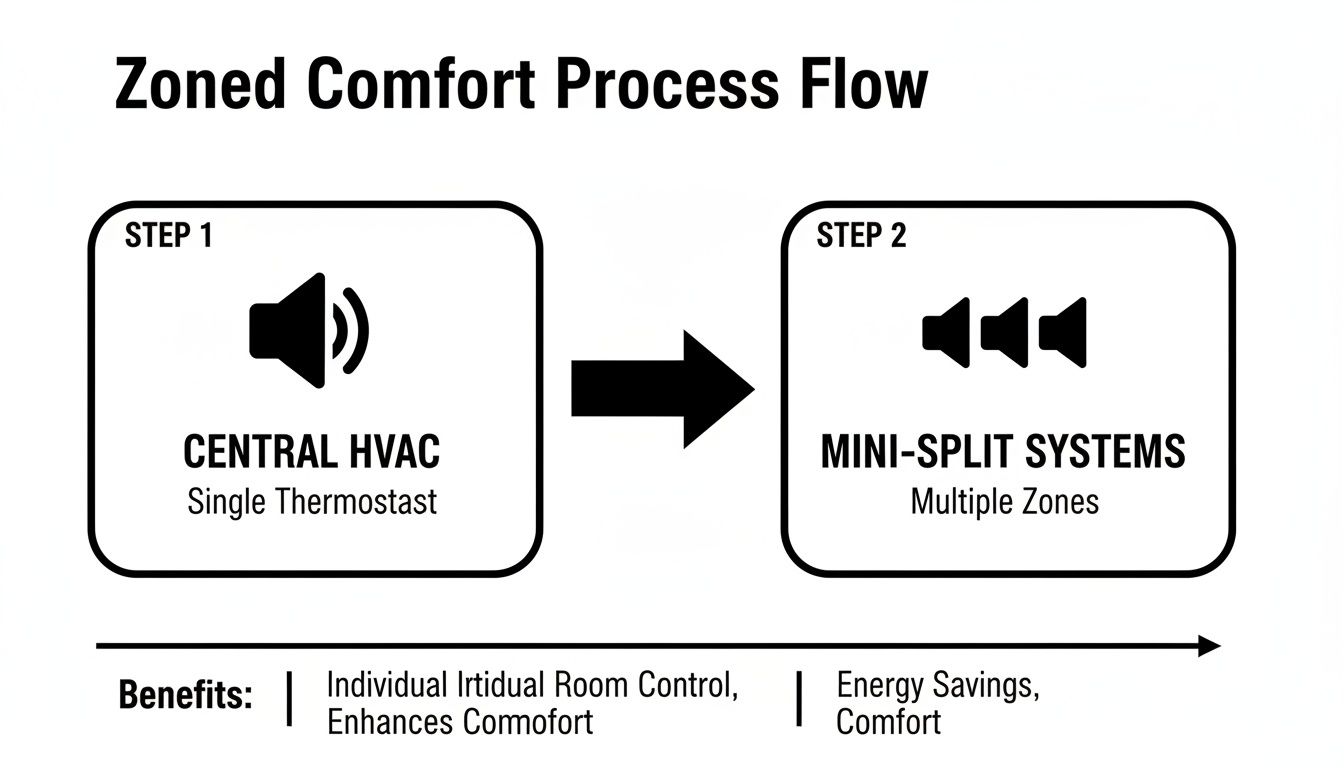
As you can see, a mini split lets you control the comfort in each specific area, so you stop wasting energy and money heating or cooling an entire house from a single thermostat.
The Refrigerant Cycle in Action
So how does the heat actually move? It all comes down to a special fluid called refrigerant that cycles between the indoor and outdoor units through the conduit.
- Cooling Mode (Summer): Inside your Standale or Walker home, the indoor unit pulls in warm air. The refrigerant inside the evaporator coils soaks up this heat, which causes it to turn from a cold liquid into a gas. The now-chilled air is blown back into your room. That heated gas then travels to the outdoor unit, where the compressor pressurizes it and pushes the heat out into the summer air.
- Heating Mode (Winter): The whole process just flips. The outdoor unit absorbs heat from the outside air (yes, even when it’s cold!) and the refrigerant carries that heat indoors. The indoor unit then releases that warmth into your room. You can dive deeper into this fascinating science in our guide on what is a heat pump.
This technology works so well that mini splits can slash your cooling costs by up to 30% compared to old-school window units or even central air. It’s all thanks to that inverter technology precisely managing the compressor speed and avoiding wasteful on-off cycles.
For homeowners in Allendale and Wyoming, Michigan, the heat pump versions are also incredibly efficient at heating through our tough winters, cutting utility bills while also improving your indoor air quality.
Choosing Your Ideal Mini Split System Type
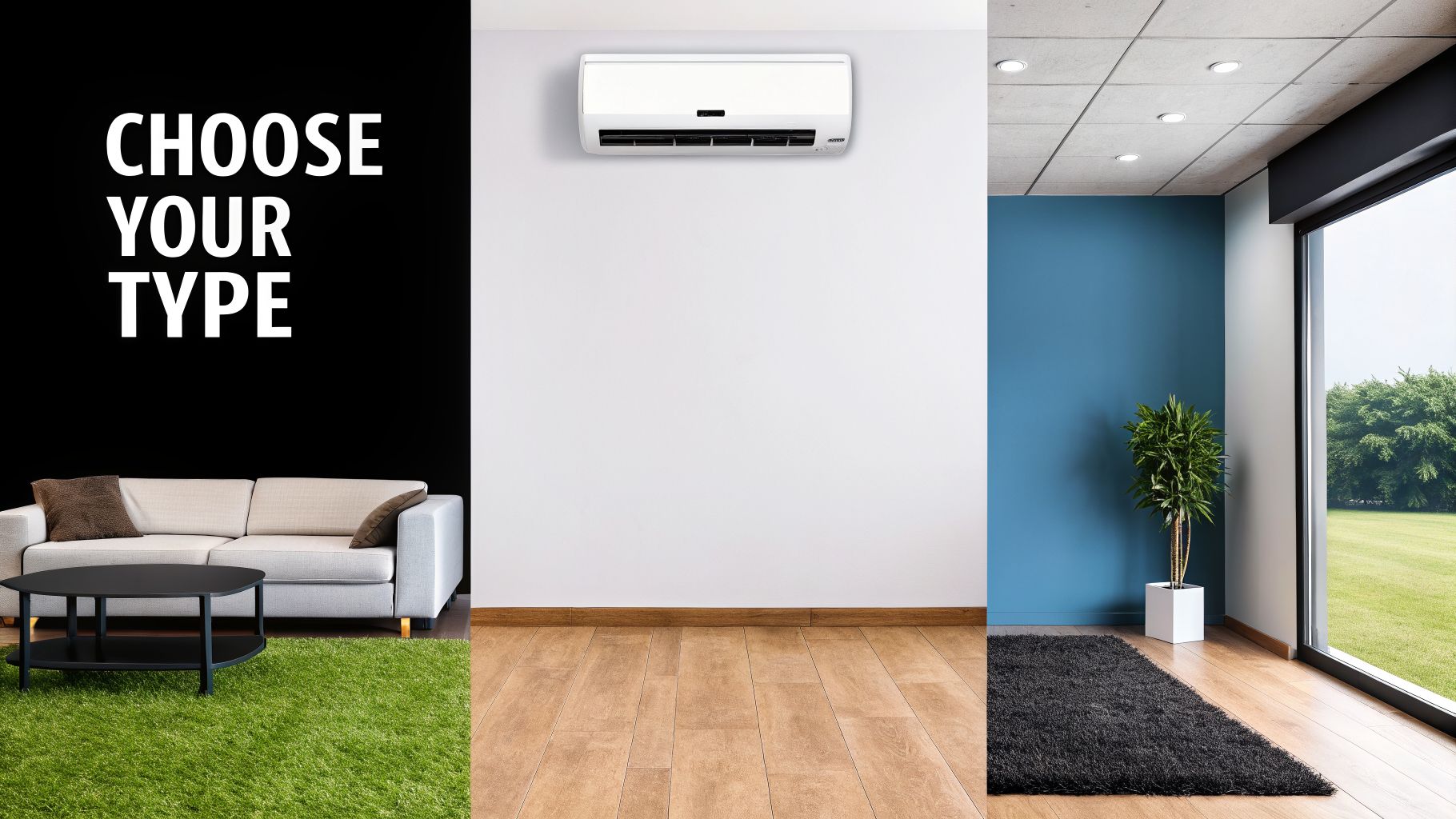
When you start digging into what a mini split system is, you’ll quickly find out they aren’t a one-size-fits-all deal. Instead, they come in a bunch of different types and setups, which is great because it means you can find the perfect match for your home or property in places like Walker or Wyoming, Michigan. The choice you land on will have a real impact on your comfort, the look of your space, and your energy bills.
This flexibility is exactly what makes mini splits so attractive. Need to cool down a single stuffy room in the summer? No problem. Need reliable heating for an entire apartment complex through the cold West Michigan winter months from November through April? There’s a system built for that, too. Let’s break down the main options to help you figure out what’s right for you.
Single-Zone vs Multi-Zone Systems
The first big decision you’ll make is whether to go with a single-zone or a multi-zone system. The names are pretty straightforward, but how you use them is what really matters.
Single-Zone Mini Splits are simple: one indoor air handler connected to one outdoor compressor. Think of it as a dedicated climate solution for one specific area. This is the perfect choice for solving a particular comfort problem, like cooling a sunroom that gets too hot or providing year-round comfort for a home office, a converted attic, or a detached garage.
Multi-Zone Mini Splits use one powerful outdoor compressor that connects to multiple indoor air handlers—usually anywhere from two to eight of them. This setup lets you create independent temperature zones in different rooms or even across separate apartments. Each indoor unit gets its own thermostat, giving you precise control over the comfort of your whole property.
This multi-zone approach is a total game-changer for property managers and homeowners in Hudsonville and Grandville. In the U.S., multi-zone mini-splits are now used in over 40% of residential installs for new multi-family construction projects. It’s a trend being led by big names like Daikin, Mitsubishi, and Carrier. You can dive deeper into this growing trend in the ductless systems global market report.
Choosing an Indoor Unit Style
Once you’ve decided between single and multi-zone, the fun part begins: picking the style of the indoor air handlers. Most people picture the standard wall-mounted unit, but you’ve actually got several options to match your home’s design and your personal taste.
Wall-Mounted Units
These are the ones you see most often. They’re installed high on an interior wall, which makes them great at distributing conditioned air evenly throughout a room. They’re popular because they’re efficient and relatively easy to install.
Ceiling Cassette Units
If you want something a bit more discreet, ceiling cassettes are a fantastic choice. These units are recessed right into the ceiling, so all you see is a slim, flat grille. They often have four-way airflow, giving you excellent, even coverage in larger, open spaces.
Floor-Mounted Units
These compact units sit at the base of a wall, kind of like a modern radiator but much sleeker. They are a great solution for rooms with low or slanted ceilings—think converted attics—or for anyone who just prefers the look over a unit mounted on the wall.
Concealed Ducted Mini Splits
But what if you want all the efficiency of a mini split without seeing any indoor units at all? That’s where a concealed or "ducted" mini split comes in, offering the best of both worlds.
A concealed ducted mini split system connects a hidden indoor air handler to short runs of ductwork that serve one or more rooms. This lets you maintain the clean, traditional look of central air vents while gaining the energy-saving advantages of zoned, inverter-driven technology.
This option is perfect for builders and homeowners in Standale, Jenison, and Allendale who are planning a new build or a major renovation. It gives you incredible design flexibility, allowing for a completely seamless look without sacrificing the high-performance heating and cooling you want.
The Pros and Cons of Going Ductless in West Michigan
Every big home upgrade has its trade-offs, and choosing a heating and cooling system is definitely one of them. When you’re figuring out what is a mini split system, you have to look at both sides of the coin. Here in West Michigan, our homes deal with it all—from sticky summer humidity to bone-chilling winter nights. Making the right call means getting the full picture.
Let's be real: mini splits have some seriously great advantages, but they also have drawbacks you need to think about. We’ll give you a balanced look to help homeowners from Standale to Grandville decide if going ductless is the right move for their home.
The Clear Advantages of Mini Splits
The benefits are what get most homeowners interested in ductless mini splits in the first place. These upsides all circle back to efficiency, comfort, and a healthier home.
Superior Energy Efficiency: This is the main event. Traditional ductwork can leak, wasting more than 30% of your cooling and heating energy before it even reaches your rooms. Mini splits don't have this problem. Their inverter-driven compressors run at a low, steady pace, sipping energy instead of chugging it with constant on-and-off cycles. That means lower utility bills, whether you're cooling your house in the summer months or heating it through a long West Michigan winter from November through April.
Room-by-Room Zoned Comfort: Mini splits are the peacemakers of home temperature. You can finally end the family thermostat wars. Set the living room to a comfortable temperature for everyone, while keeping a home office a bit cooler or a bedroom warmer. This targeted approach means you only pay to heat or cool the spaces you’re actually using—a huge plus for homes in Hudsonville, Jenison, and Allendale.
Improved Indoor Air Quality: Old-school ducts are notorious for collecting dust, pet dander, pollen, and other junk over the years, which then gets blown all through your house. Mini splits, on the other hand, have multi-stage filtration systems built right into each indoor unit. These filters grab airborne particles, helping to create cleaner, healthier air for your family to breathe.
The long-term savings from a mini split’s efficiency can be substantial. For many homeowners in Walker and Wyoming, Michigan, the drop in monthly heating and cooling costs creates a strong return on investment, often making the higher initial cost a smart financial decision over the life of the system.
The Potential Drawbacks of Mini Splits
No system is perfect. It’s just as important to understand the potential downsides before you commit. Looking at these cons head-on will help you make a smart, well-rounded decision.
Higher Upfront Installation Cost: The biggest hurdle for most people is the initial price. A professionally installed mini split system, especially a multi-zone setup, usually costs more upfront than replacing a standard furnace or central air conditioner. You have to weigh this against the long-term energy savings and any rebates or tax credits that can help soften the blow.
Aesthetics of Indoor Units: While manufacturers have different styles, the most common wall-mounted indoor units are pretty visible. For some homeowners, that look just doesn't mesh with their interior design. There are other options, like ceiling cassettes and concealed ducted units, that offer a more seamless look, but they also come at a higher price.
Regular Filter Maintenance: That fantastic indoor air quality comes with a small, regular chore. The filters in each indoor unit need to be cleaned—usually every month—to keep the system running at its best. If you forget, you’ll see performance and airflow drop. Staying on top of this is key, and it ties into the same principles behind the benefits of HVAC maintenance.
Ultimately, understanding what a mini split system is means balancing these pros and cons against your specific needs, budget, and home layout here in West Michigan.
Mini Splits vs Traditional Central HVAC A West Michigan Comparison
To make things even clearer, let's put these two systems side-by-side. For a typical homeowner in our area, the choice between a ductless mini split and traditional HVAC often comes down to a few key differences in performance, cost, and comfort.
This table breaks down how they compare on the factors that matter most.
| Feature | Mini Split System | Traditional Central HVAC |
|---|---|---|
| Energy Efficiency | Excellent. No duct losses, inverter technology. Lower monthly bills. | Good to Fair. Energy is lost through ducts (up to 30%). Higher monthly bills. |
| Zoning & Comfort | Excellent. Each room or "zone" has its own temperature control. | Limited. One thermostat controls the entire house, leading to hot/cold spots. |
| Upfront Cost | Higher. More expensive initial investment, especially for multi-zone setups. | Lower. Generally less expensive to replace an existing system. |
| Installation | Less Invasive. No ductwork needed. Only a small hole for refrigerant lines. | More Invasive. Requires a full ductwork system, which is costly to add or repair. |
| Air Quality | Very Good. Multi-layer filtration in each indoor unit captures more pollutants. | Fair. Relies on a single central filter. Ducts can collect dust and allergens. |
| Aesthetics | Visible. Indoor units are mounted on walls or ceilings unless you pay for concealed options. | Hidden. Vents are flush with walls/floors, but the outdoor unit is still visible. |
| Maintenance | Frequent but Simple. Requires monthly filter cleaning by the homeowner. | Less Frequent. Professional annual service is recommended. |
| Best For | Homes without ducts, additions, targeted problem areas, or maximizing efficiency. | Homes with existing, well-maintained ductwork or whole-home cooling needs on a budget. |
Seeing it all laid out like this can help you zero in on what's truly important for your home and family. Both systems can do the job, but they get there in very different ways.
Understanding Mini-Split Installation Costs And Sizing

When West Michigan homeowners start exploring what a mini-split system is, two big questions always pop up: "What's this going to cost me?" and "What size do I even need?" These are the bottom-line questions, and for good reason. The answers will shape your budget, your comfort for years to come, and whether you feel good about the investment.
The final cost for a mini-split isn't just one number. It’s a mix of a few key things, which is why a custom quote from a pro is the only way to get a real answer.
Key Factors That Influence Your Investment
The price you'll pay for a new mini-split depends on your specific needs and the layout of your home, whether you're in Hudsonville, Jenison, or Grandville. The biggest cost drivers are the system's power (measured in BTUs), how many indoor units you'll need, and how tricky the installation will be.
Here’s a breakdown of what shapes the final price tag:
- System Capacity (BTUs): This is the heating and cooling muscle of the system. Bigger homes or spaces with older insulation need a more powerful outdoor unit, which naturally costs more.
- Number of Indoor Zones: A single-zone system for just one room will be much less expensive than a multi-zone setup with four or five indoor units designed to heat and cool your entire house.
- Installation Complexity: A simple installation on an easy-to-reach exterior wall is more affordable. Things get more complex—and pricier—if the job requires extra-long refrigerant lines, tricky wiring, or mounting units on a second-story brick wall.
It’s easy to get hung up on the upfront price, but the true value of a mini-split comes from its long-term performance. A correctly sized and professionally installed unit pays you back with years of energy savings and reliable comfort. That makes the initial investment a pretty smart financial move.
Why Professional Sizing Is Non-Negotiable
One of the worst mistakes a homeowner can make is trying to guess the size of the mini-split they need. This isn't like buying a window AC unit; sizing a mini-split is a science. A professional technician will perform a detailed Manual J load calculation, which looks at dozens of factors unique to your home.
This calculation analyzes things like:
- Your home's total square footage and layout.
- The quality and R-value of the insulation in your walls and attic.
- The number, size, and type of your windows (single-pane vs. double-pane).
- How much sun hits different sides of your house throughout the day.
- Local climate data for West Michigan, from our hot, humid summers to our cold winters from November through April.
An improperly sized system is just asking for trouble. A unit that's too small will run nonstop, struggling to keep your home in Walker or Allendale comfortable while sending your energy bills through the roof. On the other hand, an oversized unit will "short-cycle"—blasting on and off constantly. This prevents it from properly dehumidifying your air and puts a ton of unnecessary wear and tear on the components.
Reducing Your Net Cost With Incentives and Rebates
While the upfront cost can be higher than a traditional furnace and AC, there are some fantastic ways to bring that number down. The superstar feature of mini-splits is their energy efficiency, and that makes them a favorite for government rebates. In North America, the Inflation Reduction Act offers incentives that can cover up to $2,000 for qualifying heat pump installations. You can learn more about these incentives by checking out data on mini-split air conditioning systems.
These financial perks, plus rebates from manufacturers, can take a big bite out of your out-of-pocket costs. For local heroes in Wyoming or Standale, it’s also worth noting that some companies, like Platinum Heating & Cooling, offer special discounts for veterans and first responders. Working with a contractor who knows the ropes will help you navigate these incentives, maximize your savings, and make your new system much more affordable.
Why Trust Platinum With Your Mini Split Installation
Now that you know what a mini-split is and how it can make your home more comfortable and efficient, there's one last piece to the puzzle: picking the right people for the job. Getting the performance and savings you expect hinges on an expert installation, and that’s where we come in.
At Platinum Heating & Cooling, we’re not just another HVAC company. We're your neighbors right here in West Michigan, and we're deeply committed to serving our community.
Being a locally owned business means we have a personal stake in the comfort of homeowners across West Michigan. This includes our friends and neighbors in Hudsonville, Jenison, Grandville, Walker, Standale, Allendale, & Wyoming, Michigan. Our reputation is built on trust, one home at a time.
Expertise You Can Count On
Every single mini-split installation we handle is done by our team of EPA-certified technicians. This isn’t just a piece of paper. It’s your guarantee that our crew knows how to handle refrigerants safely and install your system to strict industry standards.
This level of expertise ensures your mini-split runs at peak efficiency, whether it's keeping you cool in the summer or warm during those long northern winter months from November through April.
We pride ourselves on a customer-first approach. That means clear communication and solutions designed just for you. No two homes are the same, so we take the time to understand your goals and recommend the perfect system.
At Platinum, we believe a successful project is about more than just the technical stuff. It’s about delivering reliable service, answering your questions clearly, and making sure you feel confident and comfortable from the first call to the final handshake.
To protect your investment for years to come, we also offer a solid maintenance plan. Regular service is the best way to keep your mini-split running efficiently, head off surprise breakdowns, and make it last as long as possible.
Take a look at our dedicated mini split services in West Michigan to see how our proactive care can give you lasting peace of mind. We’re here to be your long-term partner in home comfort.
Mini Split FAQs from West Michigan Homeowners
As homeowners here in West Michigan start looking into mini split systems, a lot of practical questions come up. It's one thing to read about the technology, but it's another to know how it'll hold up in our unique climate—from humid summers to those bone-chilling winters. We hear these questions all the time from folks in Hudsonville, Jenison, and Grandville, so let's get you some clear answers.
Can a Mini Split Really Heat My Whole House in a Michigan Winter?
This is the big one, and the short answer is yes—but only with the right system. Older heat pumps gave the technology a bad rap for struggling in deep freezes. Today's cold-climate mini splits are a completely different animal, built specifically for weather like ours. They're engineered to pull heat out of the air even when the temperature drops way below freezing, giving you steady, reliable warmth from November all the way through April.
Now, if you're looking to heat your entire home in a place like Walker or Standale, a properly sized multi-zone system is non-negotiable. A professional load calculation ensures the outdoor unit has the muscle to power all the indoor heads, keeping your whole house toasty without needing to kick on a backup furnace.
How Often Do I Need to Clean My Mini Split Filters?
This is the single most important piece of maintenance you can do. To keep your system running smoothly and your air clean, plan on cleaning the filters in each indoor unit once a month. It’s a quick job, usually taking just a few minutes for each unit.
Think of it like changing the air filter in your furnace or car—a simple, quick task that prevents much bigger, more expensive headaches later on. Ignoring it leads to poor airflow, wasted energy, and extra wear and tear on your system.
A few minutes of cleaning each month protects your investment and keeps your utility bills from creeping up.
Are Mini Splits a Good Fit for Older Homes Without Ductwork?
Absolutely. In fact, this is where mini splits are superstars. For all the beautiful, historic homes you see in areas like Allendale and Wyoming, Michigan, trying to cram in traditional ductwork is a nightmare. It's messy, expensive, and often ruins the architectural character of the house.
Mini splits offer a much, much better way to go. Here’s why they’re perfect for retrofitting older homes:
- Barely a Trace: Installation just needs a small three-inch hole in an outside wall for the lines. Your original plaster walls and historic structure stay intact.
- Comfort Where You Need It: You can finally get heating and cooling into that stuffy upstairs bedroom or a drafty sunroom without tearing your house apart.
- Big Efficiency Gains: Traditional ducts are notoriously leaky. By skipping them entirely, you get a huge boost in energy efficiency—a major win for older homes that often lack modern insulation.
For anyone trying to figure out how to bring modern comfort to an older home, understanding what a mini split system is can be a real game-changer. It opens up a world of efficient, minimally invasive options.
Ready to see if a mini split is the right solution for your West Michigan home? The EPA-certified experts at Platinum Heating & Cooling are here to help with professional installation, maintenance, and repair services to keep you comfortable all year. Contact us today for a personalized consultation!