
When you see "EM Heat" on your thermostat, it means you've manually switched your system to a backup heating source, completely bypassing your heat pump. Think of it as the ultimate safety net for your home's heating, a lifeline you only use when your main system is down for the count.
Understanding Your Heat Pump Lifeline
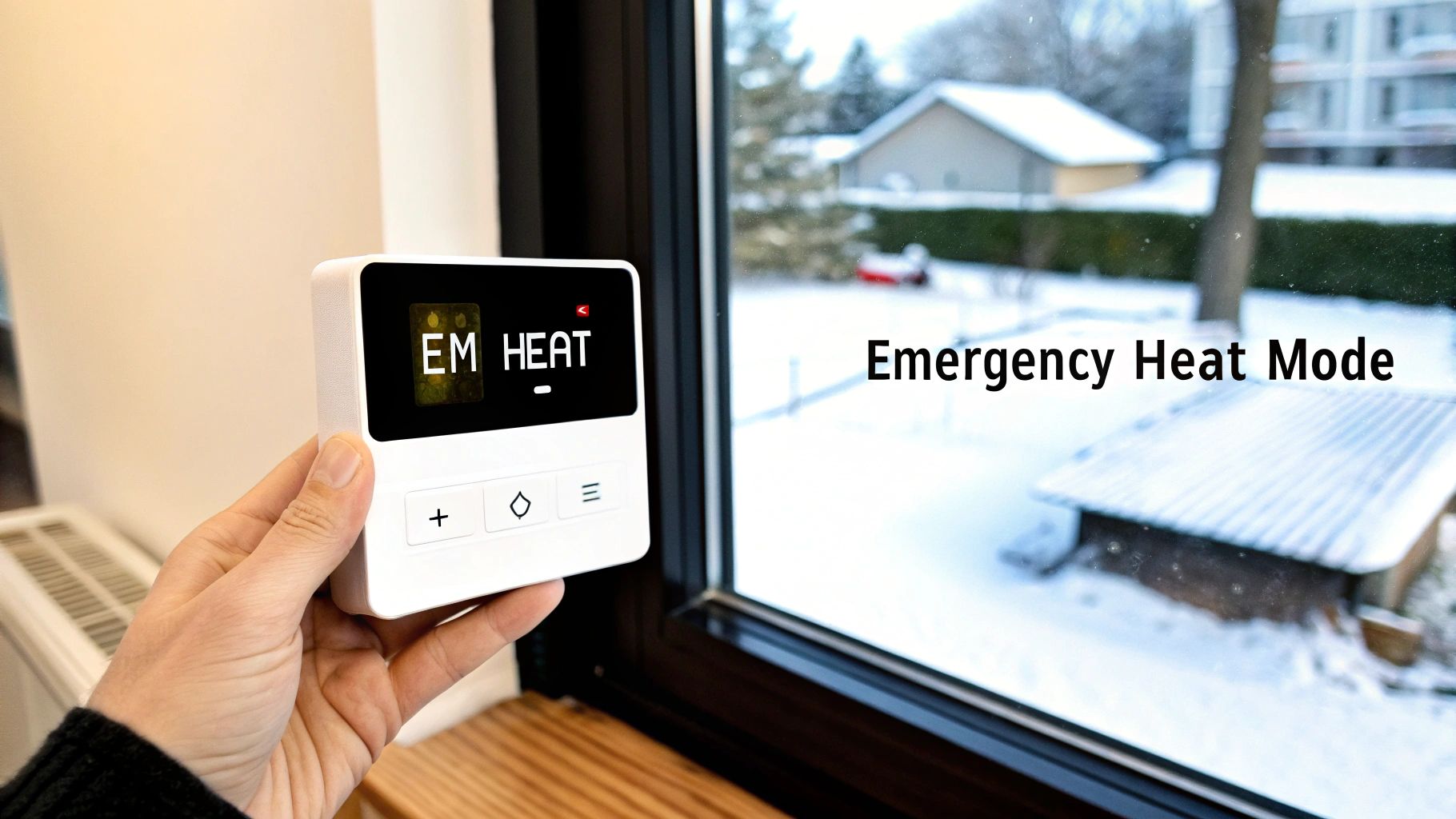
Imagine your heat pump is your go-to winter coat. It’s perfect for most of the chilly days we get here in West Michigan. But during a real blizzard, the kind that hits between November and April in places like Hudsonville, Jenison, Grandville, Walker, Standale, Allendale, & Wyoming Michigan, that single coat just won’t cut it.
That's when you grab the heavy-duty arctic parka you keep in the back of the closet. That’s your emergency heat. It's a powerful backup designed for one thing: keeping your home and family safe when your heat pump can't keep up or has failed completely.
To give you a quick overview, here's a simple breakdown of what emergency heat is all about.
Emergency Heat At a Glance
| Aspect | Description |
|---|---|
| Activation | Manual—you have to turn it on yourself. |
| Function | Completely bypasses the outdoor heat pump unit. |
| Heat Source | Relies solely on a secondary source, usually electric resistance coils. |
| Purpose | Provides temporary heat during a heat pump failure or extreme cold. |
| Cost | Significantly more expensive to run than a standard heat pump. |
| Use Case | Short-term solution until a professional repair can be made. |
This table shows that emergency heat isn't a setting to take lightly, but it's an essential feature when you really need it.
How Emergency Heat Works
When you flip that switch to "EM Heat," you’re telling your outdoor heat pump unit to take a break. The system shuts it down and instead fires up a secondary, more intense heat source. For most homes in Grandville, Walker, Standale, and Wyoming, this backup is a set of electric resistance heating strips tucked inside your indoor air handler.
These strips work just like the glowing coils inside a toaster. They get red-hot to generate powerful heat instantly. As you can imagine, this process uses a massive amount of electricity, which is exactly why it’s not meant for everyday heating during the winter months from November through April.
Emergency heat is a manual override you control. Its purpose is to provide temporary warmth during a system breakdown, ensuring your home in Allendale, Hudsonville, or Jenison stays safe until a professional repair can be made.
Key Things to Remember
Getting a handle on what this mode does is crucial for managing your comfort and avoiding a shocking energy bill. Here are the main things to keep in mind:
- It’s a Manual Setting: Your system won't turn this on by itself. You have to make the call and flip the switch.
- It Shuts Off the Outdoor Unit: This setting tells your heat pump to stop trying to pull warmth from the freezing outside air, which is an impossible task when it's broken or overwhelmed.
- It’s a Temporary Fix: Emergency heat is there to prevent a crisis, not to solve the root problem with your heat pump. If you have to use it, your very next step should be calling a technician.
Understanding Emergency Heat vs. Auxiliary Heat
It’s a common mix-up for homeowners, but knowing the difference between "Emergency Heat" and "Auxiliary Heat" is crucial. Getting it right can save you a bundle on energy bills and help you spot problems with your system before they get serious. These two modes do very different things, especially during those brutal West Michigan winter months we see between November and April.
Here’s a simple way to think about it. Imagine you’re driving a car up a really steep hill. Auxiliary heat is like your car’s automatic transmission downshifting to give you a bit more power. You don’t have to do a thing; the car just senses the extra strain and helps itself out.
Emergency heat, on the other hand, is like you manually forcing the car into first gear because the engine is sputtering and about to die. It’s a deliberate move you make to bypass the main system and rely only on your backup power to get you somewhere safe.
The Automatic Assistant: Auxiliary Heat
Auxiliary heat, which you’ll probably see as "AUX Heat" on your thermostat, is your heat pump’s built-in helper. It’s a completely normal part of how the system works, designed to kick on automatically when needed. A heat pump’s job is to pull warmth from the outside air, but when the temperature in Hudsonville, Jenison, or Grandville really drops during the winter, it just can't keep up on its own.
Your system will automatically turn on auxiliary heat when:
- The outdoor temperature is too low for the heat pump to warm your home efficiently.
- The system goes into its defrost cycle to melt any ice buildup on the outdoor unit.
- You crank up the thermostat by more than a few degrees all at once.
This all happens seamlessly in the background. The auxiliary system—usually a set of electric resistance coils—steps in to give the heat pump a boost, keeping your home comfortable without you lifting a finger. It’s designed to be a team player.
The Manual Override: Emergency Heat
Emergency heat, or "EM Heat," is a different beast altogether. This is a manual setting that you have to physically turn on. When you flip that switch, you’re basically telling your system that the main event—the outdoor heat pump—is officially out of order. It completely shuts down the outdoor unit and forces the system to rely 100% on the backup heat source.
This isn't a helper; it's a full-on replacement. That distinction is a big deal because running on emergency heat is way less efficient and a lot more expensive. For folks in Walker, Standale, Allendale, or Wyoming, Michigan, this mode should only be used when your heat pump has completely failed. It's a temporary lifeline to keep your pipes from freezing until a pro can get out for a repair. To see how modern, high-efficiency systems are put together, you can learn more about heat pump installation.
The core difference is simple: Auxiliary heat works with your heat pump, while emergency heat works instead of your heat pump.
This is so important for troubleshooting. Seeing the "AUX" light flicker on during a cold snap is normal. Having to manually switch over to "EM Heat" means something is seriously wrong.
Think of emergency heat as your last line of defense, especially when winter lows in places like Grand Rapids dip well below freezing between November and April. A heat pump’s efficiency really starts to drop below 35°F, and by the time it gets near 0°F, it’s barely hanging on. At that point, the emergency setting fires up electric resistance strips or a gas furnace to create heat directly, but this can gobble up 2-3 times more electricity than your heat pump running normally.
When You Might Need to Use Emergency Heat
Flipping on the emergency heat setting isn't something you should do just because it feels a bit chilly in your West Michigan home. This powerful feature is strictly for true system failures that knock out your heat pump's main ability to keep you warm. Knowing how to spot a real heating emergency is a crucial skill for any homeowner in Allendale, Walker, Standale, or Wyoming, Michigan.
The first step is understanding the difference between the automatic "assist" of auxiliary heat and the manual "override" of emergency heat. Think of it this way: auxiliary heat is a helper, while emergency heat is a complete takeover.
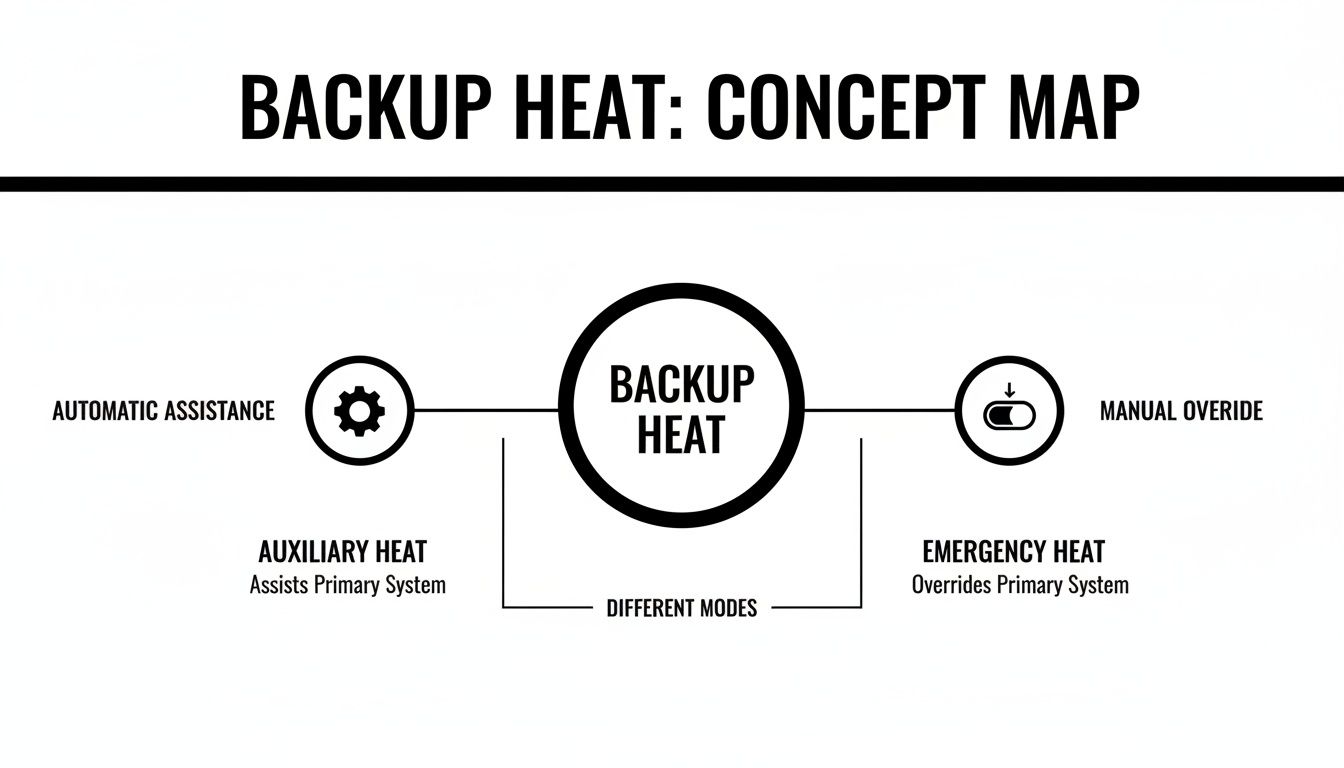
The main takeaway here is that auxiliary heat works with your heat pump, but emergency heat works instead of it. That’s a massive distinction during our cold winter months from November through April.
Signs of a True Heating Emergency
So, when is it actually time to hit that switch? A struggling heat pump will almost always give you some warning signs. If you notice any of the following, you likely have a system failure on your hands and need to engage the emergency heat as a temporary lifeline while you call for help.
- A Failed Outdoor Compressor: The compressor is the engine of your heat pump. If it breaks down, you might hear some seriously loud clanking or grinding noises coming from the outdoor unit. More often, though, it just goes completely silent and stops running, leaving your system unable to generate any heat at all.
- Significant Refrigerant Leak: Your heat pump relies on refrigerant to move heat from one place to another. A major leak means it can no longer do its job. The biggest symptom is a heat pump that runs and runs but only blows cool or lukewarm air through your vents.
- The Outdoor Unit is a Block of Ice: A little frost on the outdoor unit is normal and is handled by the system's defrost cycle. But if the entire unit gets entombed in a thick layer of ice that the defrost cycle can't touch, your system is effectively frozen solid and can't operate.
When these things happen, your heat pump is out of commission. Manually switching to EM Heat is the right call to keep your home in Grandville, Jenison, or Hudsonville warm and prevent your pipes from freezing while you wait for a technician.
Your Next Step is Always a Phone Call
It's critical to remember that emergency heat is a stopgap, not a long-term solution. Its only job is to provide basic warmth to keep your family safe until an expert can find and fix the real problem.
The second you switch to EM Heat, your very next move should be to schedule a professional service call. Running your system this way is incredibly expensive and does absolutely nothing to address the underlying failure.
The best way to avoid these stressful situations is with proactive care. Regular tune-ups are the single best way to catch small issues before they snowball into a full-blown, mid-winter breakdown. You can learn more about getting your system ready by checking out our guide on fall furnace maintenance.
The True Cost of Running Emergency Heat
Kicking your heat pump into its emergency setting has a real impact on your wallet, and knowing why is the best way to avoid a nasty surprise on your next energy bill. Your heat pump is basically a "heat mover"—it's incredibly efficient because it just transfers existing warmth from the outside air into your house, using a little bit of energy to do so.
Emergency heat, on the other hand, is a power-hungry "heat creator." It doesn't move anything. It makes heat from scratch with electric resistance heating strips, which work exactly like the glowing red coils inside your toaster. It's brute force, converting a ton of electricity directly into warmth.
Why Emergency Heat Is So Expensive
The huge difference is all about energy consumption. Your heat pump might use one unit of electricity to move three or even four units of heat. But those electric strips in emergency mode? They use one unit of electricity to create just one unit of heat. That one-to-one ratio is terribly inefficient in comparison.
For a typical home in Grandville, Walker, Standale, or Allendale, just leaving the emergency heat on for a few days during a West Michigan cold snap between November and April could easily tack on hundreds of dollars to your utility bill. This is exactly why it’s meant for true emergencies only.
The financial sting of emergency heat mode hits hard for West Michigan homeowners and businesses, with real numbers showing it can balloon energy bills during prolonged use—a perfect reason to partner with Platinum Heating & Cooling for preventive care. You can expect bills to jump by around $1.30 per hour for a standard system, which could add up to an extra $200 over a 5-day freeze. You can learn more about these energy cost findings.
A Quick Cost Comparison
To really put this in perspective, let’s look at a simple comparison for a typical hour of heating during our winter months, which run from November through April.
| Heating Mode | How It Works | Estimated Cost Per Hour |
|---|---|---|
| Normal Heat Pump | Efficiently moves heat from outside air into your home. | Low |
| Emergency Heat | Creates heat with energy-intensive electric resistance strips. | 3 to 5 times higher |
This table makes it pretty clear why getting a quick, professional repair is always the most cost-effective path when your heat pump acts up.
The longer you rely on emergency heat, the more you pay for inefficient, brute-force heating. It’s designed to keep you safe in a crisis, not to be a budget-friendly way to warm your home.
When your system forces you into that "EM Heat" setting, it's not just an inconvenience—it's a direct hit to your bank account. That’s why folks in Jenison, Hudsonville, and Wyoming, MI, should see it as a clear signal to call for professional service right away.
How to Turn Emergency Heat On and Off
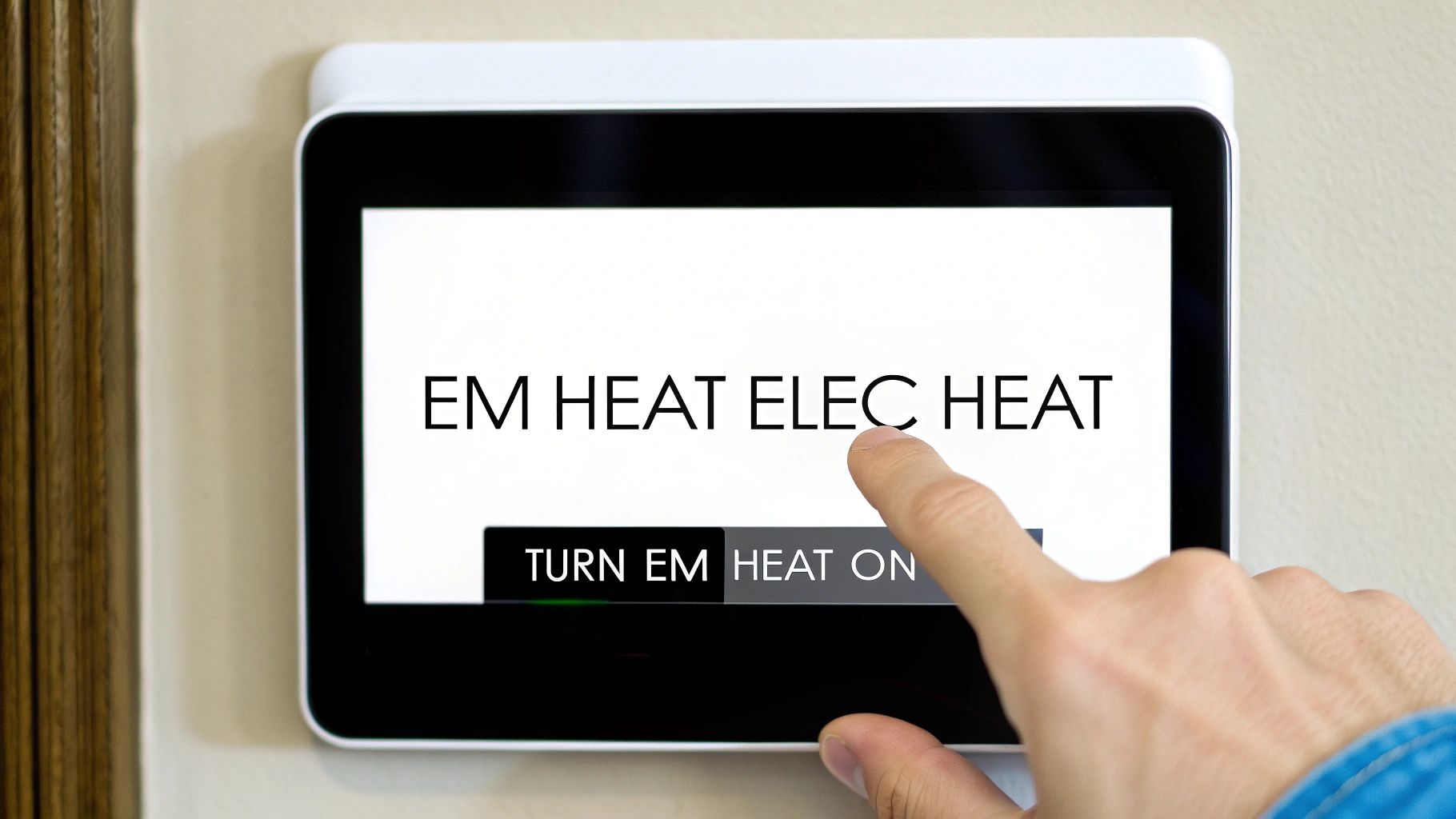
When your primary heating gives out during a West Michigan cold spell, the last thing you want to do is fumble with a confusing thermostat. Knowing exactly how to fire up your emergency heat can bring a lot of peace of mind and, more importantly, keep your family warm.
Luckily, the process is pretty straightforward, even though it can look a little different depending on your thermostat model. Most of the time, it's as simple as changing the system mode. You'll usually see settings like "Cool," "Heat," "Off," and then one for "EM Heat" or "Emergency." Just cycle through the options until you find it.
Steps to Turn On Emergency Heat
Switching on this backup mode is a manual override—you're the one in control. While the buttons might vary, the basic steps are the same whether your home is in Hudsonville, Jenison, Grandville, Walker, Standale, Allendale, or Wyoming, Michigan.
- Find the System Mode Button: Look for the button or menu option on your thermostat that flips between its main jobs (like Heat, Cool, Off).
- Cycle to the Emergency Setting: Press that button repeatedly until you see "EM Heat," "E," or "Emergency Heat" light up on the screen. On some digital thermostats, you might need to dig into an "advanced settings" menu to find it.
- Confirm It's On: Once you've selected it, an indicator light or a clear icon should pop up. This confirms your system is now running on its backup source. You'll notice the outdoor unit goes quiet, and you should start feeling warm air from your vents within a few minutes.
Quick heads-up: This is a temporary fix, not a permanent solution. The very next thing you should do after switching to EM Heat is call a pro for a repair. This setting isn't meant for long-term use, especially during our chilly winters from November through April.
How to Turn Off Emergency Heat
This is a big one. Forgetting to switch back to the normal "Heat" mode after a repair is a surprisingly common mistake, and it can be a very expensive one. As soon as your heat pump is back up and running properly, you have to manually turn off the emergency setting.
Just head back to your thermostat and hit the system mode button again. Cycle through the options until "Heat" is selected. The "EM Heat" light will go off, and your heat pump will get back to its normal, efficient self. That one little step will save you from a major shock when your energy bill arrives.
Knowing When to Call a Heating Professional
Think of your emergency heat like the spare tire in your car. It’s a temporary solution meant to get you to safety—not a permanent fix for the long haul. If you've had to manually flip that switch to EM Heat, the time to call a professional isn't tomorrow, it's right now. That single action is the clearest signal you can get that your main heat pump has a serious problem that needs an expert diagnosis.
Ignoring the issue or just leaving the system on emergency heat is a recipe for a shockingly high energy bill, and it does absolutely nothing to fix the actual problem. This is a huge deal, especially during the brutal West Michigan winter months from November through April.
Critical Signs You Need an Expert
Even before you're forced to switch to EM Heat, your heat pump often gives off warning signs that it’s in trouble. If you notice any of these symptoms around your Hudsonville, Jenison, Grandville, or Walker home, it’s time to stop troubleshooting and get a pro on the phone.
- Your Heat Pump Runs Constantly: Is the outdoor unit running nonstop but the air coming out of your vents is lukewarm at best? That's a classic sign of a major issue, like a refrigerant leak or even a failing compressor.
- Loud or Unusual Noises: Banging, grinding, or screeching from the outdoor unit is never normal. These sounds often point to serious mechanical problems that can cause catastrophic damage if you let them go.
- Frequent System Cycling: If your heat pump is kicking on and off every few minutes, it’s short-cycling. It's working way too hard without effectively heating your home in Standale, Allendale, or Wyoming.
Symptoms like these mean your system isn't just struggling—it's on the verge of failure. Putting off a service call will only make the problem worse and the repair more expensive. For immediate help, check out our emergency furnace and heating services.
Relying on emergency heat is a clear sign that your system’s primary function has been compromised. The most cost-effective and safest next step is always to schedule a professional repair.
In extreme weather, like Michigan's 2019 polar vortex when Grand Rapids plunged to -18°F, emergency heat becomes a critical safety net. In fact, statistics show that during such severe cold snaps, up to 25% of HVAC breakdowns involve heat pump defrost failures. In those cases, EM Heat provides a crucial buffer until help can arrive. But that’s its only real job.
Homeowners from Hudsonville, Jenison, Grandville, Walker, Standale, Allendale, and Wyoming can trust Platinum Heating & Cooling’s EPA-certified technicians to get to the root of the problem, fast. We'll make sure your family stays safe and warm, no matter what winter throws at us.
Frequently Asked Questions About Emergency Heat
We’ve dug deep into what emergency heat is and when it’s the right call. To finish up, let's tackle some of the most common questions we hear from West Michigan homeowners, especially when our cold winters hit from November through April.
Can I Run My Emergency Heat All Winter?
Absolutely not. You should never plan on running your emergency heat all winter. The best way to think about it is like the spare tire on your car—it's only there to get you by until a professional can fix the real problem.
Running it constantly will send your electricity bills through the roof and puts a ton of unnecessary strain on your system's backup parts. If your heat pump is struggling to keep your Hudsonville, Jenison, Grandville, or Walker home warm, that’s your cue to call in a pro to figure out what's really going on.
Is It Bad If My AUX Heat Light Comes On Frequently?
It's actually perfectly normal for the "AUX Heat" light to pop on every now and then, especially during a serious cold snap between November and April. It just means your system is automatically calling for a little extra help to keep you comfortable.
However, if you notice that light is on all the time, even on milder days, it could be a red flag. This often points to an underlying issue with your heat pump, like low refrigerant or a bad sensor, forcing it to work way harder than it should. It’s a good idea to schedule a service call to avoid sky-high energy costs and prevent bigger problems down the road.
Think of a constantly running auxiliary system as a cry for help from your heat pump. While it's not quite an emergency, it's a clear sign your system is struggling and costing you money.
How Do I Know If My Emergency Heat Is Working?
Once you’ve manually flipped your thermostat to the Emergency Heat setting, the first thing you should notice is that your outdoor unit in your Grandville, Walker, Standale, or Wyoming yard shuts off. Within a few minutes, you should feel warm air blowing from your vents.
Don't be alarmed if you smell a faint burning odor the first time it kicks on for the season; that's just dust burning off the electric heating coils. But if you switch to EM Heat and all you get is cold air—or no air at all—your backup system itself has likely failed. This is a real heating emergency, and you need to call for 24/7 service right away.
If you're facing a heating emergency in West Michigan—including Hudsonville, Jenison, Grandville, Walker, Standale, Allendale, or Wyoming—don't tough it out in the cold. Contact the trusted professionals at Platinum Heating & Cooling for fast, reliable service to get your home's comfort and safety back on track.