
That startling thump you hear when the dishwasher or washing machine finishes its cycle? That’s not your house settling. It's a common plumbing problem called water hammer, and it’s a sign that something is wrong. The root cause is simple: water flowing at high speed is forced to a sudden stop, sending a powerful shockwave crashing through your pipes. Let's break down exactly what's going on.
Understanding the Loud Bang in Your Plumbing
To really get what causes water hammer in pipes, imagine the water rushing through your plumbing is like a freight train barreling down the tracks. When a valve snaps shut, it's like a solid steel wall instantly appearing in front of that train. The water has nowhere to go, and all that forward momentum has to be absorbed instantly.
This creates a massive pressure spike, or hydraulic shock, that slams backward through the pipe. The loud banging or knocking you hear is the sound of that shockwave rattling your entire plumbing system, shaking pipes and fittings along the way. It’s an issue we see all the time in homes across West Michigan, including Hudsonville, Jenison, Grandville, Walker, Standale, Allendale, & Wyoming, Michigan.
The Science Behind the Sound
Modern appliances are often the biggest culprits. If you've ever been in your Grandville home when the dishwasher abruptly stops, only to hear a loud bang echo from the walls, you’ve experienced water hammer firsthand. Solenoid valves in today's washing machines, dishwashers, and ice makers are designed to shut off in milliseconds. This rapid closure can generate pressure surges that travel through pipes at over 4,800 feet per second. You can dive deeper into the physics in this in-depth analysis from ASPE.org.
That noise isn't just an annoyance—it's a warning sign. Each bang puts immense stress on your pipes. Over time, this repeated force can weaken joints, cause leaks, and even lead to a burst pipe. It’s a critical issue you shouldn’t ignore.
At its core, water hammer is what happens when kinetic energy (moving water) is converted into pressure energy almost instantly. A few key factors make this jarring effect worse:
- Sudden Valve Closure: Appliances with quick-closing automatic valves are the most common triggers.
- High Water Velocity: The faster your water is moving, the more powerful the shockwave will be.
- Pipe Material and Layout: The length, material, and configuration of your pipes can amplify the intensity of the bang.
For homeowners in Walker, Standale, Allendale, and Wyoming, Michigan, understanding these fundamentals is the first step toward diagnosing the problem and finally silencing those disruptive noises for good.
The Common Culprits Behind Water Hammer
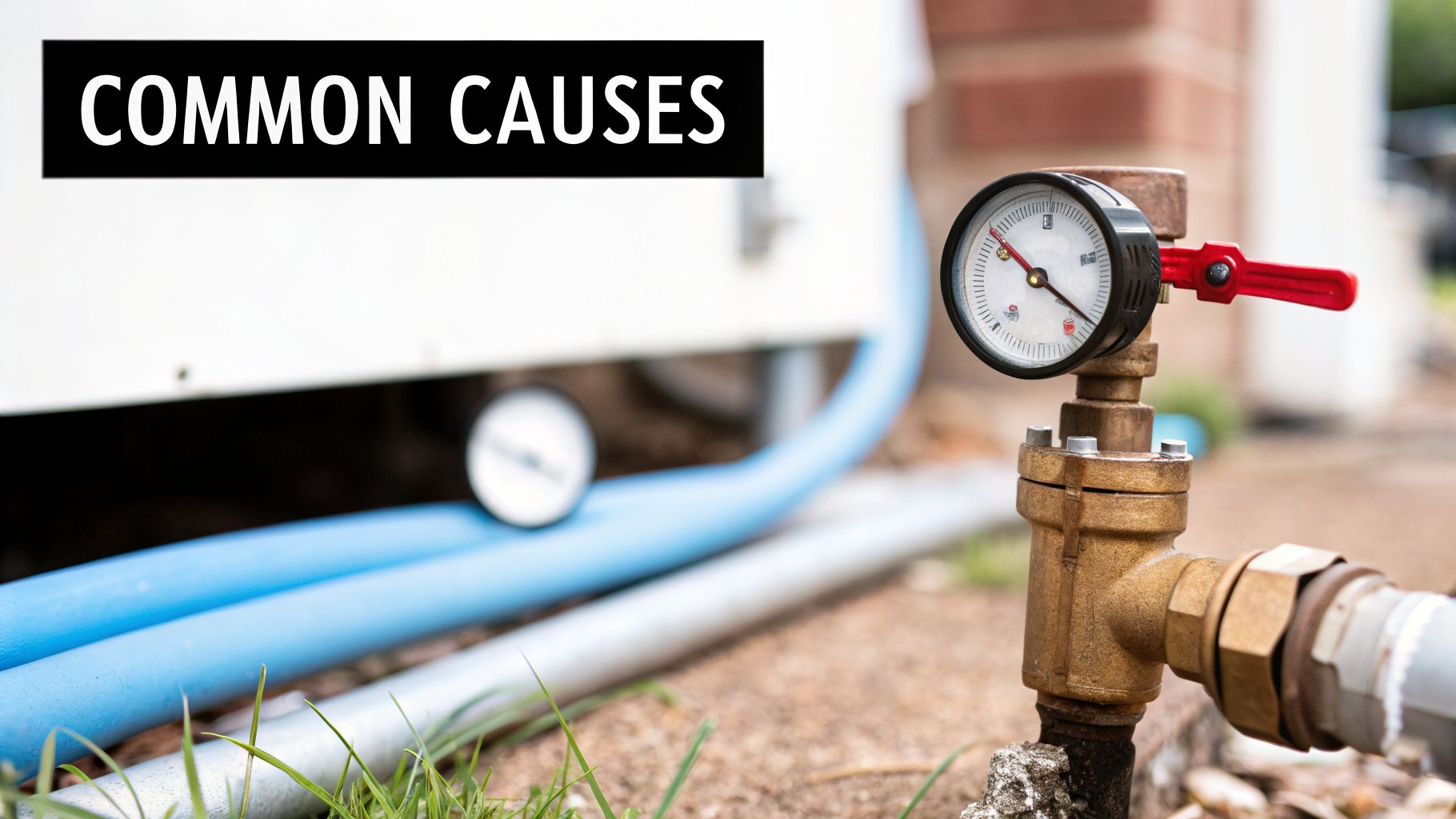
To solve the mystery of that banging in your walls, you first have to play detective and identify the culprit. Several common plumbing issues can trigger the jarring shockwaves of water hammer. Pinpointing the specific cause in your Hudsonville or Jenison home is the key to finding the right, lasting solution and finally getting some peace and quiet.
One of the most frequent offenders we see is simply high water pressure. While it might feel great in the shower, any pressure consistently over 80 PSI (pounds per square inch) puts a ton of unnecessary strain on your entire plumbing system. This high velocity makes the sudden stoppage of water far more violent, turning a minor thump into a house-shaking bang.
Fast-Closing Valves and Modern Appliances
The number one trigger for water hammer in many West Michigan homes comes down to the rapid closure of modern valves. Appliances like washing machines, dishwashers, and ice makers all use solenoid valves that snap shut in a fraction of a second. This incredibly abrupt stop is what creates that powerful hydraulic shock.
Think of it this way: a slow-turning faucet handle gently brings the water flow to a halt, but a solenoid valve slams the door shut instantly. This is exactly why you so often hear the noise right after an appliance finishes a fill cycle. Single-lever faucets can be guilty, too, if you have a habit of shutting them off quickly.
Unsecured Pipes Rattling in Your Walls
Another major factor that makes the noise so much worse is unsecured pipes. If the pipes running through your walls or floor joists aren't properly anchored, the shockwave from a water hammer event will cause them to physically shake and rattle. This vibration is what turns a contained pressure surge into a loud, disruptive noise that travels through your home's structure.
Loose pipes are a huge culprit, turning a water hammer event into a full-body shake for your plumbing. When water flow stops on a dime, unanchored pipes can whip around and bang against joists and drywall. In fact, these vibrations can generate forces exceeding 150% of the system's normal pressure, loosening mounts over time and transmitting noise everywhere. You can learn more about the risks of these powerful vibrations in this detailed explanation from Korycki Mechanical, Inc..
Even if your pipes seem secure, other issues can be at play. Older homes in areas like Grandville and Wyoming often have outdated plumbing features that no longer function as intended, leading to persistent water hammer.
Failed Air Chambers and Other System Issues
Many older plumbing systems were built with air chambers—short, vertical sections of capped pipe installed near faucets and valves. These were designed to hold a pocket of air that would act like a cushion, absorbing the shockwave from a sudden valve closure.
The problem is, over time, that air pocket can get absorbed into the water, leaving the chamber completely waterlogged and useless. When that happens, the shockwave has nowhere to go but to crash right through your pipes. The good news is these chambers can often be recharged, but it's a very common point of failure.
Other potential causes include:
- Worn-out toilet fill valves: A faulty ballcock or flapper assembly inside a toilet can create vibrations and noises that sound a lot like water hammer right after you flush.
- Well pump cycling: If your home uses a well, issues with the pump or pressure tank can cause it to turn on and off rapidly, triggering pressure surges throughout your plumbing.
- Thermal expansion: Your water heater works hard, especially during our cold northern winter months from November through April. As water heats up, it expands, and if you don't have a functioning expansion tank, that pressure has to go somewhere, sometimes contributing to pipe noise.
Identifying Common Water Hammer Causes
Use this quick guide to connect the sounds and symptoms in your West Michigan home to their likely plumbing cause.
| Potential Cause | Common Symptom You'll Notice | Typical Location in Your Home |
|---|---|---|
| High Water Pressure | Loud, consistent banging from multiple fixtures and appliances | Anywhere, but often noticeable near the main water line |
| Fast-Closing Valves | A single, sharp bang when a specific appliance finishes filling | Laundry room (washing machine) or kitchen (dishwasher) |
| Unsecured Pipes | Rattling or vibrating noises coming from inside walls or floors | Can be located anywhere pipes run through the home's structure |
| Failed Air Chambers | Banging that has gotten progressively worse over time | Near older faucets, toilets, or washing machine connections |
| Worn Toilet Fill Valve | A shuddering or vibrating noise that happens only after a flush | Inside the toilet tank |
| Well Pump Cycling | Rhythmic thumping that coincides with the well pump turning on/off | Near the pressure tank, but the sound can travel |
This table should help you start narrowing down the possibilities. Remember, sometimes more than one issue is contributing to the noise, which is when a professional diagnosis can really make a difference.
Why Ignoring Water Hammer Is a Costly Mistake
That loud banging sound you hear in your walls isn't just an annoying quirk; it's a serious warning sign that your entire plumbing system is under a huge amount of stress. While it’s easy to tune out, each "thump" is actually a powerful shockwave that’s punishing your pipes, fittings, and appliances. Over time, this repeated assault can lead to some pretty significant and expensive damage.
Think of each water hammer event as a tiny, violent earthquake happening inside your pipes. The initial impact might seem minor, but the cumulative effect is incredibly destructive. These constant pressure surges progressively weaken soldered joints and threaded fittings, creating the perfect conditions for hidden leaks to spring up behind your drywall.
From Annoying Noise to Catastrophic Failure
And the damage isn't just limited to the pipes. Those forceful jolts can harm the delicate internal parts of your appliances, like the solenoid valves in your washing machine or the connections to your dishwasher. For homeowners in Allendale and Walker, this stress can also put a serious strain on your water heater, especially during the cold winter months from November through April, potentially shortening its lifespan. If you're concerned about your system, you can learn more about professional water heater service to make sure it's in top shape.
What starts as a simple, hidden leak can quickly escalate. A weakened joint that finally gives way can lead to a catastrophic pipe burst, flooding your home and leaving you with thousands of dollars in water damage and emergency repair bills.
Ignoring water hammer is like ignoring the check engine light in your car. Sure, the car might still run for a while, but a serious and costly breakdown is getting more and more likely with every mile you drive.
The True Cost of Inaction
Proactively addressing what’s causing the water hammer is one of the smartest investments you can make for your home's plumbing health. This isn't just about stopping the noise—it's about preventing a whole cascade of expensive problems down the road. Here’s what you’re really risking by letting it continue:
- Weakened Pipe Joints: The constant flexing and stress can cause connections to fail, leading to slow leaks or sudden, messy bursts.
- Damaged Appliance Hoses: The violent shaking can loosen or even rupture the supply lines to your washing machine and dishwasher.
- Failed Valves and Fixtures: Those pressure spikes can wear out faucets, shutoff valves, and even the fill mechanisms in your toilet way ahead of their time.
- Structural Damage: Persistent leaks can lead to mold growth, rotted wood, and compromised drywall, requiring extensive and costly remediation work.
For residents all across West Michigan, from Hudsonville and Jenison to Grandville and Wyoming, tackling this issue protects your property's value and ensures your plumbing stays reliable and safe for years to come.
How to Safely Diagnose the Problem Yourself
Ready to play detective for a bit? Before you pick up the phone, there are a few simple and perfectly safe things you can do to investigate that water hammer noise. You don't need any special tools, and this little bit of sleuthing can give you some major clues about what’s going on.
Think of it as gathering evidence. The more you know, the clearer the picture becomes, and the easier it is to explain the situation to a technician.
Your first mission is to figure out exactly which fixture or appliance is triggering the chaos. For the next day or two, just pay close attention to when you hear that banging sound.
- Does it only happen when the washing machine stops filling up?
- Is the dishwasher the culprit every single time?
- Or do you hear it when you quickly shut off a specific sink faucet?
Make a mental note or jot down which device is the consistent troublemaker. This is often the biggest clue you can find, as it helps isolate the problem to a single valve or a specific run of pipes.
Checking Water Pressure and Pipe Security
Next up, let's look at two of the most common offenders: high water pressure and loose pipes.
You can check your home's water pressure with an inexpensive pressure gauge you can find at any hardware store. It just screws right onto an outdoor hose spigot. Attach the gauge, turn on the water, and see what the dial says. For most homes, the sweet spot is between 40 and 70 PSI. If your gauge is reading consistently over 80 PSI, you’ve almost certainly found a major contributor to the problem.
After that, take a quick walk through your basement or crawlspace to do a visual inspection of any exposed pipes. Pay special attention to the pipes around the washing machine or where the main water line comes in. Can you see any straps or clamps that have pulled away from the floor joists? Gently give the pipes a little nudge. If they wiggle or shake easily, they aren't secured properly, and they’re going to make any shockwave feel—and sound—a lot worse.
Ignoring these initial bangs and rattles can lead down a dangerous path, starting with small leaks and potentially ending with a burst pipe and serious water damage.
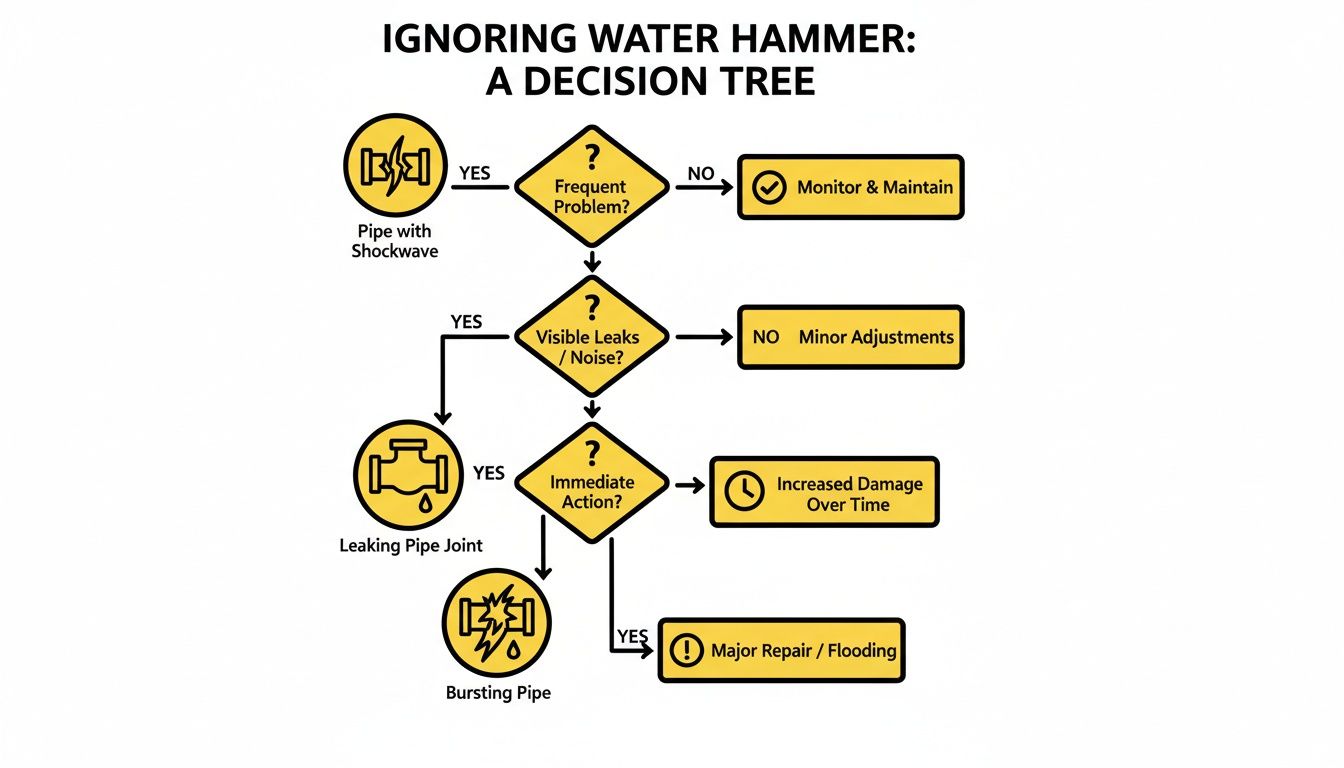
As you can see, what starts as a minor annoyance can quickly escalate into a full-blown disaster if left unchecked.
Safety First: When you're inspecting your pipes, never try to force or bend them. You're just checking for existing looseness, not trying to fix anything yourself. This is all about observation.
Once you’ve gathered this info—the appliance causing the noise, your home’s water pressure, and whether your pipes are secure—you're in a great position. When you call a professional plumbing and heating expert in West Michigan, including Hudsonville, Jenison, Grandville, Walker, Standale, Allendale, & Wyoming, Michigan, you can share these specific details. It helps us diagnose the issue much faster, saving you time and making sure we get the right fix in place right away.
Proven Solutions to Stop Water Hammer for Good
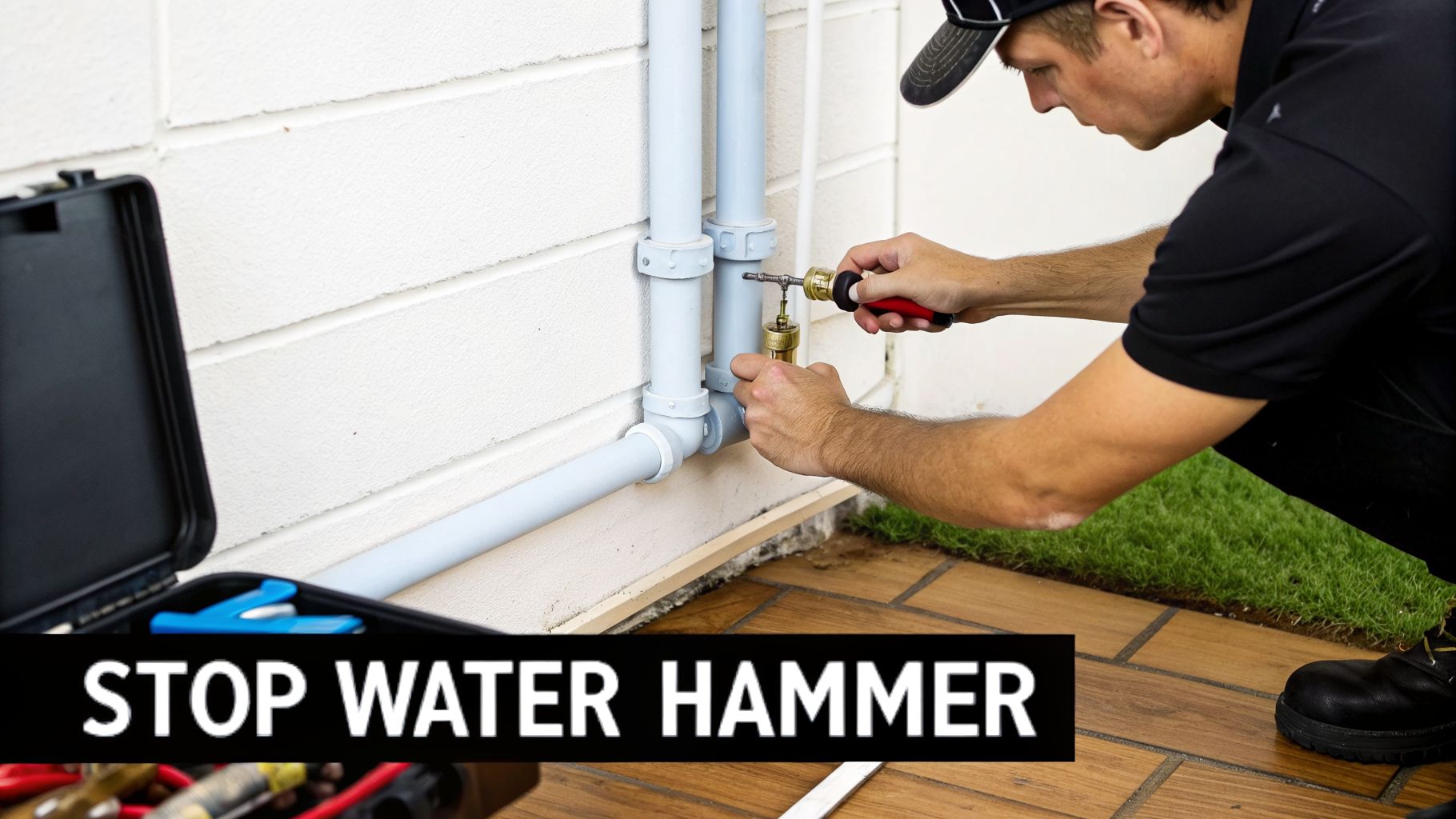
Alright, you’ve done the detective work and have a good idea of what’s causing that racket in your walls. Now for the good part: making it stop. A quiet plumbing system is definitely within reach for homeowners in West Michigan, and the right fix will do more than just silence the noise—it’ll protect your pipes from damage for years to come.
Some of these solutions are pretty straightforward, perfect for a confident DIYer. Others? They really need the steady hand and know-how of a licensed pro. We’ll walk through each one, so you can figure out the best path forward for your home in Hudsonville, Jenison, or Grandville.
Installing Water Hammer Arrestors
Think of a water hammer arrestor as a shock absorber for your plumbing. It's a small, sealed device with a piston and a cushion of pressurized air. When a valve slams shut and sends that pressure wave flying, the arrestor catches it. The air pocket inside absorbs the force, stopping the shockwave dead in its tracks before it can rattle your pipes.
These little gadgets are incredibly effective, especially when the culprit is a fast-closing valve on a washing machine or dishwasher. They’re usually installed right on the water supply lines next to the appliance. While some screw-on types can be handled by a homeowner with some plumbing experience, soldering a permanent arrestor into a copper line is a job best left to a professional.
Taming Pressure with a PRV
If you discovered your home’s water pressure is cranked up too high (anything over 80 PSI), the best long-term fix is a pressure-reducing valve (PRV). This device gets installed on your main water line, right after the meter. It acts like a gatekeeper, bringing the pressure for your entire home down to a safe and steady level, typically between 50 and 60 PSI.
A PRV doesn't just solve water hammer; it protects every single fixture and appliance in your home. It extends the life of your washing machine, dishwasher, faucets, and even your water heater from the stress of high pressure.
Installing or adjusting a PRV is definitely not a DIY task. It involves cutting into the main water supply line and has to be done perfectly to work correctly and prevent major leaks. For homeowners in Walker, Standale, and Allendale, our certified technicians at Platinum Heating & Cooling can expertly install a PRV to safeguard your whole plumbing system.
Simpler Fixes You Might Handle Yourself
Not every fix requires a major installation. Sometimes, a few simple adjustments can make a world of difference, especially if the root cause is something minor.
- Securing Loose Pipes: If you found pipes rattling around in the basement or crawlspace, this is an easy win. Grab some pipe clamps or straps and anchor them snugly to the floor joists or wall studs. This doesn't stop the pressure wave itself, but it silences the clattering it causes.
- Recharging Air Chambers: Older homes often have built-in air chambers—vertical pipes that can get filled with water over time. To recharge them, shut off your home’s main water valve. Then, open all the faucets, starting with the highest one in the house and ending with the lowest, to drain the system completely. Once the water stops, the chambers will fill back up with air. You can then close the faucets and slowly turn the water back on.
- Checking Your Water Heater: During our chilly West Michigan months from November through April, your water heater is working hard. If your system has an expansion tank to manage thermal expansion, making sure it’s working right can relieve pressure issues. For professional help, you can learn more about our tankless water heater installation and service options.
By picking the right approach—whether it's a quick DIY tweak or bringing in a pro—you can finally get that peace and quiet back in your home.
Your Guide to Common Water Hammer Questions
We've walked through the causes and fixes, but you probably still have a few questions. We get it. Here are the straight answers to the most common things we hear from homeowners across West Michigan, from Hudsonville and Jenison to Grandville and Allendale.
How Much Does It Cost to Fix Water Hammer?
The cost to fix what's causing that racket in your pipes can really vary. A simple DIY fix, like strapping down some loose pipes you can easily get to, might only set you back a few bucks for clamps.
But for professional solutions, you're looking at a wider range. Installing a few water hammer arrestors or a new pressure-reducing valve can run from a few hundred to over a thousand dollars. It all depends on how complex your home's plumbing is and what the root cause turns out to be.
Can Water Hammer Actually Cause a Pipe to Burst?
Yes, absolutely. A single "bang" is unlikely to blow a pipe on its own, but the real danger is the cumulative stress. Think of it like a tiny hammer hitting your pipes every time you shut off the water.
Each one of those shockwaves puts a little more strain on pipe joints, valves, and fittings. Over time, this repeated abuse dramatically increases the risk of a catastrophic failure—and that means a burst pipe and a world of water damage. It’s a risk that’s just not worth taking.
It's like a constant, tiny impact. One hit won't break a strong connection, but thousands of them will eventually cause it to fail. Taking care of it early is the best way to protect your home.
Is One Loud Bang of Water Hammer a Serious Problem?
Even if it only happens once in a while, that loud bang is a clear sign of a major pressure surge hitting your plumbing system. It's your pipes telling you that something isn't right.
Consider it an early warning. It often points to an underlying issue—like dangerously high water pressure or a failing valve—that will almost certainly get worse. Staying on top of routine checks, like those in our maintenance membership program, helps catch these things before they turn into major headaches.
If you’re tired of the noise and worried about your plumbing, don’t wait for a small problem to become a disaster. The EPA-certified technicians at Platinum Heating & Cooling have the expertise to diagnose and permanently solve water hammer issues in your home. We proudly serve homeowners and businesses across West Michigan, including Hudsonville, Jenison, Grandville, Walker, Standale, Allendale, and Wyoming, Michigan.