
As the West Michigan winter settles in from November through April, a reliable furnace isn't just a luxury, it's essential for comfort and safety. Homeowners from Hudsonville to Jenison and businesses in Allendale and Wyoming, Michigan depend on their heating systems to fight off the chill. But furnaces don't typically fail without warning. They often send subtle, and sometimes not-so-subtle, signals that trouble is brewing.
Ignoring these early indicators can lead to a complete breakdown in the middle of a January cold snap, expensive emergency repairs, and even serious safety hazards. This guide is designed to help you understand the most common signs your furnace needs repair. We will break down eight specific symptoms, from strange noises and uneven heating to a discolored pilot light and unexpected spikes in your energy bills.
By learning to recognize these indicators, you can address problems proactively, save money, and ensure your home or business in the Grand Rapids area stays warm and safe all winter long. Let's decode what your furnace is trying to tell you and determine when it's time to call the certified professionals at Platinum Heating & Cooling for expert service.
1. Strange Noises Coming from the Furnace
Your furnace should operate with a relatively quiet hum, so when it starts making loud, unusual, or sudden sounds, it's one of the most direct signs your furnace needs repair. These noises are mechanical cries for help, indicating specific internal components are failing, loose, or under extreme stress. Ignoring them, especially during a frigid West Michigan winter (November through April), can lead to a complete system breakdown when you need it most.
What the Sounds Mean
Different noises point to different problems, from minor annoyances to severe safety hazards.
- Banging or Booming: Often heard at startup, this loud noise can signal delayed ignition. Gas builds up in the combustion chamber before it ignites, creating a small, contained explosion. This places significant stress on your heat exchanger, which can lead to cracks and potential carbon monoxide leaks.
- Squealing or Screeching: A high-pitched squeal is a classic symptom of a worn or failing blower motor belt or bearings. Much like a car, these components need proper lubrication and tension to function silently.
- Rattling or Clanking: This could be as simple as a loose access panel or ductwork. However, it can also indicate a more serious issue, such as a failing motor or a loose component within the blower assembly.
- Grinding or Scraping: This is a severe mechanical sound that requires immediate attention. It often means the blower wheel has come loose from its shaft or the motor's bearings have completely failed, causing metal parts to scrape against each other.
Actionable Steps for Homeowners
If you hear these sounds, especially in areas like Hudsonville, Jenison, Grandville, Walker, Standale, Allendale, & Wyoming, Michigan, it’s critical to act fast.
- Document the Noise: Note what the sound is (banging, squealing, etc.) and when it happens (startup, shutdown, or during the entire cycle). This information is invaluable for a technician.
- Safety First: If you hear loud banging or grinding, turn off your furnace at the thermostat and the circuit breaker to prevent further damage.
- Schedule an Inspection: Do not ignore any of these sounds. A professional diagnosis is the only way to ensure your system is safe and functional. Timely intervention can prevent a minor issue from becoming a costly, catastrophic failure.
An unusual noise is your furnace’s early warning system. For expert diagnostics and reliable repairs, learn more about Platinum Heating & Cooling’s professional furnace service to keep your home safe and warm.
2. Uneven Heating Throughout Your Home
A properly functioning furnace should deliver consistent warmth to every room in your house. When you find yourself closing doors to trap heat or notice significant temperature differences between rooms, it’s a clear sign your furnace needs repair. This uneven heating points to underlying issues with airflow, ductwork, or the furnace itself, which can compromise comfort and efficiency, especially during a harsh West Michigan winter from November to April.
What the Imbalance Means
Inconsistent temperatures are more than just an inconvenience; they signal that your heating system is struggling to do its job effectively.
- Blocked Airflow: The most common culprit is restricted airflow. This can be caused by clogged air filters, furniture blocking supply or return vents, or obstructions deep within your ductwork.
- Ductwork Problems: Leaks, disconnected sections, or poorly designed ductwork can prevent heated air from reaching its intended destination. A significant portion of your warm air could be escaping into your walls, attic, or crawlspace instead of heating your rooms.
- Failing Components: An aging or undersized furnace may lack the power to push warm air to the farthest reaches of your home. A weakening blower motor can also fail to circulate air with enough force, leading to cold spots.
- Thermostat Issues: An improperly calibrated or poorly placed thermostat can give inaccurate readings, causing the furnace to shut off before the entire home is heated.
Actionable Steps for Homeowners
If your Grandville apartment or Allendale home has cold zones, there are a few things you can check before calling a professional.
- Check Your Vents and Filter: Walk through your home and ensure all supply vents are open and unobstructed by rugs, drapes, or furniture. Replace your furnace filter if it's dirty, as this is a common cause of weak airflow.
- Verify Thermostat Location: Make sure your thermostat isn't located near a heat source (like a lamp or direct sunlight) or a cold draft, as this can cause faulty readings.
- Schedule a Professional Inspection: If simple checks don't solve the problem, it's time for an expert diagnosis. A technician can inspect your ductwork for leaks, assess your furnace's blower motor, and ensure your system is properly sized for your home.
Uneven heating wastes energy and money. For a comprehensive system evaluation and expert repairs, explore Platinum Heating & Cooling’s professional furnace service to restore balanced comfort to your home.
3. Yellow or Discolored Pilot Light
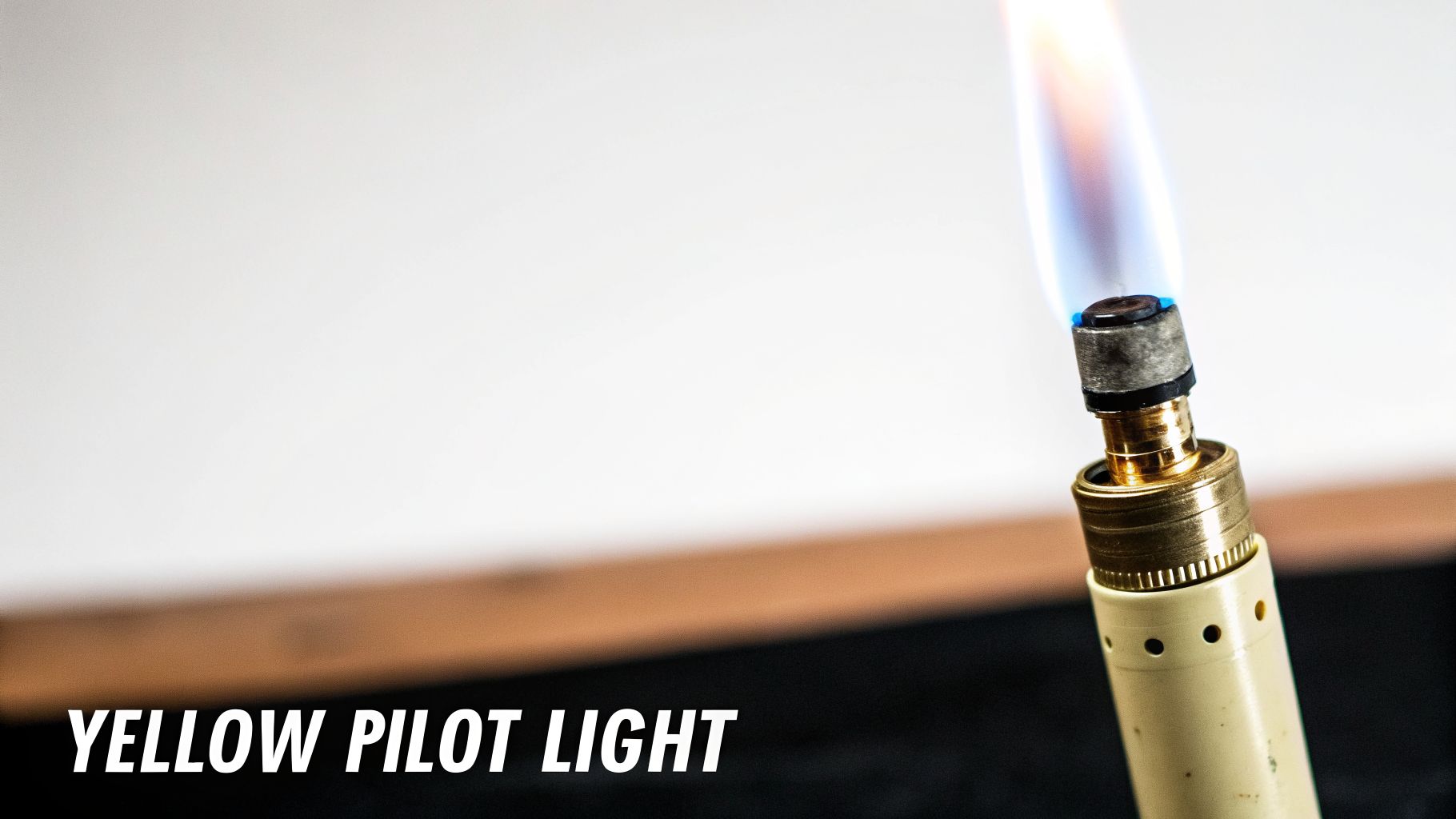
Your furnace’s pilot light should always burn a crisp, steady blue. A yellow, orange, or flickering flame is a serious warning and one of the most urgent signs your furnace needs repair. This discoloration indicates incomplete combustion, which means your furnace is not burning fuel efficiently and could be producing dangerous byproducts, including lethal carbon monoxide gas. For homeowners in West Michigan, this is a critical safety check before the harsh winter season (November through April) sets in.
What the Discoloration Means
A healthy blue flame shows the correct ratio of gas to oxygen. A change in color points to a specific, often hazardous, problem.
- Yellow or Orange Flame: This is the most common sign of trouble. It typically means there is not enough oxygen mixing with the gas for complete combustion. This can be caused by dirty burners, a partially blocked orifice, or a problem with the air intake. The incomplete burn creates soot and, more dangerously, carbon monoxide (CO).
- Flickering or Dancing Flame: While a small amount of flicker is normal, a weak or wildly dancing flame can indicate a draft issue or a problem with the gas pressure. This instability can lead to the pilot light extinguishing, leaving your home without heat.
- Green, Purple, or Other Colors: These less common colors often point to contaminants like dust, rust, or other household chemicals being burned along with the fuel, which can damage internal components.
Actionable Steps for Homeowners
A discolored pilot light is a safety emergency, especially in homes across Jenison, Grandville, Walker, and Allendale, Michigan. Do not delay.
- Immediate Shut-Down: If you see a yellow pilot light, turn off the furnace immediately at both the thermostat and the main gas supply valve to the unit. This prevents the continued production of carbon monoxide.
- Do Not Attempt DIY Repairs: Adjusting a pilot light or gas valve requires specialized tools and knowledge. Incorrect adjustments can make the problem worse or create a gas leak.
- Schedule an Emergency Service Call: Contact a certified HVAC professional right away. This is not a repair that can wait. A technician will need to diagnose the cause, whether it's a dirty burner, a ventilation issue, or a cracked heat exchanger.
A yellow flame is your furnace's most direct signal of a potential CO hazard. For an immediate safety inspection and expert repairs, learn more about Platinum Heating & Cooling’s professional furnace service to protect your family and home.
4. Frequent Cycling On and Off
A properly functioning furnace should run through a few predictable heating cycles each hour to maintain your set temperature. When your unit starts turning on and off in rapid, short bursts, it’s a clear indication of a problem known as "short cycling." This is one of the more subtle yet damaging signs your furnace needs repair, as it dramatically increases energy consumption and puts excessive strain on critical components. For property managers in Allendale or commercial offices in Wyoming, Michigan, short cycling can lead to soaring utility bills and premature system failure.
What the Cycling Means
Short cycling isn't a problem on its own; it's a symptom of an underlying issue that is causing your furnace to overheat or misread the home's temperature.
- Restricted Airflow: A severely clogged air filter is the most common cause. The furnace can't push air through the system, causing the heat exchanger to overheat and trigger a safety shutoff. Once it cools, it starts again, repeating the cycle.
- Thermostat Malfunction: A faulty thermostat or one placed in a poor location, such as in direct sunlight or near a heat source, can give inaccurate readings. It may think the room has reached the target temperature long before it actually has, shutting the furnace down prematurely.
- Oversized Furnace: If a furnace is too powerful for the space it's heating, it will quickly reach the thermostat's set point and shut off. This constant starting and stopping is highly inefficient and a common issue in newer constructions around Grandville if not properly sized.
- Failing Components: More serious causes include a malfunctioning flame sensor or a failing limit switch, both of which are crucial for safe and efficient operation.
Actionable Steps for Homeowners
If your furnace is short cycling, especially during a cold Jenison or Hudsonville winter, a few simple checks can help you identify the cause.
- Check Your Air Filter: Your first step should always be to inspect and, if necessary, replace your furnace filter. During the peak heating season from November through April, a monthly check is recommended.
- Inspect Your Thermostat: Ensure your thermostat is not obstructed or located near anything that could influence its reading, like a lamp, television, or a drafty window.
- Monitor and Document: Pay attention to how long the furnace runs before shutting off. Note the outdoor temperature and your thermostat setting. This information will help a technician diagnose the problem faster.
Short cycling accelerates wear and tear, leading to costly repairs down the line. To get to the root of the problem and restore your system's efficiency, schedule a diagnostic visit. Learn more about Platinum Heating & Cooling’s professional furnace service to keep your system running smoothly.
5. Weak or Insufficient Airflow from Vents
When your furnace is running, you should feel a steady, strong stream of warm air from your vents. If you hold your hand over a register and only feel a weak whisper of heat, it’s a clear indication of an underlying problem and one of the most common signs your furnace needs repair. This issue directly impacts your comfort and efficiency, forcing your system to run longer to heat your home, which is especially frustrating during a frigid January in West Michigan.
What Weak Airflow Means
Insufficient airflow is often a symptom of something restricting your system's ability to circulate air. The cause can range from a simple maintenance task to a more significant mechanical failure.
- Clogged Air Filter: This is the most common and easily fixable cause. A dirty filter acts like a roadblock, preventing air from entering the system to be heated and distributed. This blockage forces the blower motor to work harder, increasing energy use and strain.
- Blower Motor Issues: The blower is the heart of your HVAC's circulation. A failing motor, worn-out belt, or malfunctioning capacitor can reduce its speed and power, resulting in weak airflow throughout your home.
- Blocked or Leaky Ductwork: Obstructions, crushed sections, or holes in your ductwork can severely diminish airflow before it ever reaches the vents. This is common in older homes or properties in areas like Grandville and Allendale that have undergone renovations.
- Oversized or Undersized System: A furnace that is not correctly sized for your home will struggle to push air effectively, especially to rooms far from the unit, like a new home addition.
Actionable Steps for Homeowners
If you’re noticing weak heat in your Hudsonville or Jenison home, there are a few things you can check before calling a professional.
- Check Your Air Filter: Your first and most important step is to inspect the furnace filter. If it’s grey with dust and debris, replace it immediately. The EPA recommends checking it monthly during the heating season (November through April).
- Inspect Vents and Registers: Walk through your home and ensure all supply vents are fully open and not blocked by furniture, rugs, or curtains. Also, check that your return air grilles are clear of obstructions.
- Schedule a Professional Inspection: If a new filter and clear vents don't solve the problem, it’s time for professional help. The issue likely lies with the blower motor or inside the ductwork, requiring specialized tools and expertise.
Weak airflow is more than an annoyance; it’s a sign of system inefficiency. For a comprehensive diagnosis, learn more about Platinum Heating & Cooling’s expert furnace repair services to restore powerful, consistent heat to your home.
6. Burning Smell When Furnace Runs
A brief, dusty burning smell when you first turn on your furnace for the season is often normal. However, a persistent or acrid odor is a serious warning and one of the most urgent signs your furnace needs repair. These smells can indicate dangerous electrical issues, overheating components, or even foreign objects lodged in the system, posing a significant fire hazard to your home and family.
What the Smells Mean
Different burning odors can point to specific, and often severe, problems within your heating system.
- Dusty Burning Smell: Typically occurs during the first use in autumn. This is usually just dust that has settled on the heat exchanger over the cooling months burning off. The smell should dissipate within an hour.
- Electrical or Metallic Burning Smell: A sharp, acrid smell often points to an overheating motor, frayed wiring, or a failing electrical component. This is a serious fire risk and requires immediate shutdown of the system.
- Burning Plastic or Rubber: This could indicate melting wire casings or a problem with a belt-driven component. This smell signifies an immediate electrical hazard.
- Smoky or Oily Smell: This may suggest an issue with the oil burner (in an oil furnace) or a potential blockage in the flue pipe, which could lead to a carbon monoxide buildup.
Actionable Steps for Homeowners
For homeowners in communities like Grandville, Allendale, Walker, or Standale, Michigan, distinguishing between normal startup smells and a real emergency is critical for safety.
- Observe and Time It: If you notice a burning smell during the first startup of the heating season, let the system run for 15-30 minutes. If the smell disappears, it was likely just dust.
- Safety First: If the smell is sharp, electrical, or persists beyond an hour, immediately turn off the furnace at the thermostat and the circuit breaker. This action is crucial to prevent a potential fire.
- Schedule an Inspection: Do not operate a furnace that produces a persistent burning odor. A professional technician can safely diagnose the root cause, whether it's a failing motor, a dangerous wiring issue, or a blocked exhaust vent.
A burning smell is your furnace's most direct alarm signal. For emergency diagnostics and safe, reliable repairs, contact Platinum Heating & Cooling to ensure your system operates without risk.
7. High or Rising Heating Bills Without Increased Usage
Your energy bill naturally fluctuates with the seasons, but a sudden or steady spike during the heating months (November through April) without a corresponding change in your habits is a major red flag. This unexplained increase is often one of the first financial signs your furnace needs repair. It indicates your system is working harder and burning more fuel to produce the same amount of heat, signaling a significant drop in efficiency that directly impacts your wallet.
What the High Bills Mean
A loss of efficiency can stem from several underlying issues, ranging from simple maintenance oversights to more complex mechanical failures.
- Dirty or Clogged Filters: A blocked filter restricts airflow, forcing the furnace's blower motor to run longer and harder to circulate warm air, consuming more energy in the process.
- Worn-Out Components: As parts like belts, bearings, and motors age, they lose efficiency. This gradual decline forces the entire system to compensate, driving up fuel consumption to maintain your desired temperature.
- Leaky Ductwork: If the ducts that carry warm air through your home have holes or poor connections, a significant amount of heated air escapes into attics or crawl spaces. Your furnace runs continuously to make up for this lost heat.
- Aging System: An older furnace, especially one over 15 years old, simply cannot operate at the same efficiency level as a modern unit. Its components have degraded over time, leading to inherently higher operating costs.
Actionable Steps for Homeowners
For homeowners in communities like Allendale or Grandville, Michigan, tracking utility costs can reveal hidden furnace problems before they lead to a breakdown.
- Analyze Your Bills: Gather your heating bills from the last 12-24 months. Compare the current month's bill to the same month from the previous year to identify any abnormal increases, ruling out weather-related fluctuations.
- Check the Filter: Inspect your furnace filter. If it’s gray and clogged with dust, replace it immediately. This is the easiest and most common fix for poor efficiency.
- Schedule a Tune-Up: If a new filter doesn't bring your bills back to normal, the problem is likely internal. A professional tune-up can identify and correct efficiency losses caused by dirty components or mechanical wear.
An inefficient furnace is a constant drain on your finances. To restore your system's performance and lower your energy costs, explore Platinum Heating & Cooling’s guide to fall furnace maintenance and winter prep.
8. Furnace Won't Start or Won't Maintain Ignition
When your furnace refuses to turn on or cycles on only to shut off moments later, it's a critical failure and one of the most urgent signs your furnace needs repair. This isn't just an inconvenience; during a harsh West Michigan winter (November through April), it’s a direct threat to your family's safety and your home's integrity. A non-functional heating system, especially for families in Standale or Hudsonville, Michigan with young children or elderly residents, constitutes an emergency.
What It Means
A furnace that fails to start or stay on can be traced back to several potential culprits, ranging from simple oversights to complete component failure. The problem could stem from the thermostat, the power supply, the ignition system, or the fuel source itself. This issue indicates a breakdown somewhere in the sequence of operations required to safely generate and distribute heat.
- Thermostat or Power Issues: The problem could be as simple as incorrect thermostat settings or a tripped circuit breaker, cutting off the command or power for the furnace to operate.
- Ignition System Failure: Modern furnaces use electronic ignitors or pilot lights. A faulty ignitor, a malfunctioning flame sensor, or a pilot light that won’t stay lit will prevent the furnace from running.
- Gas Supply Problems: A closed gas valve, an issue with the gas line, or a problem from the utility provider can starve the furnace of the fuel it needs to ignite and burn.
- Clogged Burners or Dirty Sensors: Over time, dirt and soot can block the burners or coat the flame sensor, preventing proper ignition or causing the system to shut down as a safety precaution.
Actionable Steps for Homeowners
When your heat goes out in communities like Jenison or Wyoming, Michigan, especially during a January freeze, immediate action is necessary.
- Perform Basic Checks: First, ensure your thermostat is set to "HEAT" and the temperature is set higher than the current room temperature. Check your home's electrical panel to see if the furnace breaker has been tripped.
- Check for Gas Odor: If you smell gas near your furnace, do not attempt any repairs. Leave your home immediately, call your local gas utility from a safe distance, and then contact a professional for emergency service.
- Contact Professionals Immediately: A non-starting furnace is not a DIY project. The complex interplay of gas, electricity, and combustion requires certified expertise. Ignoring this problem can lead to prolonged exposure to cold and potential safety hazards.
A furnace that won't start is more than a broken appliance; it’s a failed line of defense against the cold. If repairs are extensive or your unit is old, it might be time to consider a replacement. Explore your options for a reliable new system with Platinum Heating & Cooling's professional furnace installation to ensure your home stays warm all winter.
8-Point Furnace Repair Warning Signs Comparison
| Symptom | Implementation complexity | Resource requirements | Expected outcomes | Ideal use cases | Key advantages |
|---|---|---|---|---|---|
| Strange Noises Coming from the Furnace | Moderate — diagnostic inspection; parts replacement may be needed | Technician visit, basic replacement parts (bearings, blower wheel), diagnostic tools | Quieter operation, identified faulty components, reduced failure risk | Homeowners hearing banging, squealing, grinding; pre-winter checks | Early detection prevents catastrophic failure and targeted repairs |
| Uneven Heating Throughout Your Home | Moderate–High — may involve ducts, dampers, insulation or sizing changes | Duct inspection/cleaning, damper adjustment, thermal diagnostics, possible retrofit | More consistent temperatures, improved comfort and efficiency | Large homes, multi-unit buildings, rooms that stay cold | Resolves comfort complaints and can improve energy efficiency |
| Yellow or Discolored Pilot Light | High urgency; safety-critical but repair complexity can be low–moderate | Certified technician, combustion analysis, CO test, possible utility involvement | Restored safe blue flame, eliminated CO risk, verified combustion safety | Any home with yellow/orange flame, soot, or gas smell | Prevents carbon monoxide exposure; immediate safety confirmation |
| Frequent Cycling On and Off | Moderate — requires diagnostic to pinpoint thermostat, filter, or sizing issues | Thermostat testing/replacement, filters, diagnostic service, possible system upgrade | Reduced short cycling, lower energy use, extended equipment life | Homes with rapid on/off cycles or unexplained bill increases | Improves efficiency and reduces wear and operating costs |
| Weak or Insufficient Airflow from Vents | Moderate — from simple filter fixes to blower or duct repairs | Filter replacement, vent/duct cleaning, airflow measurement, possible blower motor parts | Stronger, warmer airflow and better distribution | Rooms with low vent flow, home additions, tenant complaints | Restores circulation; identifies blower or duct defects early |
| Burning Smell When Furnace Runs | Variable — could be benign dust burn-off or serious electrical/gas issue | Immediate inspection, electrical and gas diagnostics, possible component replacement | Hazard removed or confirmed safe, repairs to electrical/gas faults | First startup with persistent smell or any acrid/electrical odor | Prevents fire or CO hazards by distinguishing normal vs dangerous smells |
| High or Rising Heating Bills Without Increased Usage | Moderate–High — may require comprehensive efficiency evaluation | Energy audit, duct sealing, insulation/air-sealing, HVAC tune-up or replacement | Lower bills, improved system efficiency, possible rebate eligibility | Homes with unexplained month-to-month cost increases | Financial savings and clear ROI for repairs or upgrades |
| Furnace Won't Start or Won't Maintain Ignition | High — emergency situation often needing same-day service | 24/7 technician response, ignition system parts, possible control/gas repairs | Restored heat, resolved safety concern, minimized downtime | No-heat situations, vulnerable occupants, winter emergencies | Restores essential heating quickly; prioritized emergency response |
Your Next Step for a Warm and Reliable West Michigan Winter
Navigating a West Michigan winter, from the first chilly winds of November in Allendale to the lingering cold of April in Wyoming, Michigan, requires a heating system you can depend on. Recognizing the early signs your furnace needs repair is more than just a home maintenance task; it’s a critical step in ensuring your family’s safety, comfort, and financial well-being. This guide has walked you through the most common indicators, from the subtle clue of a rising energy bill to the urgent alarm of a burning smell or a yellow pilot light.
Understanding these signals empowers you to move from a reactive position, where you're dealing with a sudden breakdown on a freezing night, to a proactive one. You are now equipped to identify potential issues before they escalate into costly emergencies. Remember, a seemingly minor issue like uneven heating or frequent cycling is often the first symptom of a larger problem, such as a failing blower motor or an obstructed heat exchanger. Ignoring these warnings can lead to more significant damage, higher repair costs, and even dangerous conditions like carbon monoxide leaks.
From Awareness to Action: Securing Your Home's Comfort
The true value of this knowledge lies in its application. Don't dismiss that strange rattling noise or the vent that blows lukewarm air. These are your furnace’s ways of communicating a problem. By acting on these observations, you take control of your home’s most essential winter appliance. This proactive approach not only prevents the inconvenience of a mid-winter failure but also optimizes your system's efficiency, leading to lower utility bills and a longer lifespan for your equipment.
Your next steps are clear and actionable:
- Listen and Observe: Pay attention to new sounds, changes in performance, and unexpected spikes in your heating costs.
- Perform Safe Checks: Regularly replace your air filter and ensure vents and registers are unobstructed.
- Prioritize Safety: If you suspect a gas leak or your carbon monoxide detector activates, evacuate immediately and call for professional help.
- Don't Delay Professional Service: For any persistent or concerning signs, expert diagnosis is essential.
For homeowners and property managers in Hudsonville, Jenison, Grandville, Walker, Standale, Allendale, & Wyoming, Michigan, and across the greater Grand Rapids area, this vigilance is the key to a worry-free winter. It transforms your furnace from an unpredictable machine into a reliable source of warmth and security.
Don't wait for a small issue to become a major crisis in the middle of a Michigan winter. If you've noticed any of the signs your furnace needs repair, the EPA-certified experts at Platinum Heating & Cooling are ready to provide fast, transparent, and reliable service. Schedule your diagnostic appointment today at Platinum Heating & Cooling to ensure your system is safe and prepared for the season ahead.