
As another brisk West Michigan winter settles in, your furnace becomes the unsung hero of your home, working tirelessly to keep your family warm through the coldest months from November through April. But what happens when that hero starts to show its age? A failing furnace rarely quits without warning. Instead, it sends out subtle clues and sometimes, loud alarms that it’s nearing the end of its service life. Homeowners in West Michigan, including Hudsonville, Jenison, Grandville, Walker, Standale, Allendale, & Wyoming michigan, often overlook these signals, leading to unexpectedly high energy bills, uncomfortable cold spots, and the dreaded risk of a complete system breakdown during a freezing winter night.
This guide is designed to help you interpret those warnings. We will walk you through the seven most critical signs you need a new furnace, providing clear, actionable insights for each one. From the simple factor of your system's age to the unsettling noises it might be making, we'll break down what each sign means for your home's comfort and your wallet. Understanding these indicators is the first step toward making a proactive and informed decision, helping you choose between another temporary repair and a long-term investment in a reliable, high-efficiency heating system. By recognizing the signals early, you can ensure your home remains a safe, warm, and energy-efficient sanctuary all winter long, avoiding the stress and cost of a mid-winter emergency.
1. Furnace Age: 15+ Years Old
Among all the signs you need a new furnace, age is the most definitive. A furnace is not designed to last forever. The average, well-maintained furnace has an expected lifespan of 15 to 20 years. Once your unit crosses the 15-year mark, it’s operating on borrowed time. Technology has advanced, internal components have endured thousands of heating cycles, and its efficiency has naturally declined.
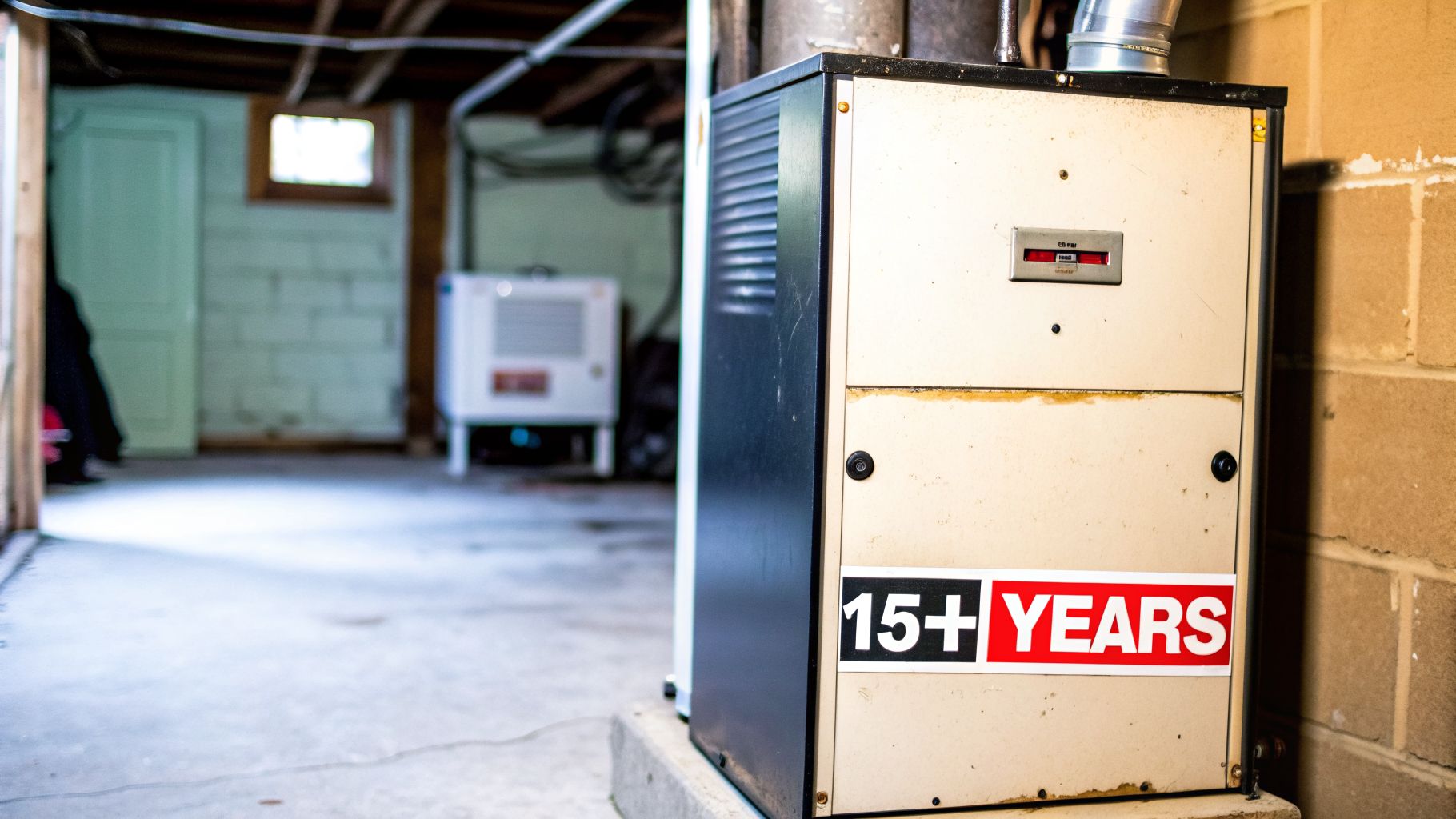
Continuing to run a furnace well past its prime is a significant financial and safety gamble, especially during the harsh northern winter months from November through April. An older unit is far more likely to break down unexpectedly, leaving you without heat during a critical time. Furthermore, its declining efficiency means you are paying progressively higher energy bills for less effective heating.
Why Age is a Critical Factor
An aging furnace isn't just an inconvenience; it represents a growing risk. Key components like the heat exchanger, blower motor, and ignition system become more susceptible to failure. A cracked heat exchanger, for instance, is a serious safety hazard that can leak carbon monoxide into your home.
Key Insight: Think of your furnace like a vehicle. While you can keep an old car running with constant repairs, at a certain point, the cost of maintenance, poor fuel economy, and risk of a major breakdown make investing in a new model the smarter financial decision. The same logic applies directly to your home's heating system.
For homeowners and property managers in communities like Jenison, Grandville, and Wyoming, an aging furnace is a liability. For example, a property manager overseeing an apartment complex with furnaces installed in 2006 should proactively begin planning a replacement cycle to avoid mass tenant disruptions and emergency call-outs.
Actionable Tips for Aging Furnaces
If your furnace is approaching or has surpassed the 15-year milestone, it’s time to be proactive.
- Determine Your Furnace's Age: Locate the manufacturer's nameplate on the side of your furnace. The serial number often contains a code indicating the month and year of production. If you can't decipher it, a Platinum Heating & Cooling technician can identify it for you.
- Schedule a "Pre-Replacement" Assessment: Even if it’s running, we recommend a professional inspection around the 10-12 year mark. This helps you understand its current condition and budget for a future replacement without pressure. You can explore a variety of HVAC recommendations for older homes to get a head start.
- Plan for an Off-Season Installation: Don't wait for it to fail in January. Scheduling a replacement during the cooling months often provides more flexibility, better availability, and a stress-free installation process.
- Prioritize a High-Efficiency Upgrade: Replacing an old 80% AFUE furnace with a modern 96% AFUE model can significantly reduce your monthly utility bills and may qualify you for valuable energy rebates. This is one of the most immediate benefits of upgrading.
2. Rising Energy Bills and Decreased Heating Efficiency
Among the most telling signs you need a new furnace is a sudden and sustained increase in your monthly energy bills. If your usage patterns and thermostat settings haven’t changed, yet your heating costs are climbing, your furnace is very likely losing its efficiency. A struggling unit must work harder and run longer to produce the same amount of heat, consuming more natural gas or electricity in the process. This slow decline often precedes a complete system failure, giving you a critical window to plan for a replacement.
This creeping inefficiency becomes especially noticeable during the intense northern winter months from November through April in places like Hudsonville and Allendale. When your furnace can no longer efficiently convert fuel to heat, you are essentially paying for wasted energy. For example, a homeowner whose gas bill jumps from a consistent $150 per month to $220 over a single winter without a change in thermostat settings is likely witnessing the degradation of their heating system.
Why Bill Increases Are a Critical Factor
A rising energy bill is a direct financial symptom of a deeper mechanical problem. As internal components wear out, friction increases, seals degrade, and burners become less effective. The furnace's AFUE (Annual Fuel Utilization Efficiency) rating, which measures its fuel-to-heat conversion efficiency, drops significantly over time. An older furnace with a nominal 80% AFUE rating might only be operating at 65% or 70% efficiency in reality, meaning 30-35 cents of every dollar you spend on heating is wasted.
Key Insight: Think of an inefficient furnace like a leaky bucket. No matter how much water (or fuel) you pour into it, a significant portion is lost before it can be used. Continuing to "fill" it costs you more and more, while the underlying problem only gets worse. Replacing the furnace is like getting a new, solid bucket that holds every drop.
For property managers overseeing multi-unit buildings in Walker or Standale, a gradual 15-20% increase in gas costs across all units with older furnaces is a major red flag. It signals that the entire portfolio of heating equipment is nearing the end of its effective life, and proactive replacement is needed to control operational costs and prevent widespread tenant issues.
Actionable Tips for Rising Energy Bills
If your heating bills are inexplicably high, it’s time to investigate the cause and plan your next steps.
- Analyze Your Utility History: Gather your gas or electric bills from the last 12-24 months. Look for a clear upward trend that can't be explained by rate hikes or colder-than-average weather. A Platinum Heating & Cooling technician can help you analyze these patterns during a system assessment.
- Calculate Your Potential Payback Period: Ask our team for an AFUE rating comparison between your old unit and a new high-efficiency model. You can then calculate the payback period for a new furnace: (New Furnace Cost ÷ Annual Energy Savings) = Years to Break Even. This often reveals a compelling financial case for upgrading.
- Request a Professional Energy Audit: While the furnace is a likely culprit, an energy audit can confirm if heat loss is also coming from poor insulation or drafty windows, helping you make the most effective home efficiency investments.
- Explore High-Efficiency Alternatives: A modern furnace is a massive leap in efficiency. However, you may also want to ask if your home is a good candidate for a different type of system. For example, you can explore the benefits of a heat pump and how it could impact your year-round energy usage.
3. Frequent Repairs and Escalating Maintenance Costs
One of the most telling signs you need a new furnace is a pattern of recurring breakdowns. While a single, isolated repair on a younger furnace is normal, needing to call a technician multiple times a year is a major red flag. This cycle of constant fixes indicates that internal components are beginning to fail in succession, turning your furnace into a money pit that offers diminishing reliability.
This pattern typically emerges when a unit is between 12 and 18 years old. What starts as a simple ignitor replacement one winter can escalate to a faulty blower motor the next, followed by a failing draft inducer. Each service call adds to a growing total that could be better invested in a new, dependable, and high-efficiency system, especially for residents in Hudsonville and Allendale who rely on consistent heat during the northern winter months from November through April.
Why Frequent Repairs are a Critical Factor
Constantly repairing an old furnace is not just a financial drain; it’s a losing battle against wear and tear. Key components in a furnace are designed to have a similar operational lifespan. When one major part fails, it's often a precursor to others failing soon after. You end up chasing one problem after another, spending hundreds or even thousands of dollars without any long-term guarantee of performance.
Key Insight: A trusted rule in the HVAC industry is the "50% Rule." If the cost of a single repair is more than 50% of the cost of a brand-new furnace, replacement is almost always the smarter financial choice. Continuing to patch up a failing system is like putting a new engine in a car with a rusted-out frame.
For property managers overseeing multi-unit buildings in Walker or Grandville, this problem is magnified. Fifteen service calls across 30 aging units in one season translates to significant budget strain, tenant dissatisfaction, and logistical headaches. A proactive replacement strategy is far more cost-effective than a reactive, emergency-based repair model.
Actionable Tips for Furnaces Needing Frequent Repairs
If your HVAC technician is becoming a familiar face, it’s time to assess the situation logically.
- Track Your Repair History: Keep a detailed log of every service call, including the date, the issue, the parts replaced, and the total cost. Seeing the cumulative expense over the last 18-24 months can make the decision much clearer.
- Ask for a Candid Assessment: The next time a technician is at your home, ask them directly: "In your professional opinion, is it more economical to replace this unit than to continue repairing it?" A trustworthy professional from Platinum Heating & Cooling will provide an honest answer based on the unit's age, condition, and repair history.
- Apply the 50% Rule: Get a quote for a new furnace installation. If your next major repair bill for your old unit approaches half of that quote, it’s a clear signal to invest in a replacement. For example, spending $2,800 on repairs over two years for a furnace that costs $4,200 to replace is not a sound investment.
- Consider Proactive Maintenance: For landlords and property managers, enrolling properties in a maintenance plan like our Platinum Maintenance Membership can help identify at-risk units before they fail, allowing for planned, off-season replacements instead of disruptive emergency calls.
4. Strange Noises: Grinding, Banging, Squealing, or Rattling
Beyond the gentle hum of the blower and the quiet click of ignition, your furnace should be a relatively silent appliance. When new, loud, or persistent sounds like grinding, banging, or high-pitched squealing emerge, they are clear auditory signals of mechanical distress. These aren't just minor annoyances; they are symptoms of specific internal components failing under stress.
Ignoring these sounds is a common but costly mistake, especially during the cold winter months in Hudsonville and Walker. A squealing belt or a rattling panel might seem manageable, but they often escalate into more severe problems. A loud banging or grinding noise is particularly serious, indicating a significant issue like a broken blower motor mount or a failing bearing that could lead to a complete and sudden system breakdown, leaving you without heat.
Why Strange Noises are a Critical Factor
Mechanical noises are direct indicators of wear, tear, and imminent failure. Each sound typically points to a specific problem: a squeal often means a deteriorating belt or a problem with the blower motor's bearings, while a metallic scraping or grinding sound suggests the motor's bearings are completely shot. A loud bang or pop when the unit kicks on can indicate dirty burners causing a delayed ignition, which poses a safety risk.
Key Insight: Think of your furnace's unusual sounds like the "check engine" light in your car. While you might be able to drive a little longer, the noise is an undeniable warning that a critical component is failing. Continuing to operate the system not only risks a complete breakdown but can also cause a cascade of damage to other parts.
For property managers in Allendale or Grandville, a tenant complaint about a noisy furnace is a red flag that demands immediate attention. For example, a tenant reporting a persistent squealing sound could be an early warning of a blower motor failure. Addressing it promptly can prevent an emergency no-heat call on a frigid January night and allows for a planned repair or replacement.
Actionable Tips for Strange Furnace Noises
If your furnace starts making sounds that are out of the ordinary, take these steps to diagnose and address the issue.
- Record the Sound: Use your smartphone to take a short video of the furnace while it is making the noise. This can be invaluable for a Platinum Heating & Cooling technician, potentially helping them diagnose the issue before even arriving.
- Note the Timing: Pay close attention to when the sound occurs. Does it happen only during ignition, while the furnace is running steadily, during shutdown, or is it continuous? This context provides important clues about the source of the problem.
- Do Not Ignore It: Never try to mask the sound or assume it will go away. A mechanical noise indicates a physical problem that will only worsen with time and continued operation.
- Schedule an Inspection Immediately: Loud grinding or banging noises warrant an immediate professional assessment. Shutting the unit off until a technician arrives can prevent more extensive and expensive damage. Ask our technician for a direct assessment: "Is this repair worthwhile, or are we at the point where a replacement makes more sense?"
5. Poor Air Quality and Health Issues: Dust, Odors, or Soot Buildup
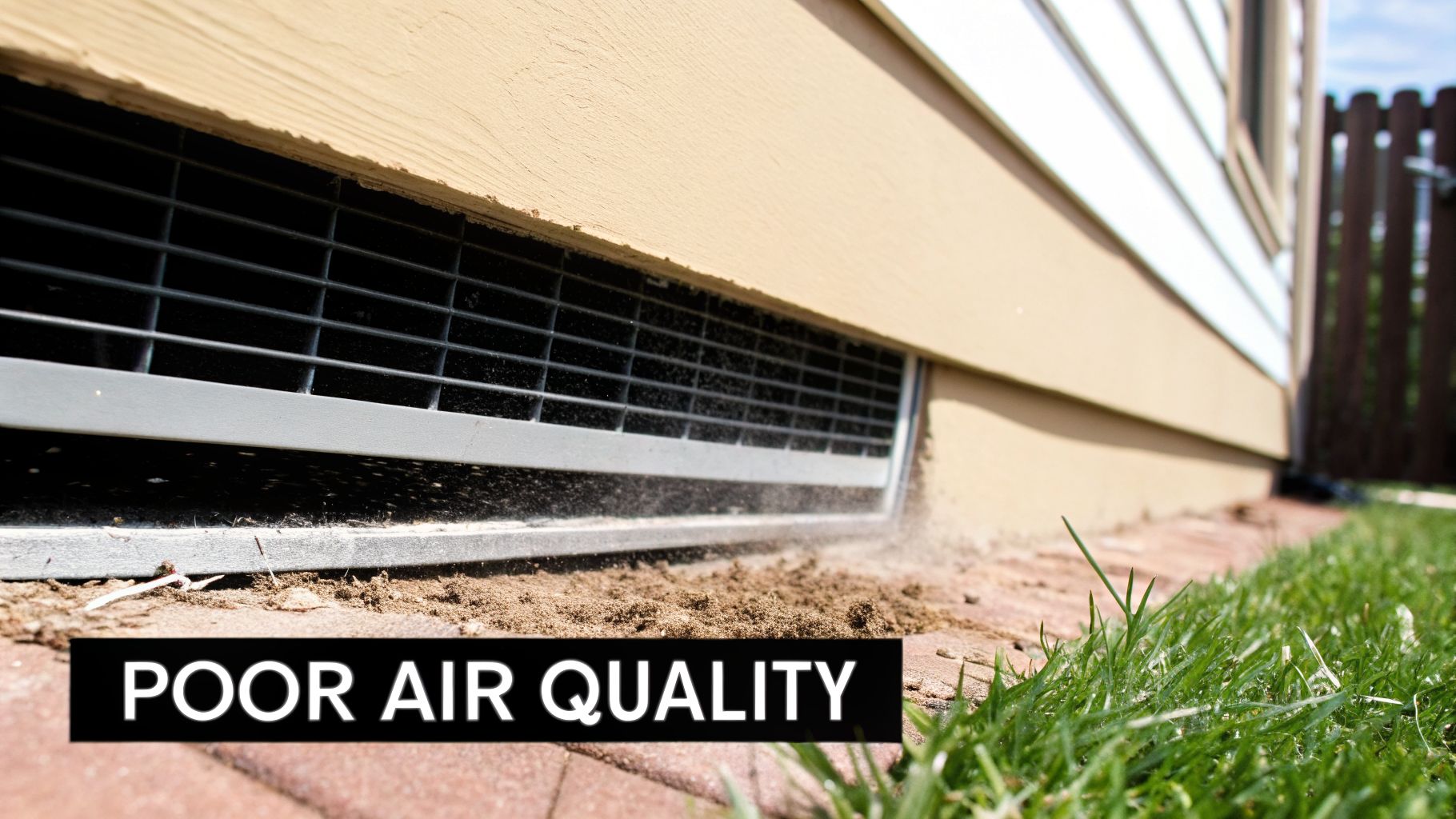
While a furnace's primary job is to heat your home, its impact on your indoor air quality is one of the most overlooked signs you need a new furnace. An aging or malfunctioning system can actively degrade the air you breathe, circulating dust, allergens, and potentially dangerous gases. If you notice a persistent increase in dust, strange odors when the heat kicks on, or soot around your vents, your furnace is sending a clear warning about its internal health.
These issues go beyond simple housekeeping; they are direct indicators of component failure. Excessive dust can mean the internal insulation is breaking down, while musty smells often point to mold or bacteria growth within the system or ductwork. The most severe risk comes from a cracked heat exchanger, which can leak colorless, odorless carbon monoxide (CO) into your home, creating a serious health emergency. Ignoring these symptoms puts your family's well-being at risk.
Why Air Quality is a Critical Factor
A decline in air quality isn't just about comfort, it's about safety. Your furnace circulates air throughout your entire home, and if it's contaminated at the source, every room is affected. For residents in Hudsonville and Allendale, especially families with young children, elderly members, or those with respiratory conditions like asthma, poor indoor air can trigger or worsen health problems during the long winter heating season from November through April.
Key Insight: Your furnace is the lungs of your home. If the furnace itself is unhealthy-corroded, cracked, or filled with debris-it will exhale contaminated air into every part of your living space. Addressing poor air quality is often less about cleaning and more about addressing the health of the central HVAC system.
For property managers overseeing multi-unit buildings in Walker or Standale, resident complaints about dusty air or strange smells are a major liability. These are not just maintenance requests; they are potential health and safety red flags that demand immediate investigation. A single malfunctioning furnace can impact multiple units, making a proactive replacement the safest and most responsible course of action.
Actionable Tips for Air Quality Issues
If you suspect your furnace is negatively impacting your home's air, take these steps to protect your family.
- Install and Test CO Detectors: Every home with a fuel-burning appliance needs carbon monoxide detectors. Place them on each level and outside sleeping areas. Test them monthly and replace them according to the manufacturer's guidelines. This is a non-negotiable safety measure.
- Inspect Vents and Surfaces: Check the registers and the walls around them for black, sooty stains. This is a strong indication of a combustion problem that requires immediate professional attention.
- Note Any Unusual Odors: A musty or "dirty sock" smell points to microbial growth. A sharp, metallic, or burning plastic smell can indicate a serious electrical or mechanical failure. Do not ignore these warnings.
- Upgrade Your Filtration: When you install a new furnace, upgrade to a higher-rated filter (MERV 11 or higher) or a media air cleaner to capture smaller particles like dust, pollen, and dander more effectively.
- Explore Whole-Home Solutions: A new furnace installation is the perfect time to address other air quality concerns. Platinum Heating & Cooling offers a range of indoor air quality solutions, including whole-home humidifiers and advanced air purification systems that integrate seamlessly with your new unit.
6. Visible Rust, Corrosion, Cracks, or Water Damage Around Furnace
The external appearance of your furnace can reveal critical information about its internal health. Seeing visible rust, corrosion, cracks, or signs of water damage are clear signs you need a new furnace, as they point to advanced deterioration and serious safety risks. These physical flaws are not merely cosmetic; they indicate that the system's structural integrity is compromised.
In West Michigan’s humid climate, especially in basements common in homes across Hudsonville, Walker, and Allendale, some level of rust or moisture can develop over time. However, widespread corrosion, flaking metal, or visible cracks are red flags that demand immediate attention. This kind of damage accelerates system failure and can lead to dangerous situations, like the release of carbon monoxide from a cracked heat exchanger.
Why Physical Deterioration is a Critical Factor
Physical damage is a direct indicator of a furnace reaching the end of its operational life. Rust and corrosion weaken metal components, while cracks create pathways for exhaust gases to escape. A crack in the heat exchanger, for example, is not a repairable issue; it is a mandatory replacement scenario for the safety of your household. Water damage suggests condensation problems or leaks that will only worsen corrosion and lead to electrical component failure.
Key Insight: Treat visible rust or cracks on your furnace like a crack in a car's engine block. It’s not something you can patch up and ignore. This type of damage signals a fundamental failure of the system's core structure, making continued operation unsafe and unpredictable.
For property managers overseeing multi-unit buildings, documenting the physical condition of each furnace is crucial. An apartment complex furnace that shows significant corrosion during a routine inspection is a ticking time bomb, risking tenant safety and an emergency breakdown during a freezing January night. Proactive replacement based on these visual cues is a responsible management practice.
Actionable Tips for Physical Damage
If you notice your furnace is showing signs of physical wear and tear, it's time to take immediate action.
- Perform a Visual Inspection: At the beginning and end of the heating season, use a flashlight to carefully inspect your furnace's cabinet, vents, and surrounding area for rust, soot stains, water pooling, or visible cracks.
- Address Basement Humidity: If your furnace is in a damp basement, address the root cause. Installing a dehumidifier can help slow the process of corrosion on your new unit and other appliances, extending their lifespan.
- Photograph and Document: Take clear pictures of any rust, corrosion, or damage you find. This provides a valuable record for your HVAC technician and can be useful for any potential warranty claims.
- Schedule an Immediate Professional Assessment: Visible cracks or significant rust are not a DIY issue. Contact a Platinum Heating & Cooling technician to perform a thorough safety inspection. We can use specialized tools to assess the heat exchanger's integrity and determine the extent of the damage, providing a clear recommendation for repair versus replacement.
7. Difficulty Maintaining Consistent Temperature and Uneven Heating Throughout Home
Among the most frustrating signs you need a new furnace is the inability to keep your home consistently comfortable. You set the thermostat to a specific temperature, but some rooms feel like a sauna while others remain stubbornly chilly. This uneven heating indicates your furnace is losing its ability to effectively circulate warm air and maintain a steady output.
As a furnace ages, its components, particularly the blower motor and heat exchanger, can no longer perform at peak capacity. It struggles to push enough warm air through the ductwork to reach the farthest corners of your home. This problem is especially noticeable during the intense northern winter months from November through April, where a reliable heating system is non-negotiable for homes in Hudsonville, Allendale, and Walker. The result is a constant battle with the thermostat and persistent discomfort for your family.
Why Uneven Heating is a Critical Factor
Significant temperature differences from room to room are more than just an annoyance; they are a clear symptom of a failing heating system. An aging furnace may be short-cycling or have a worn-out blower that can't generate the necessary airflow. This not only creates uncomfortable cold spots but also forces the furnace to run longer and harder, accelerating its decline and driving up energy costs.
Key Insight: Think of your furnace's airflow like a home's water pressure. When the system is new, pressure is strong and consistent to every faucet. As it ages and pipes clog (or in this case, the blower weakens), the faucets farthest from the source only produce a trickle. Your furnace is struggling to deliver heat where it's needed most.
For property managers in Grandville or Wyoming, inconsistent heating across different rental units is a major source of tenant complaints. An apartment where the bedroom is freezing but the living room is overheating points directly to a furnace that can no longer manage its heating load, creating a significant management headache and potential lease issues.
Actionable Tips for Uneven Heating
If your home is plagued by hot and cold spots, it's a strong signal your furnace may need replacement.
- Document Temperature Gaps: Use inexpensive thermometers in various rooms to get objective data. If you find a consistent difference of 5-10 degrees between rooms, it confirms a distribution problem that warrants a professional inspection.
- Check the Obvious First: Before calling for service, ensure all your heating vents and registers are open and not blocked by furniture, rugs, or curtains. A simple obstruction can cause a significant temperature imbalance in a single room.
- Schedule a Ductwork Assessment: When you have a Platinum Heating & Cooling technician evaluate your furnace, ask them to inspect your ductwork as well. Leaks or blockages in the ducts can mimic the symptoms of a failing furnace.
- Consider a Zoning System with a New Furnace: When you do upgrade, ask about installing a zoned HVAC system. This allows you to control the temperature in different areas of your home independently, providing ultimate comfort and efficiency.
7-Point Comparison: Signs You Need a New Furnace
| Indicator | Implementation complexity | Resource requirements | Expected outcomes | Ideal use cases | Key advantages |
|---|---|---|---|---|---|
| Furnace Age: 15+ Years Old | Moderate — full system replacement typically needed | Capital investment, licensed installer, possible vent/duct updates | Higher efficiency, lower fuel bills, new warranty, rebate eligibility | Furnaces ≥15 years or nearing end of life | Predictable replacement timeline, qualifies for incentives |
| Rising Energy Bills & Decreased Efficiency | Low–Moderate — requires audit then repair or replace | Utility bill history, energy audit, professional testing, possible replacement | Reduced energy use, measurable cost savings, typical 4–5 year payback | Sudden/steady unexplained bill increases | Quantifiable metric for decision making and ROI analysis |
| Frequent Repairs & Escalating Maintenance Costs | Low (tracking) → Moderate (replacement) | Detailed repair records, recurring service calls, capital for replacement | Eliminates chronic repair costs, fewer emergencies, warranty coverage | Multiple repairs per season or repair cost >50% of replacement | Clear financial trigger to replace, reduces downtime and liability |
| Strange Noises (grinding, banging, squealing) | Low — diagnostic inspection; may escalate to replacement | Technician visit, sound recordings, parts or unit replacement | Stops progressive mechanical damage, restores quiet operation, prevents failures | New or worsening mechanical noises during operation | Audible early warning, easier to diagnose quickly |
| Poor Air Quality & Health Issues (dust, odors, CO) | Moderate–High — may require immediate action and combined services | Air quality/CO testing, duct cleaning, filters, urgent replacement if heat exchanger compromised | Improved indoor air quality, reduced health risk, CO hazard mitigation | Odors, soot, CO detector alarms, occupant health complaints | Addresses safety and liability, protects occupant health |
| Visible Rust, Corrosion, Cracks, or Water Damage | Low — visual inspection; often immediate replacement recommended | Immediate professional inspection, potential emergency replacement, moisture control measures | Removes safety hazards (CO risk), restores structural integrity | Noticeable rust, cracks, water stains or corrosion on unit | Clear, objective visual evidence of failure risk; urgent safety indicator |
| Difficulty Maintaining Consistent Temperature & Uneven Heating | Moderate — diagnostic testing; may require ductwork or system upgrade | Multiple thermometers/data logging, airflow testing, duct balancing, possible new furnace with variable-speed blower | More even temperatures, improved comfort, reduced short-cycling | Rooms with 10+° variance, short cycling, thermostat constantly calling | Improves comfort and efficiency, modern systems offer better distribution |
Your Next Steps for a Warm and Reliable West Michigan Home
Navigating the complexities of your home's heating system can feel overwhelming, especially when faced with the potential of a major replacement. Throughout this guide, we've explored the critical indicators that your furnace may be nearing the end of its operational life. From the undeniable marker of advanced age to the subtle but persistent rise in your energy bills, these signs are your home's way of communicating a vital need.
Ignoring strange noises, inconsistent heating, or frequent breakdowns is more than just an inconvenience; it's a gamble with your comfort, safety, and budget. Each of these signs you need a new furnace serves as a crucial data point. A single symptom, like a rattling sound, might point to a repairable issue. However, when you notice a combination of factors, such as a 17-year-old furnace that requires frequent service calls and struggles to heat your upstairs bedrooms, the evidence strongly suggests that a replacement is the most financially sound and reliable long-term solution.
From Warning Signs to Proactive Solutions
The true value in recognizing these warning signs lies in the power they give you as a homeowner. By identifying potential failure points before they escalate into a full-blown crisis, you transform a stressful, expensive emergency into a planned, manageable home improvement project. Waiting for a complete breakdown in the middle of a January cold snap in West Michigan not only leaves your family in a dangerously cold situation but also forces you into a rushed decision without the time to properly research options or secure favorable financing.
Proactive replacement allows you to:
- Budget Accordingly: Plan the investment on your own timeline, not on the furnace's unpredictable schedule.
- Maximize Efficiency: Take the time to choose a modern, high-efficiency unit that will generate significant energy savings for years to come.
- Ensure Safety: Mitigate the risks associated with older systems, such as carbon monoxide leaks from cracked heat exchangers or fire hazards from faulty wiring.
- Enhance Comfort: Enjoy consistent, reliable, and quiet heating throughout your entire home, from the living room in your Grandville ranch to the upstairs bedrooms in your Jenison two-story.
Mastering this knowledge empowers you to make an informed, confident decision that protects your family and your most significant investment. It's about shifting from a reactive mindset of fixing what's broken to a proactive strategy of ensuring long-term home comfort and security.
Your Local Partner for Heating Peace of Mind
For homeowners and business managers across West Michigan, including Hudsonville, Jenison, Grandville, Walker, Standale, Allendale, and Wyoming, you don't have to decipher these signs alone. The most crucial next step is to get a professional, honest assessment from a certified expert who can validate your concerns and provide a clear path forward. An experienced technician can perform diagnostic tests, inspect the heat exchanger for safety risks, and give you a transparent evaluation of your system's remaining lifespan versus the cost of ongoing repairs. This expert consultation is the bridge between suspicion and certainty, helping you make the best choice for your specific situation. Don't wait until the first snowflake falls or your system fails completely. Taking action today ensures a warm, safe, and worry-free winter season.
Ready to get a clear, professional opinion on your furnace's health? The EPA-certified team at Platinum Heating & Cooling specializes in diagnosing these exact issues and can help you determine if a high-efficiency replacement is your best long-term investment. Schedule your comprehensive system evaluation today by visiting Platinum Heating & Cooling and ensure your home is prepared for the seasons ahead.