
A few simple preventative steps are all it takes to avoid a catastrophic and expensive plumbing disaster during a harsh West Michigan winter. The main goals? Insulating vulnerable pipes, maintaining consistent indoor heat, and eliminating drafts near your water lines.
The Reality of a Frozen Pipe Disaster in West Michigan
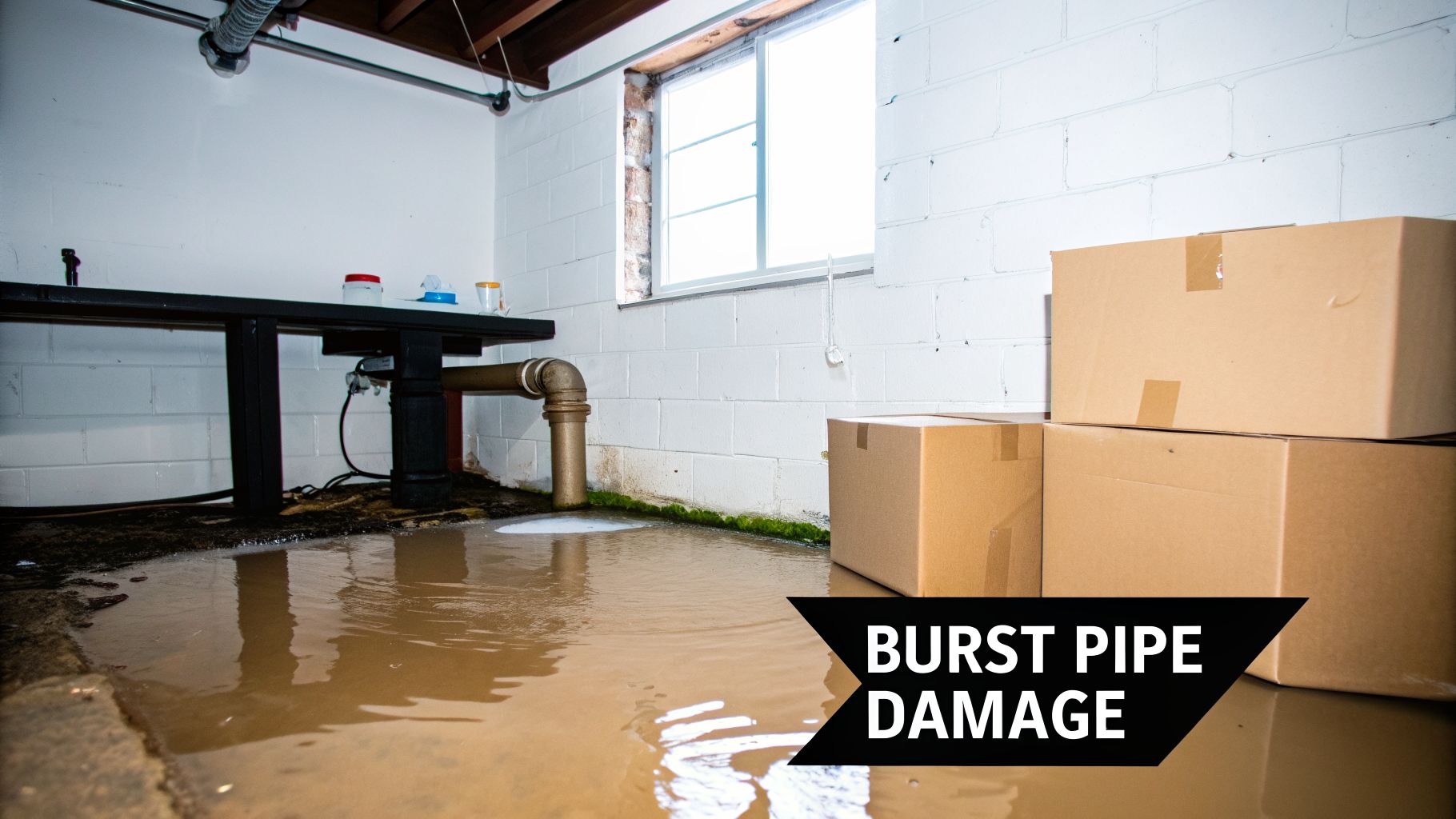
Picture this: you wake up on a frigid January morning in Hudsonville or Jenison to the sound of rushing water. You race downstairs, only to find your basement has turned into a frigid, flooded mess. This isn't just a nightmare scenario; it's the chilling reality for thousands of homeowners when pipes freeze, expand, and inevitably burst.
The consequences go far beyond a simple puddle. We're talking about warped hardwood floors, ruined carpets, destroyed family heirlooms, and the insidious threat of mold that follows water damage. The financial toll is just as devastating.
The Staggering Cost of Inaction
Many homeowners completely underestimate the destructive power of a single burst pipe. Every winter, a shocking quarter-million homes across the U.S. suffer damage from this exact issue. According to the Michigan Committee for Severe Weather Awareness, insurance data shows claims for frozen pipes are the second-most frequent nationwide.
In fact, they impact 1 in 62 insured homes each year, with the average claim payout hitting a jaw-dropping $11,650. A tiny one-eighth-inch crack can spew over 250 gallons of water daily, turning a cozy home into a disaster zone in no time. This is especially true when temperatures dip below 20°F and pipes in poorly insulated exterior walls freeze solid.
Local Vulnerabilities in West Michigan
From the historic homes in Grandville to newer constructions in Allendale and Wyoming, no property is completely immune. Older homes often have plumbing routed through uninsulated crawl spaces or drafty basements—perfect conditions for a freeze. Even modern homes have vulnerable spots, like pipes running through an unheated garage or attic.
The core issue isn't just the cold itself, but the combination of sub-freezing temperatures and a lack of consistent warmth. This is why a reliable heating system is your first line of defense during the critical winter months from November through April.
Proactive, affordable measures are the key. Investing a small amount of time and effort now can save you from the stress, disruption, and catastrophic expense of a burst pipe later. If your heating system isn't performing reliably, addressing that is a critical first step. You can explore options for emergency furnace and heating service to ensure your home is protected.
Your Pre-Winter Pipe Protection Plan
The best defense against a burst pipe disaster is a good offense. I can't tell you how many emergency calls we get that could have been avoided with a little prep work. Getting ahead of the first deep freeze here in West Michigan is, without a doubt, the smartest way to prevent frozen pipes.
This means taking a walk through your property—inside and out—to find and protect your most vulnerable pipes. The goal is simple: create a solid thermal barrier between your plumbing and the brutal winter air.
Fortify Your Home's Weak Spots
Let's start with the usual suspects: basements, crawl spaces, attics, and garages. Homeowners in places like Hudsonville and Jenison often think they're in the clear, but these spots are notorious for having insufficient insulation. They're prime real estate for a pipe to freeze solid, especially once the temperature drops below that critical 20°F mark.
Even in a finished basement, you might have pipes running exposed along the ceiling joists or right up against the sill plate where the house frame meets the foundation. Those are almost always the first to go. And don't get me started on pipes in an unheated garage that feed a laundry room or an upstairs bathroom—they are at extremely high risk.
A Tip from the Field: When you're insulating pipes, don't just wrap them loosely. Grab some foam pipe sleeves that actually match your pipe's diameter. You want a snug fit. Secure them tightly with duct tape or zip ties, and make sure you leave no gaps, especially around elbows and T-junctions. Even a tiny exposed section is enough to cause a freeze.
The time you spend preparing your home before the cold weather sets in is crucial. A simple checklist can help you cover all your bases and ensure you haven't missed a critical step.
Home Winterization Checklist Before the First Freeze
| Area of Home | Action Item | Why It's Critical |
|---|---|---|
| Outdoor Faucets | Disconnect hoses, drain, and shut off the interior water valve. | Prevents water trapped in the spigot from freezing and bursting the pipe inside your wall. |
| Basement/Crawl Space | Insulate exposed pipes, especially near exterior walls or vents. | These unheated areas are the most common zones for pipes to freeze and burst. |
| Attic | Check for and insulate any water supply lines running through the attic. | An uninsulated attic can get as cold as the outdoors, putting pipes at extreme risk. |
| Garage | Insulate pipes running along garage walls or ceilings. | An unheated garage offers almost no protection from freezing temperatures. |
| Interior – Sinks | Open cabinet doors under sinks on exterior walls during extreme cold snaps. | Allows warm air from your home to circulate around the pipes, preventing them from freezing. |
| Heating System | Schedule a fall furnace tune-up to ensure it runs reliably. | A functioning furnace provides the ambient heat that protects pipes throughout your entire home. |
Following a checklist like this takes the guesswork out of winter prep and gives you peace of mind knowing you've taken the right steps to protect your property.
Safeguard Exterior and Outdoor Plumbing
Your outdoor hose bibbs, or spigots, are a direct gateway for the cold to get into your home's plumbing. If you don't winterize them correctly, you could end up with a pipe that freezes and bursts inside a wall—a nightmare scenario that often goes unnoticed until the thaw reveals major water damage.
Here's the quick, five-minute drill for each spigot:
- Disconnect and Drain: First things first, take off every garden hose, splitter, and timer. If you leave a hose attached, it traps water inside the faucet. That water will freeze, expand, and crack either the spigot or the supply pipe.
- Shut Off the Water Supply: Head inside and find the interior shut-off valve for that faucet. You'll usually find it in the basement or a crawl space, close to where the spigot is on the outside wall. Turn the valve clockwise until it's fully closed.
- Drain the Faucet: Now, go back outside and turn the spigot handle to the "on" position. This allows any water left in the pipe to drain out completely. Just leave it open for the winter.
Seriously, this simple task is one of the most important things you can do to prevent a winter plumbing disaster.
Your Furnace Is Your Best Friend
Think of your heating system as the heart of your entire pipe-protection strategy. All winter long, from November through April, your furnace provides the steady, ambient warmth that keeps the pipes inside your walls and under your floors from freezing. If your furnace is struggling or fails, it creates cold spots in your house that put your plumbing in immediate danger.
This is exactly why we're always talking about regular heating system maintenance. A properly tuned furnace doesn't just run more efficiently; it distributes heat consistently, creating a protective shield for your whole plumbing system. For a deeper dive into getting your HVAC ready, our guide on fall furnace maintenance and winter prep has everything you need to know.
When you combine targeted insulation with a reliably warm interior, you’re creating multiple layers of defense. Believe me, taking these steps now is a whole lot less stressful—and infinitely cheaper—than dealing with a flooded basement during a Grandville or Standale blizzard.
Smart Tactics for Surviving a Deep Freeze
When a polar vortex decides to visit West Michigan, even the best-laid plans get put to the test. During an extreme cold snap in places like Wyoming or Standale, you need some in-the-moment strategies to give your plumbing that extra bit of protection. These are simple things you can do right now to get through the coldest nights.
One of the most effective moves is also one of the easiest: let your faucets drip. When you see those temperatures plummeting, find a faucet on an outside wall—usually in the kitchen or a bathroom—and turn the cold water on just enough for a slow, steady drip. This little trick works wonders because moving water is much harder to freeze than still water. It relieves the massive pressure that builds up inside a freezing pipe, which is what actually causes it to burst.
Let Warm Air Circulate
Here's another no-brainer: open up the cabinet doors under your kitchen and bathroom sinks. This simple action allows the warm air from inside your house to circulate around the pipes, which are often just a few inches from a freezing cold exterior wall. It’s a completely free and surprisingly effective way to prevent frozen pipes in winter.
You’re just using the heat you're already paying for to create a small pocket of defense for your home's most vulnerable spots.
The image below gives a great visual of the key steps for protecting your pipes before trouble starts.
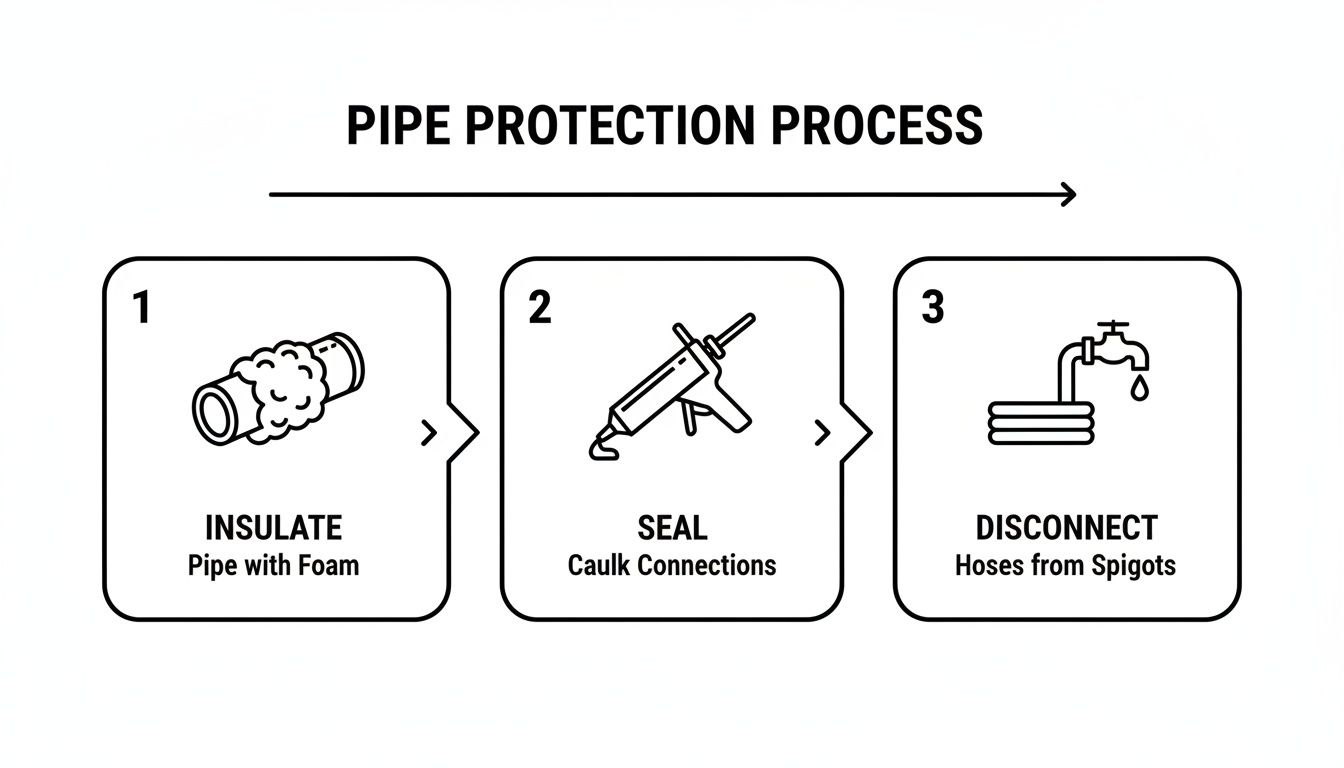
It really boils down to those core actions—insulating, sealing, and disconnecting—which are the foundation of any solid winterization plan.
Maintain a Consistent Thermostat Setting
I get it, the temptation to crank down the thermostat at night to save a few bucks is strong. But during a deep freeze, that's a gamble you don't want to take. A sudden drop in your home's ambient temperature can be all it takes for a vulnerable pipe to give in to the cold. Keeping your thermostat set at a steady 55°F or higher is crucial, even if you're not home.
This isn't just a local problem; it’s a major headache for homeowners everywhere. In fact, surveys show that 64% of homeowners are more worried about frozen pipes than any other winter issue. A single burst pipe can unleash total chaos on your home's foundation, floors, and electrical systems, leading to repairs that can drag on for weeks. You can dig into these findings on how to protect your home from frozen pipes at Safewise.com.
Your heating system is your first line of defense during our brutal winter months, from November through April. A well-maintained furnace delivers the consistent warmth your plumbing needs to stay safe. If your system is struggling, or if you ever have to use its backup system, it’s good to know what you’re dealing with. You can learn more by checking out our guide on what emergency heat mode on your furnace means. When used together, these small, smart tactics can make all the difference in helping your home weather the storm.
How to Spot and Thaw a Frozen Pipe Safely
Even with the best winter prep, a sudden West Michigan cold snap can still catch you off guard. The most important thing is to recognize the early warning signs of a frozen pipe and act quickly—and safely. Don't panic. Knowing what to do in those first few minutes can make all the difference.
The first clue you have a problem usually shows up right at the faucet. If you turn on a tap and all you get is a weak trickle—or worse, nothing at all—you're probably dealing with an ice blockage somewhere down the line.
Another red flag? Go look at any exposed pipes in your basement or crawl space. If you see frost forming on the outside of a pipe or notice a slight bulge, you've found the trouble spot. It's time to act.
Your First and Most Important Step
Before you do anything else, you need to find your main water shut-off valve. If the pipe has already burst or cracks open while you're trying to thaw it, you have to be able to kill the water flow instantly.
Seriously, make sure everyone in your household knows where this valve is and how to use it. You'll typically find it where the main water line enters your home, which is often in the basement, a utility closet, or a crawl space.
Safe Methods for Thawing a Frozen Pipe
Once you've located the frozen section, the goal is to apply gentle, even heat. Make sure you keep the faucet connected to that pipe open during this process. As the ice plug starts to melt, this gives the water and steam a place to escape, which helps relieve the dangerous pressure building up inside.
Here are the safest ways to go about it:
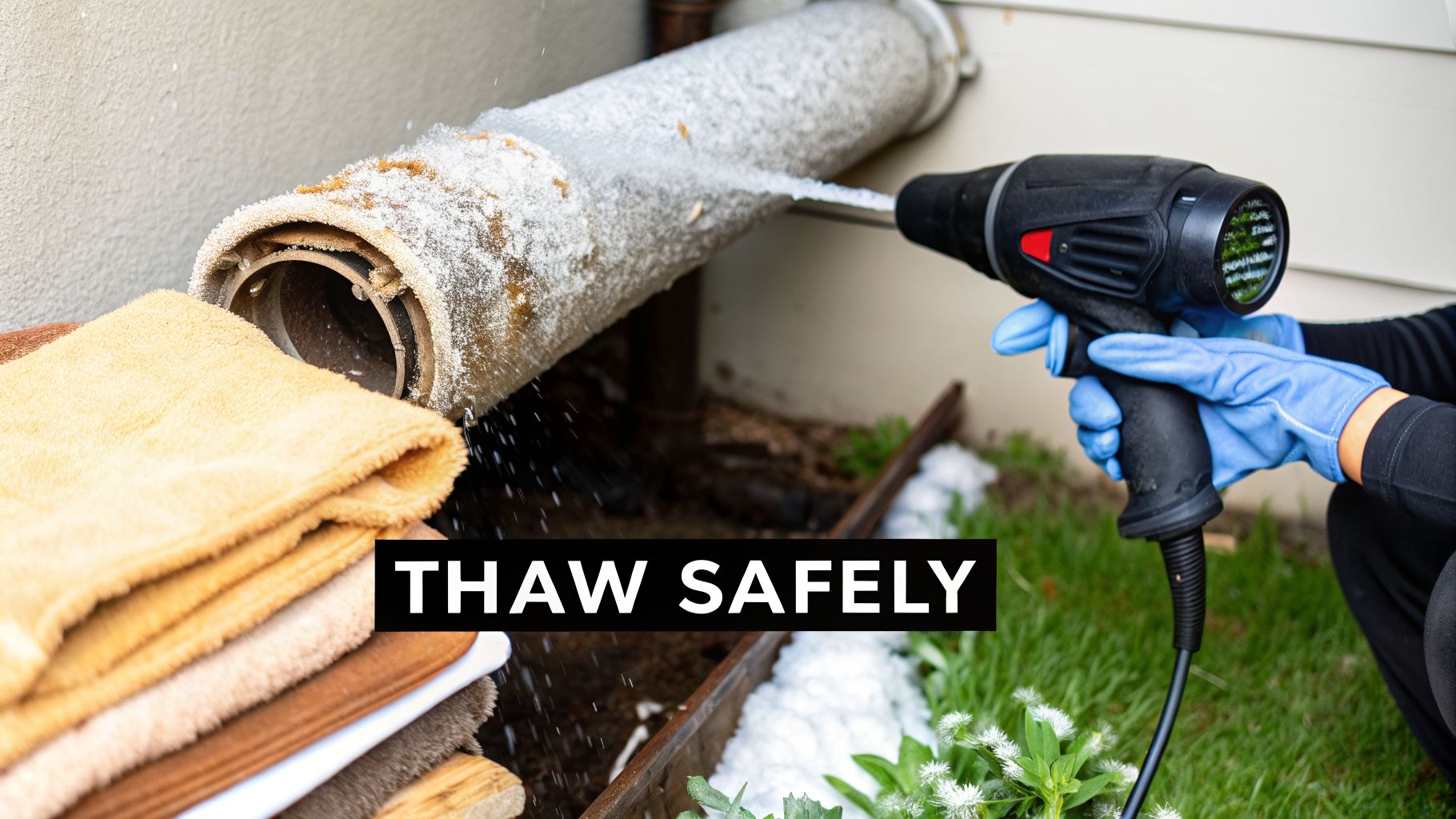
- Hair Dryer: Grab a standard hair dryer, set it to low or medium heat, and slowly move it back and forth along the frozen part of the pipe. The key is to never hold it in one spot for too long.
- Hot Towels: This one is simple but effective. Soak some towels in hot water, wring them out so they're not dripping everywhere, and wrap them directly around the frozen pipe. Just keep replacing them as they cool down.
- Space Heater: You can place a small, portable electric space heater near the pipe, but be smart about it. Make sure it’s a safe distance from any flammable materials.
Crucial Safety Warning: Never, under any circumstances, use an open flame to thaw a pipe. I'm talking about a propane torch, kerosene heater, or anything else with a direct flame. It's an extreme fire hazard and can cause the water inside the pipe to boil and burst with explosive force.
Knowing When to Call for Professional Help
Sometimes, a DIY approach just isn't going to cut it, or it simply isn't safe. If the frozen pipe is hidden inside a wall, if you can't physically get to the frozen section, or if your own thawing efforts aren't working after 30-60 minutes, it's time to call in the professionals.
A blockage that just won't budge dramatically increases the risk of a burst pipe, and the resulting water damage can easily run into thousands of dollars.
If you think a pipe has already burst, shut off your main water valve immediately and call for emergency service. For homeowners in West Michigan, including Hudsonville, Jenison, Grandville, Walker, Standale, Allendale, & Wyoming michigan, we offer 24/7 emergency service to handle these exact situations. Don't wait for a small problem to turn into a full-blown disaster, especially during our cold winter months from November through April.
Protecting Vacant Properties and Commercial Buildings
For landlords, property managers, and business owners across West Michigan, from Walker to Grandville, an empty building is a ticking time bomb for frozen pipes. Unlike an occupied home where someone is always running a shower or doing laundry—activities that circulate warm air—vacant properties need their own winter game plan.
The stakes are incredibly high. A burst pipe isn't just a minor leak; it's a major, costly disaster. In fact, about 1 in 62 homes files a claim for this exact kind of water damage each year, with the average loss hitting a painful $11,650. For businesses or multi-unit properties in places like Jenison or Allendale, that number can skyrocket, disrupting operations and displacing tenants.
You can learn more about the staggering costs of frozen pipes from State Farm, but the bottom line is clear: prevention is everything.
Strategies for Unoccupied Properties
When you're trying to safeguard a vacant home in Hudsonville or an empty apartment complex in Wyoming, you've really got two main paths to choose from. You can either completely winterize the plumbing system or just keep a minimal amount of heat running.
Full Winterization (Drain the System): This is the most bulletproof option. It means shutting off the main water supply and draining every single drop of water out of the pipes, toilets, and water heater. It's a job best left to a professional, though, because if you miss a single spot, you're right back where you started.
Maintain Minimal Heat: The other option is to simply leave the heat on low, setting the thermostat to at least 55°F. This is usually the go-to for short-term vacancies. It keeps the pipes safe while leaving the property ready for new tenants to move in without a fuss.
Addressing Commercial Vulnerabilities
Commercial buildings in Standale and around Grand Rapids come with their own unique headaches. Think about those unheated warehouses, chilly loading docks, and sprawling attics—they're often full of exposed plumbing that’s just begging to freeze over.
One of the most critical—and most overlooked—risks in commercial properties is the fire sprinkler system. Those pipes are always full of water, often run through unheated spaces, and can easily freeze and burst. Not only do you get catastrophic flooding, but you're left with a disabled fire protection system right when you might need it most.
A proactive maintenance plan is non-negotiable for protecting your commercial assets. This isn't a "set it and forget it" situation. It means regular inspections of those vulnerable areas, making sure the insulation is up to snuff, and confirming your heating systems are working reliably all winter long, from November straight through April.
Ultimately, protecting your building isn't just about preventing damage—it's about ensuring your business can continue to run, no matter how harsh a Michigan winter gets.
Answering Your Questions About Frozen Pipe Prevention
Even with the best plan, you're bound to have questions. Here in West Michigan, we get calls all winter long from homeowners in Hudsonville, Jenison, and Grandville asking about the same things. Let's tackle those common questions head-on so you have the practical answers you need before the cold really sets in.
Our goal is to clear up any confusion and give you the confidence to protect your home. Think of this as the final piece of your winterization puzzle.
What Temperature Should I Keep My House at When I'm on Vacation?
This is probably the most critical question we get, and the answer is simple: never set your thermostat below 55°F (13°C). It's tempting to drop the heat to save a few bucks on your energy bill, but going any lower is just asking for trouble.
Keeping it at 55°F ensures there’s enough ambient warmth circulating to protect pipes, especially those tucked away in cabinets or running along exterior walls. The tiny bit you might save on heating is nothing compared to the thousands of dollars you could spend repairing a burst pipe and the water damage that comes with it.
Is It Better to Drip Hot or Cold Water?
When a deep freeze is bearing down on Allendale or Standale, a slow, steady drip can be a pipe's best friend. But you should always let the cold water drip. The goal isn't to warm the pipe; it's simply to keep the water inside moving to relieve the immense pressure that builds up as ice forms.
Dripping hot water is a complete waste of energy. It forces your water heater to run constantly for no reason. A small, consistent drip from the cold tap does the job perfectly without spiking your utility bill.
Are PEX Pipes Better Than Copper for Preventing Bursts?
That's a great technical question. PEX (cross-linked polyethylene) piping is definitely more flexible than rigid materials like copper or PVC. Because it can expand, it's less likely to split wide open if the water inside freezes.
But here’s the critical takeaway: no pipe is burst-proof. While PEX has more give, the water inside can still freeze solid, creating a complete blockage. You'll still be without running water, and the frozen plug still puts immense pressure on your entire plumbing system. Insulation and other preventive steps are just as vital for PEX as they are for copper.
Does Homeowners Insurance Cover Damage from Burst Pipes?
For the most part, yes. Your standard homeowners insurance policy will typically cover sudden and accidental water damage from a burst pipe. That's a huge relief for homeowners everywhere, from Walker to Wyoming.
The key phrase is "sudden and accidental." If an adjuster determines the damage resulted from negligence—like you left the heat off all winter or ignored a known leak—your claim could be denied. It’s always smart to pull out your policy or call your agent to understand exactly what your specific coverage includes.
When it comes to protecting your home from the harsh West Michigan winter, you need a partner you can trust. If you're facing a heating emergency or want to ensure your system is ready for the cold, Platinum Heating & Cooling is here to help. Our certified technicians provide expert furnace repair, maintenance, and installation services to keep your home safe and warm.
Schedule your service or get a free estimate today at platinumheatingmi.com