
Ask ten different homeowners how often they change their furnace filter, and you’ll likely get ten different answers. While most people have heard the 90-day rule, that’s really just a starting point. The real answer for your home depends on the filter you’re using, your family’s lifestyle, and how hard your system works, especially during our tough West Michigan winters.
The Simple Answer to Your Furnace Filter Question
Changing your furnace filter is one of the easiest—and most important—things you can do for your HVAC system. Think of it like this: your furnace needs to breathe. A clean filter lets it pull in air effortlessly, keeping your home warm and cozy during the northern winter months from November through April. But a dirty, clogged filter forces the whole system to struggle, which wastes energy and puts a ton of strain on expensive parts.
So, how often should you be swapping it out? That old 90-day rule is a decent guideline, but it was created for standard, thinner filters in a "perfect world" scenario. Your filter's thickness and type can change that schedule completely.
For example, the common one-to-two-inch filters you find in about 60-70% of homes really do need to be changed every one to three months. On the other hand, if you have a thicker, high-efficiency five-inch media filter, you might only have to change it once a year. That's a 75% reduction in how often you have to think about it!
A Quick Visual Guide
To make it even simpler, here's a handy chart that breaks down the replacement schedule based on the most common filter types and thicknesses.
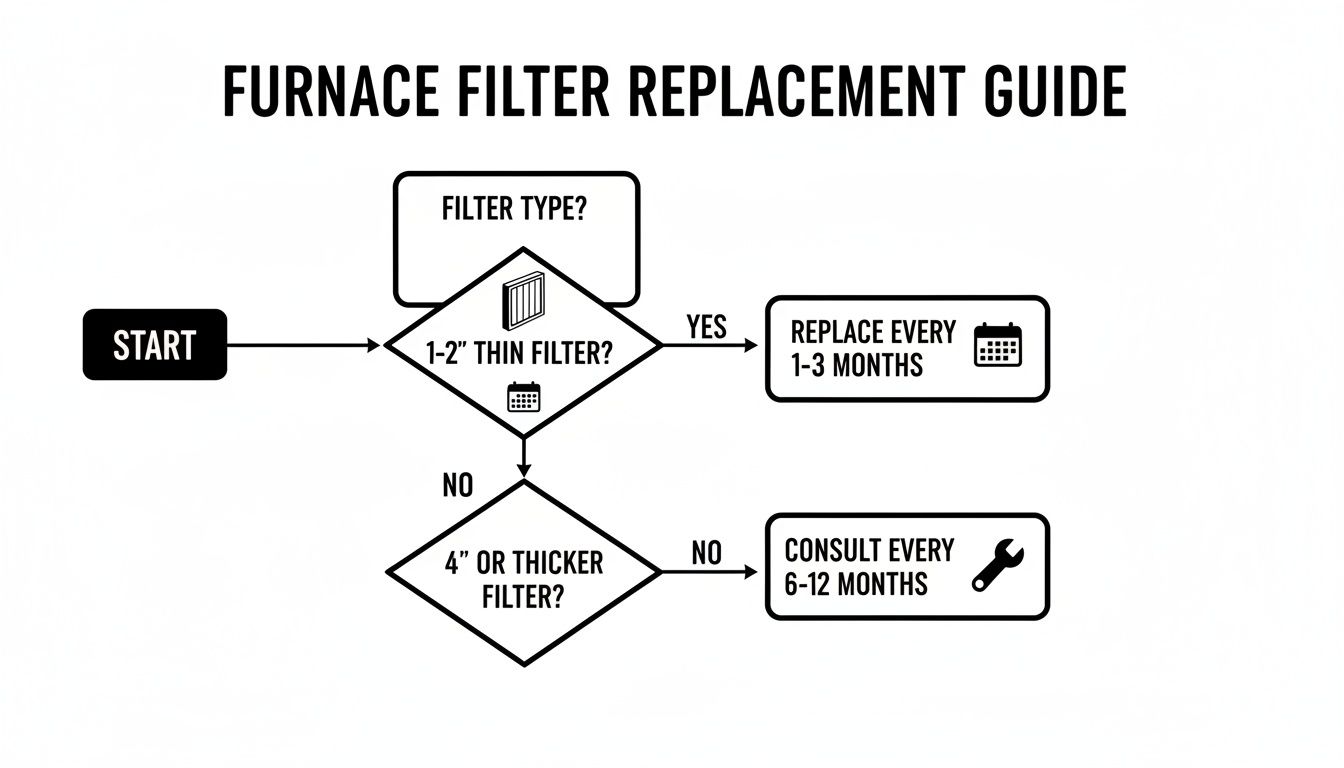
Furnace Filter Replacement At-A-Glance
This quick reference table makes it easy to find the right replacement schedule for your specific furnace filter.
| Filter Type and Thickness | Recommended Replacement Frequency |
|---|---|
| 1-2 Inch Fiberglass or Pleated Filter | Every 1-3 months |
| 3-4 Inch Pleated Filter | Every 6-9 months |
| 5-6 Inch Media Filter | Every 12 months |
As you can see, the right filter can make a big difference in your maintenance routine.
No matter if you live in Grandville or Walker, this simple task is key for your system’s health and your energy bills. Swapping out your filter on the right schedule is a cornerstone of good HVAC care, and you can learn more about the overall benefits of HVAC maintenance in our detailed guide. It's a small action that makes sure your system is ready for whatever a Michigan winter or summer throws at it.
Why Your Filter Type Changes Everything
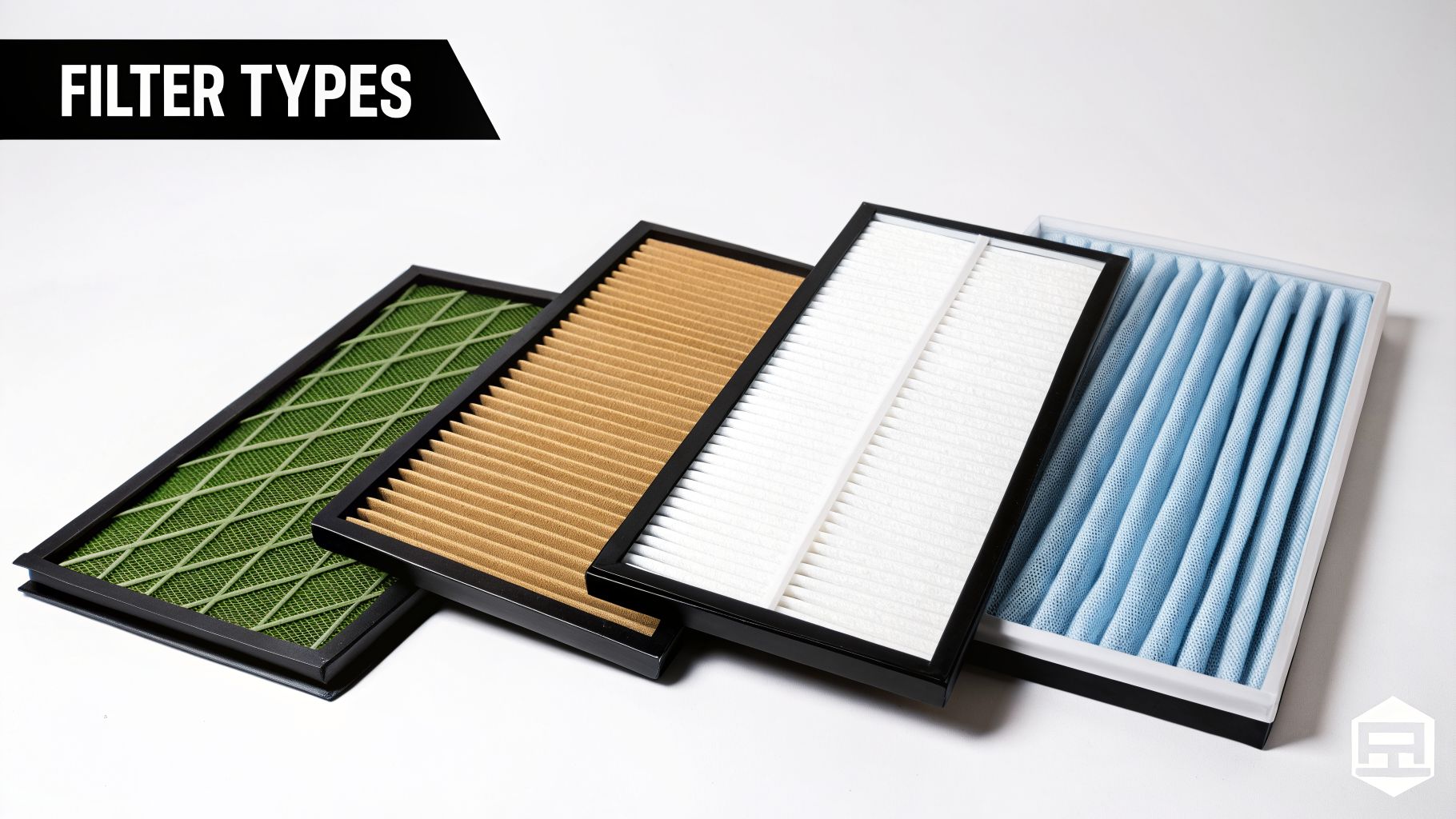
Not all furnace filters are built the same, and the kind you use is the single biggest thing that decides how often you need to change it. Think of it like a coffee filter—a thin, cheap one might let fine grounds slip through for a gritty cup, while a high-quality, dense one makes a clean brew but can get clogged up faster. Furnace filters work in a similar way, balancing good airflow with catching particles.
The effectiveness of a filter is measured by its MERV rating, which stands for Minimum Efficiency Reporting Value. This scale runs from 1 to 20 and tells you how well the filter grabs airborne particles. A higher MERV rating means it can trap smaller stuff like dust mites, pet dander, and even some bacteria.
But here’s the trade-off. A higher MERV rating also means the filter is thicker, which can slow down airflow as it fills up with debris. Getting this balance right is the key to figuring out how often to change the furnace filter in your home.
Common Filter Types and Lifespans
Let's break down the common filter types you'll see and their general replacement schedules. Just remember, heavy furnace use during our tough West Michigan winters, from November through April, will always make a filter's life shorter.
- Fiberglass Filters (MERV 1-4): These are your basic, inexpensive filters. They're really just there to protect your furnace from big stuff like lint and dust bunnies, but they don't do much for your air quality. Since they're so thin, they clog fast and should be changed every 30 days, especially in a busy household in Hudsonville or Wyoming, Michigan.
- Pleated Filters (MERV 5-13): This is the most popular choice for homes. The pleated design gives it more surface area, so it can catch more particles without immediately choking off airflow. A standard 1-inch pleated filter should be changed every 60-90 days.
- High-Efficiency and Media Filters (MERV 14+): These are the heavy-hitters, usually much thicker—often 4 to 6 inches—and they provide top-notch filtration. They are fantastic for homes where air quality is a big deal, like for families with allergy sufferers in Allendale or Jenison, Michigan. All that surface area lets them last much longer, typically from 6 to 12 months.
Picking the right filter is a balancing act. A high-MERV filter gives you cleaner air but can put a strain on your HVAC system if it’s not changed on time. On the other hand, a low-MERV filter lets air flow freely but doesn’t do much to improve what you're breathing.
At the end of the day, how your filter is made directly impacts how long it lasts. A simple 1-inch fiberglass filter might need a swap every month in your Grandville home, while a beefy 4-inch pleated filter could be good for half the year or more. Understanding this helps you pick the right filter and set a realistic maintenance schedule for your home and your system.
How Your Home Life Affects Your Filter
That 90-day filter replacement guideline on the package? Think of it as a starting point, not a hard-and-fast rule. The real story of how often you need to change your furnace filter is written by what happens inside your home every day, whether you're in Hudsonville, Jenison, or Allendale, Michigan.
What’s going on inside your walls is the single biggest factor. Your home environment directly impacts how hard your filter has to work. A quiet, two-person home with no pets will have a completely different filter schedule than a busy family with three kids and two dogs.
Key Lifestyle Factors That Clog Your Filter Faster
Several common household situations will dramatically shorten your filter's life. If any of these sound familiar, you’ll want to check your filter much more often than the standard recommendation.
- Pets in the Home: We love our dogs and cats, but they are walking, breathing sources of dander, fur, and whatever they track in from outside. All of that gets pulled right into your HVAC system, clogging your filter in a hurry.
- Allergies or Asthma: For families in Grandville or Wyoming, Michigan with someone sensitive to airborne irritants, clean air is a must. A high-MERV filter is your best friend, but it will fill up faster as it traps all that pollen, dust, and other triggers.
- Smoking Indoors: Smoke from cigarettes or vapes releases millions of fine particles that get stuck in your furnace filter. This not only clogs it but can also create stubborn odors if the filter isn't changed out regularly.
- Home Renovations or Construction: Kicking up dust is just part of the process for any home improvement project. Drywall dust, sawdust, and paint fumes can completely saturate a filter in days, not months.
The bottom line is your home environment is the best indicator of your true replacement schedule. If you have pets, smokers, or allergy sufferers, plan to check your filter at least once a month, regardless of its type.
Your HVAC system's runtime is another huge piece of the puzzle. During our cold West Michigan winters from November through April, your furnace is running almost constantly. This heavy use pushes a massive volume of air through the filter every single day. The opposite is true during the other months, when your air conditioner takes over cooling duties.
Studies show that filters in homes with heavy HVAC use can get saturated with contaminants 40-50% faster than in homes where the system runs less often. This is exactly why checking your filter every few weeks during a January cold snap is such a smart move. A clogged filter can make your furnace work up to 20% harder, which drives up your energy bills right when you want it least.
You can discover more about how system usage impacts filter life on FilterKing.com. This is also important for your home's humidifier, which needs seasonal attention, too. You might be interested in our guide on how to properly repair a furnace humidifier to keep your entire system running smoothly.
Adjusting Your Schedule for West Michigan Seasons
Living in West Michigan means your HVAC system battles through two very different extremes. We get long, brutal winters that demand nonstop heating, followed by humid summers that call for constant cooling. Because of this, knowing how often to change your furnace filter isn't just about what the package says—it's about adapting to our local climate, from the lake effect snow in Hudsonville to the summer heat in Grandville, Michigan.
Think of your furnace filter as the gatekeeper for your home's air. And during a West Michigan winter, that gatekeeper is working serious overtime.
The Demands of a West Michigan Winter
From November through April, our furnaces are the true heroes of our homes. They run almost continuously to keep us warm, especially during those deep freezes in January and February. All that constant heating use means a massive amount of air is getting pulled through your filter, every single day.
With that kind of heavy workload, a standard 90-day filter might not even make it 30 days. The furnace filter in your Jenison or Walker, Michigan home is trapping dust, dander, and other airborne gunk at a much faster rate.
During peak winter, it’s a smart habit to visually check your furnace filter every 3-4 weeks. A quick peek can stop a clogged filter from straining your system, which drives up energy bills and tanks your home’s comfort right when you need it most.
Shifting Gears for Summer and Allergy Seasons
Once winter finally gives way, your air conditioner takes the baton for the cooling months. While your AC uses the same filter, it often runs differently. It might go full-blast during a July heatwave but get plenty of rest on milder days in May or September. This means you can often relax your filter-changing schedule a bit.
But spring and fall bring their own brand of trouble for homeowners in Standale, Allendale, and Wyoming, Michigan—allergies. Pollen, ragweed, and mold spores flood the air, and your furnace filter is your first and best line of defense.
If your family dreads allergy season, you'll probably want to change your filter more often during these peak times:
- Spring Allergy Season (April-May): As trees and flowers come back to life, your filter is working hard to trap all that pollen.
- Fall Allergy Season (August-October): Ragweed and mold spores become the main offenders, putting extra strain on your filter before winter hits.
Adjusting your filter schedule for West Michigan's unique seasons is a game-changer for your system's health and your family's air quality. For a deeper look at getting your system ready for the cold, check out our guide on fall furnace maintenance and winter prep. A little prep work now ensures you're ready for whatever Michigan's weather decides to throw at us next.
Warning Signs Your Filter Needs Changing Now
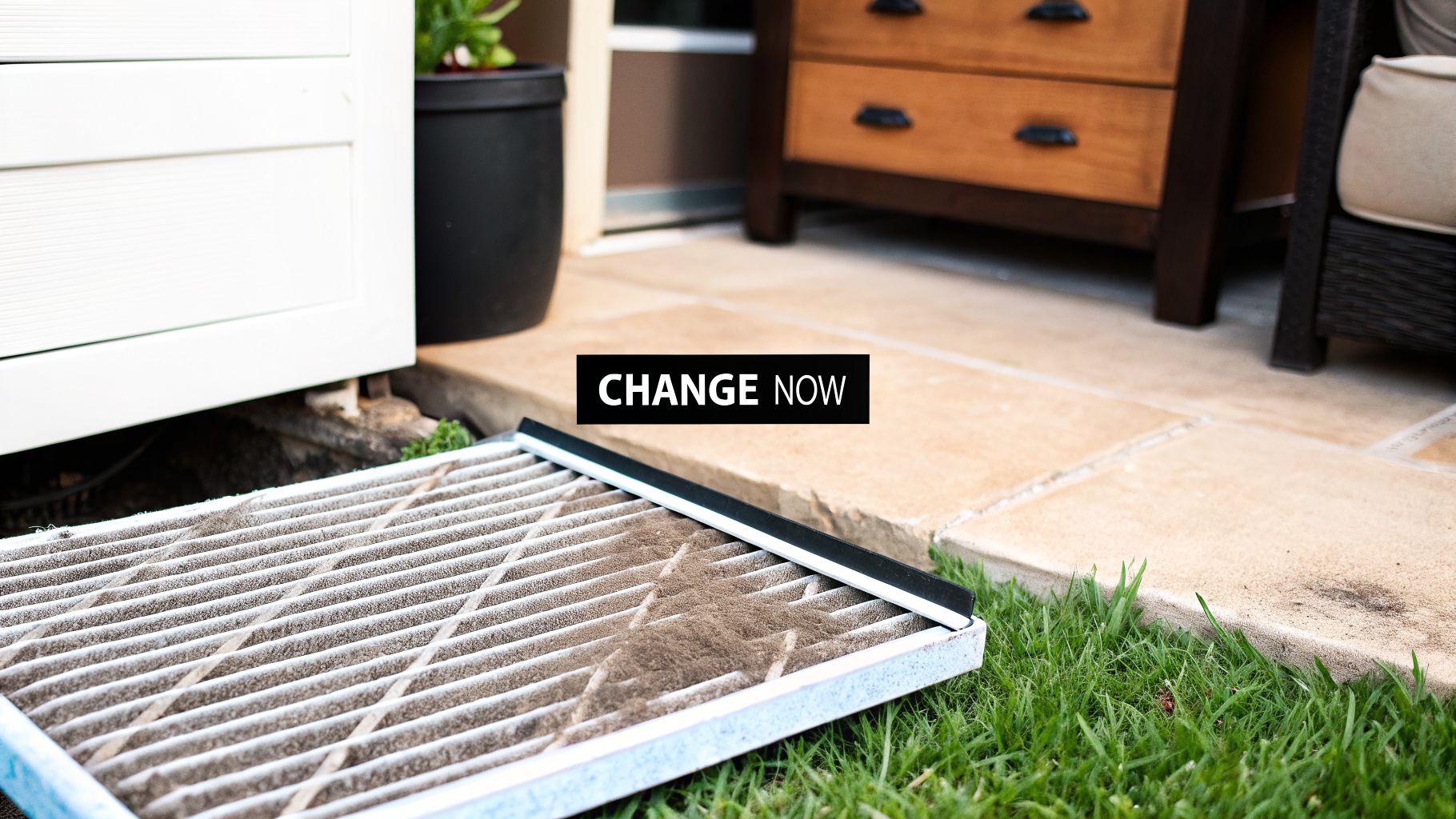
While a schedule is great, sometimes your home sends you a clear message that your furnace filter is finished. Forget the calendar for a second. You can actually learn to spot the red flags of a clogged filter. These warning signs are your system's cry for help before a tiny issue snowballs into a major, costly repair.
Paying attention is especially critical during our tough West Michigan winters, when your furnace is putting in overtime for heating. A clogged filter during a January cold snap in Jenison or Grandville, Michigan can mean a chilly house and a surprisingly high heating bill. Here are the main signs that scream, "It's time to change the filter!"
A Checklist for Proactive Homeowners
You don’t have to be an HVAC pro to know when a filter has given up. Just keep an eye (and an ear) out for these clues that it's time to check your system.
- You Can See the Dirt: This one's the most obvious. If you pull the filter out and it’s covered in a thick blanket of gray or brown crud, its work is done. A clean filter is usually white or off-white; a dirty one is impossible to miss.
- Reduced Airflow From Vents: Feel like the air coming from your vents is weak? Hold your hand over a register. If the airflow feels sluggish, a clogged filter is the number one suspect. It's struggling to pull air through the grime.
- More Dust Around the House: Are you dusting your furniture in your Walker or Standale, Michigan home more than usual? When a filter gets completely full, it stops trapping dust. Instead, your HVAC system just blows it right back into your rooms.
A clogged filter is like trying to breathe through a thick blanket. Your furnace has to work much harder to pull in the air it needs, leading to wasted energy, increased strain on components, and a less comfortable home.
- Your System Runs Constantly: Does your furnace or AC seem to run nonstop without ever hitting the temperature set on the thermostat? A blocked filter could be the problem. The choked-off airflow makes your system inefficient, forcing it to run longer to heat or cool your space.
- Strange Noises: You might suddenly hear a new whistling sound coming from your furnace. This can happen when air has to squeeze through the few remaining open spots on a clogged filter at high speed, creating a very noticeable noise.
Learning to spot these signs makes you a smarter homeowner. Catching a clogged filter early is one of the simplest ways to keep your system efficient, improve your air quality, and avoid an emergency repair call in Allendale or Wyoming, Michigan.
When to Call a Professional for Help
Swapping out your furnace filter is one of the easiest DIY jobs for any homeowner. But what happens when you’ve put in a fresh filter and your system is still acting up?
Sometimes, a simple filter change just isn't the answer. If you’re still dealing with issues after replacing the filter, it’s a good sign that something more serious is going on. Knowing when to step back and call in an expert is just as important as knowing how often to change your filter.
When a Professional Touch Is Needed
Don't hesitate to give our certified team at Platinum Heating & Cooling a call if you run into any of these problems, whether you're in Hudsonville, Jenison, or Grandville, Michigan.
- You can't find the filter: Some furnace setups can be tricky, hiding the filter slot in a hard-to-reach spot. We can find it for you and show you where it is for next time.
- You're unsure of the correct size: Using the wrong filter size is almost as bad as using a dirty one. We’ll make sure you have the exact right one for your system.
- Problems persist after a filter change: If you still have weak airflow, strange noises, or high energy bills, the real issue is likely deeper inside your furnace or ductwork.
For homeowners all over West Michigan, from Walker to Wyoming, Michigan, having a trusted HVAC partner is key. This is especially true during our tough heating season from November to April, when you absolutely need your system to be reliable.
Peace of Mind with the Platinum Maintenance Membership
If you’d rather not worry about HVAC maintenance at all, our Platinum Maintenance Membership offers complete peace of mind. It’s designed to take all the guesswork out of caring for your system.
As a member, you get proactive system tune-ups, priority service when you need it, and other exclusive perks. We’ll handle your entire maintenance schedule—including filter changes—to keep your furnace and AC running at peak efficiency all year long. Think of us as your dedicated partner in keeping your home comfortable and safe.
Frequently Asked Questions About Furnace Filters
Even with a regular schedule, our technicians still hear a lot of the same questions from homeowners all over West Michigan, including Hudsonville, Jenison, Grandville, Walker, Standale, Allendale, & Wyoming, Michigan. Getting the answers straight helps connect the dots between this simple chore and your home’s overall health—not to mention your budget.
Here are a few of the most common questions we get asked every day.
What Happens if I Forget to Change My Filter?
Forgetting to change your filter might not seem like a huge deal at first, but it can cause some very real problems down the line. A clogged filter essentially suffocates your furnace, forcing it to work much, much harder just to pull in enough air.
This extra strain often leads to an overheated system, potential damage to the blower motor, and definitely higher energy bills. A neglected filter makes your whole system less efficient and can even shorten its lifespan, which just increases the odds of a breakdown at the worst possible time. That’s a risk you don’t want to take during a cold heating season in Hudsonville or Jenison, Michigan.
Can I Wash and Reuse My Filter?
That really depends on the kind of filter you have. The vast majority of filters—especially the common 1-inch pleated and fiberglass types you see everywhere—are disposable and should never be washed. Trying to wash them will damage the filter media, rendering them useless and creating a perfect spot for mold to grow.
Now, there are specific "washable" or "reusable" filters out there designed for this. If you have one, you absolutely must follow the manufacturer’s instructions for cleaning it and letting it dry completely before you put it back. Honestly, most homeowners we talk to in Grandville and Walker, Michigan find that high-quality disposable filters are just more convenient and effective.
The most critical takeaway is this: a dirty filter directly increases your heating and cooling costs. By forcing your system to run longer and harder to do its job, a clogged filter can significantly inflate your monthly energy bills. Changing it on time is one of the easiest ways to save money.
This simple bit of maintenance ensures your system runs efficiently, protecting your budget and keeping your home comfortable no matter what the weather is doing outside.
If you have more questions or need a hand with your HVAC system, the certified experts at Platinum Heating & Cooling are ready to help. We serve all of West Michigan, including Hudsonville, Jenison, Grandville, Walker, Standale, Allendale, & Wyoming, Michigan. Schedule your service online today.