
That jarring silence when your heat pump clicks off unexpectedly can send a chill through you, and not just because the heat is gone. If you're starting to wonder if you need a heat pump system repair, it’s probably because your system is already sending up flares. These warning signs can be subtle at first—strange noises, weaker airflow, or even a sudden jump in your energy bills—all pointing to a system that’s working way too hard to keep you comfortable.
Is Your West Michigan Heat Pump Sending Out an SOS?
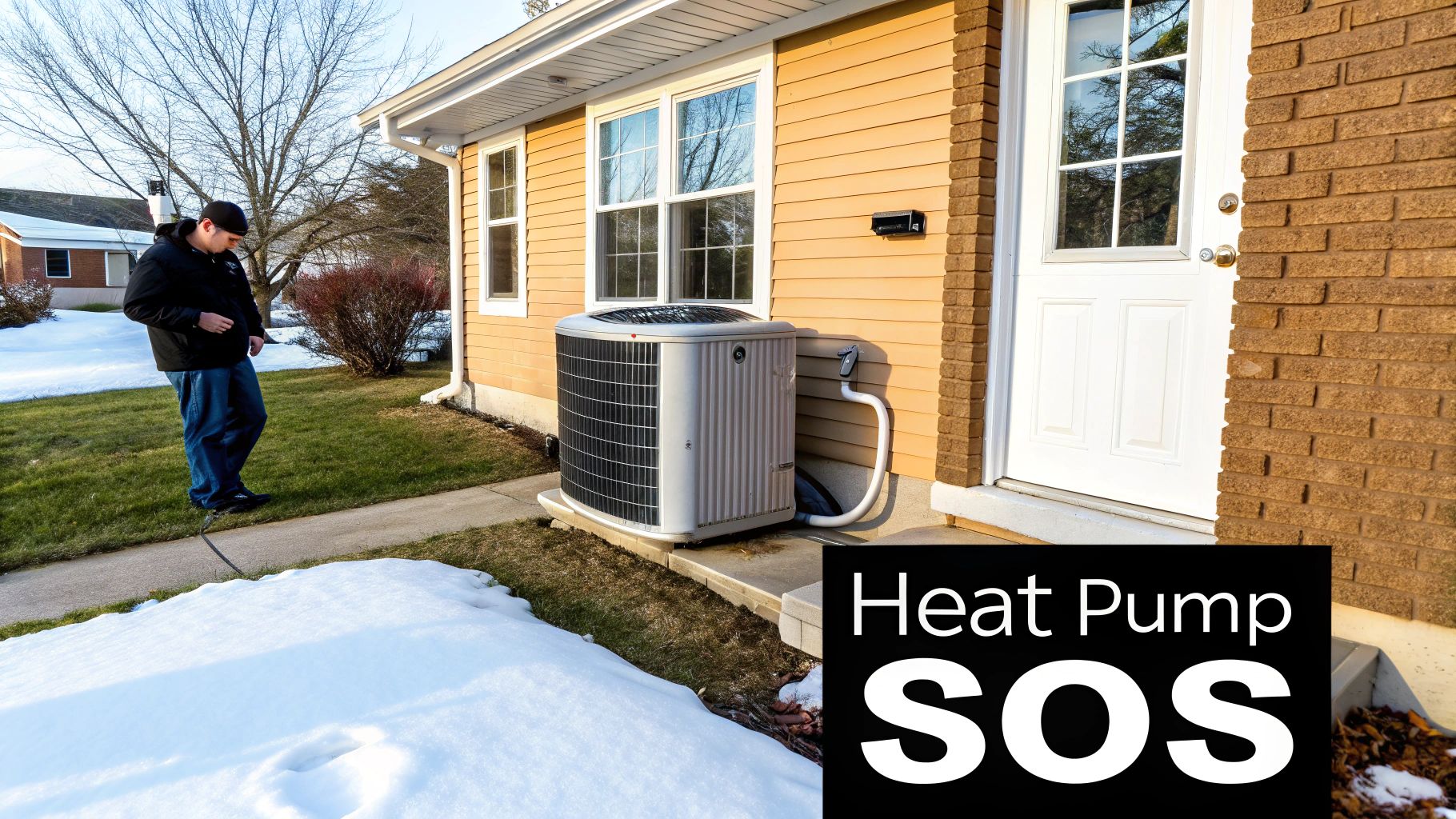
A heat pump is a real workhorse, pulling double duty to heat and cool your home all year long. But that constant grind means wear and tear is a given. Catching those early warnings is the key to stopping a small hiccup from turning into a full-blown, expensive breakdown, whether you're in Jenison, Michigan on a cold January morning or sweating it out in Allendale, Michigan in August. Our service areas cover all of West Michigan, including Hudsonville, Jenison, Grandville, Walker, Standale, Allendale, & Wyoming, Michigan.
Strange and Unusual Noises
The first thing you’ll probably notice is the sound. A happy heat pump hums along quietly in the background. When that tune changes, it's time to listen closely.
- Grinding or Squealing: These are nasty, high-pitched mechanical sounds. They often mean motor bearings are failing or some other internal part is under serious stress. If you let it go, you risk the whole motor seizing up.
- Rattling or Banging: Loose parts, like fan blades hitting something they shouldn’t or a panel that's come loose, will cause a rattle. A loud, rhythmic bang could point to a bigger problem with the compressor—the heart of the system.
- Gurgling or Hissing: These wet sounds are classic signs of a refrigerant leak. Losing refrigerant doesn't just stop your heat pump from doing its job; it can starve the compressor of lubrication and cause catastrophic damage.
If you’re not totally sure how your unit is supposed to work, you can learn more about what a heat pump is and how it keeps your home comfortable year-round.
Inconsistent Performance and Comfort Issues
Your home’s temperature shouldn’t be a guessing game. If your heat pump suddenly can't keep things stable, that’s a clear signal it needs a professional look.
During our long northern winter months, from November through April, you might notice the air from your vents just isn't that warm. Or maybe the system runs and runs but never quite hits the temperature on your thermostat. We hear this a lot from folks in Grandville and Walker, Michigan when the temperatures really plummet.
On the flip side, if your system can't seem to cool your house down in Standale or Wyoming, Michigan during a summer heatwave, it’s more than just an annoyance—it's a sign of a real problem. Weak airflow or air that feels lukewarm are telltale symptoms that something's off, maybe with the refrigerant charge or the reversing valve.
A sudden, unexplained spike in your utility bills is often the clearest proof you have a problem. A struggling heat pump has to work much harder and run longer to do the same job, and that extra effort shows up directly on your energy bill.
Visual Red Flags
Finally, just taking a quick walk outside to look at your unit can tell you a lot. In the winter months, it’s normal to see a light coating of frost, but if the unit is encased in a solid block of ice, the defrost cycle isn't working right. In the cooling months, any puddles or visible leaks around the base could signal a clogged condensate drain. Don't brush these visual cues aside; they’re your system’s way of asking for help before it's too late.
Decoding Common Heat Pump Failures and Fixes
So, you’ve noticed the warning signs. Now it’s time to peek under the hood. Understanding what’s actually happening inside your heat pump helps take the mystery out of the heat pump system repair process. It also shows why a tiny issue today can snowball into a massive headache tomorrow.
It's a bit like a complex machine where all the parts have to work together perfectly. When one part starts to fail, the whole system feels the strain.
These issues are popping up more often as heat pumps become the go-to choice for homeowners. The global heat pump repair market has already hit $121.3 million, and it's only going to grow as more people switch over. In fact, U.S. heat pump sales are now beating natural gas furnaces by a whopping 30%, adding millions of new units that will eventually need a check-up.
For homeowners here in West Michigan, that means ignoring a strange new noise could be a costly mistake. Typical repair bills can run anywhere from $500 to $1,500. The good news? Catching these problems early can save you 20-30% on what you'd pay for an emergency service call. You can read the full research about these market trends to see just how important proactive care really is.
Common Culprits Behind a Breakdown
A few key components are notorious for causing trouble, especially when they’re up against a Michigan climate. Here are a few of the most common failures we see in homes from Walker to Allendale, Michigan.
Refrigerant Leaks: This is one of the most frequent—and damaging—problems we run into. Think of refrigerant as the lifeblood of your heat pump. A leak is like a slow puncture in a tire; the system gradually loses its ability to move heat, crippling its performance until it can’t heat or cool your home at all. This also forces the compressor to work overtime, risking a complete burnout.
Failing Capacitors: Capacitors are like the starter motors for your car, but for your heat pump. They deliver that initial jolt of electricity needed to get the fan and compressor spinning. When a capacitor dies, you might hear a clicking or humming noise as the motor tries (and fails) to start. Luckily, it’s a relatively simple and affordable fix if we catch it early.
Faulty Reversing Valve: This little piece of engineering genius is what lets your heat pump switch from cooling to heating. If this valve gets stuck, your system might be trapped in one mode. You’ll know something is wrong if you flip on the heat on a chilly November morning and get nothing but cold air, or vice versa during a summer heatwave.
What a Professional Repair Involves
When our technicians show up at your home in Grandville or Jenison, Michigan for a heat pump system repair, they follow a step-by-step process to get to the root of the problem and fix it right. We believe in total transparency because we want you to understand exactly what’s happening with your system.
Demystifying the repair process is our goal. When you know what to expect, a stressful situation becomes manageable. A professional will always diagnose first, explain the issue clearly, and provide upfront pricing before any work begins.
First, we run a full diagnostic check. This involves testing electrical parts, measuring refrigerant pressures, and inspecting all the mechanical components for wear and tear. Once we pinpoint the cause—whether it’s a bad capacitor, a stuck valve, or a refrigerant leak—we’ll explain the issue to you in simple terms. Then, we’ll outline the repair needed and give you a clear, upfront price.
For example, fixing a refrigerant leak isn't just about topping it off. A certified technician has to find the leak, repair it, and then recharge the system to the manufacturer’s exact specifications. This is the only way to guarantee safe, efficient, and long-lasting operation, protecting your investment and getting your home comfortable again.
Common Heat Pump Issues and Professional Solutions
When your heat pump acts up, figuring out what's wrong can feel like guesswork. To help, we've put together this quick-reference table. It matches common symptoms to their likely causes and shows what a professional repair typically involves.
| Symptom | Potential Cause | Typical Repair Solution |
|---|---|---|
| Blowing Cold Air in Heat Mode | Stuck reversing valve, low refrigerant | Diagnose and replace the reversing valve or find and repair the refrigerant leak, then recharge the system. |
| System Not Turning On | Failed capacitor, thermostat issue, power loss | Test and replace the capacitor, troubleshoot and repair the thermostat, or check and restore power from the circuit breaker. |
| Constant Running / Short Cycling | Clogged filters, incorrect sizing, thermostat issues | Replace air filters, perform a system load calculation to verify size, and recalibrate or replace the thermostat. |
| Strange Noises (Grinding/Squealing) | Worn-out motor bearings, loose parts | Inspect and replace the failing motor or tighten all loose hardware and components inside the unit. |
| Ice Buildup on Outdoor Coils | Defrost control failure, low refrigerant | Test and replace the defrost control board or locate and repair the refrigerant leak before recharging. |
This table is a great starting point, but a professional diagnosis from a certified technician is the only way to be certain. Getting an expert opinion ensures the right fix is done the first time.
What to Check Before Making a Service Call
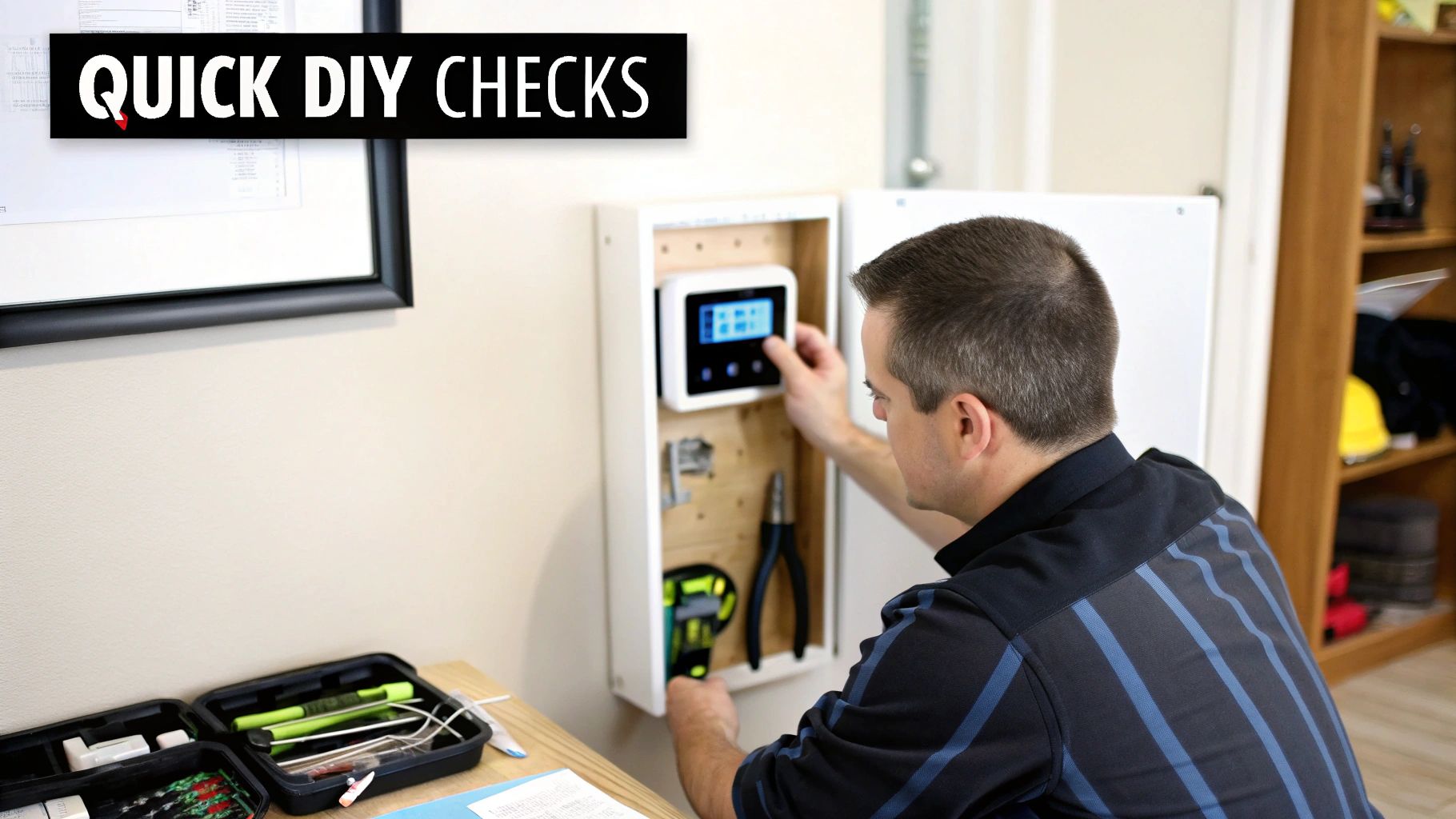
Before you pick up the phone to schedule a heat pump system repair, a few minutes of simple, safe troubleshooting can sometimes fix the problem right then and there. We get plenty of service calls in Hudsonville and Jenison, Michigan that turn out to be minor oversights—the kind any homeowner can handle.
Walking through these quick checks can save you time, money, and the hassle of a service visit. But it's also crucial to know your limits. These steps cover the most common and easily fixed issues. Anything more complex really needs an expert eye to keep you safe and prevent bigger problems down the road.
Inspect Your Thermostat Settings
It sounds almost too simple, but you'd be surprised how often a wonky thermostat setting is the real culprit. Someone might have bumped it by accident, or a quick power flicker could have reset your programming.
Check these three things first:
- Is it in the right mode? During our chilly northern winter months from November through April, it needs to be set to "Heat." In the other months, switch it to "Cool."
- Is the temperature set correctly? Make sure the thermostat is actually telling the system to run. If your home is 65°F but the heat is set to 62°F, it's just doing its job by staying off.
- Does it need new batteries? If the screen is completely blank, this is the first thing to try. Fresh batteries often bring it right back to life.
Check the Air Filter
Think of your air filter as your heat pump's lungs. If it's clogged with dust and dirt, your system can't breathe. This forces it to work much harder, leading to sky-high energy bills, poor performance, and sometimes, a total shutdown.
A severely clogged air filter is one of the top reasons for system failure. It can cause the indoor coil to freeze solid—in both heating and cooling modes—stopping your heat pump cold. Checking it monthly is the single best habit you can get into.
It’s an easy check. Just pull the filter out and hold it up to a light. If you can’t see the light through it, it’s well past time for a new one. This one simple, inexpensive step can make a world of difference.
Clear the Outdoor Unit
Your outdoor unit needs to breathe, too. It has to have clear, unrestricted airflow to pull heat from the air (or release it). Here in West Michigan, that means keeping an eye out for different things throughout the year.
In the winter months, especially in places like Grandville and Walker, Michigan, check for snow drifts and ice buildup that can smother the unit. From May through October, the enemies are overgrown bushes, grass clippings, and leaves. You want at least two feet of clearance on all sides. Gently clear away anything that’s blocking it.
Verify the Circuit Breaker
Last but not least, take a quick trip to your home’s electrical panel. A power surge or just an overloaded circuit can trip the breaker for your heat pump.
Look for the breaker labeled "Heat Pump" or "Air Handler." If the switch is in the middle or "Off" position, flip it all the way off, then firmly back to "On." If it trips again right away, don't reset it again. That’s a clear sign of an electrical problem that needs a professional technician.
Knowing When to Call an HVAC Professional
Look, a little DIY troubleshooting is great for catching small things early. But some problems are definite red flags. They’re your heat pump’s way of saying, “This is serious.” Trying to fix complex electrical or mechanical issues on your own isn’t just risky—it can be flat-out dangerous. For anyone with a heat pump in West Michigan, from Hudsonville to Grandville, Michigan, knowing when to put the tools down is key to staying safe and avoiding a catastrophic system failure.
If you even suspect a serious issue, it's time to step back and call in the pros. Messing with these problems yourself can lead to electrical shock, exposure to hazardous refrigerant, or even voiding your manufacturer’s warranty. Suddenly, a manageable repair becomes a full, expensive replacement.
Electrical Warning Signs
Your heat pump is a high-voltage piece of equipment. Any sign of an electrical problem is a non-negotiable, stop-what-you're-doing moment. Call a professional immediately.
- Persistent Buzzing or Humming: A loud, constant electrical hum coming from either the indoor or outdoor unit is a bad sign. It often points to a failing capacitor or a faulty contactor—components that hold a powerful electrical charge even when the power is off.
- Frequently Tripped Breakers: If your heat pump’s circuit breaker keeps tripping, there's an electrical short or an overloaded circuit somewhere in the system. Just flipping it back on won't fix the root cause, and it creates a serious fire hazard.
Alarming Mechanical Noises
Loud, aggressive noises are your system screaming for help. These aren’t the normal hums and clicks of operation; they're the sounds of a machine in distress, signaling that a major failure is right around the corner.
A violent grinding or metal-on-metal screeching is a classic sign that motor bearings are shot or other internal parts are grinding together. Let that go, and you're almost guaranteed a seized motor. Likewise, a loud banging or clanking sound often means there’s a serious issue with the compressor—the heart of your heat pump and its most expensive part. You can learn more about how a system's age plays into these failures in our guide on heat pump life expectancy.
Any suspected refrigerant leak is an immediate emergency. Refrigerant is a controlled substance, harmful to the environment, and requires special handling by an EPA-certified technician. Trying to fix it yourself is not only unsafe, it's illegal.
The Value of Professional Expertise
Calling a certified and insured technician is an investment in safety, quality, and your own peace of mind. The global heat pump market has exploded to $96.36 billion, which means the need for qualified repairs has shot up, too. Data shows that a surprising 20-30% of heat pumps need a major service call within their first five years, often for complex issues like refrigerant leaks or compressor failures.
For property managers in Grand Rapids or businesses in Walker, Michigan, professional inspections can catch 80% of these problems before they cause costly downtime. An expert diagnosis ensures the heat pump system repair gets done right, gets done safely, and gets your comfort back without compromise.
The Platinum Heating & Cooling Repair Process
When your heat pump quits, the last thing you want is a repair process that’s confusing or adds more stress to your day. We get it. That’s why we’ve built our entire service experience to be as straightforward and reliable as the comfort we put back into your home. For our neighbors across West Michigan, from Wyoming to Allendale, Michigan, we turn a frustrating breakdown into a clear, professional, and reassuring fix.
It all starts the moment you call us. You won’t get an automated menu or a long hold time. You’ll talk to a real, friendly person who will actually listen, get the details, and work with your schedule to get a certified technician out to you, fast. A broken HVAC system is an emergency, especially during a bitter northern winter from November through April or on a sweltering summer afternoon.
Your Step-by-Step Service Experience
Our promise is simple: clear communication and expert service from the first call to the final handshake. We want you to feel confident and in the loop every step of the way with your heat pump system repair.
- On-Time Arrival and Respect for Your Home: Our technician will show up at your home in Standale or Jenison, Michigan right on time, ready to get to work. We treat your property like it’s our own, using protective gear to keep everything clean and tidy.
- Listening and Initial Assessment: The first thing we do is listen. You know your system better than anyone, and the little details you notice—like a strange new noise or a weird drop in performance—are huge clues for us.
- Thorough System Diagnostics: Next, our technician dives into a complete diagnostic check. This isn't just a quick look-around; we use specialized tools to test every electrical component, check refrigerant pressures, and inspect all the mechanical parts for signs of wear.
This deep-dive diagnostic helps us nail down the real root of the problem, not just patch up a symptom.
The image below shows some of the common issues we find during a service call, from refrigerant leaks to the electrical faults and mechanical grinding that often signal a deeper problem.
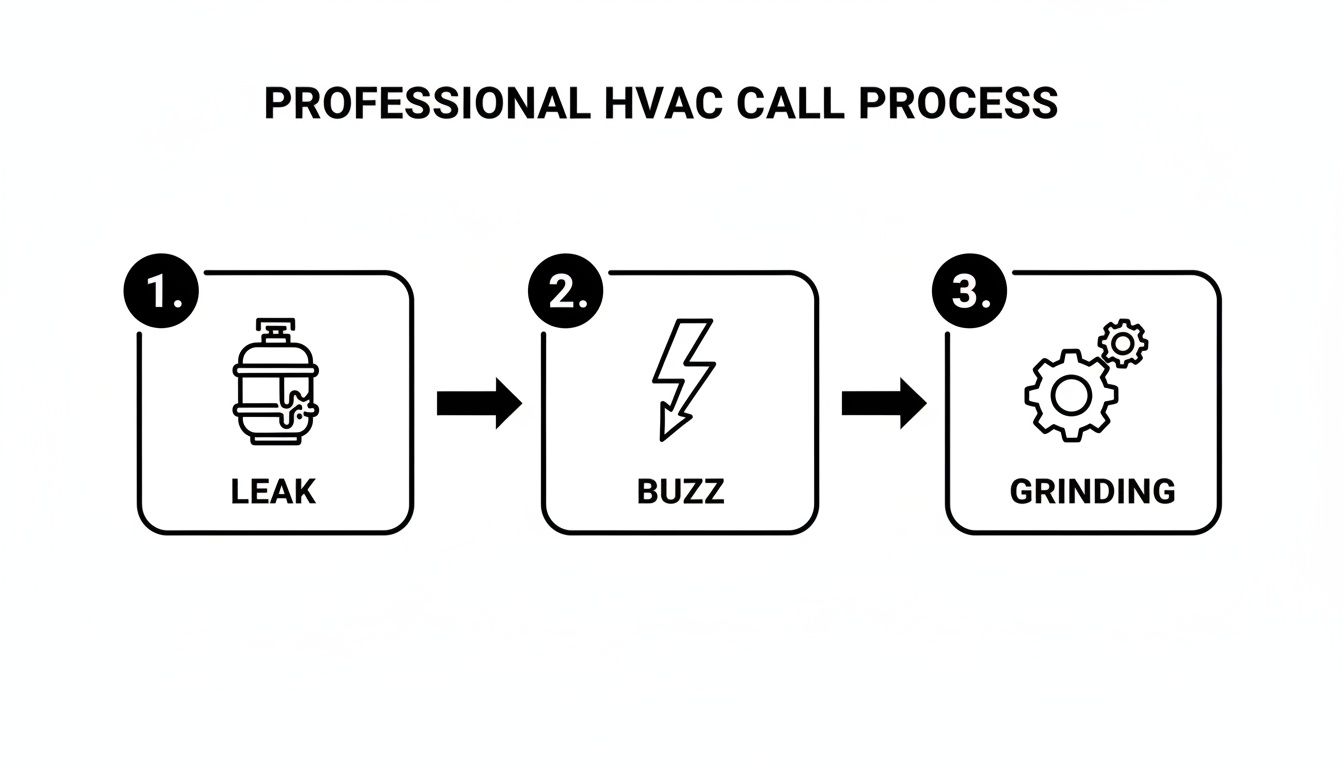
As you can see, something as simple as a buzzing sound can point directly to specific electrical issues that need an expert’s touch to fix safely and correctly.
Clear Explanations and Upfront Pricing
Once we know exactly what’s wrong, our job is to make sure you understand it, too. We'll skip the technical jargon and explain the problem in plain English.
We'll show you what we found—whether it's a worn-out capacitor or a stuck reversing valve—and walk you through the best repair options. Before we touch a single tool, you’ll get a detailed, upfront quote.
We have a strict “no surprises” policy. The price we quote is the price you pay, period. You’ll have all the time you need to review the cost and approve the work, putting you firmly in control.
Once you give us the thumbs-up, our technician gets right to it, using top-quality parts and the best techniques in the business. Our trucks are well-stocked with the most common components, so we can usually finish the job in just one visit. We wrap up by testing everything thoroughly to ensure your heat pump is running safely and efficiently, finally bringing that peace of mind and comfort back to your West Michigan home.
How Proactive Maintenance Prevents Costly Repairs
The best way to deal with a heat pump repair is to avoid needing one in the first place. Honestly, shifting from a reactive mindset to proactive care is the single best thing you can do for your system's health and longevity. It's like changing the oil in your car—you don't wait for the engine to seize before you do something about it.
Regular maintenance ties everything we've talked about together, heading off the common failures that can leave you stuck in the cold or sweating in the heat. Think of a scheduled tune-up as your first line of defense against surprise breakdowns and crazy high energy bills.
The Power of a Professional Tune-Up
A professional maintenance visit is a lot more than just swapping out a filter. It's a full-on health check for your heat pump, designed to spot the small stuff before it snowballs into an expensive emergency. Our certified techs go through a methodical process to inspect, clean, and tune every important part.
Here’s a glimpse of what that includes:
- Cleaning Coils: Dirty coils, both inside and out, basically choke your system and force it to work way harder. A professional cleaning gets the air flowing freely again, boosting efficiency.
- Checking Electrical Connections: We tighten up all the electrical connections and check the voltage on the motors. This prevents serious safety hazards and keeps key components from failing.
- Inspecting Condensate Drains: A clogged drain line can cause water damage and shut your system down completely. We make sure it's clear and draining properly.
- Verifying Refrigerant Levels: The wrong refrigerant level can wreck your compressor, which is a very expensive fix. We make sure the charge is exactly what the manufacturer recommends.
This kind of detailed attention gets your heat pump ready for the demands of a West Michigan winter and summer. During the heating season from November through April, a well-maintained system will have no problem keeping your Hudsonville or Jenison, Michigan home warm. When the cooling months roll around, it'll cool your place in Grandville or Walker, Michigan without breaking a sweat.
Proactive maintenance isn’t an expense; it’s a savings plan. Investing a little in an annual tune-up can help you sidestep premature failures that often carry repair bills over $1,000.
Turning Prevention into Performance
The payoff for staying ahead of repairs is crystal clear. A properly maintained heat pump doesn't just last longer—it runs better every single day. That translates directly into lower utility bills and a more comfortable home. The U.S. heat pump market is growing fast, with 15% more units needing repairs each year, which makes proactive care more important than ever.
In fact, some studies show that 40% of older heat pumps fail efficiency tests after just 10 years if they haven't been serviced properly. On the flip side, homeowners who invest in professional maintenance can slash their utility bills by 30-50%, helping them avoid early replacements that can cost $2,000 or more. You can discover more insights about these market trends here.
For folks in Allendale, Standale, and Wyoming, Michigan, this all adds up to peace of mind. You won't have to cross your fingers and hope your system can handle that first surprise snowstorm or a sudden July heatwave. You can find out more about how we get systems ready for the seasons in our guide on spring HVAC maintenance. Our Platinum Maintenance Membership takes all the guesswork out of it, providing scheduled care and priority service to keep your system at its best and your costs down.
Frequently Asked Questions About Heat Pump Repair
Even with all the details, you probably still have a few questions about your heat pump system repair. That's completely normal. Homeowners all across West Michigan tend to ask us about the same things: how much it'll cost, when it's time to replace the unit, and if these things really work in our winters.
We've gathered the most common questions we hear on the job to give you the clear, straightforward answers you're looking for.
How Much Does a Typical Heat Pump Repair Cost?
This is always the first question, and for good reason. The honest answer is: it really depends on what's wrong.
For homeowners in places like Hudsonville and Grandville, Michigan, a simple fix like a bad capacitor or a faulty thermostat is usually pretty straightforward. You're typically looking at a cost somewhere in the $150 to $400 range. These are the kinds of repairs we can often knock out quickly, getting your system back up and running right away.
Then there are the more involved jobs. Things like tracking down and sealing a refrigerant leak or swapping out a worn-out blower motor take more time, skill, and specific parts. For these types of repairs, the cost generally falls between $400 and $1,200. The biggest ticket items are major components—a full compressor replacement, for example, can start at $1,500 and go up from there.
No matter what, we'll always give you a clear, upfront quote after we've diagnosed the problem. You'll know the exact cost and can approve it before we pick up a single tool.
Should I Repair or Replace My Aging Heat Pump?
That's the big question, isn't it? Deciding to repair a system that's seen better days or invest in a new one is a major financial call. A well-cared-for heat pump can give you a solid 10-15 years of service, but as it gets older, you can bet the repair bills will start showing up more often.
To help homeowners in Jenison and Walker, Michigan make a smart call, we often suggest the "5,000 rule." It’s a simple bit of math that can bring a lot of clarity.
Here's how it works: just multiply your heat pump's age in years by the estimated repair cost. If that number is over $5,000, it’s probably more financially savvy to replace it.
Let's say your 12-year-old heat pump needs a $500 repair. You'd calculate 12 years x $500 = $6,000. Since that's over the $5,000 mark, putting that money toward a new, more efficient model is likely the better long-term investment. Our technicians are always happy to run the numbers with you and give you an honest recommendation.
Can a Heat Pump Handle a Harsh Michigan Winter?
Yes, it absolutely can. We hear this concern all the time from folks in Allendale, Standale, and Wyoming, Michigan. The heat pump technology of today is a world away from what it used to be. Modern cold-climate models are specifically engineered to keep pumping out heat efficiently, even when the temperature drops below freezing.
They are a fantastic primary heat source for our tough northern winter months, which usually run from November right through April.
But here's the key: every heat pump has a "balance point." That's the outdoor temperature where it can no longer pull enough heat from the air and needs a little help from its backup system—usually a set of electric resistance coils. If your heat pump isn't properly maintained, it might lean on that less-efficient backup heat way too often, which you'll definitely see on your utility bill. This is why regular maintenance is so critical to making sure it handles our winters as efficiently as possible.
When you need heat pump system repair you can count on in West Michigan, turn to the certified experts at Platinum Heating & Cooling. We’re all about fast, honest service to make your home comfortable again. Contact us today to schedule your service.