
When you’re thinking about a big home investment like a new HVAC system, one of the first questions that always comes up is, "How long is this thing actually going to last?" It’s a fair question. For most modern, well-maintained heat pumps, you can expect a lifespan of 15 to 20 years.
But that number isn't set in stone. Think of it like the mileage you get out of a car—its real-world longevity comes down to how well it was installed, how you use it, and most importantly, whether you keep up with professional maintenance.
Understanding Your Heat Pump Lifespan
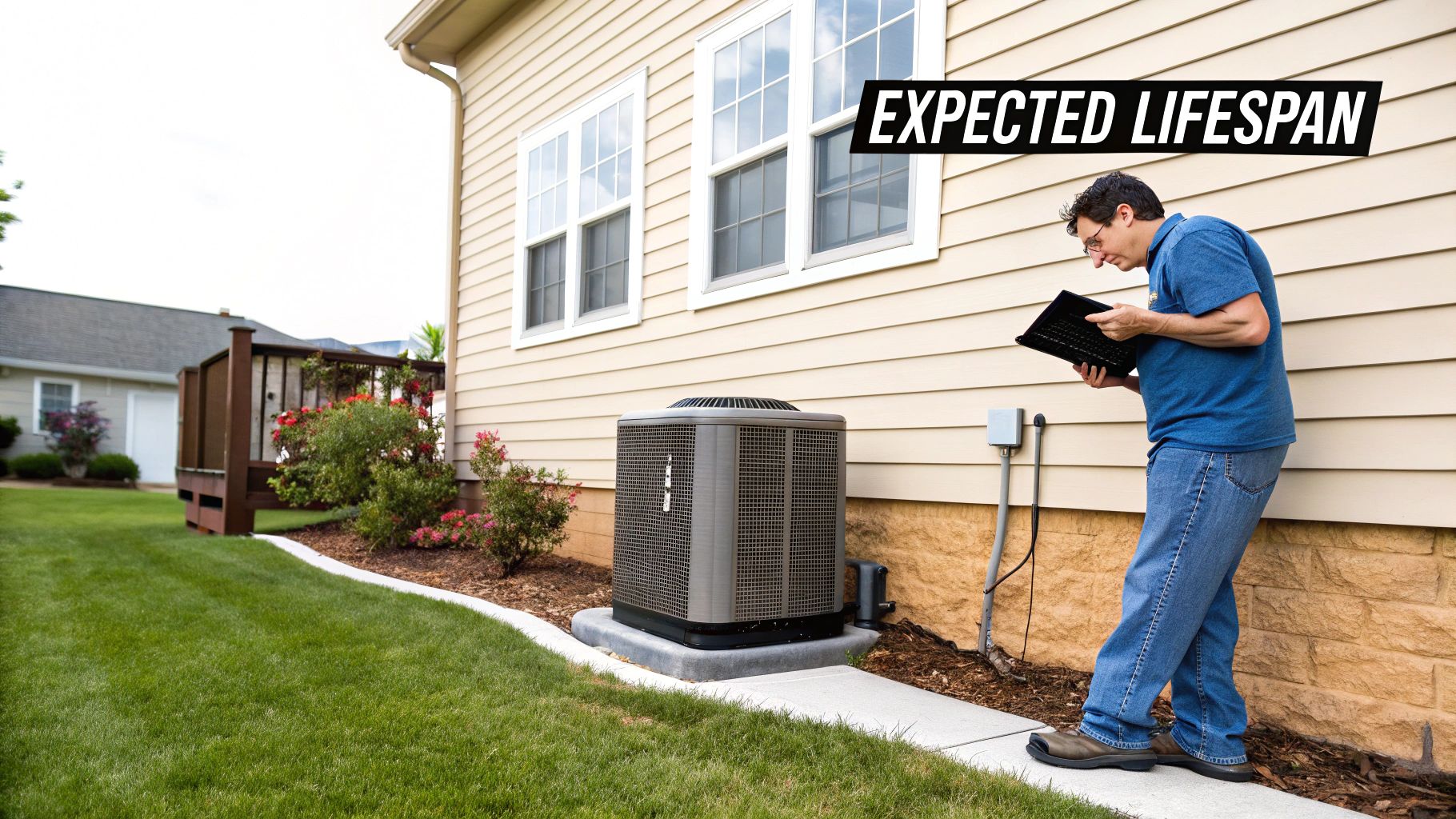
For homeowners all across West Michigan, including Hudsonville, Jenison, Grandville, Walker, Standale, Allendale, & Wyoming, Michigan, a heat pump is a true year-round workhorse. It’s your source of crucial warmth during our long heating season from November through April, and then it switches gears to provide reliable cooling for the rest of the year.
This dual-function design is what makes them so incredibly efficient, but it also means they never really get a break.
That constant operation is exactly why understanding its service life is so important. The average heat pump life expectancy isn't a guarantee; it's a benchmark. A system in Grandville that gets its annual tune-up will almost certainly outlast a neglected unit over in Allendale. The durability of your investment is directly tied to the care you put into it.
Average Heat Pump Lifespan by Type
To give you a clearer picture, not all heat pumps are built the same. Here’s a quick-reference table comparing the expected service life of the most common systems we see in West Michigan homes and businesses.
| Heat Pump Type | Average Lifespan (with Maintenance) | Best For |
|---|---|---|
| Air-Source Heat Pump | 15–20 years | Standard residential homes needing an all-in-one heating and cooling solution. |
| Ductless Mini-Split | 15–20 years | Homes without existing ductwork, additions, or for zoned temperature control. |
| Geothermal Heat Pump | 25+ years (indoor), 50+ years (ground loop) | Properties with enough land for installation, seeking maximum efficiency and longevity. |
As you can see, geothermal systems are in a league of their own for durability, but a well-cared-for air-source or ductless unit is still a fantastic long-term investment for any property.
The Evolution of Heat Pump Durability
The good news is that technology has dramatically improved how long these systems last. Heat pumps have come a long way in just the last couple of decades. Older models from the early 2000s might have given you 10 to 15 years, but today’s high-efficiency units are now commonly hitting the 15 to 25-year mark.
Why the big jump? It's thanks to major advancements in compressor technology, the switch to better refrigerants, and the use of corrosion-resistant coils that can handle our tough West Michigan weather. Here, where winters in Walker and Standale are cold but our summers are relatively mild, a modern heat pump avoids the extreme stress you’d see in other parts of the country. You can discover more insights about these advancements on palmetto.com.
A heat pump's lifespan is a story written by its installation quality, its environment, and the maintenance it receives. Proactive care is the best way to ensure a long and efficient service life.
This guide will walk you through everything that impacts your unit's longevity, from our unique West Michigan climate to the critical role of regular maintenance. We'll give you the knowledge you need to get the most out of your HVAC system, ensuring your home in Wyoming, Michigan, stays comfortable no matter what the season throws at us.
How West Michigan Weather Impacts Your System
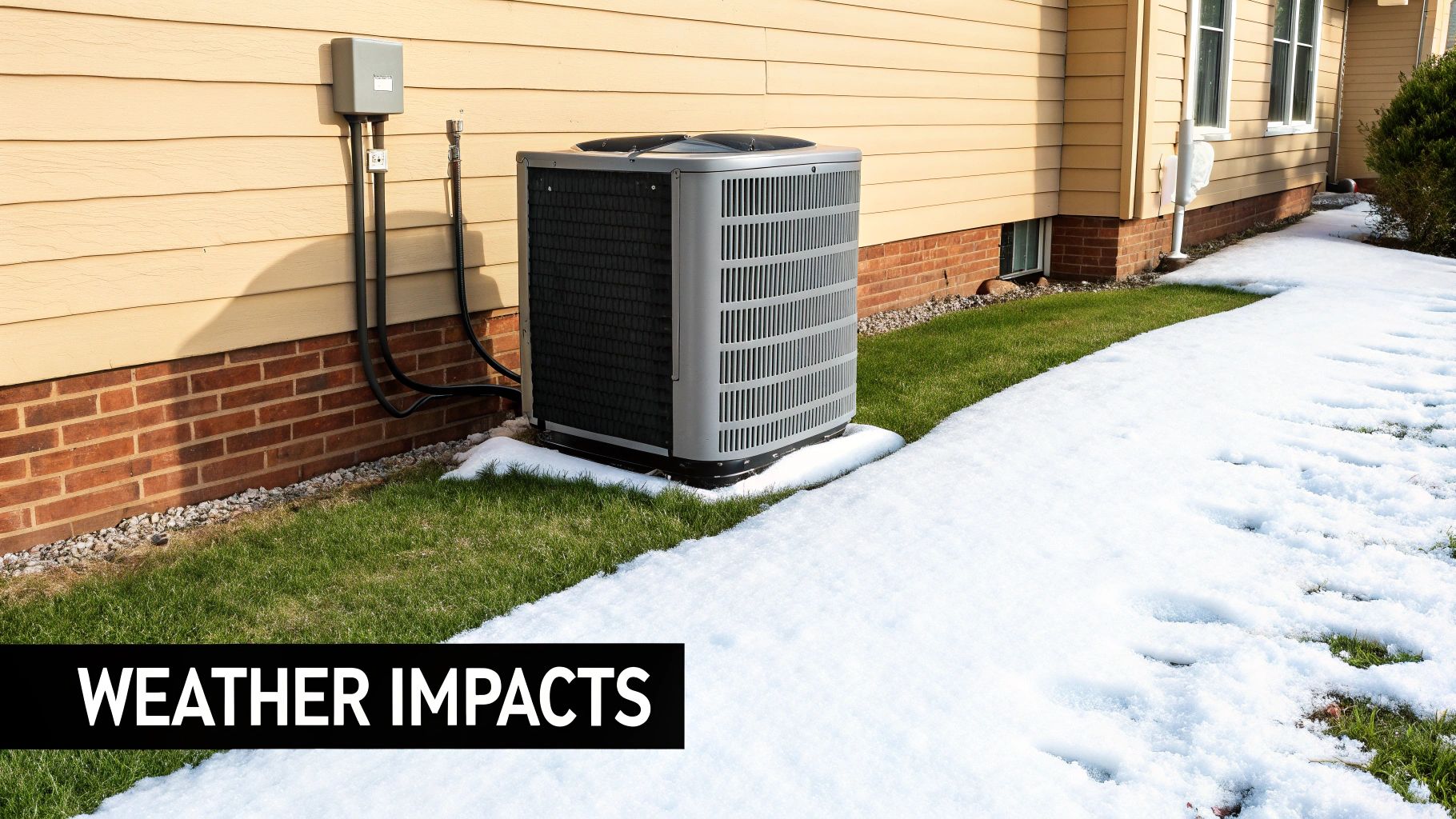
Here in West Michigan, a heat pump doesn't get an off-season. It’s a year-round workhorse, a true all-star player that never gets to sit on the bench. Unlike a traditional furnace or AC unit that gets a six-month break, your heat pump is on duty every single day.
During the northern winter months from November through April, it’s fighting off the cold to keep your house cozy. Then, in the other months, it completely flips its script to deliver that much-needed relief from our humid summers. This constant back-and-forth puts a unique strain on every component, making its lifespan directly tied to our ever-changing local weather.
The Challenge of West Michigan Winters
The heating season is where your heat pump really shows its value, but it's also where it faces its toughest battles. For anyone living in Hudsonville, Allendale, and Walker, our signature lake-effect snow and freezing rain cause specific headaches that can cut a unit's life short if you’re not on top of it.
Winter conditions here demand a lot more from your system:
- Heavy Snowfall: Deep snow can completely bury an outdoor unit, choking off its airflow. When that fan can't breathe, the compressor has to work overtime to pull heat from the frigid air, leading to serious strain and potential burnout.
- Freezing Rain and Ice: Ice storms can turn your outdoor coils into a solid block of ice. Sure, heat pumps have a defrost cycle, but it can easily get overwhelmed by a heavy Michigan icing, forcing the system to run poorly or just give up entirely.
- Prolonged Cold Snaps: When the temperature dips into the single digits for days on end, your heat pump has to run almost non-stop. That constant operation just accelerates the wear and tear on the fan motor, compressor, and every other moving part.
A heat pump’s life in winter is a delicate balancing act. It has to work hard enough to heat your home while being protected from the very elements it’s fighting. Keeping that outdoor unit clear of snow and ice is one of the simplest, most effective things you can do to help it win.
Humid Summers and Cooling Demands
Once the snow melts, the fight shifts from heating to cooling. Late spring through early fall in places like Jenison, Grandville, and Wyoming often means heavy, sticky air, which adds another layer of work for your heat pump.
When your system is cooling, it’s also pulling double duty as a dehumidifier, wringing all that moisture out of your indoor air. The muggier it is outside, the harder the system has to work to hit your thermostat setting and keep you comfortable. All that effort to both cool and dehumidify puts a major load on the compressor and evaporator coil all summer long.
How Our Climate Affects Longevity
Here’s the good news: while our seasons are demanding, West Michigan is actually considered a pretty moderate climate zone for HVAC equipment. Where a heat pump lives plays a huge role in its durability. Units in moderate zones like ours can see 15-20 year lifespans, compared to much shorter 10-15 year spans in places with extreme heat or cold.
Because our average January lows are around 19°F and our July highs are typically near 82°F, systems here don't have to run as aggressively as those in Arizona's blistering heat or Vermont's deep freezes. This can extend compressor life by 20-30%. You can learn more about these climate findings on constellation.com.
This "sweet spot" climate helps maximize the average heat pump life expectancy, but only if the system is maintained to handle our specific seasonal punches. Knowing how snow, ice, and humidity affect your unit is the first step in protecting your investment and making sure it runs like a champ through every Michigan season.
Why Professional HVAC Maintenance Is a Game Changer
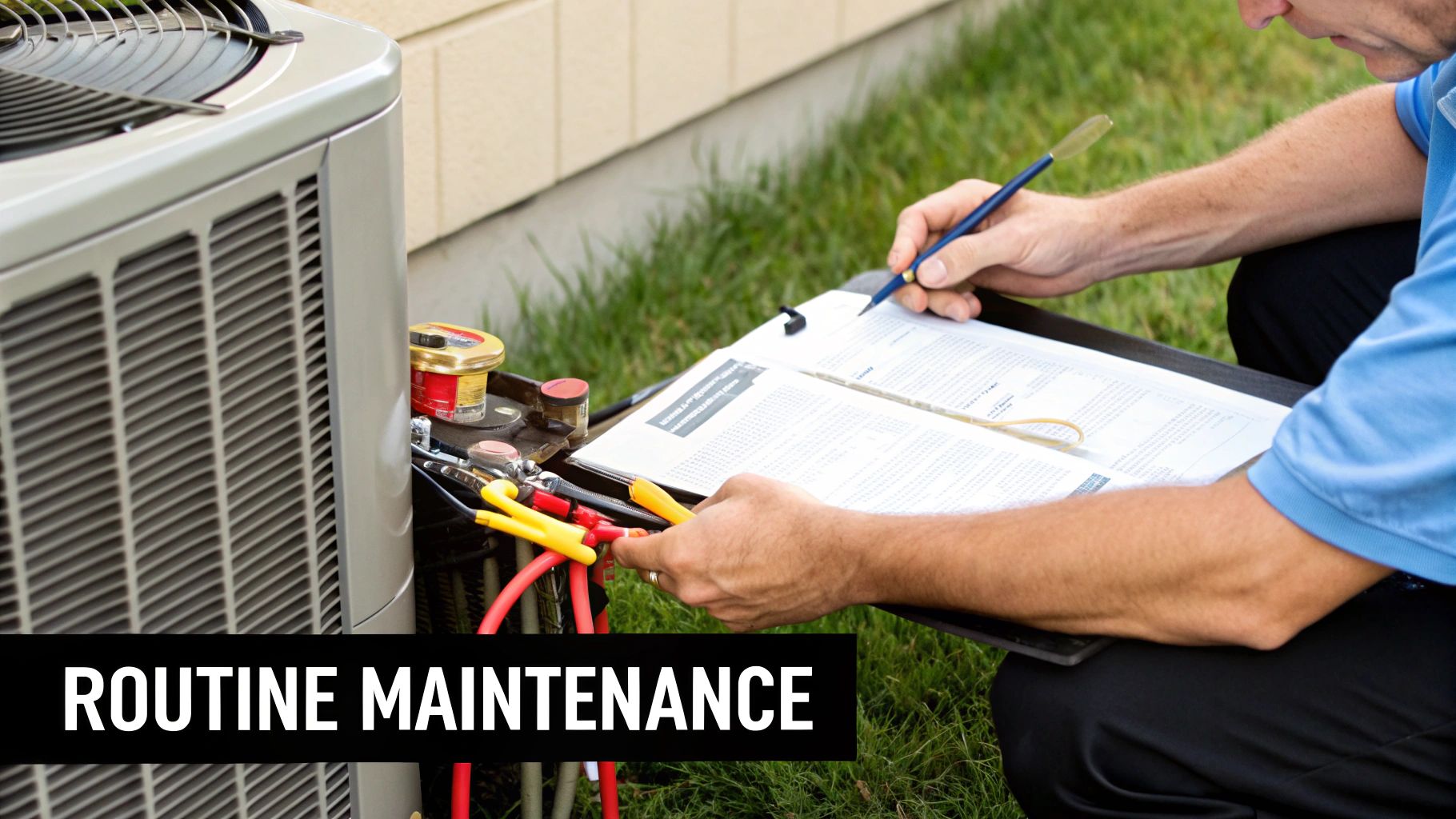
Think of professional maintenance like routine oil changes for your car—it’s the single best thing you can do to get more years out of your heat pump and avoid those surprise breakdowns. Skipping this step is a gamble that almost never pays off, especially with the weather we get here in West Michigan.
A system that's regularly inspected, cleaned, and tuned just runs better and lasts longer. This isn't just our opinion; the numbers don't lie. Professional maintenance is the key to unlocking a heat pump's full potential. Well-cared-for systems can last 15-20 years, a huge jump from the 10-12 years we often see with neglected units.
Here in West Michigan, with our muggy summers and brutal winters, heat pumps work overtime. They're constantly cycling between heating and cooling, which puts a lot of stress on parts like the compressor and fans. Without regular check-ups, that wear and tear adds up fast. For anyone living in Jenison, Walker, or Wyoming, a system failing during a January cold snap isn't an inconvenience—it's a real emergency.
What Happens During a Professional Tune-Up
When a certified technician from our team shows up, they're doing more than just a quick look-over. They’re performing a deep diagnostic health check on your entire system, designed to spot small issues before they snowball into thousand-dollar problems. It's a detailed process that focuses on the parts of your heat pump that work the hardest.
A full tune-up always includes these critical tasks:
- Cleaning Coils and Components: We give the indoor and outdoor coils a thorough cleaning. Dirty coils are like wearing a winter coat in July—they force the system to struggle, wasting energy and straining the compressor.
- Checking Refrigerant Levels: The refrigerant level has to be just right. Too much or too little can wreck your compressor, which is the heart of the system. We'll make sure the charge is perfect.
- Inspecting and Tightening Electrical Connections: Loose wires are a surprisingly common reason for system failure and can even be a fire hazard. We go through and tighten everything to keep it safe and reliable.
- Lubricating Moving Parts: All those motors and bearings need proper lubrication to reduce friction. This simple step helps those crucial components last as long as they were designed to.
A professional tune-up isn't just a service; it's an investment in your heat pump's future. It’s the difference between a system that limps through each season and one that runs smoothly for years.
The Twice-a-Year Advantage in West Michigan
Because your heat pump is your go-to for both heating and cooling, we strongly recommend getting it serviced twice a year. This isn't an upsell—it's about getting the system ready for the unique demands of the season ahead.
A spring tune-up, usually before things get hot, is all about prepping for summer humidity in places like Grandville. Our techs focus on the cooling functions to make sure you're ready for that first heatwave.
Then, a fall tune-up gets your unit ready for the long haul of the heating season, which can stretch from November clear through April. This visit is absolutely vital for homeowners in Hudsonville and Allendale, as we ensure the defrost cycle is working right and all the heating elements are primed for freezing temps.
This proactive schedule keeps your system at peak efficiency all year, which means lower monthly energy bills and—most importantly—peace of mind.
For homeowners who want an easy and affordable way to stay on schedule, a maintenance plan is the way to go. You can learn more about our Platinum Maintenance Membership Program and see how you can get priority service and automated scheduling. At the end of the day, consistent care is what will maximize your heat pump life expectancy and protect your investment.
Common Issues That Can Cut a Heat Pump's Life Short
Beyond just skipping your yearly tune-up, a few other culprits can send your heat pump to an early retirement. A well-maintained unit is built to last, but certain problems put a ton of unnecessary stress on its parts. This constant strain chips away at its lifespan and quietly drives up your energy bills.
Each one of these issues makes your system work way harder than it should. Think of it like driving your car with the emergency brake slightly on—it’ll still go, but you’re causing a lot of extra wear and tear. Spotting and fixing these problems is the best way to protect your investment and get a long, efficient life out of your heat pump.
The Make-or-Break Role of Proper Installation
The most important day in your heat pump’s life is installation day. Hands down, improper installation is one of the biggest reasons systems fail early. If a unit is the wrong size for your home—either too big or too small—it’s going to be in a constant battle to keep you comfortable.
An oversized unit will short-cycle, kicking on and off constantly. All that starting and stopping puts a massive strain on the compressor and other key components. On the flip side, an undersized unit will run almost nonstop, struggling to ever hit the temperature you set, which leads to burnout. For anyone in Hudsonville or Grandville, making sure your installer does a proper load calculation isn't just a suggestion; it's essential.
Forgetting About the Outdoor Unit
Another classic mistake, especially for homeowners in places like Standale and Allendale, is neglecting the outdoor unit. This big metal box needs to breathe to do its job. When it gets blocked, it can't transfer heat properly, forcing the whole system to overwork itself.
Keep an eye out for these common obstructions:
- Debris Buildup: Leaves, grass clippings, and dirt can get sucked in and clog up the coils. This chokes the airflow, and during the cooling months, it's a perfect recipe for an overheating system.
- Heavy Snow and Ice: Our West Michigan winters can bury an outdoor unit in no time. From November through April, it’s critical to maintain at least two feet of clearance around the unit so it doesn't suffocate.
- Landscaping Overgrowth: Planting shrubs or bushes too close might look nice, but it can block airflow and trap heat. This tanks efficiency and puts a lot of stress on the internal parts.
A clean, clear outdoor unit is a happy unit. If you start treating it less like a piece of yard art and more like the critical machine it is, you'll get a lot more life out of it.
Ignoring the Indoor Air Filter
Inside your home, one of the easiest and most overlooked tasks is simply changing the air filter. Forgetting to do this is like making your system try to breathe through a dirty rag. A clogged filter forces the indoor fan motor to work much harder just to pull air through, which can cause it to overheat and fail prematurely.
It's not just the motor, either. A dirty filter reduces airflow across the indoor coil. In the summer, this can cause the coil to freeze into a block of ice. In the winter, it can cause the system to overheat. Both scenarios can lead to expensive damage to the compressor. A quick check once a month is all it takes to prevent this whole destructive domino effect.
These common issues—a shoddy installation, a smothered outdoor unit, and a clogged filter—all take a heavy toll on a heat pump's life expectancy. By getting ahead of them, you can help your system run smoothly for its full lifespan and keep your West Michigan home comfortable for years to come.
Telltale Signs Your Heat Pump Needs Replacing
Even a heat pump that’s been perfectly maintained won't last forever. Just like any hardworking machine, it will eventually hit a point where replacing it makes more financial sense than sinking more money into repairs.
Knowing the warning signs helps you plan for a replacement instead of getting caught off guard by a total breakdown on a frigid West Michigan night.
Think of it as a quick health check for your HVAC system. One symptom might not be a huge deal, but if you start noticing several of these issues, your heat pump is probably trying to tell you it's on its last legs. Catching these signals early gives you time to research and choose the right new system without the pressure of an emergency.
Your System's Age and Performance
The most obvious clue is simply its age. If your heat pump is pushing past 15 years old, it’s living on borrowed time. HVAC technology has come a long way, and a unit from that era is nowhere near as efficient as today's models. You're likely paying more for less comfort.
Age usually brings a noticeable drop in performance. Is your system struggling to keep your Jenison home warm through the heating season from November to April? Can it no longer cut through the heavy humidity during a Walker summer? This struggle to hold a steady temperature is a classic sign of a worn-out compressor and other aging parts.
When an older system can't do its main job anymore—keeping you comfortable—it's time to stop thinking about repairs. Continuing to pour money into an outdated unit is a losing battle.
Rising Energy Bills and Frequent Repairs
Your monthly utility bill is one of the best diagnostic tools you have. If you see your energy costs creeping up month after month without any change in your habits, it’s a dead giveaway that your heat pump's efficiency is fading fast. An older system has to work much harder to do the same job, and that extra effort shows up directly on your bill.
Also, think about how often you're calling for service. A single repair every couple of years is one thing. But if you and your HVAC technician are on a first-name basis because the system needs constant fixes, that's a major red flag.
Keep an eye out for these repair-related warning signs:
- Increasing Repair Frequency: Needing a technician more than once or twice a year suggests a bigger failure is just around the corner.
- Rising Repair Costs: When a single repair bill is 30-50% of what a new unit would cost, replacement is the smarter financial move.
- Major Component Failure: Problems with critical parts like the compressor or reversing valve on an old unit are often the final straw.
If you're dealing with an older system, you can find more tips in our article on HVAC recommendations for homes over 10 years old.
Finally, just listen. Heat pumps are designed to be pretty quiet. If you suddenly start hearing new and strange sounds—grinding, squealing, rattling, or loud banging—don't ignore them. These noises almost always point to serious mechanical problems, like a failing motor or a loose part that could cause a total breakdown. Paying attention to these signs is the best way to manage your heat pump life expectancy and avoid a crisis.
Upgrading Your System for Long-Term Value
Deciding to replace an old, sputtering heat pump isn't just about fixing a problem—it's a golden opportunity to invest in your home's future. Think of it as a major upgrade to your home's comfort, efficiency, and overall value. When you move on from an aging unit, you’re stepping into a whole new world of home climate control, backed by modern tech you can actually feel.
Today's high-efficiency models are simply in a different league than their older counterparts. They come with much better SEER2 (Seasonal Energy Efficiency Ratio 2) and HSPF2 (Heating Seasonal Performance Factor 2) ratings. In plain English, that means they use way less electricity to deliver far superior comfort. For homeowners in Hudsonville and Grandville, that translates directly into smaller monthly energy bills.
More Than Just a Replacement
The financial savings alone are often enough for the new system to pay for itself over its lifespan. During our tough heating months from November through April, a high-efficiency unit keeps your home toasty without the constant strain that wore out your old model. And when summer hits, it delivers consistent, powerful cooling to cut through that Michigan humidity.
Beyond the immediate comfort and savings, a new heat pump is a real asset. It's a feature that potential buyers love to see, which can directly increase your property's market value. It's a smart move for today and for your home's future. You can check out different options and learn more about a professional heat pump installation in West Michigan to see what makes sense for your home.
An upgrade isn't just an expense; it's a strategic investment in your home. By choosing a modern, high-efficiency system, you secure years of reliable comfort, lower energy bills, and enhanced property value.
Choosing the right system for your home, whether you're in Jenison, Walker, or Wyoming, is a decision that will pay you back for years. It means you get a reliable, worry-free system that keeps your family comfortable no matter what the season throws at you. This proactive choice delivers immediate benefits and lasting peace of mind, making it one of the smartest upgrades you can make. You're not just swapping out an appliance; you're elevating your entire living experience.
Frequently Asked Questions About Heat Pump Longevity
We hear a lot of the same questions from homeowners across West Michigan when it comes to their heat pumps. Here are some straightforward answers to the things people ask us most.
Is It Worth Repairing a 15-Year-Old Heat Pump?
This is a tough one, but here’s a good rule of thumb: if a major repair is going to cost you more than 30-50% of what a brand-new unit would, it’s probably time to replace it. A 15-year-old system is almost certainly out of warranty, running less efficiently than modern units, and just more likely to have another breakdown soon.
When you call us out to your Hudsonville or Jenison home, our technicians can walk you through a clear cost-benefit analysis. We'll lay out the repair cost right next to the long-term energy savings and improved reliability you'd get from a new system, so you can make the best call for your budget.
Why Do Geothermal Heat Pumps Last So Much Longer?
It's all about protection from the elements. A geothermal system's underground loops have an amazing lifespan because they’re completely shielded from West Michigan's brutal weather. While a standard air-source unit is getting hammered by snow, ice, and humid summers, those buried loops are enjoying stable, consistent ground temperatures all year round.
This is exactly why the ground loops often come with a warranty for 50+ years. Even the indoor components tend to last longer—think 20-25 years—because they aren't working nearly as hard to pull heat from the ground as an air-source unit does from the frigid winter air.
Does Emergency Heat Mode Hurt My Heat Pump?
Running the 'emergency heat' won't directly damage your heat pump, but it’s a big red flag that something is wrong. More immediately, it will cause your electricity bills to skyrocket. That setting is truly for emergencies only—like when the main unit has failed or can't keep up with an extreme cold snap.
If your system in Grandville or Walker is constantly kicking into this mode during our long heating season (from November through April), you could be dealing with low refrigerant or a failing compressor. Don't wait. Schedule a service call right away to get it diagnosed before you're stuck with massive energy bills.
What DIY Maintenance Can I Do to Help My Heat Pump?
While you should always leave the technical stuff to the pros, there are absolutely a few things you can do to help your heat pump live a long, healthy life.
- Change your air filter every 1-3 months. A clogged filter makes the whole system strain to breathe, which is one of the easiest ways to cause a breakdown.
- Keep the outdoor unit clear. Make sure leaves, tall grass, and snow aren't blocking it. Aim for at least two feet of clear space all the way around for proper airflow.
- Gently rinse the outdoor coils with a garden hose during the cooling months. This washes away the dirt and pollen that build up and make it harder for the unit to do its job.
For anything more involved, like checking electrical components or refrigerant levels, it's always safest to call in a certified professional.
This simple flowchart can help guide your decision on when to upgrade, focusing on what matters most: improving your home's comfort and achieving significant long-term savings.
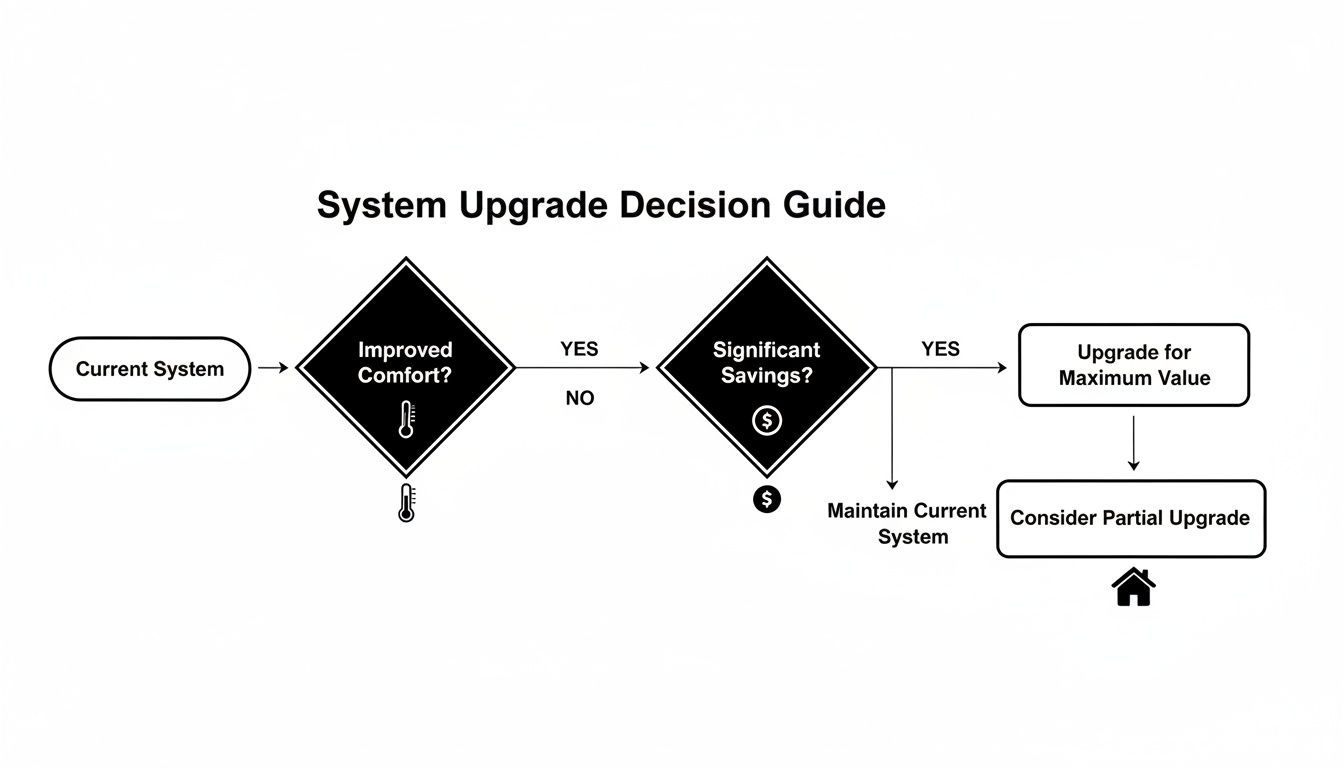
Ultimately, the choice comes down to balancing the upfront cost of a new system against the ongoing repair bills and frustrations that come with an old, inefficient one.
Whether you just need a system inspection or you're ready to explore high-efficiency upgrades for your West Michigan home, the team at Platinum Heating & Cooling is here to help. Contact us today for a professional consultation.