
Before you even start searching for heat pump installation near me, it's worth asking a more basic question: is a heat pump a good choice for my home? For homeowners in West Michigan, the answer is a definite yes, thanks to incredible advances in cold-climate heat pump technology.
These aren't the heat pumps of a decade ago. Modern systems give you powerful heating during the northern winter months (November through April) and efficient cooling in the warmer months, all from a single unit.
Is a Heat Pump Right for West Michigan Homes?
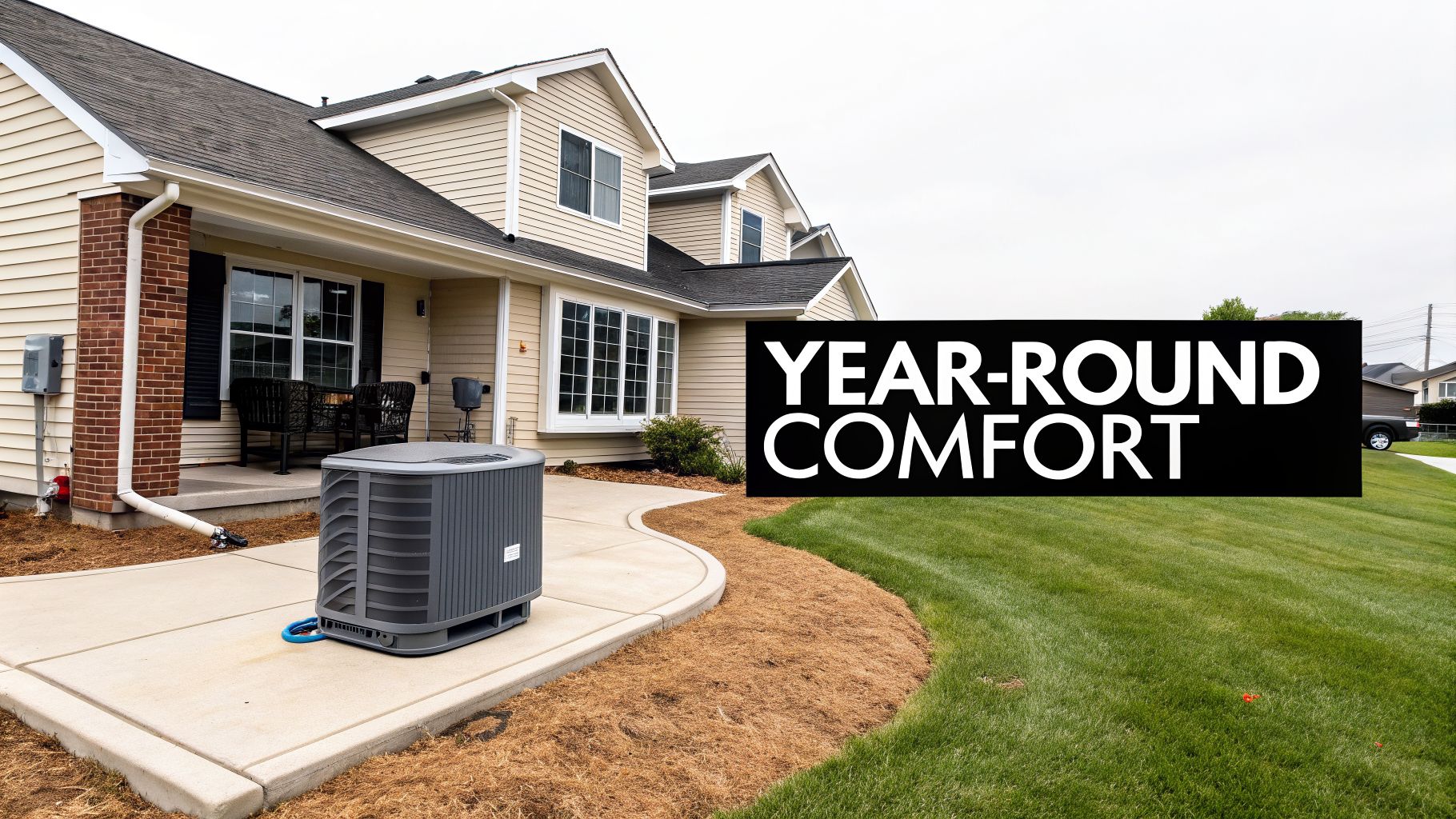
If you live in West Michigan, including Hudsonville, Jenison, or Grandville, you might be skeptical about using a heat pump to stay warm through a Michigan winter (from November through April). It’s a fair question. But today’s models are built specifically for northern climates, running efficiently even when the temperature drops well below freezing.
Unlike a furnace that burns fuel to create heat, a heat pump works by moving heat from the outside air into your home. It’s an incredibly efficient process—often delivering three to four times more energy than it uses. We get into the nitty-gritty of how this works in our guide on what a heat pump is.
A Quick Comparison
To see the difference, let's put these systems side-by-side. For many in West Michigan, the numbers speak for themselves.
Heat Pump vs Traditional HVAC Systems in West Michigan
| Feature | High-Efficiency Heat Pump | Traditional Furnace & AC |
|---|---|---|
| Function | Provides both heating (winter) and cooling (summer) in one unit | Separate furnace for heat and AC for cooling |
| Energy Source | Electricity (moves heat, doesn't create it) | Natural Gas/Propane (furnace) and Electricity (AC) |
| Winter Efficiency | Highly efficient, even in cold climates (November through April) | Efficiency drops in very cold weather |
| Energy Bills | Lower year-round utility costs | Higher costs, especially with fluctuating gas prices |
| Rebates | Qualifies for significant federal tax credits & local rebates | Fewer incentives available |
| Carbon Footprint | Smaller environmental impact (all-electric) | Larger carbon footprint due to fossil fuel combustion |
Looking at this, it's clear why so many homeowners are making the switch. The long-term savings and year-round comfort are hard to ignore.
Year-Round Efficiency and Comfort
When the warmer months roll around, the system simply reverses to provide cooling. It pulls heat from inside your house and moves it outside, working exactly like a high-efficiency air conditioner. This makes it a true all-in-one solution for homes in Walker, Standale, Allendale, and Wyoming, Michigan.
The benefits go beyond just convenience. Switching to a heat pump can seriously lower your monthly utility bills and shrink your carbon footprint. For a lot of people, the long-term energy savings alone make the upgrade a smart financial move.
One of the biggest advantages we see with modern heat pumps is their ability to deliver consistent, even comfort. You can say goodbye to the hot and cold spots that older HVAC systems are famous for.
A Growing Trend with Real Savings
This move toward heat pumps isn't just a local thing; it's happening everywhere. The heat pump market is expected to grow from USD 123.42 billion in 2025 to USD 297.63 billion by 2035.
That kind of growth means the technology keeps getting better, prices become more competitive, and great financial incentives are available for homeowners. For example, a new heat pump can cut your heating costs by up to 50% compared to a standard electric furnace. They also qualify for major federal tax credits that help reduce the initial installation cost.
How to Find and Vet Qualified Local Installers

Let’s be honest: a successful heat pump project is 90% installer and only 10% equipment. You can buy the most expensive, advanced system on the planet, but if it’s not installed right, it will never perform as it should.
That’s why your search for "heat pump installation near me" needs to be more than just a quick Google search. This is especially true now, as heat pumps are quickly becoming the go-to for modern homes.
They're on track to capture 80% of the global market, and for good reason. Homeowners are drawn to systems that can deliver three units of heat for every one unit of electricity. For those of us in West Michigan, that kind of efficiency is a game-changer. But to get those results, you have to partner with a top-tier installer. You can read more about heat pump market trends here.
Your Non-Negotiable Contractor Checklist
Before you even start looking at quotes, any contractor you consider must meet these basic requirements. Don't be shy about asking for proof—a true professional will have this information ready to go. A few minutes of checking now can save you from a massive headache down the road.
- Michigan Mechanical Contractor License: This is a state-mandated license proving they are legally allowed to do HVAC work in Michigan. No license, no deal.
- EPA Section 608 Certification: This federal certification is critical. It means their technicians are properly trained to handle refrigerants safely, protecting your family and the environment.
- Proof of Insurance: Always, always confirm they have both general liability insurance and workers' compensation. This protects you from being on the hook financially if an accident or property damage happens on your property.
A contractor who gives you the runaround or hesitates to provide these documents is a huge red flag. Your home is too important to risk on an unlicensed or uninsured installer.
Sifting Through Reviews and References
Once you've checked the boxes on the non-negotiables, it’s time to do some real digging. Online reviews are a good starting point, but you have to learn how to read between the lines. Look for patterns—are multiple people praising their professionalism, on-time arrivals, or how well they cleaned up?
Then, take it a step further and ask for local references, especially from homeowners in our West Michigan service areas, including Jenison, Grandville, Walker, Standale, Allendale, & Wyoming, Michigan. A company that’s proud of its work will be happy to connect you with past clients.
When you call those references, ask pointed questions:
- How did the system handle its first real West Michigan winter (the November-April heating season)?
- Was the installation crew professional and respectful of your home?
- Have you needed any service calls since the installation, and how did the company respond?
Getting this kind of direct feedback gives you a much clearer picture than any anonymous online review ever could. Often, choosing a locally-owned company with deep roots in communities like Wyoming or Standale leads to better service and accountability. After all, they’re your neighbors, and their reputation is built right here at home.
Making Sense of Quotes, Costs, and Rebates in 2026
Once you’ve found a few solid contractors, it's time to talk money. Getting quotes for a heat pump isn’t just about hunting for the lowest price. It’s about truly understanding what you’re paying for and figuring out how much you can actually save.
When a quote arrives, don't just skip to the bottom line. A good quote will break everything down, but you have to know what you’re looking at. The essentials include the exact make and model of the heat pump, labor charges, any extra electrical or ductwork needed, and the warranty details for both the parts and the installation itself.
How to Compare Contractor Quotes
Comparing quotes can feel like comparing apples to oranges if you’re not careful. One contractor might suggest a top-of-the-line model that costs more upfront but runs more efficiently, while another might offer a more budget-friendly unit.
You need to dig into the details:
- The Equipment: Is this a cold-climate model designed to handle a West Michigan winter (from November through April)? What are its SEER2 (cooling) and HSPF2 (heating) efficiency ratings?
- Labor and Materials: This should cover everything, from taking out your old system to getting the new one running. If you see a vague "miscellaneous" fee, ask what it’s for.
- The Warranty: A strong warranty shows the installer stands behind their work. You want to see at least a 10-year parts warranty and a minimum 1-year labor warranty.
If one quote comes in way lower than the others, find out why. It could be a red flag for inexperienced labor, a lower-quality unit, or hidden costs that will pop up later. For anyone in Hudsonville or Jenison, it’s a good idea to confirm if the price includes pulling the necessary local permits.
A detailed, easy-to-understand quote is the first sign you're dealing with a trustworthy contractor. If the numbers are fuzzy or they can't explain a charge, that’s a warning sign. Your "heat pump installation near me" search should end with a partner, not just a salesperson.
Unlocking Savings with Rebates and Tax Credits
This is where installing a heat pump gets really interesting from a financial perspective. Government incentives and a global push for decarbonization are making heat pumps more popular than ever. These programs can seriously reduce your initial cost, often cutting payback periods to just 5-7 years.
With rebates sometimes covering 30% or more of the total project and modern heat pumps hitting efficiency ratios of 300-400%, these incentives make the switch a no-brainer. For homeowners in West Michigan, including Allendale or Wyoming, Michigan, stacking federal tax credits with local utility rebates is the best way to get the most bang for your buck. You can learn more about the global trends driving these incentives.
A good local installer in areas like Grandville, Walker, or Standale will be your best guide here. They know which programs are available and will handle the paperwork to make sure you get every penny you’re owed. That service alone is often worth thousands and makes the whole project a lot less stressful.
What to Expect During the Installation Process
Knowing what happens on installation day can take a lot of the stress out of the process. A professional heat pump installation is a well-coordinated job, and our goal is to be as undisruptive as possible. From protecting your home to firing up the new system, here’s a look at what you can expect when our team arrives.
The day starts with our installation crew walking you through the plan. First things first, we lay down drop cloths and runners to protect your floors and furniture from any foot traffic or debris. It’s a small detail, but it shows respect for your home and sets the tone for a professional job.
Home Preparation and Old System Removal
Before the new heat pump can go in, the old equipment has to come out. Whether it’s an old furnace, an air conditioner, or both, our crew will safely disconnect and remove everything. This includes handling any remaining refrigerants according to strict EPA regulations—we never vent them into the atmosphere.
Once the old system is out of the way, the team prepares the areas for the new components. This usually involves:
- Clearing the space: We make sure there's enough room around the indoor air handler for future service and easy filter changes.
- Preparing the outdoor pad: The ground is leveled, and we place a new composite pad where the outdoor unit will sit. This gives the unit stability and ensures proper drainage.
Unit Placement and Critical Connections
With the spaces prepped, our technicians carefully place the indoor and outdoor units. For homeowners in West Michigan communities like Standale or Walker, getting the placement right is key to performance. The outdoor unit needs good airflow, away from heavy foliage or spots where snow might drift heavily from November through April.
Next comes the technical work. Our team runs a new refrigerant lineset between the indoor and outdoor units and makes all the electrical connections. A skilled technician makes sure these lines are perfectly sealed to prevent leaks and that all high-voltage wiring is safe and up to code. This part of the job requires serious precision, which is a major reason why searching for "heat pump installation near me" should lead you to certified experts.
The most critical calculation a technician makes is determining the proper size of your heat pump. A system that's too small will struggle to keep up, while one that's too large will cycle on and off too frequently, wasting energy and causing unnecessary wear. This isn't a guess; it's a science based on your home's unique needs.
This visual shows how the costs associated with your installation translate into long-term financial benefits.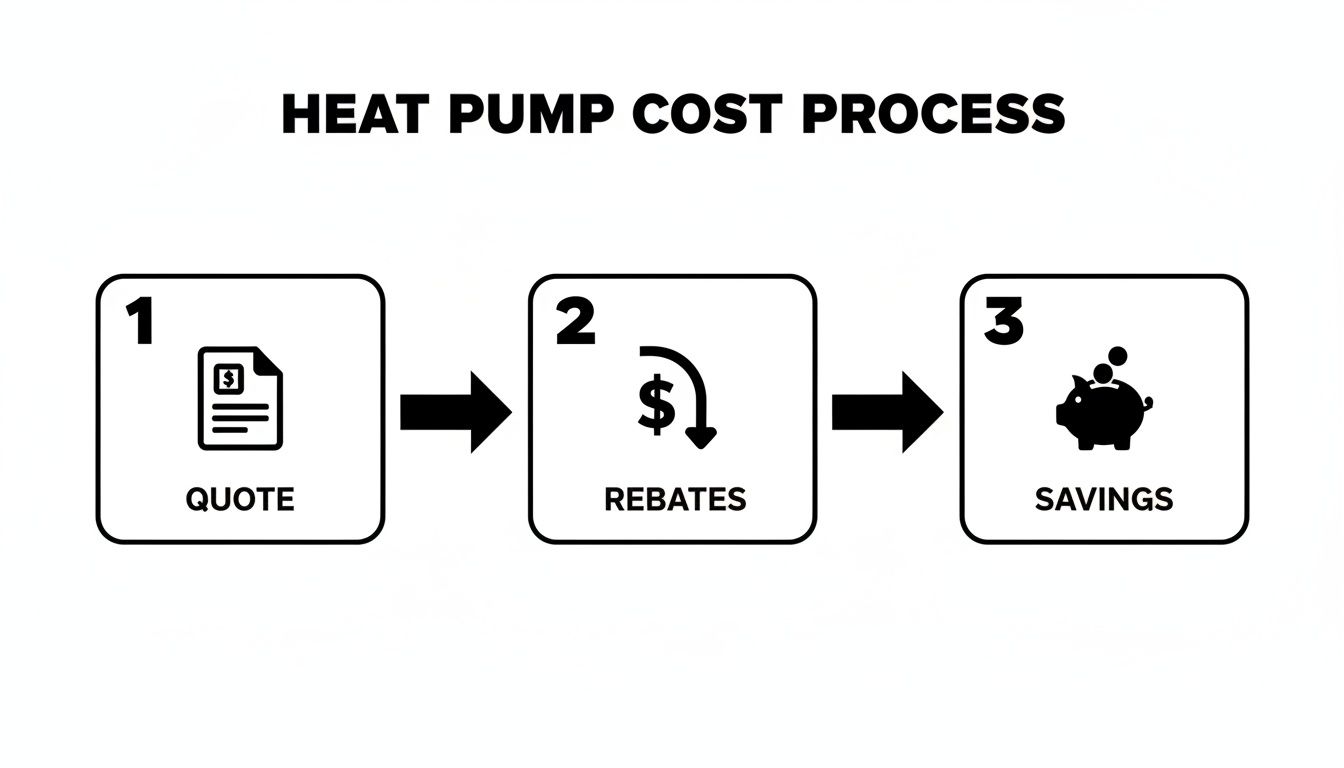
The process clearly illustrates that after the initial quote and application of rebates, the result is tangible savings over time.
The Final Commissioning and Handover
The final step is arguably the most important: commissioning the system. Our technician will run a series of checks to confirm the unit is operating exactly as the manufacturer intended. They’ll test refrigerant pressures, check airflow, and make sure both the heating (for winter) and cooling (for summer) cycles are functioning perfectly.
Finally, we’ll walk you through your new thermostat, show you how to operate the system, and answer any questions you have. By the time our crew leaves your West Michigan home, your new heat pump will be fully operational and ready to provide efficient comfort for years to come.
Alright, the installation is done and your new heat pump is humming along. But your job isn't quite finished. To get the most out of your investment, you need to know how to take care of it for the long haul.
A few simple habits are all it takes to protect your system and keep it running at peak performance for years.
First things first, get to know your new smart thermostat. It's the brain of the operation. Spend a little time learning its features, from setting schedules to programming a vacation mode. This is your best tool for managing comfort and efficiency, especially when that West Michigan weather shifts from summer cooling to a chilly winter from November through April.
Simple Homeowner Maintenance Tasks
A little bit of upkeep on your end can go a long way. These are easy tasks any homeowner can handle to keep their system healthy and avoid a surprise service call. Think of it as basic preventative care for one of your home's most important appliances.
- Filter Changes are Non-Negotiable: A dirty, clogged filter is your heat pump's worst enemy. It chokes off airflow, making the system work much harder and spiking your energy bills. Check your filter every month and plan on replacing it at least every 90 days. If you have pets or bad allergies, you’ll want to do it more often.
- Keep the Outdoor Unit Clear: Your outdoor unit needs space to breathe. During the warmer months, ensure grass clippings and leaves are cleared away. In the winter, gently brush off any snow that piles up on top. It’s crucial to maintain at least two feet of clearance on all sides for proper airflow. This is especially important for homes in areas like Hudsonville, Jenison, and Grandville that can get significant snowfall during the northern winter months.
Your heat pump works by moving heat between your home and the outside air. If that outdoor unit is buried under snow, leaves, or lawn clippings, it just can't do its job efficiently. A quick check after a storm or before you mow the lawn makes a bigger difference than you might think.
The Value of Professional Tune-Ups
While your own maintenance is crucial, it doesn't take the place of a professional's touch. An annual tune-up from an EPA-certified technician is the single best thing you can do to protect your heat pump.
During a professional visit, a technician does things a homeowner can't, like checking refrigerant levels, inspecting all the electrical connections, and deep cleaning the indoor coils. This is what stops small, quiet problems from snowballing into huge, expensive breakdowns.
This annual check-up ensures your system keeps running at its factory-rated efficiency, which keeps your utility bills down. For homeowners in West Michigan, including Walker, Standale, Allendale, or Wyoming, Michigan, this scheduled service is pure peace of mind. To see just how much regular care matters, take a look at our article on the factors that influence a heat pump's life expectancy.
Ultimately, a successful "heat pump installation near me" search doesn't just end with the installation—it means finding a long-term partner for the life of your system.
Common Questions About Heat Pump Installation
Even after you've decided a heat pump is the way to go for your home, you've probably still got some questions. When you're looking up "heat pump installation near me," you want real answers, not just sales pitches. We get it. Here are some of the most common questions we hear from homeowners all across West Michigan.
Will It Keep My House Warm in a Michigan Winter?
This is the big one, and for good reason. The answer is a definite yes. Today's cold-climate heat pumps are built differently; they're engineered specifically to handle the kind of cold we get, providing powerful heat even when the temperature dips below freezing during the northern winter months (November through April).
But what about those truly brutal cold snaps we see in West Michigan? Your system will have a smart backup plan. Most are set up as a dual-fuel system with your existing furnace or are paired with a small, efficient auxiliary heat strip. An experienced installer in Hudsonville or Jenison will size the entire system to make sure your house stays comfortable all winter long, from November through April.
How Long Does a Standard Installation Take?
For most homes, a standard installation—where we're swapping out an old furnace and AC for a new heat pump system—is a one-day job.
Of course, some projects are more involved. If your home in Grandville or Walker needs a lot of ductwork modification, or if we're working on a new construction project, the job might stretch into a second day. Any good contractor will give you a clear, realistic timeline before any work starts.
One of the biggest surprises for homeowners is how non-disruptive a professional installation can be. A good team works efficiently, protects your property, and has the entire process down to a science. The goal is to get you comfortable as quickly as possible.
What Is the Difference Between Air-Source and Geothermal?
The names might sound complex, but the idea is simple. It all boils down to where the system is pulling heat from.
- Air-Source Heat Pumps: These are the most common systems we install in homes from Standale to Allendale and across West Michigan. They work by moving heat between your home and the outside air—heating in the winter and cooling in the summer. They're more affordable to install and are a great match for nearly any property.
- Geothermal Heat Pumps: These systems use a loop of underground pipes to transfer heat, tapping into the stable temperatures deep in the ground. While they're incredibly efficient, the installation is a much bigger project with a higher upfront cost.
We can walk you through the pros and cons of each to see what makes the most sense for your home and your budget.
Do I Need to Replace All My Ductwork?
Most of the time, no. If your existing ductwork is in solid shape, properly sealed, and was sized correctly for your old system, we can often use it for your new heat pump.
During our initial visit to your Wyoming, Michigan home, we’ll do a thorough inspection of your duct system. We’ll look for leaks, damage, or anything that could restrict airflow and hurt performance. If we find issues, we might just recommend some sealing or targeted repairs. Getting your ducts right is essential for a high-efficiency system to do its job, and it’s a critical part of a quality installation. If your system needs more than just a quick fix, you can learn about our approach to heat pump system repair.
Ready to upgrade your home's comfort and efficiency with a modern heat pump? The certified experts at Platinum Heating & Cooling are here to help. We provide professional installation and service across West Michigan, including Hudsonville, Jenison, Grandville, Walker, Standale, Allendale, & Wyoming, Michigan. Contact us today for a free consultation and quote!