
Thinking about a new heat pump? The first question on just about everyone's mind is always the same: what’s the heat pump installation cost?
For a typical home here in West Michigan, you can expect the all-in price to be anywhere from $4,000 to over $15,000. Some high-end geothermal systems can even reach $30,000. The final number really depends on the system you choose, what your home needs, and any rebates you can get.
Your 2026 West Michigan Heat Pump Cost Guide
Choosing a new heat pump is a lot like buying a car. You could go for a reliable, no-frills sedan that gets you from point A to B, or you could invest in a high-performance SUV loaded with all the best features. Both will get you where you need to go, but the upfront cost, performance, and overall experience are worlds apart.
Your heat pump installation cost is shaped by the same kind of choices. A standard air-source unit is like that practical sedan—it offers fantastic efficiency for most situations. On the other hand, a high-performance geothermal system is your luxury SUV. It's a bigger investment upfront but delivers incredible performance and long-term savings, especially during our tough West Michigan winter months from November through April. For homes in Grandville or Jenison without existing ducts, a ductless mini-split is a perfect, flexible solution.
This is exactly why a single price tag just doesn't work. A traditional gas furnace might cost between $3,000 and $7,000, but a similar heat pump system usually starts in the $4,000 to $8,000 range. The most advanced systems, like ground-source geothermal, can run from $15,000 to $30,000 because of all the groundwork needed.
Even with that initial investment, the demand for these super-efficient systems is through the roof. You can explore more about the future of heat pump technology to see why they're becoming so popular worldwide.
Estimated 2026 Heat Pump Installation Costs in West Michigan
To give you a clearer picture, here’s a quick look at what homeowners in Hudsonville, Walker, and the surrounding areas can expect for a full installation project. These are ballpark numbers for a standard-sized home.
Estimated 2026 Heat Pump Installation Costs in West Michigan
| System Type | Estimated Total Installation Cost | Best For |
|---|---|---|
| Air-Source Heat Pump | $6,000 – $12,000+ | Most homes with existing ductwork seeking a balance of cost and efficiency for year-round comfort. |
| Ductless Mini-Split | $4,000 – $15,000+ | Homes without ductwork, room additions, or for targeted zoning in specific areas. |
| Geothermal Heat Pump | $15,000 – $30,000+ | New construction or homeowners prioritizing the highest efficiency and lowest long-term operating costs. |
Keep in mind these are just estimates. The best way to get a firm number is to have a professional look at your specific situation.
At Platinum Heating & Cooling, we’re all about giving our neighbors in West Michigan, including Hudsonville, Jenison, Grandville, Walker, Standale, Allendale, & Wyoming michigan, clear, honest pricing. We firmly believe an informed homeowner makes the best decisions, and this guide is our way of helping you understand what really goes into your heat pump installation cost.
Understanding What Drives Your Final Installation Cost
A heat pump's sticker price is just the beginning. Your final heat pump installation cost is more like a detailed bill than a single price tag—the unit is the main event, but several other critical parts add up to the total investment. For homeowners here in West Michigan, from Allendale to Standale, knowing these cost drivers is the key to a smooth and transparent project.
Think of it this way: the equipment is only one piece of the puzzle. The real value comes from a professional installation that ensures your system runs at peak efficiency for years. That means powerful heating during our harsh northern winter months (November through April) and reliable cooling during the rest of the year.
Let's break down what truly shapes your final quote.
This diagram shows how the total cost of a heat pump installation branches out based on the system you choose.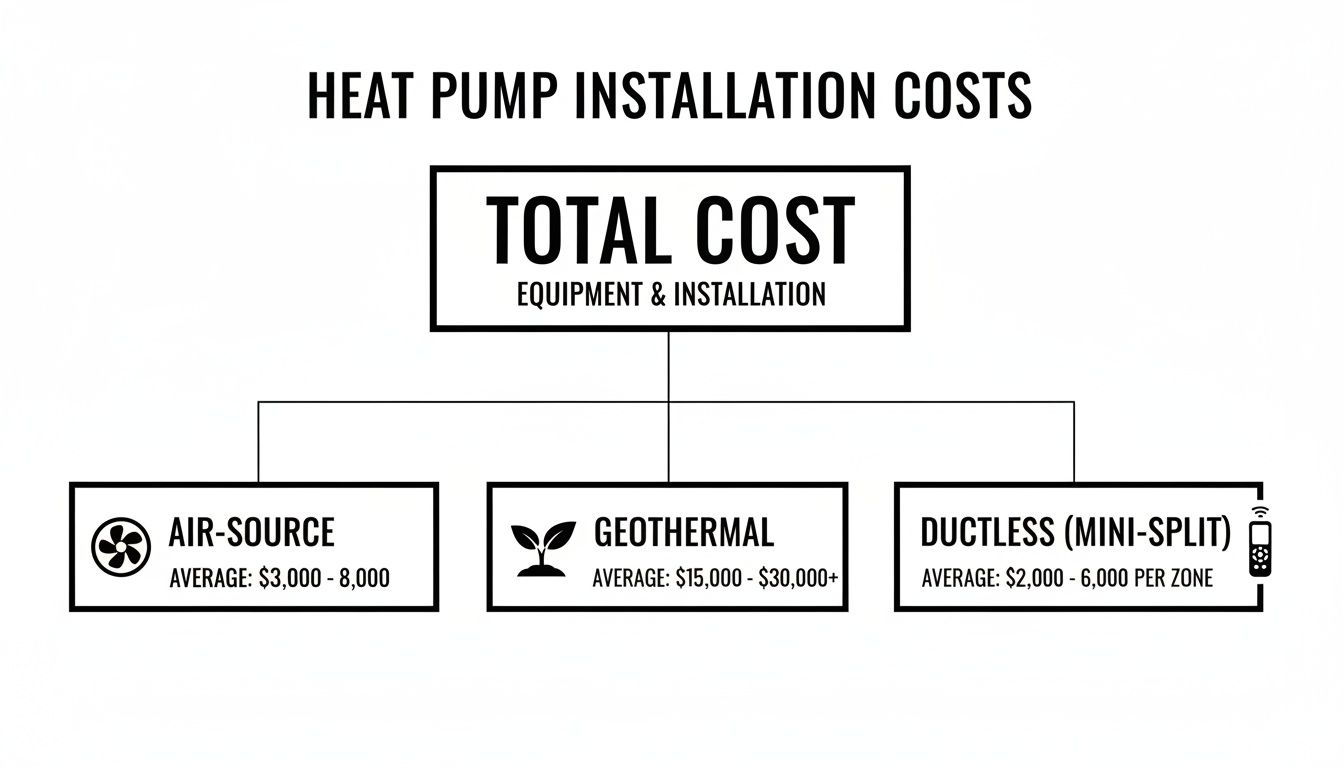
As you can see, while air-source systems are a common starting point, more complex options like geothermal can significantly change the total project investment.
The Equipment and Its Efficiency
The single biggest factor in your heat pump installation cost is the equipment itself. This includes both the outdoor condenser unit and the indoor air handler. The price is directly tied to three key things:
- Brand and Model: Just like with cars or appliances, some brands are known as premium options. They often come with advanced features and longer warranties, which means a higher price tag.
- Size (Tonnage): Your heat pump must be sized perfectly for your home's square footage, layout, and insulation. A unit that’s too small will constantly struggle to keep up, while an oversized one will short-cycle, wasting energy and wearing itself out faster.
- Efficiency Ratings: A system’s SEER2 (cooling efficiency) and HSPF2 (heating efficiency) ratings are critical. Higher ratings mean you'll save more on energy over the unit's life, but they also require a larger upfront investment.
A professional installer in areas like Jenison or Grandville will perform a detailed load calculation to find the exact size you need. This ensures you don't overpay for a unit that’s too big or end up with one that's too small to do the job.
Labor: The Cost of Expertise
The second major piece of your quote is labor. This isn't just about paying for someone's time; it's about the skill, training, and certification needed to install these complex systems correctly and safely. An installation by EPA-certified technicians makes sure refrigerants are handled properly and every connection is secure.
While high installation costs can be a hurdle for some homeowners, the installer's expertise is what guarantees your system’s long-term performance. The demand for trained pros is booming globally, with the market projected to grow from $91 billion in 2025 to $205.7 billion by 2032. You can read the full research on heat pump market growth to see these trends for yourself.
Ductwork and Electrical Modifications
Your home's current setup plays a huge role in the final heat pump installation cost. Many quotes for homeowners in Wyoming, Michigan, or Walker will have line items for these necessary adjustments.
Ductwork: If your home's ducts are old, leaky, or not the right size, they can rob your new heat pump of up to 30% of its efficiency. A proper installation has to include:
- Inspection: A thorough check of your existing ductwork for leaks, damage, or poor design.
- Sealing: Closing up any gaps and holes to ensure all the conditioned air gets where it's supposed to go.
- Modification or Replacement: In some cases, we might need to resize or replace sections of ductwork to handle the airflow of the new system.
Electrical Work: Heat pumps have very specific electrical needs. Your project may require a licensed electrician to:
- Install a new dedicated circuit just for the heat pump.
- Upgrade your home's main electrical panel to handle the extra load.
- Run new wiring to both the indoor and outdoor units.
These aren't optional add-ons; they are fundamental to a safe, effective system. A transparent quote from a trusted contractor like Platinum Heating & Cooling will clearly outline these needs, so you know exactly where every dollar of your investment is going.
Choosing the Right Heat Pump for Your Michigan Home
Not all heat pumps are built the same, especially when you need one tough enough for a West Michigan winter. Picking the right system is a huge decision that directly shapes your upfront heat pump installation cost and your family's comfort for years to come. It’s all about matching the right equipment to your home, your budget, and our local climate.
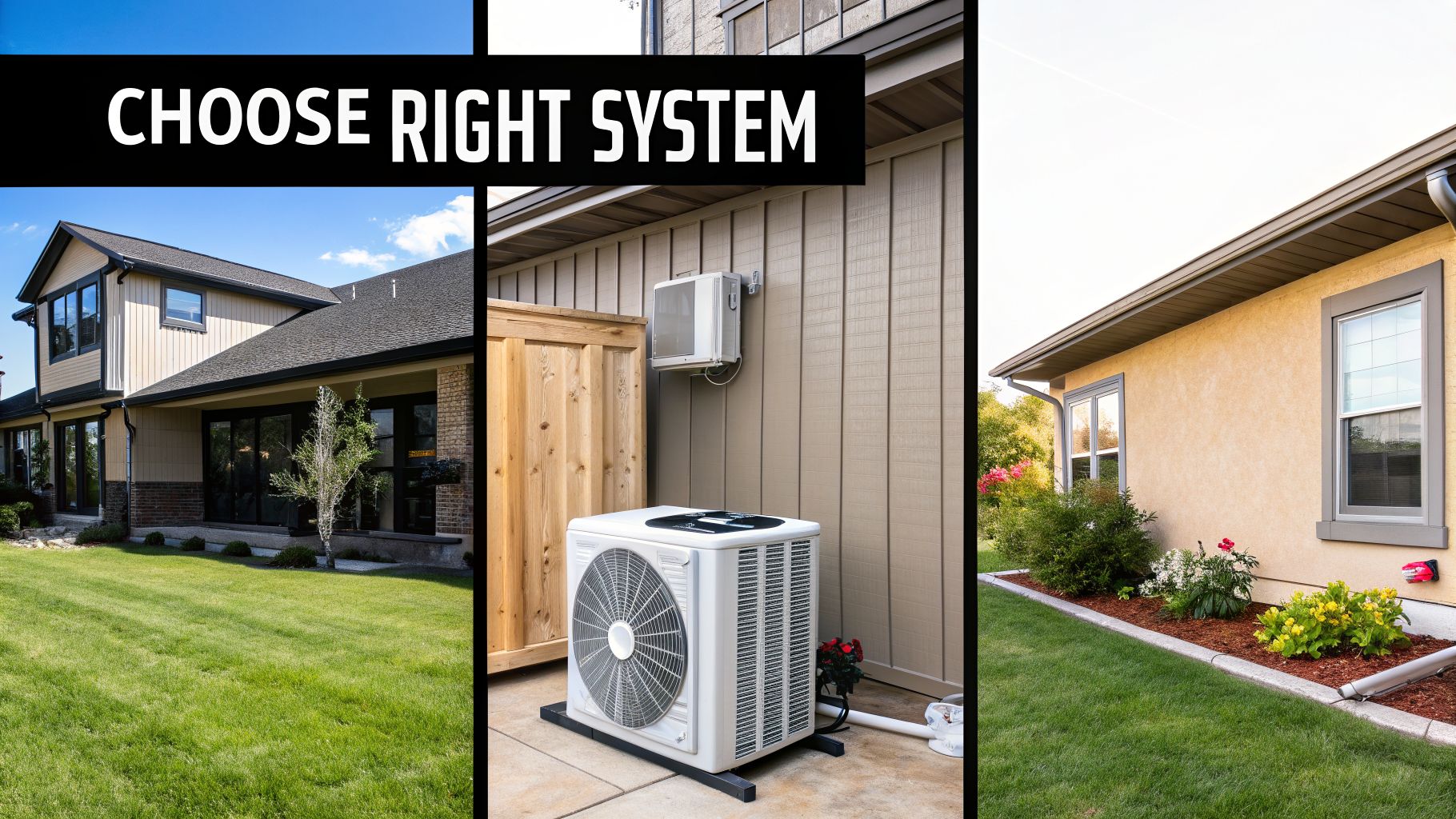
Think of it like this: you wouldn't grab a small hand shovel to clear a foot of snow from your driveway. You’d want a powerful snowblower. In the same way, the heat pump for a new, well-insulated home in Hudsonville is going to be different from one needed for an older, historic house in Grandville. Let's break down the main options we see for homeowners around here.
Air-Source Heat Pumps: The Popular Choice
For most homes in West Michigan that already have ductwork, a central air-source heat pump is the go-to. These are the most common systems out there, and for good reason—they offer a fantastic balance of performance, efficiency, and installation cost. They work by pulling heat from the outside air to warm your home in the winter months (November through April) and then reversing that process to cool it down during the other months.
Huge strides in technology have made modern units incredibly good at their job, even when it gets cold. Today’s cold-climate models can work efficiently in temperatures far below freezing, which is a massive leap from older generations.
The bottom line is that a properly installed, modern air-source heat pump is a true workhorse. It can handle the vast majority of heating and cooling needs in towns like Jenison and Wyoming, Michigan, giving you year-round comfort from a single piece of equipment.
Ductless Mini-Splits: Flexible and Efficient
But what if your home doesn't have ductwork? This is pretty common in older homes, new additions, or spaces you’ve converted, like a garage or attic. For these situations, a ductless mini-split system is the perfect solution.
Instead of one big unit pushing air through a maze of ducts, mini-splits use an outdoor condenser connected to one or more indoor "heads" mounted on a wall or ceiling. This design gives you amazing flexibility.
- Zoned Comfort: Each indoor head has its own thermostat, so you can heat or cool different rooms or zones to different temperatures. No more fighting over a single thermostat.
- High Efficiency: By blowing conditioned air directly into the room, mini-splits eliminate the energy losses that can happen with leaky ducts—sometimes as high as 30%.
- Easier Installation: Since there’s no ductwork to install, the process is way less invasive and usually quicker. This makes them a great choice for retrofitting homes in communities like Walker and Allendale.
These features make ductless systems a smart, energy-saving choice for a wide variety of home layouts.
Geothermal Systems: The Ultimate Investment
For homeowners who want the absolute best in efficiency and long-term value, geothermal heat pumps are in a league of their own. Instead of using the air, these systems exchange heat with the ground, which stays at a fairly constant temperature all year round. The upfront heat pump installation cost is definitely the highest, but the long-term rewards are unbeatable.
Because they tap into the earth's stable temperature, they are incredibly efficient, often slashing heating costs by up to 70% compared to traditional furnaces. This makes them a powerful option for new construction projects in areas like Standale or for anyone planning to stay in their home for the long haul.
That higher initial investment gets paid back through drastically lower energy bills and a system lifespan that often exceeds 20-25 years for the indoor parts. If you're curious about the science behind it, you can learn more about how a heat pump works in our detailed guide.
How to Maximize Your Savings with Rebates and Tax Credits
The initial heat pump installation cost can look a little daunting, but that’s just the sticker price. Think of it as a starting point. A smart mix of federal, state, and local incentives can bring that number way down for homeowners here in West Michigan.

We’re not talking about a small coupon here. These are powerful financial tools meant to make high-efficiency upgrades affordable. For homeowners in places like Jenison, Hudsonville, and Grandville, these savings add up to thousands of dollars.
Federal Tax Credits: The Inflation Reduction Act
The biggest savings opportunity often comes from the federal government. Thanks to the Inflation Reduction Act (IRA), there are significant tax credits for homeowners who install qualifying high-efficiency heat pumps. This isn't just a discount—it's a direct reduction in what you owe on your taxes.
Here’s the breakdown:
- Energy Efficient Home Improvement Credit: You can claim a tax credit for 30% of the project cost, up to $2,000 per year.
- Eligibility: Your new heat pump must meet certain efficiency standards set by the Consortium for Energy Efficiency (CEE). We make sure the models we recommend qualify.
- How It Works: When you file your taxes, you claim the credit for the year you had the system installed. It directly lowers your tax bill.
This credit also resets every year. That means you could claim it again for other qualifying home energy projects down the road.
A Real-World West Michigan Example
Let’s see how this plays out. Say a homeowner in Jenison, Michigan, gets a quote from us at Platinum Heating & Cooling for a new cold-climate air-source heat pump.
The total heat pump installation cost is $12,000. Because they chose a qualifying model, they can claim the $2,000 federal tax credit. Right away, their net cost drops to $10,000.
But that's just the first layer of savings. The good news doesn't stop there.
State and Local Utility Rebates
On top of the federal credit, Michigan and our local utility companies offer their own rebates. These are usually cash-back deals you get after the installation is finished.
- State of Michigan Programs: Michigan sometimes offers programs to encourage energy efficiency. As your installer, we stay on top of these and can point you toward any available funds.
- Utility Rebates: Companies like Consumers Energy and DTE often give back hundreds of dollars for installing high-efficiency heat pumps. These programs help reduce demand on the power grid, which is good for everyone.
Back to our Jenison example: that same homeowner might also qualify for a $500 rebate from their utility. When they stack that with the federal credit, their $12,000 installation is now down to $9,500. Homeowners in Grandville and Walker are quickly learning that stacking these incentives can cut the final cost by 30-50%.
Platinum's Commitment to Our Community
We truly believe everyone in West Michigan deserves a comfortable and efficient home. We actively help our neighbors in Wyoming, Standale, Allendale, and beyond find and apply for every single incentive they qualify for.
On top of that, we often run our own promotions and offer discounts for veterans and first responders. If we applied a $500 community discount, that final cost for our Jenison homeowner comes down to just $9,000.
That’s a drop from $12,000 to $9,000—a 25% reduction—just by knowing which programs to use. When you combine those upfront savings with lower monthly energy bills, you can really see the value. To learn more ways to trim your energy bills, check out our guide on how to reduce heating costs.
Calculating Your Long-Term Savings and Payback Period
A new heat pump isn't just another bill to pay. Think of it as an investment in your home’s comfort and your wallet. The upfront heat pump installation cost is just the start. The real payoff comes from the energy savings you'll see month after month, year after year.
When you look at it like an investor, you see past the initial price tag. A modern, high-efficiency heat pump directly cuts your monthly utility bills, especially during West Michigan's bitter northern winter months (November through April) and our sticky summer months.
Estimating Your Annual Energy Savings
First things first, let's figure out how much you can actually save. Compared to an older furnace and air conditioner, a new heat pump can slash your heating and cooling energy use by a solid 30% to 50%. For a typical family here in West Michigan, that can mean hundreds, sometimes thousands, of dollars back in your pocket every year.
It’s like trading in a car that gets 15 miles per gallon for a new hybrid that gets 30 MPG. You’ll immediately spend less at the pump every time you kick on the heat or AC. Those savings are what eventually pay for the system itself.
A West Michigan Payback Calculation Example
Let's break it down with a real-world example. Say a family in Walker, Michigan, needs to replace their old furnace and AC. Their total heat pump installation cost, after rebates, comes out to $10,000.
- Previous Annual Energy Cost: They were paying around $3,000 a year to keep their home comfortable.
- New Annual Energy Cost: With their new high-efficiency heat pump, that cost drops to $1,650—a 45% savings.
- Annual Savings: This adds up to $1,350 in savings each year.
To get the simple payback period, we just divide the net cost by the annual savings: $10,000 / $1,350 = ~7.4 years. After a little over seven years, the system has officially paid for itself through lower energy bills.
With energy prices always seeming to go up, that payback can happen even faster. A post-rebate installation in a place like Walker or Jenison could recoup its cost in as few as 6-8 years, turning your home into a much more affordable place to live. You can even read the latest research on heat pump innovations to see how new tech is making this possible.
Beyond the Payback Period
The good news doesn't stop when the system is paid off. Every year after that, the $1,350 in annual savings is pure cash back in your pocket. Not to mention, a modern heat pump is a huge plus for your home's resale value, catching the eye of smart buyers who want lower utility costs.
To make sure you get every bit of value from this asset, you have to take care of it. Our Platinum Maintenance Membership includes scheduled tune-ups to keep your system running at its best, protecting your investment for its entire lifespan. You can learn more about the importance of maintenance in our guide on heat pump life expectancy. Keeping your system tuned up locks in those energy savings for the long haul.
Common Questions About Heat Pump Installation
Thinking about a heat pump is a big step. It’s natural to have questions. Homeowners all over West Michigan, from Hudsonville to Jenison, ask us the same things. We want to clear up any confusion so you can feel great about your decision.
A heat pump isn't just another appliance; it's a major upgrade to your home's comfort and efficiency. Getting the details straight helps you look past the initial heat pump installation cost and see the long-term value you're getting.
How Long Does a Heat Pump Installation Take?
This is one of the first things people want to know. You’ll probably be surprised at how fast a professional crew can get the job done.
For a simple replacement—like swapping out your old furnace and air conditioner for a new heat pump—we can usually finish in just a single day. Our EPA-certified technicians are experts at working quickly and cleanly, causing as little disruption as possible to your life in Grandville or Walker.
If your project is a bit more complex, it might take a little longer. Things like major ductwork changes or installing a brand-new ductless mini-split system could take two or three days. Our number one goal is to make sure your new system is installed perfectly, with every connection tight and every setting dialed in for the best performance.
We know having contractors in your house is an interruption. That's why our team at Platinum Heating & Cooling makes a point to communicate clearly from start to finish. You’ll always know what’s happening and what to expect next.
Do I Need a Backup Heater for a Michigan Winter?
This is a huge question for anyone living in Wyoming, Allendale, or Standale. We all know our winters are serious business. From November through April, you can’t mess around with your heating.
The good news is that today's cold-climate heat pumps are amazing. They can keep your home warm and toasty even when the temperature outside drops way below freezing. For many homes, a modern, high-efficiency heat pump is all you'll ever need. But for total peace of mind during those brutal polar vortex spells, a dual-fuel system is a very smart move.
A dual-fuel system is a team effort between your electric heat pump and a gas furnace.
- For most of the winter, the heat pump does all the work, running incredibly efficiently.
- On the absolute coldest days of the year, the gas furnace automatically takes over to provide that extra blast of powerful heat.
It’s truly the best of both worlds. You get fantastic efficiency all year long, plus an unbeatable guarantee that you’ll stay warm no matter what winter throws at us.
Is Financing Available for My New Heat Pump?
Yes, absolutely. We firmly believe that the upfront heat pump installation cost shouldn't stop anyone from having a comfortable, efficient home. That's why Platinum Heating & Cooling offers flexible financing options to make this upgrade happen for you right now.
Financing lets you break up the total cost into smaller, predictable monthly payments that work with your budget. You don't have to wait to save up the full amount. You can start enjoying a more comfortable home and lower energy bills right away. Our team can quickly walk you through the simple application and help you find the perfect plan.
Working with Platinum for a Smooth Installation
Choosing the right heat pump is a huge step, but the most important part of your heat pump installation cost is the team you hire to put it in. A top-notch installation from a real pro is what makes sure your system works efficiently and safely for years. At Platinum Heating & Cooling, we make the whole process easy for our neighbors across West Michigan.
It all starts with a free, no-pressure chat. We’ll come out, listen to what you need, take a good look at your home, and give you a clear, easy-to-read quote with no surprises. We believe that when you have all the facts, you can make the best choice for your home, whether you're in Hudsonville, Jenison, or Grandville.
The Platinum Promise: What We Do For You
When you work with us, you’re not just another job on the schedule. We know this is a big investment in your home, and we take that seriously.
- Real Expertise: Our technicians are EPA-certified and fully insured. Every single installation we do meets the highest standards for safety and performance. No shortcuts.
- We're Local: We’re proud to serve our communities right here, from Walker and Standale to Allendale and Wyoming, Michigan. We know what a Michigan winter feels like, so we build systems that will keep you warm from November through April and cool all summer long.
- No Guessing Games: From the first phone call to the final walkthrough, we keep you in the loop. We'll answer every question you have and make sure you’re comfortable with the plan before we even start.
Your peace of mind is what matters most to us. We stand by our work with long-term support, and that includes 24/7 emergency service. We aren't just installing a heat pump; we're building a relationship you can count on for dependable comfort.
Choosing Platinum means you’re picking a partner who cares about your family’s comfort as much as you do. Let's start the conversation about what’s next for your home.
Ready to see what the Platinum difference is all about? Contact Platinum Heating & Cooling for your free, no-obligation estimate. You might be surprised how affordable a new high-efficiency heat pump can be. Schedule your free consultation online today!