
When your thermostat shows that your heat pump emergency heat not working, it’s a message that can send a shiver down your spine, especially during a frigid West Michigan winter. More often than not, the culprit is something simple like a tripped breaker, a bad setting, or a faulty component like the heat strips. This backup system is your home's last line of defense against the bitter cold, so when it fails, you need to act fast.
Why Your Emergency Heat Is a Winter Lifeline
Here in West Michigan, from the cold months of November through April, we count on our heating systems to work without a hitch. Homeowners in Hudsonville, Jenison, Grandville, Walker, Standale, Allendale, & Wyoming michigan know that a reliable furnace or heat pump isn't a luxury—it's a necessity.
Your heat pump is a workhorse, efficiently pulling heat from the outside air to warm your home. But as the temperature drops, especially below freezing, its efficiency starts to fade. When it gets too cold for the heat pump to keep up on its own, your system automatically calls for auxiliary heat to help out.
Emergency heat is different. You use it manually when the main heat pump fails completely. It’s not just another button on your thermostat; it's the critical backup that keeps your home and family safe when things go wrong.
The Role of Emergency Heat in West Michigan
Picture a brutal January night in Wyoming or Standale, with temperatures plunging into the single digits. This is when your heat pump is pushed to its absolute limit. The emergency heat setting bypasses the outdoor unit entirely, relying on powerful electric resistance coils—often called heat strips—inside your air handler to generate heat directly.
This is the system designed for worst-case scenarios:
- Total Heat Pump Failure: If your outdoor compressor gives out or the fan motor dies, emergency heat is your only source of warmth until a technician can get there.
- Severe Icing: Sometimes the outdoor unit gets completely encased in ice, stopping it in its tracks. Emergency heat keeps you warm while the unit defrosts or awaits repair.
It's the peace of mind you need, knowing you have a solid backup plan. If you want to get a better handle on how these systems work, check out our guide explaining what a heat pump is and how it operates year-round for both heating and cooling.
Why You Can't Ignore a Failure
A broken emergency heat system leaves your home completely exposed. During one historic January cold snap, heating system failures spiked by 16% as temperatures plummeted 10-40°F below average, affecting millions of homes. This data shows just how fast a winter storm can become a crisis when your backup fails. You can learn more about how extreme weather impacts home systems from this national report.
Think of your emergency heat like the spare tire in your trunk. You hope you never have to use it, but if you get a flat, it's absolutely essential to get you somewhere safe. Ignoring its condition is a risk no homeowner in Allendale or Walker should take.
A Quick Reassurance for Homeowners
Finding out your emergency heat is on the fritz is stressful, but don't panic just yet. In many situations, the problem is a simple fix. It might be nothing more than a tripped circuit breaker in your electrical panel or a wrong thermostat setting.
These are often issues you can check and resolve on your own in a few minutes, potentially saving you the time, worry, and cost of a service call. Before you assume the worst, we'll walk you through a few basic checks to diagnose the problem yourself.
Simple Troubleshooting Steps You Can Do Yourself
When your emergency heat gives out during a bitter West Michigan cold snap, it's easy to feel a sense of dread. But before you jump to conclusions about a major repair, take a breath. More often than not, the reason your heat pump emergency heat is not working is a simple issue you can safely track down and fix yourself in just a few minutes.
The trick is to be systematic, starting with the easiest and most common culprits. These checks don’t require any special tools or technical skills, just a few moments of your time that could get your heat back on and restore your peace of mind.
This simple diagnostic process shows the three most common areas to check when troubleshooting your heat pump.
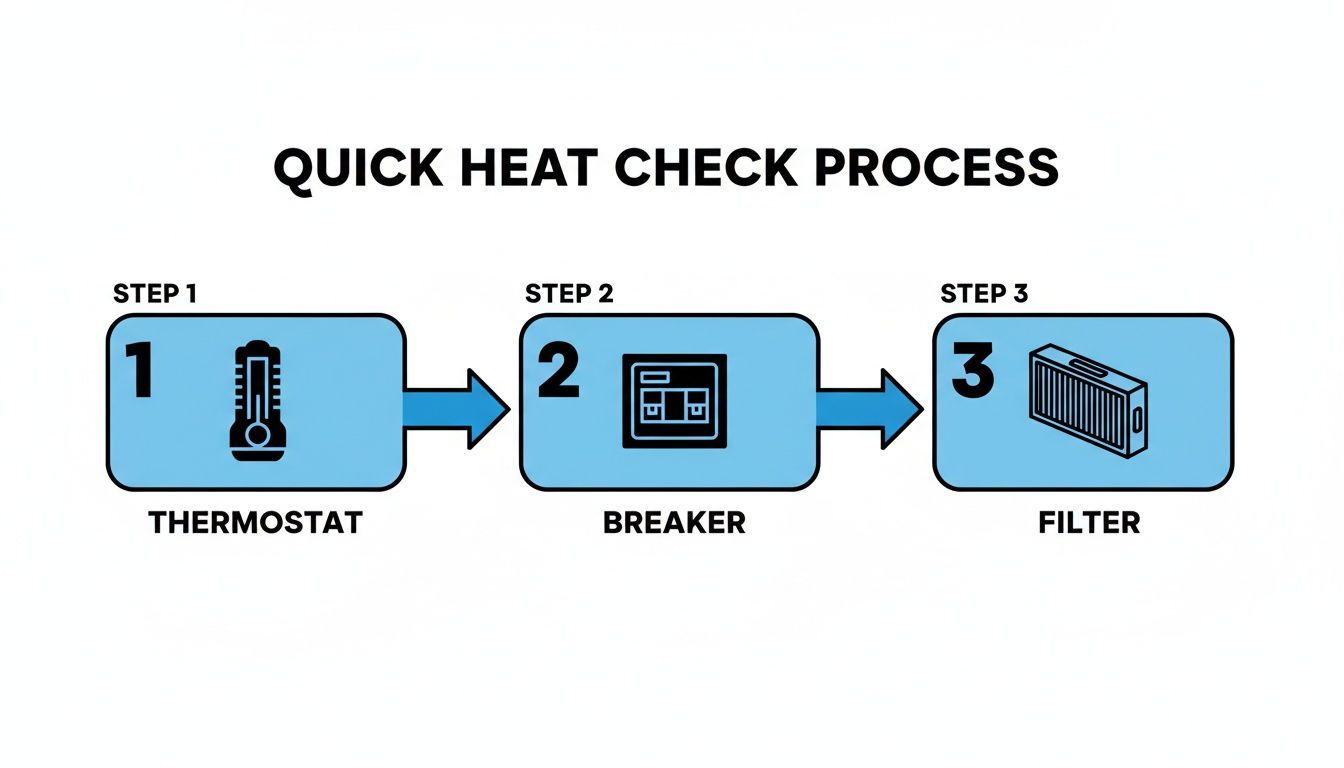
This visual guide is a great reminder to start at the thermostat, move to the breaker panel, and finish by checking the air filter—the three pillars of DIY troubleshooting.
Verify Your Thermostat Settings
Your first stop should always be the thermostat—it's the brain of your entire HVAC system. A simple incorrect setting is one of the most frequent reasons we see for heating issues.
First, make sure your system is actually set to "Emergency Heat" or "EM Heat." If it’s still on "Heat," it will keep trying to use the outdoor unit that isn't working. You have to manually switch it over. For a deeper dive on this, you can learn more about what emergency heat mode does and why it's so critical for your system.
Next, check that the temperature is set at least 3-5 degrees higher than the current temperature in the room. If the set point is too low, the system simply won't get the signal to turn on. It’s a small detail, but it makes all the difference.
Reset the Correct Circuit Breakers
A tripped circuit breaker is probably the single most common reason for emergency heat failure. Power surges or a system overload can cause a breaker to flip, cutting power as a safety measure. It's an easy fix, but you have to know what you’re looking for.
Most heat pump systems actually have two separate breakers in the main electrical panel.
- One for the outdoor heat pump unit: This one controls the compressor and fan outside.
- One for the indoor air handler: This breaker powers the indoor fan and, most importantly, the electric heat strips that create your emergency heat.
If the air handler breaker is tripped, your emergency heat has no power to run. Go to your electrical panel and look for two breakers labeled "Air Handler," "Furnace," "AHU," or "Heat." Flip them all the way off, then firmly back on. If a breaker trips again right away, don't reset it again—that points to a more serious electrical issue that needs a professional.
Inspect and Replace Your Air Filter
It might not seem connected, but a severely clogged air filter is a notorious cause of emergency heat shutdowns. Homeowners in dusty or high-traffic homes in Jenison and Walker often find this is the root of the problem.
Your heat strips generate a massive amount of heat. They depend on a steady, unrestricted flow of air from the blower fan to spread that warmth and keep from overheating.
A dirty filter acts like a dam, completely blocking that airflow. When this happens, the heat strips can get dangerously hot, which triggers a high-limit safety switch that shuts them down to prevent a fire hazard.
Pull out your furnace filter. If it’s caked in gray dust and debris, replace it with a clean one of the correct size. This simple, cheap task not only brings back airflow but also boosts your system's efficiency and your home's air quality. For many homeowners in Grandville and Allendale, this quick swap is all it takes to get the emergency heat running again during our critical November through April heating season.
Finding the Real Culprit Behind the Failure
So, you've done the initial checks. The thermostat seems okay, you’ve flipped the breakers, and the air filter is fresh. But you’re still left with that dreaded cold air. When your heat pump emergency heat is still not working, it's time to dig a bit deeper. The problem is almost certainly hiding within the mechanical or electrical guts of your indoor air handler.
Getting a handle on what these parts do will make you a more informed homeowner, especially when you need to talk to a pro. In West Michigan, where the cold can stretch from November clear through April, you need every part of your heating system ready to go. Let's pull back the curtain on the key players that deliver that critical backup warmth.
Electric Heat Strips: The Core of Emergency Heat
At the heart of it all, you'll find the electric heat strips. The best way to picture them is like the coils in a giant, powerful toaster. These elements are tucked away inside your indoor unit, and when electricity flows through them, they glow red hot. Your system's blower then pushes air across these glowing-hot strips, sending a wave of warmth through your ducts.
They're built to last, but they aren't bulletproof. With enough years and cycles, they can burn out or break. Sometimes, an electrical hiccup like a power surge or a loose connection can knock them out prematurely, leaving you in the cold right when you need them most.
The Sequencer and Relay: The Power Dispatchers
Those heat strips don't just fire up on their own—they need a direct order. That command comes from a little device called a sequencer or heat relay. Think of it as an air traffic controller for electricity. It manages the massive electrical draw the heat strips demand, preventing a sudden power surge that could trip your home's main breaker.
Here's how it works: the thermostat sends a low-voltage signal to the sequencer. The sequencer then clicks on the high-voltage circuits in stages, bringing the heat strips online one by one. If this little dispatcher fails, the heat strips never get the message to turn on.
A bad sequencer is a super common problem. A classic symptom is hearing a click from your air handler, but no heat ever comes out. That's the sound of the sequencer trying to do its job but failing to make the connection.
The Contactor: The Main Electrical Gatekeeper
Another key electrical player is the contactor. This is a heavy-duty switch, plain and simple. Its only job is to open or close the pathway for high-voltage power to reach the heat strips. When it gets the signal from the thermostat (usually through the sequencer), it closes and lets the power flow.
A contactor can fail in a few ways:
- Pitted or Burnt Contacts: After thousands of cycles, the spark of electricity can wear down the contact points, leading to a poor connection.
- Stuck Open: Sometimes, the mechanical parts just get stuck and won't close the circuit.
- Failed Coil: The small electromagnetic coil that actually flips the switch can burn out, leaving the contactor dead in the water.
We see these issues all the time in systems across Walker, Allendale, and other West Michigan communities, especially in older units that have battled through many Michigan winters.
When your backup heat fails, it's often one of these key components that's to blame. Here’s a quick breakdown to help you understand what might be happening inside your system.
Common Emergency Heat Failure Points
| Component | Common Symptom | DIY Fixable? | Professional Repair Needed? |
|---|---|---|---|
| Heat Strips | System runs, air blows, but it's cold. High electric bill. | No | Yes |
| Sequencer/Relay | Clicking noise from the air handler, but no heat. | No | Yes |
| Contactor | Humming or buzzing from the unit, but heat strips don't engage. | No | Yes |
| Defrost Board | Emergency heat won't turn on, outdoor unit may be iced over. | No | Yes |
While this table points you in the right direction, diagnosing and replacing these parts involves working with high voltage. It's always safest to leave these repairs to a licensed and insured professional.
The Defrost Control Board: A Trickier Diagnosis
Occasionally, the problem isn't with a single part but with the system's "brain." The defrost control board on your outdoor unit is in charge of melting ice buildup during cold, damp weather. If this board malfunctions, it can get confused and send the wrong signals, sometimes preventing the emergency heat from turning on when it’s supposed to.
Diagnosing a faulty control board is definitely not a DIY job—it requires specialized tools and a deep understanding of HVAC electrical systems. It's a perfect example of when calling a pro is the smartest, safest move.
This is especially true for our climate. Heat pumps lose a lot of their punch in extreme cold, which is exactly why reliable backup heat is a necessity, not a luxury. Research confirms that once temperatures drop between 5°F and -22°F, heat pump efficiency plummets. This data, detailed in technical studies on cold climate heat pump performance, highlights why a working set of heat strips isn't just an inconvenience in West Michigan—it's a critical safety net during the heating months we depend on it most, from November through April.
When to Call for Emergency HVAC Service
The moment your heat gives out on a frigid West Michigan night, your focus instantly flips from troubleshooting to safety. If you've tried the simple fixes and your heat pump emergency heat is not working, it's time to know when to stop and call in the pros. Certain signs are clear warnings that the problem is beyond a DIY fix and needs an expert’s eyes, immediately.
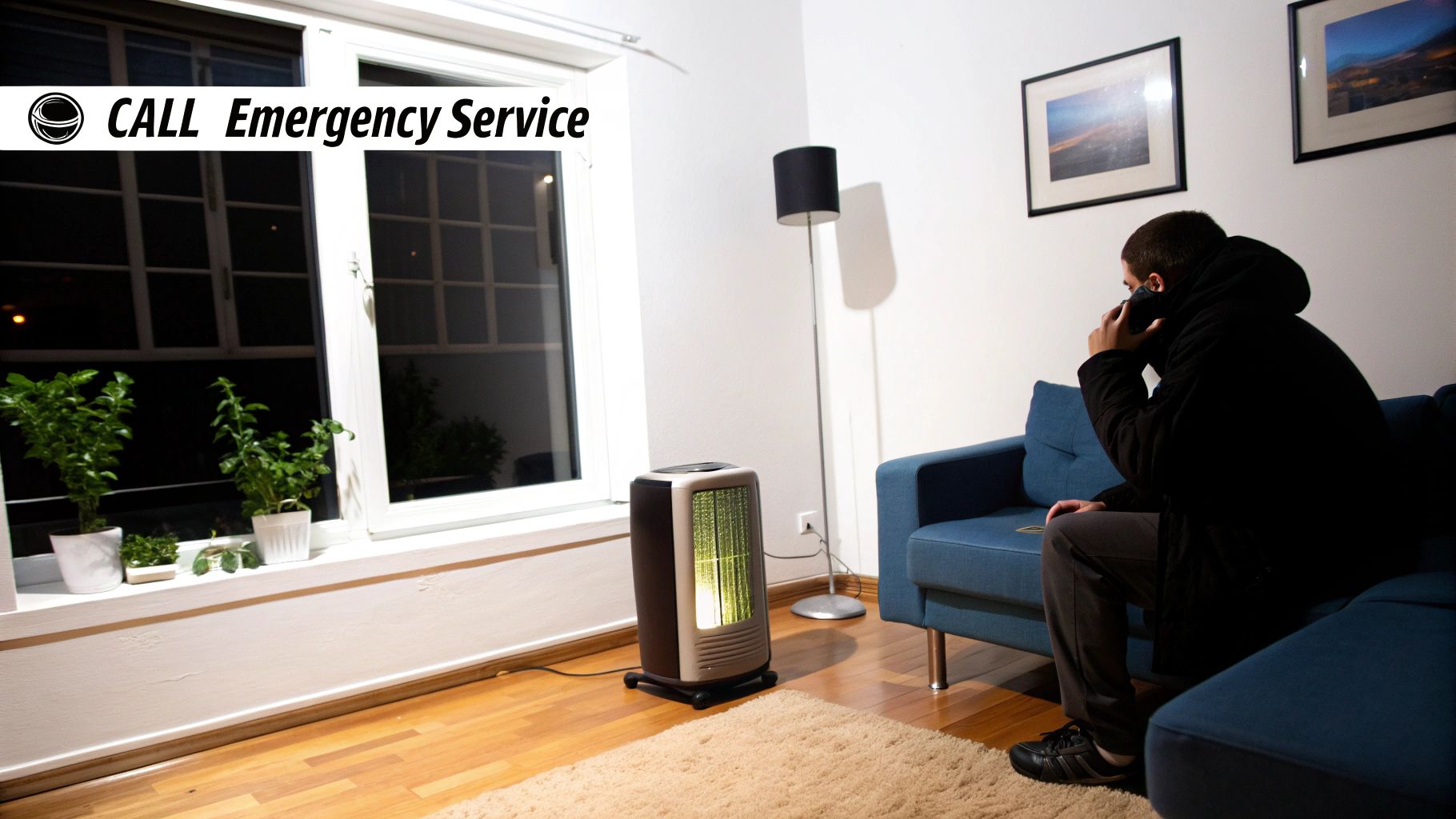
Trying to push through these issues can do more than just damage your HVAC system—it can create serious safety hazards for your family. That's especially true during the deep cold we get from November through April in places like Wyoming, Standale, and Allendale.
Red Flags That Demand an Immediate Call
Some symptoms aren't just an inconvenience; they're your system screaming for help. If you run into any of these, don't wait. It's time to call for 24/7 emergency service.
These are tell-tale signs of a potentially dangerous electrical or mechanical failure that a professional needs to diagnose right away.
- Burning Smells: It's one thing to get a whiff of dust burning off when the heat kicks on for the first time all season. But a persistent smell of burning plastic or that distinct, ozone-like electrical odor is a huge red flag. It often points directly to overheating wires or melting components.
- Loud, Unusual Noises: Your air handler is going to make some noise, that's normal. What isn't normal is a loud buzzing, humming, or screeching coming from the indoor unit. Those sounds often mean you've got a failing contactor, a blower motor under serious stress, or another major electrical issue.
- Repeatedly Tripping Breakers: You reset the breaker for your air handler, and it trips again right away. Stop right there. This indicates an electrical short or an overload somewhere in the system. Trying to force it by resetting it over and over can cause more damage or even a fire.
These signs are non-negotiable. For your own safety, kill the power to the system at the breaker and get a trusted HVAC professional on the phone.
Staying Safe and Warm While You Wait
Once you’ve made the call for emergency service, your next job is to manage your home's temperature and keep everyone safe. Losing heat during a Grandville or Hudsonville winter is no joke, but there are practical steps you can take to stay warm.
Your main goal is to trap the heat you already have inside. Close the doors to any rooms you aren't using, shut the curtains and blinds to add another layer of insulation, and stuff towels or blankets under drafty doors. Every little bit helps keep the temperature livable.
If you have space heaters, use them—but be smart about it.
- Always place them on a flat, hard surface, far away from flammable things like curtains, bedding, or rugs.
- Never, ever leave them running unattended, especially if you have kids or pets.
- Plug them directly into a wall outlet. Do not use an extension cord or power strip, as they can easily overheat and create a fire hazard.
The Value of Local 24/7 Emergency Service
When your heat is out, you don’t have the luxury of waiting until morning. That’s why having a reliable, local 24/7 emergency service in Jenison, Walker, or anywhere in West Michigan is so critical. A local company gets it—they understand the urgency of a no-heat call during a Michigan winter and have the technicians and parts ready to go.
At Platinum Heating & Cooling, our team is always on standby for our West Michigan neighbors, including Hudsonville, Jenison, Grandville, Walker, Standale, Allendale, & Wyoming michigan. We make emergency calls our top priority to make sure no family is left out in the cold. When you're in the middle of a heating crisis, you need a team that shows up fast, finds the problem, and gets your heat back on safely.
Preventing Future Breakdowns With Proactive Care
Once you’ve gone through the stress of your heat pump emergency heat not working, you want to make sure it never happens again. The best repair, as we always say, is the one you never have to make. Shifting from reactive fixes to proactive care is the single best way to ensure your heating system is there for you when you need it.
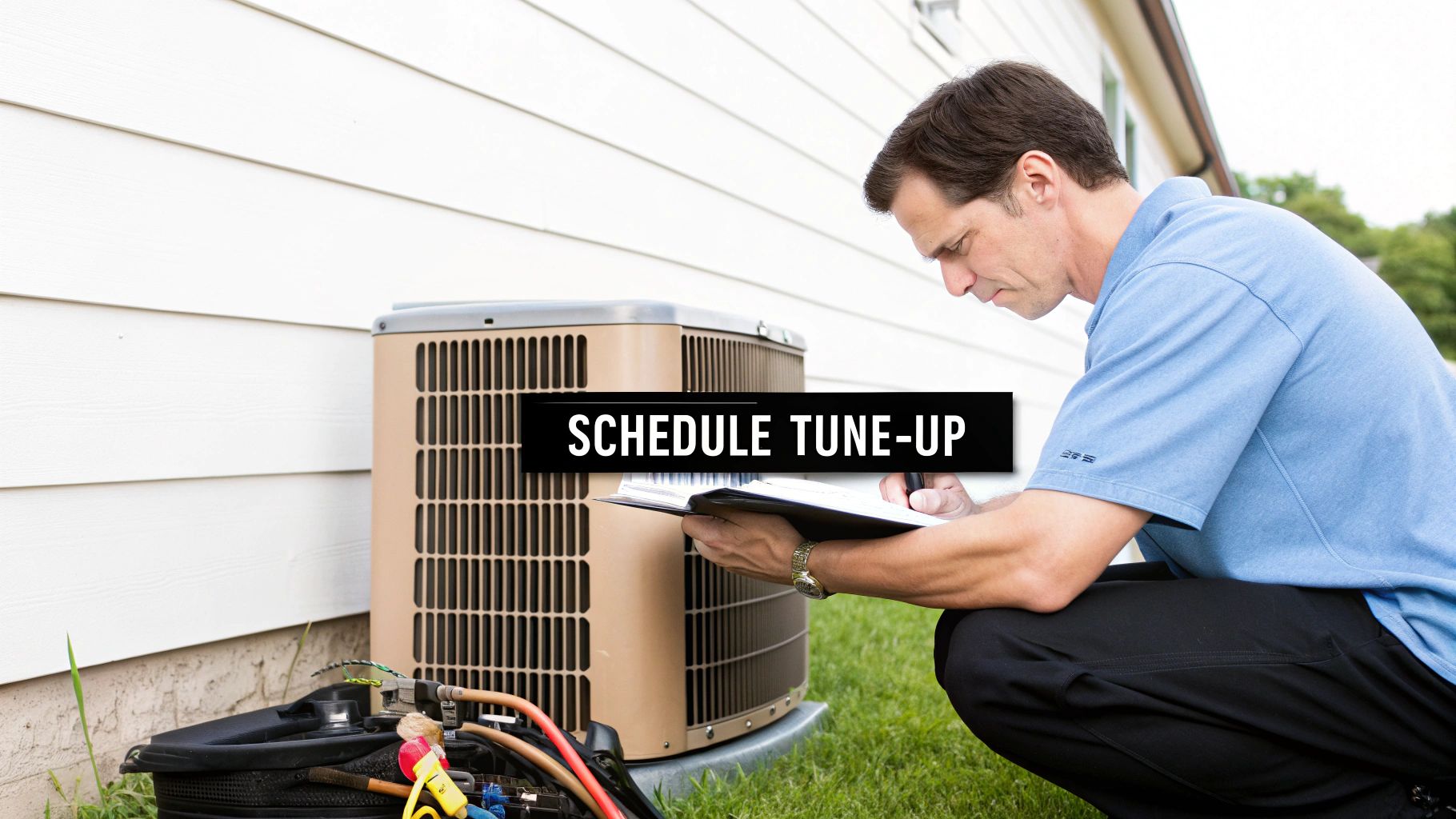
This is especially true here in West Michigan. While your heat pump is working hard to cool your home in Hudsonville or Jenison during the warmer months, its most critical heating components—the heat strips, sequencers, and contactors—are just sitting there, unused. They don't get called into action until the temperature really drops, which makes a fall inspection an absolutely essential part of home maintenance.
The Critical Role of Annual HVAC Inspections
An annual professional tune-up is your system's best defense against a surprise failure. It’s so much more than just a quick filter change. A skilled technician performs a detailed inspection designed to catch problems before they leave you in the cold during our long heating season, which can easily stretch from November through April.
During a full maintenance visit, a certified technician will specifically test the emergency heat circuit. This isn't a simple glance; it involves a series of diagnostic tests to confirm every single component is ready for winter.
Here’s what a proper tune-up for your emergency heat system should cover:
- Heat Strip Amperage Draw: The technician will measure the electrical current each heat strip pulls. This confirms they are heating correctly and not drawing too much power, which can signal a looming failure.
- Sequencer and Relay Functionality: They'll manually trigger the sequencers to make sure they engage and disengage the heat strips in the right order and without any hesitation.
- Contactor and Wiring Inspection: All the electrical connections get tightened, and the contactor is checked for pitting or burning—signs of wear that could cause it to fail under a heavy load.
This preventative approach is what ensures that when you actually need that backup heat in Grandville or Walker, it’s going to work.
How Maintenance Translates to Reliability and Savings
Regular maintenance does more than just stop breakdowns; it has a direct impact on your wallet and your peace of mind. A well-maintained system simply runs more efficiently, meaning it uses less energy to keep your home warm and comfortable.
It’s also really important to understand what it costs to run emergency heat. When you manually switch to the Emergency Heat setting, you're shutting down the efficient heat pump compressor and relying only on the electric resistance heat strips. This can easily double or triple your heating costs compared to using the standard heat pump function.
Think of an annual inspection as an insurance policy against both sudden failures and sky-high utility bills. Catching a failing sequencer in October is a simple, inexpensive repair. Discovering it during a January blizzard is a crisis.
Regular check-ups also significantly extend the life of your equipment. Knowing what affects your system's longevity can help you make smarter maintenance decisions. For more on that, check out our article on heat pump life expectancy and what you can do to get the most out of your investment.
Becoming a Partner in Your Home's Comfort
Ultimately, proactive care makes you an active partner in keeping your home comfortable and safe. When you schedule a tune-up before the heating season kicks in, you’re taking control. You aren’t just sitting back and waiting for something to go wrong; you're actively preventing it.
For homeowners in Standale, Allendale, and Wyoming, this is a vital strategy. Our West Michigan winters, which run from November through April, are no joke, and a reliable heating system isn't a luxury—it’s an absolute necessity. By making sure your emergency heat is tested and ready each fall, you can face the coldest months with confidence, knowing your home is prepared for whatever winter throws at it.
Emergency Heat Not Working? Your Questions Answered
When your main defense against a Michigan winter suddenly quits, the questions start flying. It's stressful when your heat pump's emergency heat is not working, and getting straight answers is the first step to making a smart decision. Here are a few of the most common questions we get from homeowners all over West Michigan, from Hudsonville and Jenison to Grandville, Walker, Standale, Allendale, & Wyoming michigan.
What Is the Difference Between Auxiliary and Emergency Heat
This one trips up a lot of people, but the difference is pretty important. Think of "auxiliary heat" (you'll often see it as AUX on the thermostat) as an automatic helper. When it gets so cold outside that your heat pump just can't pull enough warmth from the air, the system automatically kicks on its electric heat strips to assist the heat pump and get you to your set temperature.
"Emergency heat," or EM Heat, is something you have to turn on yourself. It's a full manual override for when your heat pump is actually broken or has turned into a giant block of ice. Flipping that switch tells the outdoor unit to take a break completely, forcing your system to run 100% on those electric heat strips. It's a true backup, but because it's less efficient and more expensive to run, you only want to use it until a pro can get out for a repair.
How Do I Know If My Emergency Heat Is Actually Running
Okay, so you've switched the thermostat over to emergency mode. How can you be sure it's actually doing its job? There are a few dead giveaways.
- Check the Thermostat: Your thermostat display should clearly say "EM Heat," "Emergency," or something similar.
- Listen to the Outdoor Unit: That big fan and compressor unit outside should be completely silent. If it's still humming or whirring away, the system hasn't switched over correctly.
- Feel the Vents: You should feel warm—not necessarily scorching hot—air coming from your vents. Air from electric heat strips often feels a bit milder than what you'd get from a gas furnace, but it should definitely be warm.
If you've checked all three boxes but your house is still an icebox, that's a pretty clear sign the problem is with the emergency heat components themselves.
How Much Do Emergency Heat Repairs Cost in West Michigan
This is a tough one to answer without seeing the system, as the cost really depends on what part has decided to quit. A simple problem like a bad fuse or a faulty thermostat is a relatively inexpensive fix. If a major component is the issue, though, the cost will naturally be higher.
A common repair, like replacing a bad sequencer or contactor, might run anywhere from a couple hundred to several hundred dollars once you factor in the part and the technician's time. If the entire heat strip assembly is shot and needs to be replaced, you're looking at a more significant investment.
The best thing to do is get a clear diagnosis from a technician you trust. A good company serving Grandville, Walker, and the greater West Michigan area will give you transparent, upfront pricing so you know exactly what you're getting into before the work starts. No surprises on the final bill.
Can I Still Use My Heat Pump If the Emergency Heat Is Broken
You can, but it comes with a big "if." As long as the temperature outside stays above your heat pump's "balance point"—which for most systems in our area is around 30-40°F—it can usually handle the heating load on its own.
The problem is, once the temperatures in Allendale or Wyoming drop below that point (which happens a lot from November through April), your heat pump will really start to struggle. Without its backup, it will run nonstop trying to hit the temperature on your thermostat, which is terrible for the unit. It won't heat your house effectively and puts a massive strain on the compressor, putting you at risk for a far more expensive failure. It’s definitely not a good idea during a deep freeze.
When your heat goes out, you need a team you can count on to show up fast and get the job done right. Platinum Heating & Cooling offers 24/7 emergency service across West Michigan—including Hudsonville, Jenison, Grandville, Walker, Standale, Allendale, & Wyoming michigan—because we know that heating problems don't stick to a 9-to-5 schedule. For expert diagnostics and reliable repairs, visit us online to schedule your service.