
For businesses in West Michigan, from the bustling corridors of Grandville and Wyoming to the growing communities of Hudsonville and Allendale, a functioning HVAC system isn't just about comfort. It's the engine of productivity and operational stability. Unexpected system failures can lead to costly downtime, unhappy tenants, and emergency repair bills that disrupt your budget. This guide moves past simple tips to offer a detailed, actionable commercial HVAC maintenance checklist.
Our goal is to empower facility managers, property owners, and business leaders across Jenison, Walker, and Standale with the specific steps needed to prevent problems before they start. You will learn precisely what tasks to perform and when, gaining control over your building's climate and operational expenses.
This checklist provides a clear framework for proactive care. We'll break down the essential tasks by frequency (daily, weekly, monthly) and equipment type, ensuring your heating systems are robust for the harsh northern winter months (November through April) and your cooling systems are primed for the other months. Moving beyond generic advice, this guide provides the specific details you need to:
- Extend the life of your expensive equipment.
- Significantly reduce monthly energy consumption.
- Maintain a healthy and productive indoor environment year-round.
- Avoid disruptive and expensive emergency service calls.
Think of this checklist not as another chore, but as a strategic asset for your business's financial health and continuity. Let’s get started.
1. Air Filter Replacement and Inspection
Regularly inspecting and replacing air filters is the cornerstone of any effective commercial HVAC maintenance checklist. This single task directly impacts system efficiency, indoor air quality (IAQ), and long-term equipment health. Clogged filters suffocate the system by restricting airflow, forcing components like blower motors and compressors to work harder. This strain leads to higher energy bills, increased wear and tear, and a greater risk of premature system failure.
This simple yet critical step is essential for all types of commercial properties, from office buildings in Grandville to multi-unit apartment complexes in Jenison. Neglecting it is a common cause of preventable service calls, especially during the peak heating season from November through April and the high-demand cooling months.
Implementation and Best Practices
For most commercial settings in West Michigan, including Hudsonville, Jenison, Grandville, Walker, Standale, Allendale, & Wyoming michigan, a monthly visual inspection is recommended, with replacements scheduled every 60-90 days. However, factors like high foot traffic, industrial pollutants, or proximity to construction may require a more frequent schedule. A proactive approach not only improves air quality but also generates tangible results. For instance, office buildings in Walker that switch to high-quality MERV 11 filters often see a significant reduction in employee complaints about dust and allergens.
Key Insight: Consistent filter maintenance can prevent up to 70% of common HVAC system failures. Documenting each replacement creates a valuable service history that helps diagnose future issues and validates warranty claims.
To streamline this process, property managers should:
- Keep Spares On-Site: Store a supply of correct-sized filters to enable immediate replacement during inspections, minimizing downtime.
- Document Everything: Use a logbook or digital spreadsheet to track the date of each filter change and note its condition. This data is invaluable for optimizing your replacement schedule.
- Set Calendar Alerts: Use digital calendars to create recurring monthly reminders for inspections, ensuring the task is never overlooked.
- Train Your Staff: Empower on-site staff to identify a dirty filter between professional service visits. This first line of defense can prevent minor issues from escalating.
Consistent filter maintenance is a key part of seasonal readiness, which you can explore further in our guide to spring HVAC maintenance.
2. Condenser Coil Cleaning
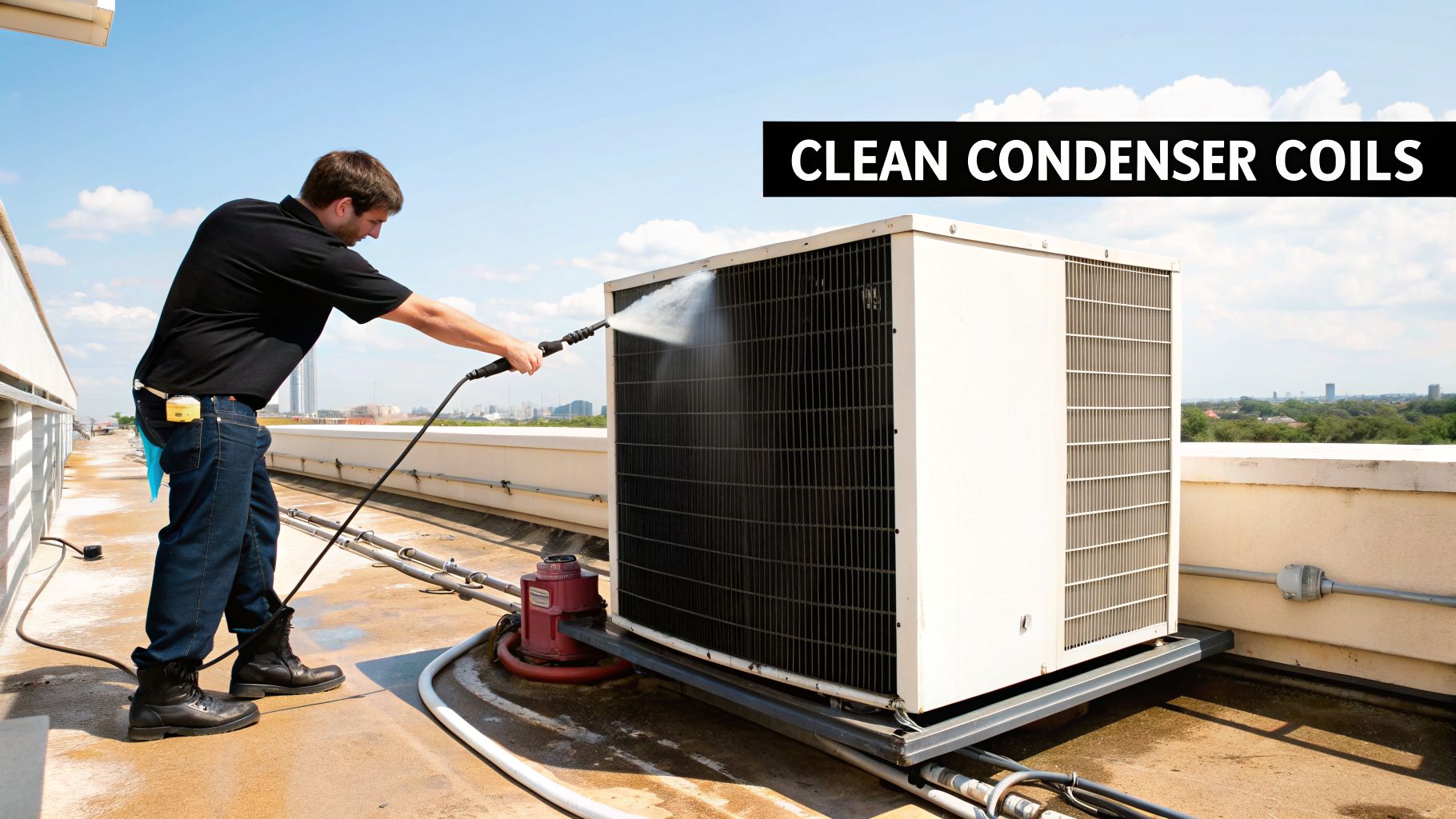
The outdoor condenser coil is your HVAC system’s primary tool for releasing heat into the atmosphere. Over time, these coils accumulate dirt, leaves, pollen, and other debris that act like an insulating blanket, severely hindering heat transfer. For commercial properties, especially those with rooftop units (RTUs) common in West Michigan, including Hudsonville, Jenison, Grandville, Walker, Standale, Allendale, & Wyoming michigan, this buildup forces the compressor to work much harder to cool the refrigerant. This extra strain leads directly to higher energy consumption, increased wear, and a significant risk of costly compressor failure.
Keeping condenser coils clean is a critical part of any commercial HVAC maintenance checklist, especially before the peak cooling season hits West Michigan. Businesses in high-pollen areas like Hudsonville or near industrial zones in Wyoming, MI, will see a rapid decline in performance if this task is neglected, leading to poor cooling and higher operational costs.
Implementation and Best Practices
Professional coil cleaning should be scheduled at least once a year, ideally in the spring before summer demand begins. For facilities in high-contamination environments, such as retail centers in Jenison or properties near construction in Allendale, a twice-yearly cleaning schedule is recommended to maintain consistent cooling capacity. Commercial office buildings in Walker have reported energy savings of 15-18% after a thorough spring coil cleaning.
Key Insight: A clean condenser coil can improve system efficiency by up to 20%. The cost of a professional cleaning service ($200-$500) is minimal compared to an emergency compressor replacement, which can easily exceed $2,000.
To maintain your system's efficiency, property managers should:
- Schedule Proactively: Book cleanings before the cooling season starts to ensure your system is ready for the heat.
- Manage Surroundings: Trim back any vegetation, trees, or shrubs at least three feet from all sides of the outdoor unit to promote proper airflow and reduce debris accumulation.
- Document the Service: Keep a detailed log of when coils were cleaned and include before-and-after photos. This record is useful for tracking performance and validating maintenance efforts.
- Bundle Services: Combine your coil cleaning appointment with a refrigerant level check to address two critical maintenance points in a single service call.
Proper cleaning techniques are essential to avoid damaging the delicate coil fins; you can learn more about the professional process of how to clean an AC condenser unit in our detailed guide.
3. Evaporator Coil Inspection and Cleaning
While outdoor condenser coils get most of the attention, the indoor evaporator coils are just as critical to your cooling system's performance and the building's indoor air quality. These coils absorb heat and humidity from the indoor air, a process that causes condensation. Over time, this moisture, combined with airborne dust and debris, creates a prime breeding ground for mold, mildew, and bacteria. Neglecting this part of the commercial HVAC maintenance checklist leads to reduced cooling efficiency, restricted airflow, and significant air quality problems.
This task is especially vital for multi-tenant properties where air quality directly impacts occupant health and satisfaction. For businesses in Wyoming and Hudsonville, a dirty evaporator coil can manifest as musty odors or an increase in tenant complaints, particularly during the humid summer months. Regular cleaning ensures the system not only cools effectively but also circulates clean, healthy air throughout the facility.
Implementation and Best Practices
For most commercial properties in West Michigan, including Hudsonville, Jenison, Grandville, Walker, Standale, Allendale, & Wyoming michigan, scheduling a professional evaporator coil cleaning twice a year is the best practice: once before the cooling season starts around April and again mid-season. For example, apartment buildings in Hudsonville that adopted quarterly coil cleanings reported a 40% reduction in air quality complaints. Similarly, office buildings in downtown Grand Rapids perform biannual cleanings to maintain high tenant satisfaction scores and ensure a healthy work environment.
Key Insight: A clean evaporator coil can improve cooling efficiency by up to 15%. This translates directly into lower energy costs and a reduced carbon footprint for your facility.
To properly manage evaporator coil maintenance, facility managers should:
- Use Approved Cleaners: Insist on EPA-approved, non-acidic, self-rinsing foam cleaners that effectively remove buildup without damaging the delicate aluminum fins or copper tubing.
- Clean the Condensate System: The service should always include cleaning the drain pan and flushing the condensate line to prevent clogs, water backups, and potential property damage.
- Document with Photos: Ask your technician to take before-and-after photos of the coil. This visual evidence is perfect for maintenance logs and for communicating IAQ improvements to tenants.
- Train Staff on Odor Detection: Educate on-site staff to recognize musty or "dirty sock" smells as an early warning sign that the evaporator coil needs immediate attention.
Proper coil maintenance is a fundamental component of ensuring system longevity. Learn more about our comprehensive approach in our guide to HVAC System Replacement.
4. Refrigerant Level Check and Recharge
Proper refrigerant levels are the lifeblood of a commercial HVAC system’s cooling performance and efficiency. A precise charge ensures the system can transfer heat effectively, while low refrigerant levels, often due to leaks, force the compressor to work much harder. This overexertion increases energy consumption, accelerates wear on critical components, and can lead to expensive compressor failure. This check is a vital part of any comprehensive commercial HVAC maintenance checklist.
Handling refrigerants is a highly regulated task governed by the EPA's Clean Air Act. Only EPA-certified technicians possess the specialized gauges and knowledge to measure system pressures and safely recharge units with the correct type of refrigerant, such as R-410A. Neglecting this crucial service can result in poor cooling, tenant complaints, and preventable emergency calls, especially during the demanding summer months in West Michigan.
Implementation and Best Practices
For commercial properties in areas like Hudsonville and Standale, biannual refrigerant checks are recommended: once in the spring before the cooling season begins and again in the fall. This proactive schedule ensures optimal performance year-round. For example, rooftop units at office complexes in Allendale that are recharged before summer consistently maintain tenant comfort and avoid mid-season breakdowns. Similarly, identifying and repairing a small refrigerant leak during a routine visit can prevent a costly emergency service call for a multi-unit property in Wyoming.
Key Insight: A refrigerant charge that is just 10% low can increase your system's energy consumption by up to 20%. Regularly documenting refrigerant levels and any added amounts is crucial for tracking system health and complying with environmental regulations.
To manage refrigerant effectively, facility managers should:
- Request Leak Detection: When servicing is required, always ask the technician to perform a leak detection test to address the root cause of refrigerant loss, not just the symptom.
- Document Everything: Maintain a detailed log of the refrigerant type (e.g., R-410A), baseline pressure readings, and the date and amount of any refrigerant added. This history is invaluable for long-term diagnostics.
- Plan for R-22 Phase-Out: If your system still uses R-22, create a transition plan to a modern, more cost-effective alternative like R-410A. The cost of R-22 is prohibitively high and will continue to rise.
- Combine with Coil Cleaning: Schedule refrigerant checks alongside condenser coil cleaning to maximize efficiency gains and ensure the system operates under ideal conditions.
5. Thermostat Calibration and Programming
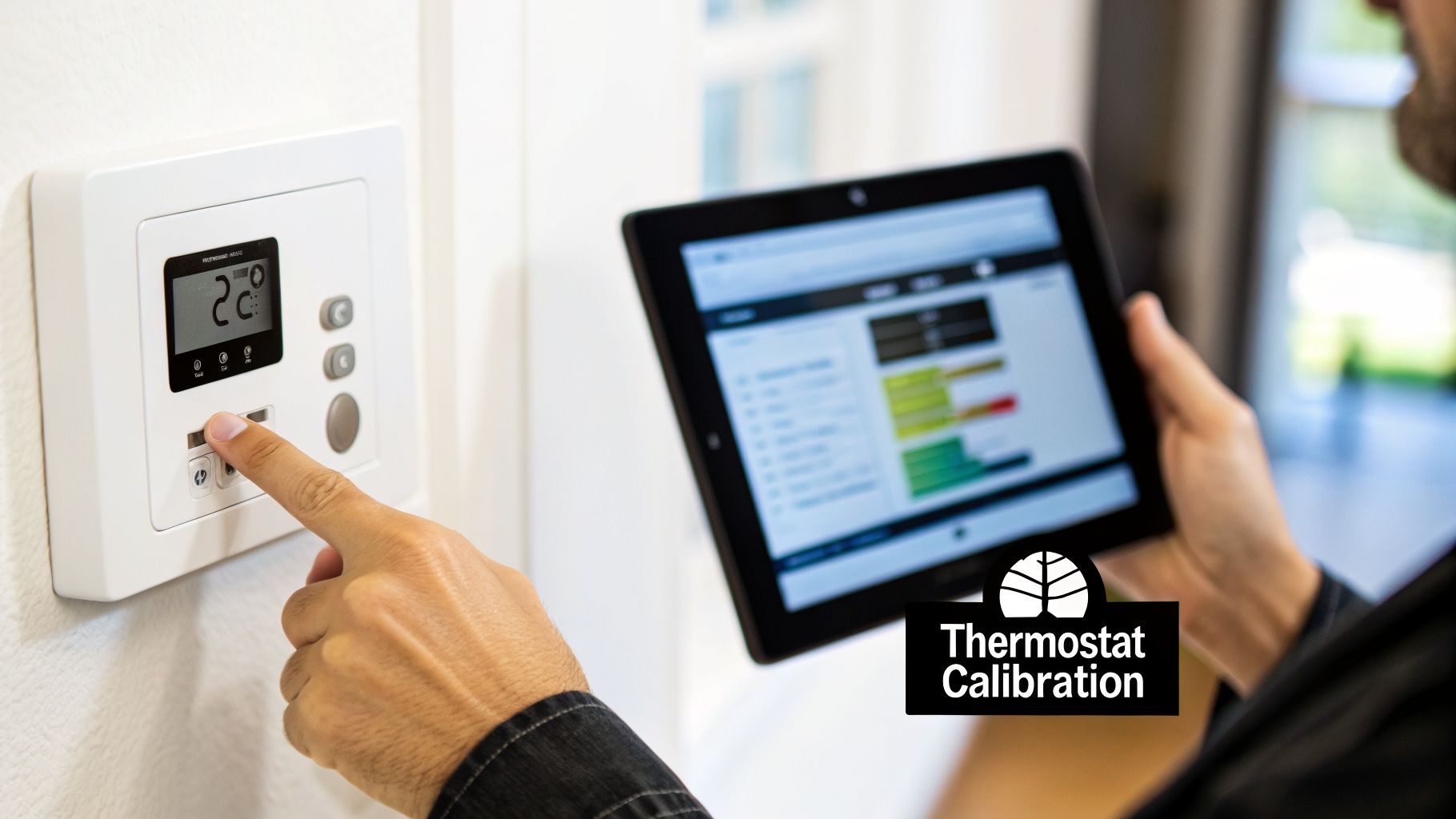
The thermostat is the brain of your commercial HVAC system, directly controlling system operation, tenant comfort, and energy costs. Proper calibration and programming are crucial for efficiency, as even minor inaccuracies can lead to significant energy waste and occupant complaints. Over time, sensors can drift or become damaged, causing the system to run longer than necessary or fail to meet temperature setpoints.
This aspect of a commercial HVAC maintenance checklist is vital for multi-zone properties like office buildings in downtown Grand Rapids or apartment complexes in Hudsonville. By verifying thermostat accuracy and optimizing schedules, property managers can ensure their systems operate precisely when and where needed, preventing unnecessary heating during the cold West Michigan winters (November through April) or excessive cooling in the summer.
Implementation and Best Practices
Annual calibration checks using a professional-grade digital thermometer are recommended to ensure accuracy. Beyond calibration, optimizing programmable thermostat schedules to match actual building occupancy can reduce energy consumption by 10-15%. For example, retail facilities in Jenison can use demand-controlled settings that adjust based on customer traffic, while offices in Walker can program reduced operation for weekends and holidays.
Key Insight: A single degree of miscalibration can increase a building's annual heating or cooling costs by 3-5%. Regularly optimizing thermostat programming ensures you are not paying to heat or cool an empty building.
To effectively manage your commercial thermostats, facility managers should:
- Develop Occupancy Schedules: Create detailed heating and cooling schedules that reflect true business hours, including weekends, holidays, and seasonal variations.
- Establish Setpoint Policies: Set heating to around 68°F during unoccupied hours to maximize savings without risking damage to building materials, especially during the cold months from November through April.
- Train Authorized Staff: Educate on-site personnel on proper thermostat operation to prevent manual overrides that disrupt schedules and waste energy.
- Document and Analyze: Keep a log of all programming changes and use smart thermostat data analytics to identify operational irregularities or opportunities for further savings.
For expert assistance with thermostat calibration and advanced system programming, consider scheduling a professional tune-up with our team.
6. Compressor Oil Level and Condition Check
The compressor is the heart of any commercial HVAC system, and its oil is the lifeblood. Much like engine oil in a vehicle, compressor oil provides critical lubrication, cooling, and sealing for internal components. Over time, this oil can become contaminated with moisture, acid, and tiny metallic particles from wear, reducing its effectiveness and leading to catastrophic component failure. This makes checking the oil a vital part of any comprehensive commercial hvac maintenance checklist.
Neglecting compressor oil can lead to bearing wear, seal failure, and eventually, a seized compressor, a repair that can cost between $4,000 and $10,000. For businesses in areas like Hudsonville and Allendale, this unplanned expense and resulting downtime can be devastating, especially during the peak cooling season. This specialized task requires a qualified technician to safely access the compressor, check levels, and draw samples for analysis.
Implementation and Best Practices
Routine oil level checks should be part of every scheduled service visit. Beyond visual inspection, an annual oil analysis provides a deep diagnostic look into the compressor's health. Commercial properties in West Michigan, including Hudsonville, Jenison, Grandville, Walker, Standale, Allendale, & Wyoming michigan, that implement oil analysis programs often identify developing internal issues one to two years before they would cause a failure, allowing for planned, less costly repairs. This proactive monitoring is key to the reliability of rooftop units at retail properties in Walker and multi-unit buildings in Jenison.
Key Insight: A formal oil analysis can detect hidden contaminants like acid and moisture long before they cause irreversible damage. Documenting these results creates a trend line, making it easier to predict component life and budget for future replacements.
To effectively manage compressor health, property managers should ensure their service plan includes:
- Regular Level Checks: A technician should verify the oil level via the compressor's sight glass during every maintenance visit.
- Annual Lab Analysis: Send an oil sample to a certified lab annually to test for acid, moisture, and metal particle contamination.
- Detailed Record-Keeping: Log all oil analysis results to track trends and establish a baseline for compressor health.
- Use OEM-Specified Oil: Always use the exact oil type recommended by the manufacturer for the specific compressor model and refrigerant.
- Address Root Causes: If contamination is found, the technician must identify and fix the source, such as a refrigerant leak or moisture ingress, to prevent a recurrence.
Proper oil management is a high-level maintenance task that protects one of your most expensive assets. Learn more about our detailed approach in our Commercial HVAC Maintenance Membership.
7. Ductwork Inspection and Sealing
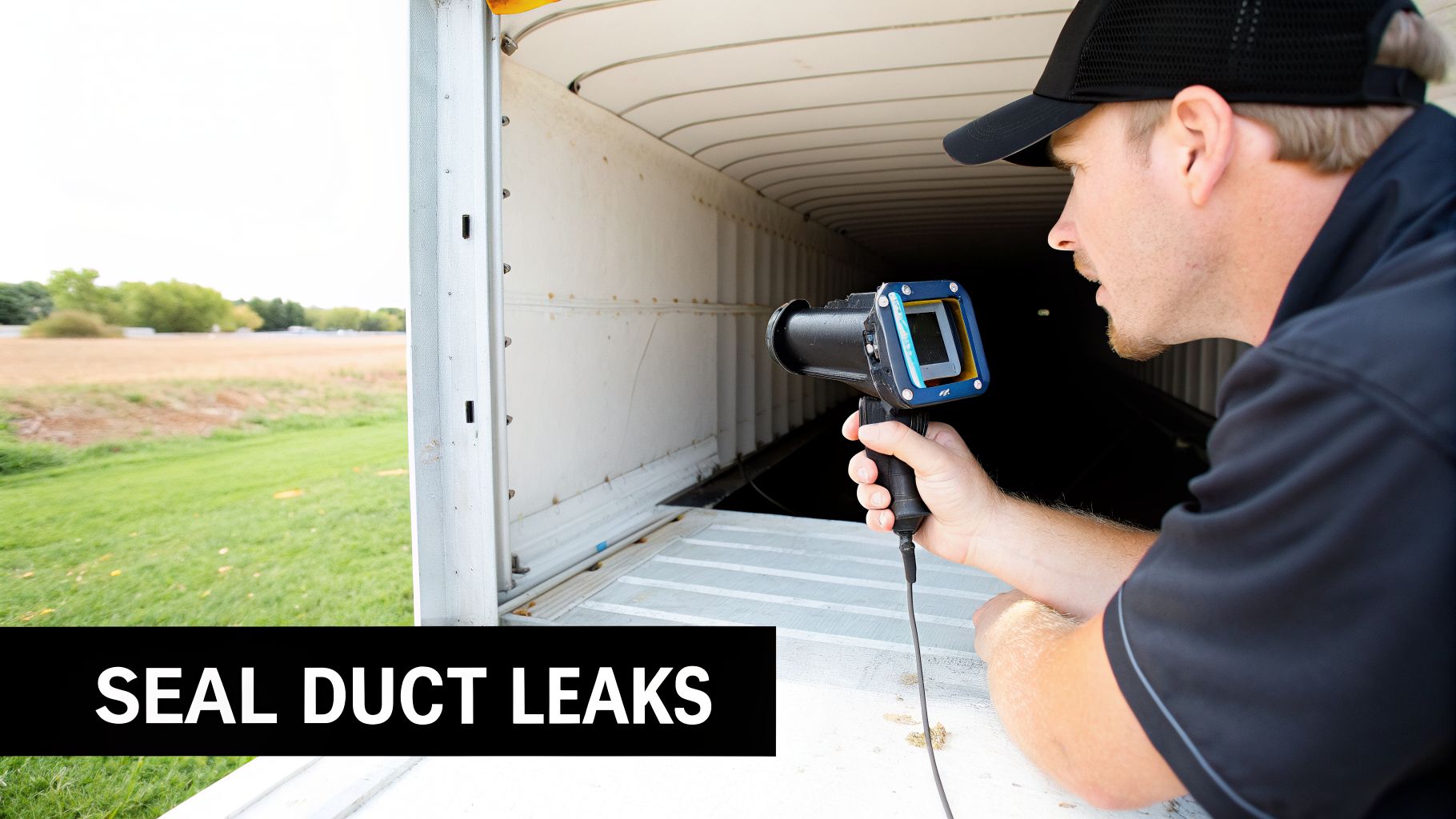
The network of ducts that distributes conditioned air is the circulatory system of a commercial building, but it is often a major source of energy waste. Leaks caused by aging seals, building vibrations, or improper installation can allow 15-30% of heated or cooled air to escape into unconditioned spaces like attics and wall cavities. This hidden inefficiency forces the entire system to work harder, leading to higher energy costs and inconsistent temperatures across different zones.
A thorough ductwork inspection is a critical part of any comprehensive commercial HVAC maintenance checklist. It identifies these costly leaks, allowing for targeted sealing that restores system performance and occupant comfort. For large facilities, such as office buildings in Grand Rapids or multi-unit apartment complexes in Hudsonville, sealing leaky ducts can directly address persistent tenant complaints about hot and cold spots, especially during the peak heating season from November through April.
Implementation and Best Practices
A professional duct leakage test provides a baseline measurement of energy loss, helping to quantify the potential return on investment before any work begins. For instance, many commercial properties in Wyoming undergo duct testing as a prerequisite for ENERGY STAR certification, demonstrating the tangible benefits of a well-sealed system. Sealing is most effective when performed during the milder spring or fall seasons when system downtime is more acceptable.
Key Insight: A comprehensive duct sealing project can reduce a building's total energy costs by up to 25%. Focusing on high-priority leaks at joints, connections, and major penetrations offers the quickest and most significant improvements in efficiency.
To effectively manage your building’s ductwork, property managers should:
- Prioritize a Professional Test: Start with a diagnostic test to map leak locations and prioritize repairs for the best return on investment.
- Use the Right Materials: Insist on mastic sealant for all accessible joints and connections in mechanical rooms and plenums. Duct tape should only be used as a temporary fix, as its adhesive fails over time.
- Document Repairs: Keep photographic records of sealed areas. This documentation is valuable for future maintenance planning and service history.
- Bundle with Other Upgrades: Combine duct sealing with a filter upgrade or coil cleaning for a more complete improvement in system efficiency and indoor air quality.
8. Belt and Bearing Inspection and Replacement
Inspecting belts and bearings is a fundamental part of a mechanical commercial HVAC maintenance checklist, crucial for keeping large equipment like rooftop units and air handlers operational. These components transfer power from motors to fans, circulating conditioned air throughout your facility. Over time, drive belts stretch, crack, and fray from constant friction and tension, while bearings wear down, leading to grinding noises and inefficiency. Proactive inspection prevents sudden belt failure, which can cause an immediate system shutdown and force an emergency service call.
This maintenance task is non-negotiable for properties with significant air handling equipment, from office parks in Grand Rapids to multi-unit residential buildings in Hudsonville. A snapped belt during a summer heatwave or a seized bearing in the dead of a January winter (November through April) can disrupt business operations and tenant comfort, leading to costly emergency repairs. Scheduled replacement is always more cost-effective than a reactive fix during peak demand.
Implementation and Best Practices
For most commercial systems in West Michigan, technicians should inspect belts and listen for bearing noise during every quarterly service visit. A strategic approach involves replacing components based on condition and age, rather than waiting for failure. For example, many property managers in Allendale and Wyoming schedule preventive belt replacements during spring tune-ups to ensure reliability for the demanding summer cooling season. This preemptive action significantly reduces the risk of mid-season breakdowns.
Key Insight: A worn belt can reduce a fan's airflow by 10-20% before it fails completely, silently driving up energy costs. Regular tension checks and visual inspections maintain peak efficiency and prevent this hidden energy waste.
To manage these critical components effectively, property managers should:
- Check Belt Tension: Use a tension gauge to ensure belts meet the manufacturer's exact specifications. A belt that is too loose will slip, while one that is too tight will strain bearings and motors.
- Listen for Warning Signs: During operation, listen for any squealing, grinding, or humming noises coming from the motor or fan assembly, as these often indicate failing bearings.
- Keep Spares Available: Stock common belt sizes for your primary RTUs and air handlers on-site to reduce downtime if a replacement is needed unexpectedly.
- Log All Findings: Document belt condition, tension measurements, and any audible bearing noise in your maintenance log. This history helps predict component lifespan and plan for future replacements.
9. Electrical Connections and Component Testing
A thorough inspection of electrical connections and components is a critical part of any commercial HVAC maintenance checklist, preventing major failures and enhancing safety. Commercial systems depend on a network of electrical parts, including compressors, motors, capacitors, and controls. Over time, vibrations can loosen connections, terminals can corrode, and components can degrade, leading to inefficiency, intermittent operation, and significant safety risks.
Neglecting electrical integrity often leads to catastrophic mechanical breakdowns. For instance, a failing capacitor can destroy a compressor, turning a minor repair into a costly replacement. This proactive check is vital for businesses in West Michigan, including Hudsonville, Jenison, Grandville, Walker, Standale, Allendale, & Wyoming michigan, where system reliability directly impacts operations and tenant satisfaction, especially during the peak cooling and heating seasons.
Implementation and Best Practices
Electrical inspections should be performed during every seasonal maintenance visit. A qualified technician uses tools like multimeters to check voltage and amperage and may use thermal imaging to spot overheating connections invisible to the naked eye. This preventive approach yields real results; commercial facilities in Walker have eliminated persistent intermittent system shutdowns by identifying and tightening loose electrical connections found during routine checks. Similarly, a multi-unit property in Jenison identified that nearly 40% of its maintenance issues stemmed from preventable electrical faults.
Key Insight: Electrical problems often precede mechanical failure. Documenting voltage, amperage, and capacitor readings creates a baseline that helps technicians spot degradation and address issues before a complete system breakdown occurs.
To ensure electrical safety and system reliability, property managers should:
- Schedule Biannual Tests: Ensure capacitors are tested twice a year, as they are a common failure point, especially before the high-demand summer months.
- Verify Component Performance: Have a technician measure motor amperage draw against the manufacturer's specifications to detect signs of strain.
- Inspect Contactors and Relays: Check for pitted or corroded contacts, as this can cause arcing and eventual component failure.
- Tighten All Terminals: Ensure all electrical terminals, from the main disconnect to individual components, are secure to prevent overheating and power loss.
Ensuring your system's electrical health is a core benefit of a structured service plan. You can see how these checks are integrated into our Maintenance Membership Program.
10. Controls and Safety Device Testing
Commercial HVAC systems rely on a network of safety controls and sensors to operate correctly and prevent catastrophic damage. This includes high and low-pressure switches, temperature sensors, flame rollout switches on gas furnaces, and emergency shutoffs. Regular testing confirms that these critical safety devices respond properly to abnormal conditions, preventing dangerous operation or expensive system failures. This vital part of a commercial HVAC maintenance checklist is often overlooked until a real emergency strikes.
Testing requires a qualified technician to simulate fault conditions that trigger these safety responses, carefully documenting that each device functions as designed. For office buildings in Allendale, this documentation is essential for maintaining both insurance and building code compliance. Similarly, apartment complexes in Hudsonville rely on these checks each fall to verify that gas heating safety controls are working correctly before the cold season begins (November through April).
Implementation and Best Practices
At a minimum, all safety controls should be tested biannually, ideally before the peak heating and cooling seasons in West Michigan. This proactive step verifies system integrity and protects both the equipment and the building's occupants. For instance, discovering a faulty high-pressure switch during a routine test in a Grand Rapids commercial building can prevent a compressor burnout when summer demand is at its highest.
Key Insight: A failed safety control can turn a minor operational issue into a major system failure, leading to costly repairs and significant downtime. Documented safety checks provide a clear record of due diligence and operational readiness.
To ensure your system's safety net is secure, facility managers should:
- Schedule Biannual Tests: Plan for professional testing before the heating season (November through April) and the cooling season.
- Verify Specific Triggers: Ensure technicians test high and low-pressure switches at their designated setpoints and check flame rollout switches on all gas-fired units.
- Test Freeze Protection: Simulate low-temperature conditions to confirm that freeze protection stats on coils and chillers are working, preventing costly damage.
- Document All Results: Maintain a detailed log of every safety device test, including the date, the results, and any corrective actions taken.
- Train On-Site Staff: Educate your team on what different safety alerts mean so they don't attempt to override a legitimate shutdown, which could cause further damage.
10-Point Commercial HVAC Maintenance Checklist Comparison
| Item | Implementation complexity | Resource requirements | Expected outcomes | Ideal use cases | Key advantages |
|---|---|---|---|---|---|
| Air Filter Replacement and Inspection | Low — routine task, simple access | Spare filters (MERV 8–16), basic PPE, scheduling/calendar | Improved airflow & IAQ; 5–15% energy savings; reduced wear | Multi-unit residential, offices, high-occupancy spaces | Low cost, high ROI, easy to monitor |
| Condenser Coil Cleaning | Medium — requires professional technique | Certified technician, pressure-wash equipment, rooftop access | Restores 5–20% efficiency when fouled; reduces compressor strain | Rooftop units, high-pollen or construction-exposed sites | Significant efficiency gains, prevents premature compressor failure |
| Evaporator Coil Inspection and Cleaning | Medium–High — confined access, careful chemical use | Technician, EPA-approved cleaners, drain pan service | 5–10% efficiency improvement; fewer odors and IAQ complaints | Indoor AHUs, multi-tenant buildings, humid environments | Improves IAQ, prevents microbial growth, moderate cost |
| Refrigerant Level Check and Recharge | High — EPA-certified procedures required | Certified tech, gauge set, refrigerant supply, leak detection tools | Restores 20–30% cooling capacity if undercharged; 10–15% efficiency gain | Systems with suspected leaks, older units, pre-season servicing | Prevents compressor damage, identifies leaks, restores capacity |
| Thermostat Calibration and Programming | Low–Medium — requires calibration tools and occupancy data | Digital thermometers, smart thermostat/software, staff training | 10–15% energy savings with optimized schedules; improved comfort | Multi-zone offices, multi-tenant buildings, variable-occupancy sites | Low-cost, remote control/analytics, automated setback |
| Compressor Oil Level and Condition Check | High — specialized access and sampling | Technician, oil sampling kit, lab analysis, evacuation equipment | Early detection of contamination; extends compressor life 3–5 years | Large compressors, older systems, preventive-maintenance programs | Prevents catastrophic failure, reveals system issues early |
| Ductwork Inspection and Sealing | Medium–High — invasive work, labor-intensive sealing | Video inspection camera, mastic/sealants, access to duct runs | Reduces energy loss 15–30%; improves zone comfort and IAQ | Large multi-zone buildings, older installations, pre-audit prep | Significant energy savings, improves comfort, rebate eligibility |
| Belt and Bearing Inspection and Replacement | Medium — requires shutdown and alignment | Spare belts/bearings, tension gauge, technician | Prevents unexpected failures; maintains airflow and efficiency | Rooftop units, AHUs, equipment with mechanical drives | Low-cost prevention, extends motor/drive life, easy to document |
| Electrical Connections and Component Testing | High — requires electrical certification | Multimeter, thermal camera, certified electrician/technician | Prevents electrical failures; improves safety; avoids costly repairs | Three-phase systems, older equipment, safety/compliance checks | Early detection of hot spots/failing parts; safety & code compliance |
| Controls and Safety Device Testing | High — specialized testing and simulation | Test equipment, trained technicians, possible downtime | Verifies safety responses; prevents dangerous operation; compliance | Gas systems, critical facilities, insurance-required checks | Reduces liability, ensures safe operation, supports code/insurance requirements |
Partner with the Experts: Your Next Step to a Flawless HVAC System
You've just reviewed a detailed commercial HVAC maintenance checklist, a foundational tool for any property manager, business owner, or builder in West Michigan. From the daily visual inspections of rooftop units to the deep annual cleaning of condenser coils and the precise calibration of complex control systems, each task is a critical piece of a much larger puzzle. The difference between a system that merely functions and one that performs at peak efficiency lies in the consistent and expert execution of these very steps.
This checklist is more than a simple to-do list; it's a strategic framework for protecting your investment, ensuring tenant comfort, and controlling operational costs. A neglected air handler in a Jenison office building can lead to poor air quality and decreased productivity. An uninspected boiler in a Standale apartment complex during a frigid northern winter month (November through April) could result in catastrophic failure and displaced tenants. Proactive maintenance is not an expense, but a direct investment in operational continuity and asset preservation.
From Checklist to Action: The Professional Advantage
While your in-house team can manage daily and weekly checks, the true value of this comprehensive commercial HVAC maintenance checklist is unlocked when paired with professional expertise. Tasks like checking refrigerant levels, testing electrical connections, and inspecting heat exchangers require specialized tools, EPA certification, and an experienced eye to spot subtle signs of impending failure. An issue that might seem minor to an untrained observer, like a slightly worn belt or a minor fluctuation in voltage, can be an early indicator of a major breakdown on the horizon for a seasoned technician.
Consider the specific demands of our region. For businesses in Hudsonville, Grandville, and Wyoming, the transition from a hot, humid summer to a harsh, freezing winter puts immense strain on HVAC equipment. A system must be expertly prepared to switch from providing consistent cooling to delivering reliable heating. This is where a partnership with a trusted HVAC provider becomes essential.
Key Takeaway: A maintenance checklist empowers you to understand your system's needs, but a professional maintenance plan ensures those needs are met with precision, safety, and foresight. It shifts the burden from a reactive, emergency-based approach to a proactive, preventative strategy that saves money and minimizes disruption.
Mastering this checklist means recognizing its limits. The goal is not just to check off boxes but to build a robust system of care that guarantees performance, safety, and efficiency year-round. It's about ensuring your Walker storefront is cool and welcoming in July and your Allendale multi-unit property is warm and safe in February. This proactive stance prevents the costly downtime and emergency repair calls that can cripple a business's budget and reputation. By embracing this approach, you are not just maintaining equipment; you are safeguarding your business's core operations.
Don't let your system's health be a question mark. Turn your checklist into a fully managed, professional maintenance plan with Platinum Heating & Cooling. Our Platinum Maintenance Membership is designed to cover every detail, providing businesses across West Michigan, including Hudsonville, Jenison, Grandville, Walker, Standale, Allendale, & Wyoming michigan, with the expert care and priority service needed to ensure their HVAC systems operate flawlessly. Contact us today to secure your investment and achieve true peace of mind.